
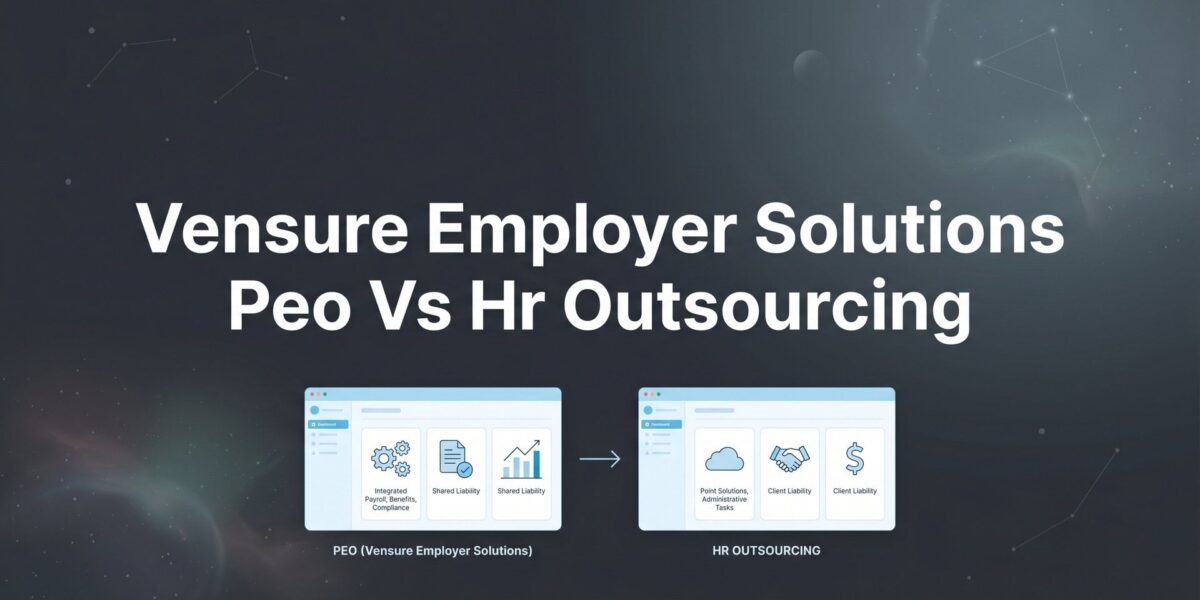
If you’re searching “Vensure PEO vs HR outsourcing,” you’re probably not just evaluating Vensure. You’re asking a bigger question: do I actually need a co-employment relationship, or would a lighter HR outsourcing setup give me what I need without the structural strings attached?
That’s the right question to be asking. Vensure Employer Solutions operates as a full-service PEO, which means co-employment, bundled services, and a pricing model that wraps payroll, benefits, compliance, and risk management into one arrangement. That structure works well for some businesses. For others, it’s more than they need, or it creates complications they didn’t anticipate when they signed up.
This guide breaks down Vensure’s model alongside the best HR outsourcing alternatives, covering full PEOs, standalone HR platforms, and hybrid options. If you want broader context on how PEOs work before diving in, our PEO comparison hub covers the fundamentals in detail. Otherwise, let’s get into the tools.
1. Clicks Geek PEO Comparison Platform
Best for: Business owners who want an independent, unbiased view before committing to any PEO or HR outsourcing provider.
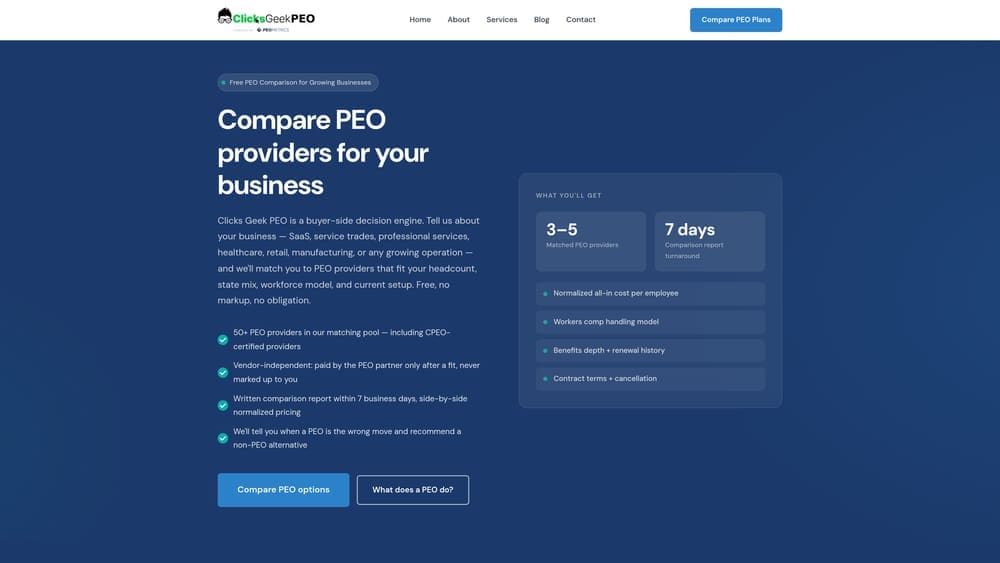
Clicks Geek PEO is an independent comparison and advisory platform built specifically to help business owners evaluate PEO providers and HR outsourcing options without vendor bias.
Where This Tool Shines
Most businesses end up comparing PEOs through broker channels where the “advisor” earns a commission from the provider they recommend. Clicks Geek operates differently. It’s built around transparent pricing analysis, side-by-side provider breakdowns, and educational resources designed to help you understand what you’re actually buying before you sign anything.
If you’re weighing Vensure against HR outsourcing alternatives and you’re not sure which model fits your situation, this is the logical starting point. It’s particularly useful for businesses approaching a renewal who suspect they’re overpaying or getting bundled services they don’t fully use.
Key Features
Side-by-Side Provider Comparisons: Breaks down major PEO providers by pricing structure, service scope, and contract terms in one place.
Independent Advisory Model: Not a PEO, not a broker, no vendor commissions. Evaluations are built around your business needs, not referral economics.
Contract and Pricing Transparency: Surfaces the administrative markups, bundling structures, and fee components that vendors rarely explain upfront.
PEO vs. HR Outsourcing Decision Support: Helps you determine which model is actually appropriate for your headcount, compliance exposure, and budget before you start collecting quotes.
Partnership with PEO Metrics: Data-driven provider evaluations grounded in real market benchmarks rather than vendor-supplied materials.
Best For
Business owners who are evaluating PEOs for the first time, approaching a renewal, or considering switching providers. Also valuable for CFOs and operations managers who want to validate whether their current PEO costs are reasonable before committing to another contract term.
Pricing
Free comparison resources available directly on the platform. Advisory services are available for businesses that want more hands-on support through the evaluation process.
2. Vensure Employer Solutions
Best for: Businesses that want a single-vendor PEO solution covering payroll, benefits, compliance, and workers’ comp under one contract.
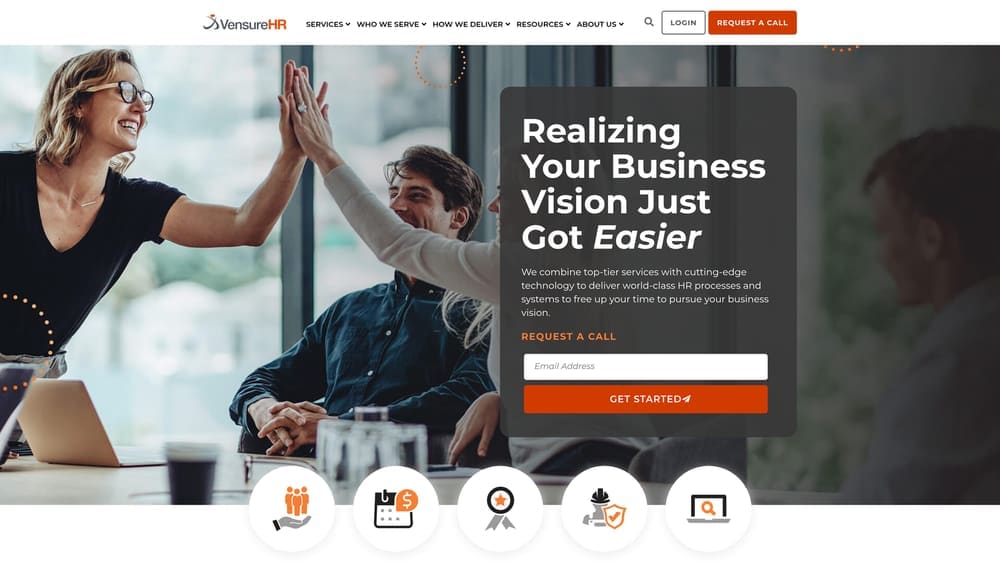
Vensure Employer Solutions is one of the largest PEOs in the U.S. by client count, built primarily through an aggressive acquisition strategy over the past several years.
Where This Tool Shines
Vensure’s scale is its primary selling point. The company has acquired a significant number of regional PEOs and HR firms, giving it broad geographic coverage and a wide range of bundled services. For businesses that want a single vendor handling payroll, benefits, risk management, and compliance, Vensure can cover that ground.
That said, the acquisition-driven model is worth understanding before you sign. Because Vensure operates through multiple legacy entities, service quality and platform consistency can vary depending on which entity actually manages your account. Some clients experience a well-integrated setup; others find themselves dealing with inconsistencies that trace back to the underlying company their account lives in. This is worth asking about directly during any sales conversation.
Key Features
Full Co-Employment PEO Model: Vensure becomes your co-employer, taking on shared responsibility for payroll taxes, workers’ comp, and benefits administration.
Broad Geographic Coverage: Supported by its network of acquired entities across multiple states and regions.
Risk Management and Compliance: Includes workers’ compensation coverage and HR compliance support as part of the bundled offering.
Employee Self-Service Technology: Platform for employee-facing HR tasks including onboarding, benefits enrollment, and pay access.
Scalable Headcount Range: Designed to serve businesses from roughly 10 employees up through several hundred.
Best For
Small to mid-sized businesses that want a bundled PEO relationship and are comfortable with co-employment. Particularly useful for companies that need access to group benefits purchasing power they couldn’t access independently. Less ideal for businesses that prioritize platform consistency or have had mixed experiences with acquisition-heavy vendors.
Pricing
Custom quotes only. Pricing is typically structured as a per-employee-per-month fee or a percentage of payroll. Request a detailed quote and ask specifically about administrative fees and what’s included versus billed separately.
3. TriNet
Best for: Companies in specific industries, like tech, financial services, or nonprofits, that need HR and compliance support tailored to their sector.
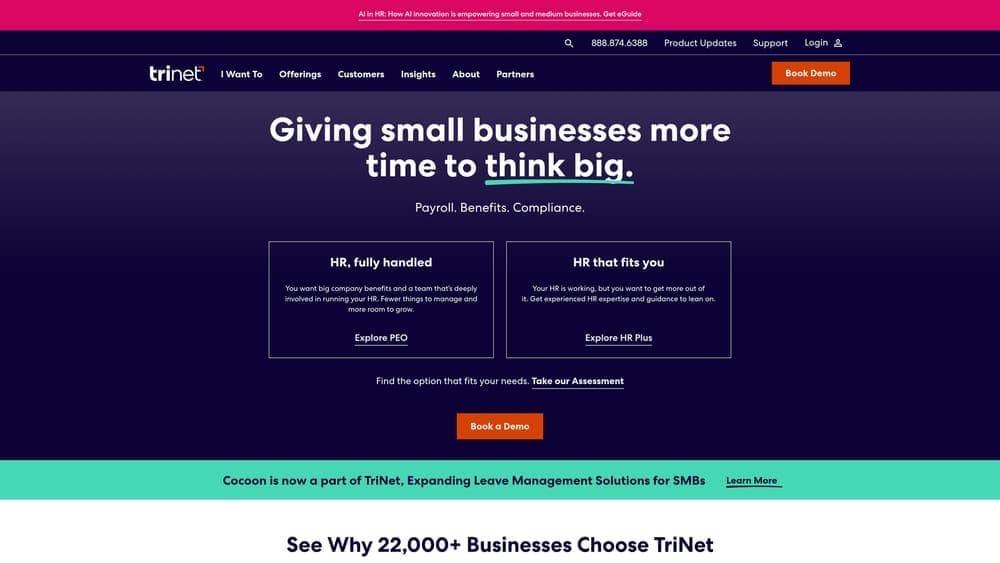
TriNet is a full-service PEO that differentiates itself through industry-vertical specialization, which is a meaningful distinction in a market where most PEOs offer generalist HR support.
Where This Tool Shines
Most PEOs assign you a generalist HR team. TriNet assigns teams with expertise in your specific industry, which matters when your compliance exposure, employment practices, or benefits expectations are shaped by sector norms. A tech startup and a nonprofit have very different HR realities, and TriNet’s vertical model reflects that.
The tradeoff is cost. TriNet is generally priced at the higher end of the PEO market, and some smaller businesses find the per-employee fees harder to justify as headcount grows. It’s worth modeling the cost at your current size and at your projected size 18 months out before committing.
Key Features
Industry-Specific HR Teams: Dedicated compliance and HR expertise organized by vertical, not just by geography or headcount tier.
Large-Group Benefits Access: Employees gain access to benefits plans that would typically require a much larger headcount to obtain independently.
Cloud-Based HR Platform: Covers payroll processing, reporting, and employee self-service in an integrated interface.
Employment Practices Liability Coverage: Risk mitigation support included as part of the PEO relationship.
Dedicated Service Representatives: Named contacts assigned by vertical, rather than a general support queue.
Best For
Companies in regulated or specialized industries where generic HR guidance creates real compliance risk. Works best for businesses with 10 to 150 employees that want both benefits access and sector-specific HR support under one relationship.
Pricing
Custom pricing based on industry and headcount. Expect per-employee-per-month billing. TriNet typically comes in at the higher end of PEO pricing, so get a detailed quote and compare it against your current arrangement before deciding.
4. ADP TotalSource
Best for: Growing companies that want enterprise-grade PEO services now and a clear path to standalone HR infrastructure later.
ADP TotalSource is ADP’s IRS-certified PEO offering, built on the same infrastructure that powers one of the largest payroll and HR platforms in the world.
Where This Tool Shines
The standout feature here isn’t just the PEO service itself. It’s the migration path. Most PEOs create a dependency: when you leave, you’re rebuilding everything from scratch. ADP TotalSource is designed so that when you grow beyond the PEO model, you transition directly into ADP Workforce Now or ADP RUN without losing your data, your configuration, or your institutional knowledge. For businesses that anticipate scaling past the point where a PEO makes financial sense, that continuity matters.
The cost is real, though. ADP TotalSource is generally priced higher than smaller or regional PEOs, and the service model is more structured than flexible. If you’re a 15-person company looking for a nimble relationship, this probably isn’t the right fit.
Key Features
IRS-Certified PEO: Certified PEO status means ADP shares certain federal employment tax liabilities, which is a meaningful compliance protection.
Comprehensive HR Suite: Payroll, benefits, compliance, and talent management in a single integrated platform.
Clear Migration Path: Structured transition to ADP Workforce Now or ADP RUN when you outgrow the PEO model.
Dedicated HR Business Partner: Named HR professional assigned to your account, not a rotating support team.
Workforce Analytics: Reporting and data tools that go beyond basic payroll into workforce planning and compensation benchmarking.
Best For
Companies with 50 to 500 employees that want enterprise-grade HR infrastructure and are planning for growth. Also a good fit for businesses that are already ADP users and want to consolidate into a PEO arrangement without switching platforms.
Pricing
Custom quotes. Pricing reflects enterprise-level service and typically runs higher than mid-market PEOs. Factor in the long-term value of the migration path when comparing against lower-cost alternatives.
5. Bambee
Best for: Small businesses that need real HR expertise and compliance support but don’t want co-employment or a bundled PEO arrangement.
Bambee is an HR outsourcing service that provides a dedicated HR manager without any of the co-employment structure that comes with a PEO.

Where This Tool Shines
Bambee solves a specific problem: small businesses that can’t afford a full-time HR hire but need more than a compliance checklist. You get a dedicated HR manager who knows your business, helps you build policies, handles employee relations issues, and flags compliance gaps before they become legal problems. None of that requires co-employment.
This is a meaningful distinction. If your core concern is HR compliance and employee management, not benefits access or workers’ comp pooling, Bambee delivers that without requiring you to restructure your employment relationships. You stay the employer of record throughout.
Key Features
Dedicated HR Manager: A real, named HR professional assigned to your account, not a shared support pool.
HR Audit and Compliance Gap Analysis: Identifies where your current practices create risk before those risks surface as complaints or claims.
Policy and Handbook Creation: Custom employee documentation built for your business, not generic templates.
Termination and Disciplinary Support: Guidance on handling sensitive employee situations in a way that reduces legal exposure.
No Co-Employment: You remain the sole employer of record. Bambee advises; you retain full control.
Best For
Businesses with 1 to 50 employees that need HR expertise and compliance support without the cost or structural complexity of a PEO. Particularly useful for companies that have been operating without formal HR policies and need to get their documentation and practices in order.
Pricing
Starts around $99 per month for very small businesses. Pricing scales with headcount. Significantly lower cost than a PEO for businesses that don’t need benefits pooling or co-employment services.
6. Insperity
Best for: Mid-market companies that want a stable, well-established PEO with consistent service quality and strong benefits access.
Insperity is one of the oldest and most established PEOs in the U.S., publicly traded and IRS-certified, with a service model built around dedicated team relationships rather than high-volume account management.

Where This Tool Shines
Insperity’s reputation is built on service consistency. In a market where many PEOs assign you to a rotating support queue, Insperity operates on a named-contact model where you have a dedicated team that knows your account. That matters more than it sounds when you’re dealing with a compliance issue on a Friday afternoon.
The company has also maintained a relatively transparent pricing posture compared to many competitors, which makes it easier to model total cost of ownership when evaluating against alternatives. It’s not the cheapest option, but it’s one of the more predictable ones.
Key Features
IRS-Certified PEO: Shared federal employment tax liability as part of the co-employment relationship.
Full-Service HR Suite: Payroll, benefits, performance management, and compliance in an integrated platform.
Dedicated Service Team: Named contacts across HR, payroll, and benefits, not a general support line.
Fortune 500-Level Benefits Access: Group purchasing power that gives small and mid-sized companies access to benefits plans typically reserved for much larger employers.
Transparent Pricing Structure: Clearer fee breakdowns than many competitors, which simplifies comparison shopping.
Best For
Companies with 25 to 300 employees that want a full-service PEO with a long operational track record and consistent service delivery. A strong alternative to Vensure for businesses that prioritize service stability over the lowest possible per-employee cost.
Pricing
Custom per-employee-per-month pricing. Generally falls in the mid-to-upper range for PEOs. Request a detailed quote and compare the fee structure line-by-line against any competing proposals.
7. Gusto
Best for: Small businesses that want modern payroll and HR technology without co-employment, bundled services, or PEO-level complexity.
Gusto is a payroll-first SaaS platform with optional HR tools, benefits administration, and compliance features designed for businesses that want clean, modern HR tech and nothing more complicated than that.
Where This Tool Shines
Gusto is the clearest example of what pure HR outsourcing looks like at the technology layer. There’s no co-employment, no bundled risk management, no shared workers’ comp pool. You run payroll, manage benefits, and handle onboarding through a well-designed platform, and you stay the employer of record throughout. For businesses that don’t need the structural benefits of a PEO, Gusto removes a lot of the overhead that comes with one.
It’s also genuinely easy to use. If you’ve spent time navigating legacy HR systems, Gusto’s interface is a noticeable improvement. The tradeoff is that it doesn’t replace what a PEO provides: you don’t get group benefits purchasing power, shared compliance liability, or dedicated HR advisory support at the standard pricing tiers.
Key Features
Full-Service Payroll: Automated payroll processing with federal, state, and local tax filing handled by the platform.
Benefits Administration: Health insurance brokering and benefits enrollment built into the same platform as payroll.
Employee Onboarding and Self-Service: Digital onboarding workflows and an employee portal for pay stubs, benefits, and time-off management.
Time Tracking and PTO Management: Built-in tools for tracking hours and managing leave policies.
No Co-Employment: Pure SaaS model. You remain the employer of record with full control over employment decisions.
Best For
Businesses with 1 to 50 employees that want reliable payroll and basic HR tools at a predictable monthly cost. A good fit for companies that have outgrown manual payroll but aren’t ready for, or don’t need, a full PEO relationship.
Pricing
Simple plan starts at $40 per month base plus $6 per employee per month. Higher tiers with additional HR features are available. Significantly lower total cost than most PEOs, though the scope of service is also narrower.
Making the Right Call for Your Business
The Vensure vs. HR outsourcing question doesn’t have a universal answer. It has an answer that depends on your specific situation, and the variables that matter most are headcount, benefits strategy, compliance exposure, and how much structural complexity you’re willing to manage.
If you’re a sub-50-employee company that needs access to quality group benefits, a PEO, whether Vensure, Insperity, or TriNet, gives you purchasing power you can’t replicate on your own. That’s a real, tangible advantage worth the co-employment tradeoff for many businesses.
If you primarily need HR expertise and compliance support without restructuring your employment relationships, Bambee delivers that at a fraction of the cost. If you need clean payroll technology and basic HR tools without any co-employment complexity, Gusto handles that well.
ADP TotalSource makes the most sense for businesses that are scaling and want a PEO now with a clear path to standalone infrastructure later. TriNet fits best when your industry creates specific compliance requirements that a generalist PEO won’t handle well.
And if you’re not sure which model fits, or you suspect your current PEO costs aren’t competitive, the smartest first move is to get an objective view before renewing anything. Most businesses overpay due to bundled fees and unclear administrative markups. You can compare your options with transparent pricing breakdowns and independent analysis before you commit to another contract term.
The decision is worth getting right. The exit costs from the wrong PEO arrangement, including re-establishing your own benefits, payroll tax accounts, and workers’ comp policies, are real enough that a few hours of comparison work upfront pays for itself quickly.