

Choosing between a PEO and standalone HR software isn’t straightforward—and the ‘right’ answer depends entirely on what you’re actually trying to solve. A PEO bundles HR administration, compliance, benefits, and payroll under a co-employment model. HR software gives you tools without the employer relationship or bundled services.
This guide breaks down 9 options across both categories, covering what each does best, where it falls short, and which business scenarios fit. Whether you’re weighing the operational simplicity of a PEO against the flexibility of software, or trying to figure out if you even need either, we’ll help you understand the real tradeoffs before you commit.
1. Clicks Geek PEO Comparison Platform
Best for: Business owners evaluating PEO providers and comparing pricing before signing contracts
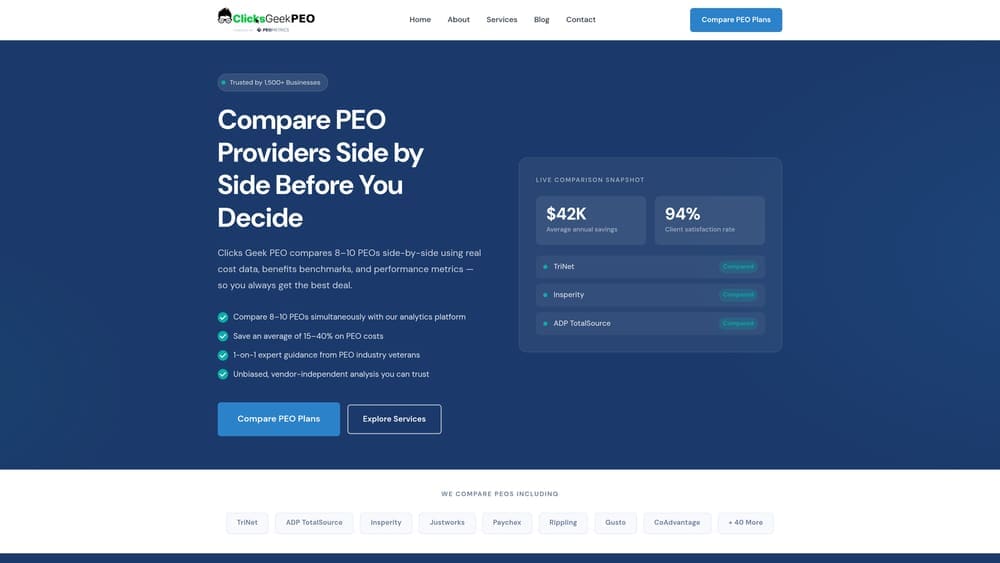
Clicks Geek PEO Comparison Platform is an independent resource that helps you compare PEO providers side-by-side without sales pressure.
Where This Tool Shines
Most PEO pricing is opaque. You’ll get custom quotes that vary wildly, and it’s hard to know if you’re overpaying or getting a fair deal. This platform breaks down what different providers actually charge, how their fee structures work, and what’s included versus what costs extra.
It’s built for business owners who want objective information before renewing or switching PEO providers. You’re not buying a PEO here—you’re getting clarity on what’s available and what it costs.
Key Features
Side-by-Side Provider Comparisons: Compare multiple PEO options based on services, pricing models, and contract terms in one place.
Transparent Pricing Breakdowns: Understand per-employee costs, administrative fees, and hidden charges before you commit.
Contract Term Analysis: See what you’re actually agreeing to, including renewal terms, exit clauses, and fee escalations.
Independent Advisory: Get objective guidance without sales commissions or provider bias influencing recommendations.
Educational Resources: Learn what questions to ask, what red flags to watch for, and how to negotiate better terms.
Best For
Small to mid-sized business owners who are evaluating their first PEO, considering switching providers, or reviewing renewal terms. Especially useful if you’re comparing multiple quotes and want to understand what you’re actually paying for.
Pricing
Free comparison resources and educational content. No cost to compare providers or access pricing breakdowns.
2. Justworks
Best for: Startups and small teams needing straightforward PEO services without complex pricing
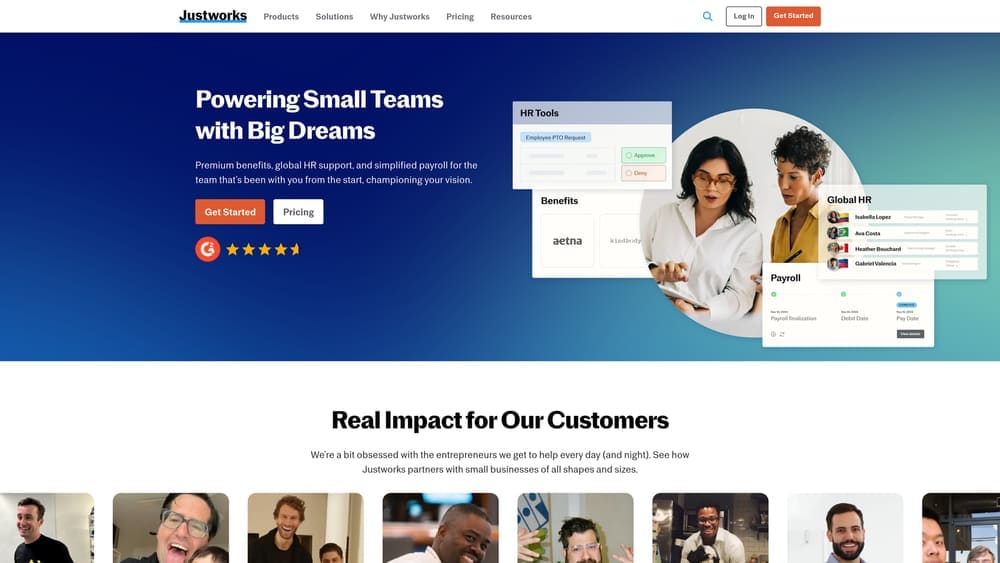
Justworks is a PEO platform that simplifies HR, benefits, and payroll with transparent per-employee pricing.
Where This Tool Shines
Justworks doesn’t hide costs or require custom quotes for basic services. You know upfront what you’ll pay per employee, which makes budgeting simpler. The platform is designed for teams that want PEO benefits without enterprise complexity.
Onboarding is fast, and the interface feels less corporate than traditional PEOs. Support is available 24/7, which matters when payroll issues happen outside business hours.
Key Features
Flat Per-Employee Pricing: No percentage-of-payroll fees or hidden administrative markups—just a fixed monthly cost per employee.
24/7 Support: Access help anytime, not just during standard business hours.
Benefits Access for Small Teams: Get access to health insurance, 401(k), and other benefits typically reserved for larger companies.
Simple Onboarding Process: Get up and running quickly without lengthy implementation timelines.
Compliance Support: Handles multi-state tax filings, workers’ comp, and regulatory requirements.
Best For
Startups and small businesses with 5-50 employees who want predictable PEO costs and don’t need industry-specific customization. Works well if you’re hiring across multiple states and need compliance handled for you.
Pricing
Basic plan starts at $59/employee/month. Plus plan with enhanced benefits access costs $99/employee/month. Both include payroll, compliance, and HR support.
3. TriNet
Best for: Companies in specialized industries needing vertical-specific HR expertise and compliance
TriNet is a full-service PEO that tailors HR solutions to specific industries like tech, healthcare, and professional services.

Where This Tool Shines
TriNet doesn’t treat every business the same. They build expertise in specific verticals and apply that knowledge to compliance, risk management, and benefits selection. If you’re in a heavily regulated industry, that specialization matters.
You get access to HR consulting services, not just software. This includes help with employee relations issues, policy development, and strategic HR planning—useful if you don’t have an internal HR team.
Key Features
Industry Vertical Specialization: Focused expertise in tech, financial services, healthcare, nonprofits, and professional services.
Risk Management and Compliance: Proactive support for industry-specific regulations, employment law, and workplace safety requirements.
HR Consulting Services: Access to HR advisors who understand your industry’s unique challenges.
Enterprise-Grade Benefits: Leverage TriNet’s purchasing power to offer competitive health insurance, retirement plans, and other benefits.
Dedicated Service Team: Assigned HR business partner who knows your company and industry.
Best For
Mid-sized companies (20-200 employees) in specialized industries where compliance complexity justifies the higher cost. Best fit if you need strategic HR guidance, not just administrative processing.
Pricing
Custom pricing based on headcount, industry, and service level. Typically structured as a percentage of total payroll, often ranging from 3-10% depending on complexity and services included.
4. Rippling
Best for: Tech-forward companies wanting flexibility between HR software and full PEO services
Rippling offers modular HR software that can scale from basic tools to full PEO services based on what you need.

Where This Tool Shines
Rippling’s architecture lets you start with HR software and add PEO services later—or use both simultaneously for different employee groups. This flexibility matters if you’re not sure whether you need full PEO services or just better tools.
The platform integrates IT management with HR, so you can provision laptops, software access, and benefits through one system. That integration reduces administrative overhead significantly if you’re managing remote teams.
Key Features
Flexible PEO or Software-Only Options: Choose between standalone HR software or full PEO services without switching platforms.
IT and Device Management Integration: Manage employee devices, software licenses, and access permissions alongside HR tasks.
Automated Workflows: Build custom automation for onboarding, offboarding, and administrative processes.
Global Payroll Capabilities: Handle international contractors and employees through the same platform.
Unified Employee Database: Single source of truth for employee data across HR, IT, and finance systems.
Best For
Growing tech companies and remote-first businesses that need both HR tools and IT management. Works well if you want the option to add PEO services later without changing platforms.
Pricing
Core HR software starts at $8/employee/month. PEO services are priced separately based on headcount and services selected. Total cost varies significantly based on modules and features used.
5. Gusto
Best for: Small businesses prioritizing ease of use with optional PEO services in select markets
Gusto provides user-friendly HR and payroll software with PEO services available in limited states.

Where This Tool Shines
Gusto’s interface feels less like enterprise software and more like a consumer app. Employees can manage their own benefits, PTO, and tax documents without HR intervention, which reduces administrative load.
The software-first approach means you’re not locked into a PEO relationship. You can use Gusto for payroll and benefits administration, then add PEO services later if compliance complexity increases.
Key Features
User-Friendly Payroll Processing: Simple payroll runs with automatic tax filing and direct deposit.
Benefits Administration: Manage health insurance, 401(k), commuter benefits, and more through one platform.
Hiring and Onboarding Tools: Digital offer letters, I-9 verification, and new hire reporting built in.
PEO Available in Limited States: Optional PEO services for businesses in select markets where Gusto operates.
Employee Self-Service: Employees handle their own profile updates, tax forms, and benefit elections.
Best For
Small businesses under 30 employees who want simple payroll and HR tools without committing to a full PEO relationship. Best if you value ease of use over advanced features.
Pricing
Software starts at $40/month base fee plus $6/employee/month. Benefits administration and PEO services are priced separately based on location and services needed.
6. BambooHR
Best for: Companies with internal HR teams needing employee management and performance tracking tools
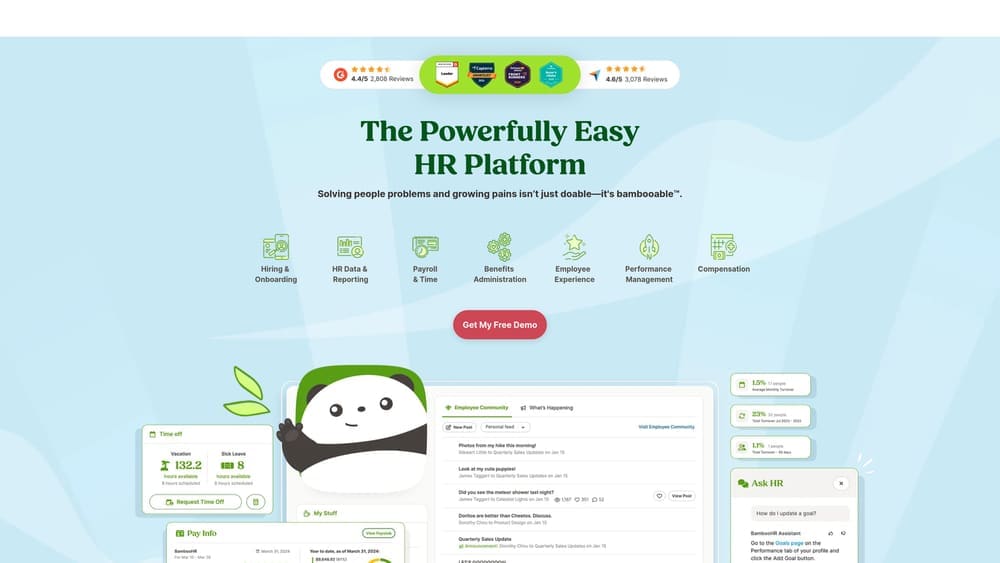
BambooHR is HR software focused on employee records, onboarding workflows, and performance management without PEO services.
Where This Tool Shines
BambooHR doesn’t try to be a PEO. It’s built for companies that have HR capacity and just need better systems to manage employee data, track performance, and streamline onboarding.
The employee database is the core strength—it becomes your single source of truth for org charts, job histories, compensation changes, and performance reviews. If you’re still managing HR in spreadsheets, this is the upgrade.
Key Features
Employee Database and Records: Centralized system for all employee information, documents, and history.
Onboarding Workflows: Automated task lists, document collection, and new hire training schedules.
Performance Management: Goal tracking, performance reviews, and feedback tools with customizable templates.
Time Tracking and PTO: Employee time-off requests, approval workflows, and accrual tracking.
Reporting and Analytics: Build custom reports on headcount, turnover, compensation, and other HR metrics.
Best For
Companies with 25-500 employees who have dedicated HR staff and don’t need co-employment services. Works well if you already handle payroll and benefits separately and just need better employee management tools.
Pricing
Custom pricing based on headcount and features selected. Typically ranges from $6-$9/employee/month depending on modules and support level.
7. Paychex Flex
Best for: Businesses wanting scalable options from basic payroll to full PEO services
Paychex Flex offers a platform that scales from standalone payroll software to comprehensive PEO services.

Where This Tool Shines
Paychex lets you start small and add services as you grow. You can begin with just payroll, add HR tools later, and eventually move to full PEO services if needed—all without switching platforms.
The multi-state compliance tools are particularly strong. If you’re expanding into new states, Paychex handles the tax registrations, unemployment insurance, and state-specific reporting requirements that trip up most small businesses.
Key Features
Standalone Payroll or Full PEO: Choose the service level that matches your current needs and scale up later.
Multi-State Compliance Tools: Automated tax filings, state registrations, and compliance tracking across all 50 states.
Retirement Services: Integrated 401(k) administration and employee retirement planning tools.
HR Administration Support: Access to HR advisors for policy questions, employee relations issues, and compliance guidance.
Mobile App: Employees can view pay stubs, request time off, and manage benefits from their phones.
Best For
Growing businesses (10-100 employees) that need flexibility between software and PEO services. Good fit if you’re expanding into multiple states and want compliance handled automatically.
Pricing
Custom pricing based on services selected. Standalone payroll typically starts around $39/month base fee plus per-employee charges. PEO services priced separately based on headcount and service level.
8. Zenefits
Best for: Small businesses needing benefits administration and payroll without co-employment complexity
Zenefits combines benefits administration, payroll processing, and compliance alerts in a software platform without PEO services.

Where This Tool Shines
Zenefits makes benefits administration simple. Employees can compare health insurance plans, enroll in coverage, and make changes during open enrollment without HR involvement. The platform handles carrier integrations and premium deductions automatically.
Compliance alerts notify you when action is required—new hire reporting deadlines, benefits notices, or regulatory changes. This prevents the common mistakes that happen when compliance tasks fall through the cracks.
Key Features
Benefits Administration: Streamlined enrollment, carrier integrations, and automated premium deductions for health, dental, and vision insurance.
Payroll Processing: Run payroll with automatic tax calculations, direct deposit, and year-end reporting.
Compliance Alerts: Automated reminders for required notices, reporting deadlines, and regulatory requirements.
Mobile HR Management: Employees and managers access HR tools, approve requests, and view information from mobile devices.
Document Management: Store employee handbooks, policies, and signed documents in one secure location.
Best For
Small businesses with 10-75 employees who want to offer competitive benefits without PEO complexity. Best if you have basic HR capacity and just need better tools for benefits and payroll.
Pricing
Starts at $8/employee/month for core HR features. Payroll add-on costs an additional $6/employee/month. Benefits administration included in base pricing.
9. ADP TotalSource
Best for: Mid-sized businesses requiring enterprise-grade PEO services and comprehensive HR outsourcing
ADP TotalSource provides full-service PEO for companies needing Fortune 500-level benefits and dedicated HR support.
Where This Tool Shines
ADP TotalSource delivers enterprise capabilities to mid-sized businesses. You get access to health insurance plans, retirement options, and benefits packages that would normally require hundreds of employees to negotiate directly.
The dedicated HR business partner model means you’re not calling a general support line when issues arise. You have a specific person who knows your company, understands your industry, and can provide strategic HR guidance.
Key Features
Full HR Outsourcing: Complete management of payroll, benefits, compliance, and HR administration under co-employment.
Fortune 500-Level Benefits: Access to premium health insurance carriers, retirement plans, and benefit options through ADP’s purchasing power.
Dedicated HR Business Partner: Assigned advisor who provides strategic guidance, not just administrative support.
Compliance and Risk Management: Proactive monitoring of employment law changes, workplace safety requirements, and regulatory compliance.
Scalable Platform: Grows with your business from 50 to 500+ employees without switching providers.
Best For
Established businesses with 50-500 employees who need comprehensive HR outsourcing and can justify premium pricing. Best fit if you want enterprise-level benefits and dedicated strategic HR support.
Pricing
Custom pricing based on headcount, industry, and service requirements. Typically requires minimum of 5 employees. Pricing structured as percentage of payroll or per-employee-per-month fees depending on agreement.
Making the Right Choice
The PEO vs. HR software decision comes down to what you’re actually buying: operational capacity or just tools.
A PEO takes work off your plate through co-employment—handling compliance, benefits negotiation, and HR administration. You’re paying for someone else to manage these functions, not just access to software. This makes sense when you don’t have internal HR expertise and the cost of mistakes (compliance penalties, benefits missteps, payroll errors) exceeds the PEO fees.
HR software gives you systems to manage HR yourself, which works if you have the internal bandwidth. You maintain full control and avoid co-employment complexity, but you’re responsible for execution. If you already have HR infrastructure and just need better workflows, standalone software avoids the co-employment relationship.
For most small businesses under 50 employees without dedicated HR staff, a PEO typically delivers more value per dollar. The compliance support alone often justifies the cost—especially if you’re operating in multiple states or a regulated industry. Options like Justworks or TriNet handle the administrative load while you focus on running your business.
If you have HR capacity and just need better tools, platforms like BambooHR or Zenefits provide the systems without the co-employment structure. You’ll pay less but take on more responsibility for compliance and execution.
Hybrid options like Rippling and Paychex Flex let you start with software and add PEO services later. This flexibility matters if you’re not sure which path fits your current stage.
Before you renew your PEO agreement, compare your options. Most businesses overpay due to bundled fees and unclear administrative markups. We break down pricing, services, and contract structures so you can make a smarter decision.
The right choice depends on your current headcount, internal HR capacity, compliance complexity, and whether you need someone to do the work or just provide the tools. Evaluate what you’re actually solving for before committing to either path.