

Vensure Employer Solutions has grown into one of the largest PEOs in the country by worksite employees, largely through years of aggressive acquisitions. That scale can be a selling point. It can also be a source of confusion, especially when it comes to health insurance.
Here’s the reality: Vensure’s health plan offerings aren’t uniform. Because they’ve absorbed dozens of regional PEOs and HR entities over the years, the carrier access, plan options, and service experience a client gets can vary significantly depending on which legacy entity handles their account. That’s not a dealbreaker, but it is something you need to understand before signing anything.
The real question isn’t just “what does Vensure offer?” It’s whether those offerings are competitive against what other PEOs can put on the table for your specific headcount, industry, and geography. Health insurance is often the single largest cost driver in a PEO relationship. It deserves a real comparison, not a side-by-side brochure review.
This guide covers Vensure’s health insurance approach alongside several competing PEO providers and one independent comparison resource designed to help you cut through the noise and evaluate your actual options.
1. Clicks Geek PEO
Best for: Business owners who want an independent, unbiased comparison of PEO health insurance options before committing.
Clicks Geek PEO is an independent PEO comparison and advisory platform built for business owners who want straight answers about health insurance costs, carrier access, and contract terms across multiple providers.

Where This Tool Shines
Most PEO evaluations happen inside a sales process. You’re getting information from providers who have a financial interest in your decision. Clicks Geek PEO sits outside that dynamic entirely. It’s not affiliated with any single PEO, which means the analysis isn’t shaped by referral incentives or preferred partner arrangements.
For businesses specifically evaluating Vensure, this matters. Given how much Vensure’s service delivery can vary by legacy entity, having an independent resource to benchmark their health plan offerings against what Insperity, ADP TotalSource, or Justworks can provide gives you actual leverage in the decision.
Key Features
Side-by-Side PEO Health Insurance Comparisons: Evaluate carrier access, plan types, and cost structures across multiple providers in one place rather than chasing separate sales reps.
Transparent Pricing Breakdowns: Understand what’s bundled, what’s marked up, and where fees are buried before you sign a contract.
Independent Advisory: No affiliation with any PEO means the analysis reflects your business interests, not a referral arrangement.
Provider Evaluation Methodology: Covers carrier access, plan flexibility, renewal transparency, and portability risk — the factors that actually matter when health insurance is your biggest line item.
Best For
Business owners actively evaluating or renewing a PEO contract who want objective data before committing. Particularly useful for companies currently on Vensure who aren’t sure whether their current health plan is competitive, or for businesses comparing Vensure against two or three other finalists.
Pricing
Free comparison resources are available. Advisory services are also offered for businesses that want more hands-on support through the evaluation process.
2. Vensure Employer Solutions
Best for: Mid-sized businesses in regions where Vensure has strong legacy PEO infrastructure and established carrier relationships.
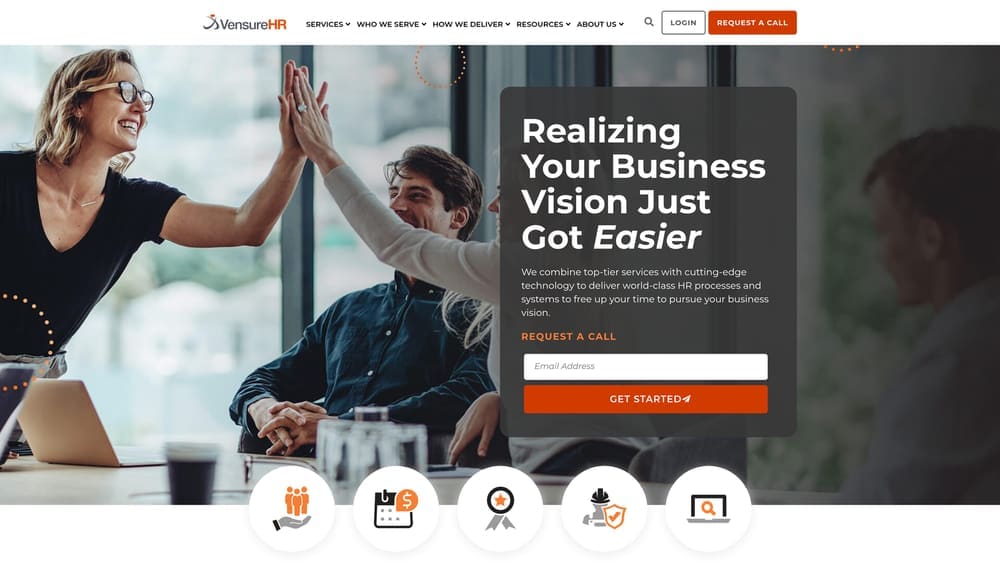
Vensure Employer Solutions is one of the largest PEOs in the U.S. by worksite employees, built through an extensive acquisition strategy spanning regional and national HR organizations.
Where This Tool Shines
Vensure’s scale gives them carrier leverage in certain markets. If your business operates in a region where a Vensure-acquired entity had deep-rooted carrier relationships, you may get access to competitive multi-carrier health plan options that smaller PEOs can’t match. Their broad geographic footprint is a genuine operational advantage for companies with employees spread across multiple states.
The challenge, and it’s worth being direct about this, is that Vensure’s health insurance experience is not consistent across all clients. Because they’ve absorbed entities like VensureHR, EmployeeConnect, Apex HR, and others, the specific carrier network, plan design options, and even the service team assigned to your account can differ based on which legacy entity is handling your relationship. If you’re evaluating Vensure, ask directly which entity will service your account and what carrier access that entity specifically provides.
Key Features
Multi-Carrier Health Insurance Access: Scale enables relationships with multiple carriers, though availability varies by region and legacy entity.
Broad Geographic Coverage: Operates across most U.S. states, making it viable for distributed workforces.
Bundled HR, Payroll, and Benefits Administration: Full-service PEO model covering the standard suite of employer functions.
Variable Plan Options: Plan availability and carrier options depend on which acquired entity services your account — a factor that requires direct clarification during the sales process.
Best For
Companies with 50 or more employees in regions where Vensure has established legacy infrastructure. Less predictable for businesses that need consistent plan design across multiple locations served by different Vensure entities.
Pricing
Custom quotes required. Pricing typically follows a percentage-of-payroll or per-employee-per-month model. Fee structures vary by entity and should be reviewed carefully for administrative markups embedded in health plan costs.
3. ADP TotalSource
Best for: Mid-sized businesses that want enterprise-level carrier access and a certified PEO with strong compliance infrastructure.
ADP TotalSource is one of the largest certified PEOs in the country, offering national carrier partnerships and a benefits technology platform built for companies that have outgrown basic HR solutions.

Where This Tool Shines
ADP TotalSource’s CPEO certification matters for businesses that want IRS-recognized status and the legal protections that come with it. On the health insurance side, their partnerships with major national carriers like Aetna and MetLife give clients access to large-group plan rates that many smaller PEOs simply can’t replicate.
The technology layer is also a differentiator. Employees get a self-service portal that’s genuinely functional, which reduces the administrative burden on HR teams during open enrollment and throughout the year.
Key Features
National Carrier Partnerships: Established relationships with Aetna, MetLife, and other major carriers provide access to competitive large-group health plan rates.
CPEO Certification: IRS-certified PEO status offers specific legal and tax advantages not available through non-certified providers.
Employee Self-Service Benefits Portal: Robust digital platform for benefits enrollment, changes, and management reduces administrative friction.
Integrated Platform: Payroll, HR, and benefits administration operate within a single system, reducing data errors and manual reconciliation.
Best For
Companies with 50 to several hundred employees that want Fortune 500-caliber benefits infrastructure and are willing to pay a premium for it. Less suited for startups or very small businesses where the cost structure won’t pencil out.
Pricing
Custom quotes only. ADP TotalSource is generally positioned at the premium end of the PEO pricing spectrum, reflecting the enterprise-level service model.
4. Justworks
Best for: Small businesses and startups that want straightforward health plan options with published, predictable pricing.
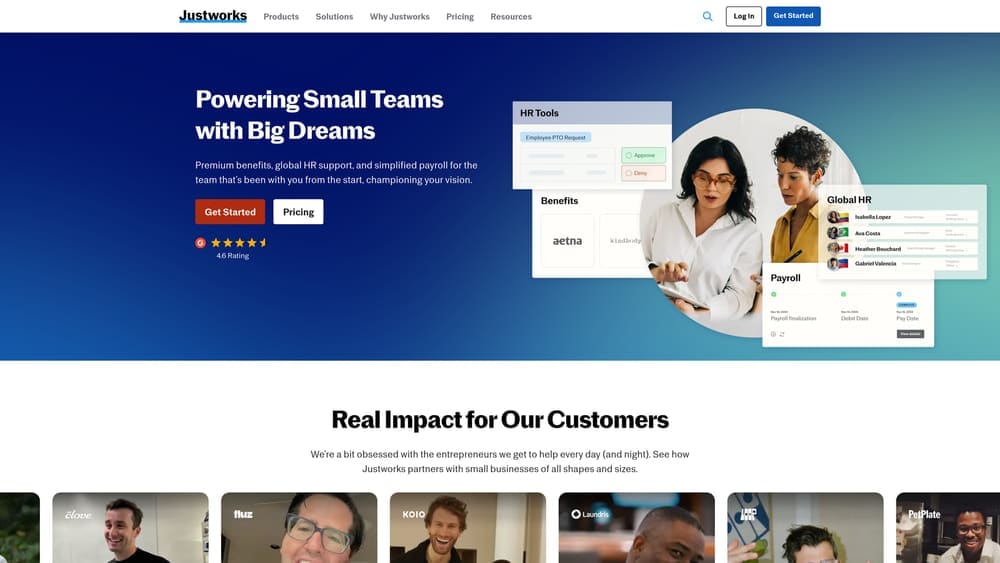
Justworks is a PEO built for smaller companies that want access to quality health insurance without navigating a complex, opaque pricing structure.
Where This Tool Shines
Justworks is one of the few PEOs that publishes its pricing publicly, which is a significant advantage for business owners who are tired of sitting through sales calls just to get a number. Their Aetna-based health plan access is available in most states, and the enrollment process is notably straightforward compared to more complex enterprise PEO platforms.
For companies evaluating Vensure that have under 50 employees, Justworks often makes more sense. The plan options are clear, the pricing is transparent, and the platform doesn’t require a dedicated HR department to navigate.
Key Features
Published Per-Employee Pricing: Rare in the PEO industry — you can see base costs before ever talking to a sales rep.
Aetna Health Plans: Available in most states, providing access to a recognized national carrier network.
Simple Enrollment Process: Plan selection and benefits enrollment are designed for teams without dedicated HR staff.
Modern Benefits Management Platform: Clean, user-friendly interface for both administrators and employees.
Best For
Startups and small businesses with under 100 employees, particularly those in states where Aetna has strong network coverage. Also a strong fit for companies that prioritize pricing transparency over maximum plan customization.
Pricing
Starts at $59 per employee per month for the Basic plan. The Plus plan, which includes benefits access, starts at $109 per employee per month. One of the most transparent pricing structures in the PEO market.
5. Insperity
Best for: Growing businesses that want high-quality health benefits and a dedicated service team, and are prepared to pay for it.
Insperity is a premium PEO with a long-standing UnitedHealthcare partnership that gives clients access to large-group master health plan rates typically reserved for much larger organizations.
Where This Tool Shines
Insperity’s UnitedHealthcare relationship is a genuine differentiator. Clients access a master health plan structure, meaning your employees benefit from the risk pool of Insperity’s entire client base rather than just your company’s headcount. For a 30-person company, that can mean meaningfully better rates and plan stability than you’d find going to market independently.
The service model is also a standout. Insperity assigns dedicated HR specialists to each client rather than routing everything through a general support queue. If your team has health insurance questions or claims issues, there’s a real person who knows your account.
Key Features
UnitedHealthcare Master Health Plan: Large-group risk pool access gives smaller businesses rates that reflect a much larger employee base.
Dedicated HR Service Teams: Named specialists assigned to each client account rather than generic support channels.
Employee Retention Focus: Benefits quality is positioned as a recruiting and retention tool, not just a compliance checkbox.
Compliance and Risk Management: Comprehensive support for employment law compliance layered into the service model.
Best For
Companies with 25 to 500 employees that prioritize benefits quality and are willing to pay a premium for it. Particularly strong for businesses in competitive hiring markets where health plan quality directly affects talent acquisition.
Pricing
Custom quotes only. Insperity is consistently positioned as a premium-tier PEO. Expect pricing to reflect that, and evaluate it against the total value of the UnitedHealthcare access and dedicated service model.
6. Paychex PEO
Best for: Growing companies with fluctuating headcounts that need a scalable benefits structure without constant renegotiation.
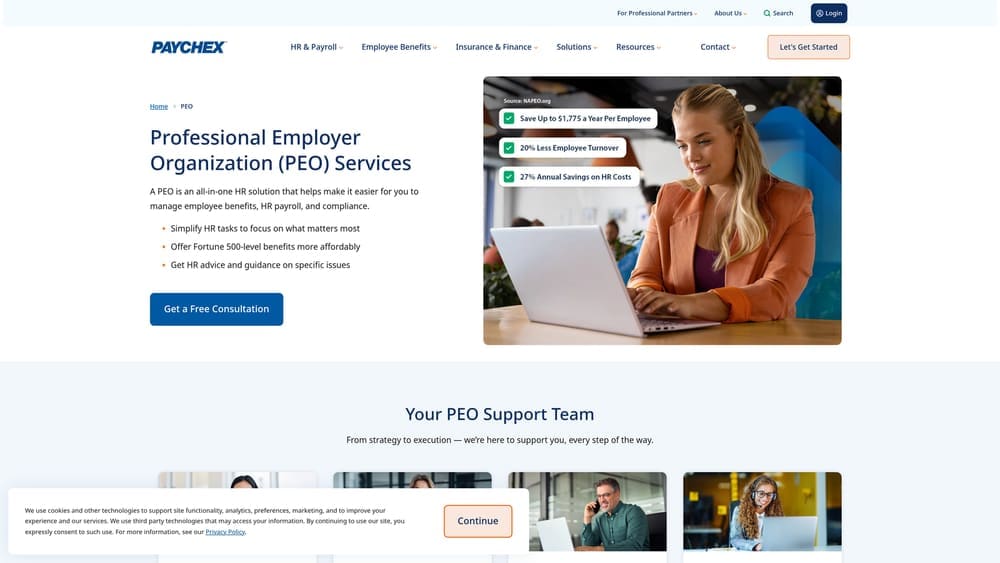
Paychex PEO offers a range of health plan types suited for businesses that expect to grow, contract, or evolve their workforce over time.
Where This Tool Shines
Paychex’s strength in the health insurance context is plan variety. Where some PEOs push clients toward a single carrier or a narrow plan menu, Paychex offers HMO, PPO, and HSA-compatible options. That flexibility matters when you have a workforce with diverse coverage preferences or when your employees are spread across different regions with different network considerations.
The scalability piece is also real. Paychex’s infrastructure is designed to accommodate growth without forcing you into a full renegotiation every time your headcount crosses a threshold. For companies in a growth phase, that operational continuity has practical value.
Key Features
Multiple Plan Types: HMO, PPO, and HSA-compatible options give employees meaningful choice rather than a take-it-or-leave-it menu.
Scalable Benefits Structure: Designed to accommodate headcount changes without requiring full contract restructuring.
Integrated Payroll and Benefits Administration: Single platform for payroll processing and benefits management reduces administrative overhead.
Dedicated Support: Clients are assigned a payroll specialist and HR generalist rather than relying solely on self-service tools.
Best For
Companies in active growth phases, seasonal businesses with variable headcounts, and organizations that want plan type variety for a workforce with diverse coverage needs.
Pricing
Custom quotes only. Paychex uses a per-employee-per-month pricing model. Pricing varies based on headcount, plan selections, and service level. Ask specifically about what’s bundled versus billed separately for health insurance administration.
7. TriNet
Best for: Companies in specific industry verticals that want health plan design shaped by their sector’s norms and risk profile.
TriNet is an industry-vertical PEO that groups clients by sector, which directly influences how health plans are structured, which carriers are available, and what benefits packages look like for your team.
Where This Tool Shines
TriNet’s vertical model is genuinely different from how most PEOs operate. Rather than pooling all clients together in a single risk group, TriNet organizes clients by industry, which means a tech company’s health plan is shaped by the risk profile and coverage expectations of other tech companies. For sectors like life sciences, financial services, or software, that can result in plans that are better calibrated to what employees in those industries actually expect.
This structure also means TriNet’s carrier relationships and plan options vary by vertical. A company in the technology space may have different options available than one in professional services. It’s worth understanding which vertical you’d fall into before evaluating their health plan offerings.
Key Features
Industry-Specific Client Grouping: Vertical clustering influences plan design, carrier selection, and risk pool composition in ways that can benefit sector-specific businesses.
Multiple Carrier Options Within Verticals: Carrier access varies by industry cluster, providing options tailored to sector norms.
Tailored Benefits Packages: Health plan design reflects the expectations and competitive benchmarks of your specific industry.
Online Benefits Administration: Employee self-service tools for enrollment, plan changes, and benefits management.
Best For
Technology companies, life sciences firms, financial services businesses, and other specialized sectors where benefits benchmarking against industry peers matters for talent competitiveness. Less differentiated for generalist businesses without a strong vertical identity.
Pricing
Custom quotes only. Pricing varies by industry vertical and headcount. The vertical structure means costs aren’t easily comparable across sectors, so get a quote specific to your industry classification.
Making the Right Call on PEO Health Insurance
Health insurance is often the biggest single line item in a PEO contract. It’s also the area where most businesses spend the least time asking the right questions. They compare sticker prices, maybe ask about deductibles, and move on. That’s how companies end up locked into a plan that looked fine on paper but underdelivers when employees actually try to use it.
Here’s a practical breakdown of which provider fits which scenario:
If you’re evaluating Vensure and want an objective benchmark: Start with Clicks Geek PEO. Understand what you’re actually being offered before you accept it as the standard.
If you’re a small business or startup that values pricing transparency: Justworks is the clearest path to predictable costs with solid Aetna access.
If benefits quality is your primary recruiting lever: Insperity’s UnitedHealthcare master plan and dedicated service model are worth the premium pricing.
If you’re mid-sized and want enterprise-grade infrastructure: ADP TotalSource’s CPEO certification and national carrier partnerships make it a serious contender.
If your workforce is growing or variable: Paychex PEO’s plan flexibility and scalability reduce the friction of headcount changes.
If your industry identity is central to your hiring: TriNet’s vertical model may give you plans that are better calibrated to your sector’s expectations.
The Vensure question specifically comes down to which legacy entity will actually service your account and what carrier access that entity provides. Don’t assume uniformity across a PEO that was built through acquisition.
Before you renew your PEO agreement, compare your options. Most businesses overpay due to bundled fees and unclear administrative markups. We break down pricing, services, and contract structures so you can make a smarter decision.