
You’re comparing ADP TotalSource and Amplify PEO because someone told you to get three quotes, and now you’re staring at two proposals that look nothing alike. One comes from a household name with enterprise-grade infrastructure. The other promises personalized service without the corporate bureaucracy. Neither is objectively better—they’re built for different operational realities.
ADP TotalSource operates at massive scale, processing payroll for a significant portion of the U.S. workforce through its parent company. Amplify positions itself as the nimble alternative for businesses that want direct access to decision-makers and transparent pricing. The right choice depends on your headcount trajectory, technology expectations, risk tolerance, and how much hand-holding you actually need.
This isn’t about feature checklists. It’s about operational trade-offs that affect your day-to-day experience and total cost of ownership. Here’s what actually matters when you’re deciding between these two providers.
1. Understand the Scale Mismatch Before Anything Else
The Challenge It Solves
You can’t evaluate these PEOs fairly without acknowledging they’re designed for different market segments. Treating them as interchangeable creates unrealistic expectations about service delivery, account priority, and how quickly your requests get addressed. Scale affects everything from your dedicated rep’s workload to how much leverage you have when negotiating contract terms.
The Strategy Explained
ADP TotalSource serves thousands of client companies. That scale brings proven infrastructure, deep carrier relationships, and technology investment smaller PEOs can’t match. It also means you’re one account among many. Your dedicated rep likely manages dozens of clients. Customization requests go through standardized processes. Service feels polished but impersonal.
Amplify operates regionally with a smaller client base. You’re more likely to know the people making decisions about your account. Service feels personalized because it actually is—your rep isn’t juggling 50 other companies. The tradeoff: less carrier leverage, potentially fewer technology integrations, and reliance on vendor partnerships for capabilities ADP builds in-house. Understanding how a PEO works step by step helps clarify these operational differences.
Neither model is wrong. The question is which operational reality fits your business better.
Implementation Steps
1. Ask each provider how many clients your dedicated rep currently manages and what their average response time looks like for non-urgent requests.
2. Request client references at your approximate headcount—a 20-person company’s experience with ADP differs dramatically from a 200-person company’s experience.
3. Clarify decision-making authority: Can your rep approve custom benefit configurations, or does everything route through regional management?
Pro Tips
Small companies often assume bigger PEOs will ignore them. That’s not always true—ADP has dedicated small business divisions. The real issue is standardization. If you need flexibility on contract terms, benefits customization, or billing structures, smaller providers typically move faster. If you want proven processes and can tolerate less flexibility, scale works in your favor.
2. Map Your Technology Expectations to Each Platform’s Reality
The Challenge It Solves
Technology promises look identical on sales decks. Both providers claim mobile apps, employee self-service portals, and seamless integrations. The difference emerges when you’re three months into the relationship and your accounting software won’t sync properly, or employees complain the mobile app crashes during open enrollment. Technology gaps create administrative friction that compounds over time.
The Strategy Explained
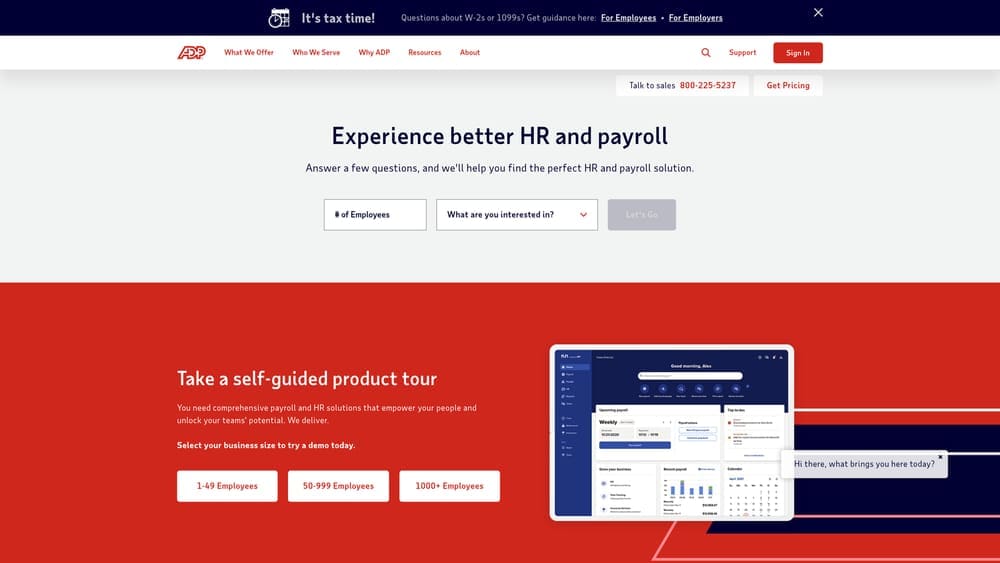
ADP TotalSource runs on ADP’s proprietary platform—the same infrastructure powering their standalone payroll products. That means mature technology, frequent updates, and extensive integration options with accounting systems, time tracking tools, and applicant tracking systems. Employee self-service is robust. Mobile functionality works reliably. The platform feels corporate because it is. If you’re currently using ADP Run, you might explore replacing ADP Run with a PEO for expanded capabilities.
Amplify typically partners with third-party HRIS platforms rather than building proprietary technology. This creates dependency on vendor relationships. Integration quality varies. Updates happen on the vendor’s timeline, not Amplify’s. The upside: if you already use a specific HRIS and Amplify supports it, you might avoid a platform migration entirely.
Implementation Steps
1. List every software tool that needs to integrate with your PEO: accounting software, time tracking, 401(k) recordkeeper, applicant tracking system.
2. Ask each provider for documentation showing how those integrations work—not whether they’re possible, but how data flows and where manual intervention is required.
3. Request a live demo focused on employee-facing functionality: How do employees request time off, update direct deposit, or access pay stubs from mobile devices?
Pro Tips
Technology becomes critical at specific headcount thresholds. Below 25 employees, clunky software is annoying but manageable. Above 50, poor employee self-service creates constant administrative interruptions. If your growth plan involves doubling headcount within two years, prioritize platform scalability over current functionality. Ask how each provider handles technology transitions as you grow.
3. Calculate True Cost Differences Beyond the Per-Employee Quote
The Challenge It Solves
PEO pricing looks deceptively simple until you read the contract. One provider quotes $150 per employee per month. Another quotes 3% of gross payroll. Both sound reasonable until you discover implementation fees, benefits administration markups, workers’ comp audits, and annual renewal increases. Total cost of ownership often diverges significantly from initial quotes.
The Strategy Explained
ADP TotalSource typically uses per-employee-per-month pricing with tiered rates based on headcount. Larger clients pay less per head. Pricing includes most core services but expect add-ons for premium benefits, specialized compliance support, or advanced reporting. Implementation fees are standard. Annual increases are contractual and predictable—usually tied to a percentage or index.
Amplify often structures pricing as a percentage of gross payroll, which scales naturally as you grow but creates less predictability if you have variable compensation or seasonal staffing. Smaller PEOs sometimes bundle more services into base pricing to compete on simplicity. The risk: less transparency about what drives cost increases year over year. Watch out for hidden PEO fees that can significantly impact your total spend.
Neither pricing model is inherently better. The question is which structure aligns with your payroll patterns and growth trajectory.
Implementation Steps
1. Request a three-year cost projection from each provider showing base fees, anticipated increases, and common add-on scenarios.
2. Identify every fee category in the contract: implementation, technology access, benefits administration, workers’ comp audit adjustments, termination fees.
3. Calculate total cost of ownership using your actual payroll data—not the provider’s sample scenarios—and model what happens if headcount increases 30% next year.
Pro Tips
Pay attention to benefits administration markups. Some PEOs charge administrative fees as a percentage of total benefits spend, which compounds as health insurance premiums increase. Others use flat per-employee fees. Ask explicitly how benefits costs are structured and whether administrative fees increase if you switch to a more expensive health plan. Learning how to compare PEO pricing properly can save you thousands annually.
4. Evaluate Benefits Administration Depth and Carrier Access
The Challenge It Solves
Benefits are usually the primary reason businesses consider PEOs in the first place. Access to better health plans, lower premiums through pooled purchasing, and outsourced administration all sound valuable. The reality: carrier access, plan quality, and administrative support vary dramatically between providers. A PEO with weak carrier relationships leaves you with the same limited options you had before.
The Strategy Explained
ADP TotalSource benefits from massive scale. Pooling employees across thousands of client companies creates negotiating leverage with national carriers. You’ll typically see multiple plan options across different carriers, broader networks, and more predictable renewal rates. Benefits administration is systematized—enrollment, qualifying life events, COBRA—because they’ve processed millions of transactions.
Amplify’s benefits leverage depends on regional carrier relationships and total covered lives. Smaller PEOs often partner with a limited number of carriers, which narrows plan options but can create stronger relationships with specific providers. Personalized benefits consulting is more common. The tradeoff: fewer plan choices and potentially less negotiating power during renewals. For smaller teams, finding an affordable PEO for small business often means balancing benefits access against cost.
Implementation Steps
1. Request current plan summaries from each provider showing carrier names, plan designs, employee cost-sharing, and network coverage in your geographic footprint.
2. Ask how many total employees each PEO covers under their master health plan—this directly affects their negotiating leverage with carriers.
3. Clarify the renewal process: How much advance notice do you get? What happens if your preferred carrier exits the PEO’s network mid-contract?
Pro Tips
Don’t assume larger PEOs always offer better benefits. Some smaller providers build deep relationships with regional carriers and deliver more personalized plan design. The real test: Ask each provider what happened to their clients’ health insurance premiums during the last two renewal cycles. Consistent, reasonable increases matter more than rock-bottom initial rates that spike later.
5. Assess Compliance Support Based on Your Risk Profile
The Challenge It Solves
Compliance support sounds identical across PEO proposals until you face an actual regulatory challenge. Both providers promise to handle employment law updates, wage-and-hour compliance, and workplace safety requirements. The difference emerges when you’re expanding into a new state, navigating an OSHA inspection, or dealing with a wage claim. Generic compliance support doesn’t help much when you need specific expertise.
The Strategy Explained
ADP TotalSource holds IRS certification as a Certified Professional Employer Organization, which provides specific tax liability protections. Their compliance infrastructure includes dedicated teams for different regulatory domains: multi-state employment law, ACA reporting, workplace safety. Compliance updates are systematized and delivered through the platform. You’re unlikely to get custom guidance, but standardized processes cover most scenarios. Understanding whether a certified PEO is safer helps you evaluate this distinction properly.
Amplify’s compliance support depends on internal expertise and vendor partnerships. Smaller PEOs often provide more accessible compliance advisors who know your business personally. The risk: less depth in specialized areas. If you operate in multiple states or a highly regulated industry, verify that their compliance team has actual experience with your specific challenges—not just general HR knowledge.
Implementation Steps
1. List your specific compliance exposures: states where you employ people, industry-specific regulations, historical compliance issues.
2. Ask each provider for case examples showing how they’ve handled similar situations—not hypothetically, but with actual client scenarios.
3. Clarify liability allocation in the contract: What compliance responsibilities remain with you versus transfer to the PEO?
Pro Tips
CPEO certification matters if you’ve had payroll tax issues in the past or operate in states with aggressive tax enforcement. The IRS certification provides an additional layer of protection because the PEO assumes certain tax liabilities. If your compliance needs are straightforward—single state, low-risk industry—this distinction matters less. Focus instead on accessibility: Can you actually reach someone knowledgeable when you need guidance?
6. Test Service Model Fit Through Reference Checks
The Challenge It Solves
Sales presentations showcase best-case scenarios. References reveal operational reality. Every PEO claims responsive service, but you won’t know what that actually means until you talk to current clients about response times, problem resolution, and what happens when things go wrong. Reference checks are your chance to validate service claims before you’re locked into a multi-year contract.
The Strategy Explained
Request references from each provider, but don’t accept their standard list. Ask for clients at your approximate headcount, in your industry, and operating in your states. Generic references from 200-person companies don’t help if you have 30 employees. You need to hear from businesses facing similar operational challenges.
Structure reference calls around specific scenarios: How long does it take to resolve payroll errors? What happens during open enrollment if employees have questions? How accessible is your dedicated rep during month-end close? Generic “they’re great to work with” feedback doesn’t help. You need operational specifics. Having a comprehensive list of questions to ask a PEO provider ensures you cover all critical areas.
Implementation Steps
1. Request three references from each provider matching your headcount range, industry, and geographic footprint.
2. Prepare specific questions: What’s the longest you’ve waited for a response to a non-urgent request? Describe the last time something went wrong—how was it handled?
3. Ask references what they wish they’d known before signing: What surprised them about the service model, and what would they negotiate differently?
Pro Tips
Pay attention to how references describe their relationship with their dedicated rep. If they can’t name their rep or describe the relationship as transactional, that tells you something about service consistency. The best references will mention specific people by name and describe how those individuals helped solve actual problems. That’s the service experience you’re buying—or not.
7. Plan Your Exit Strategy Before You Sign
The Challenge It Solves
Nobody enters a PEO relationship planning to leave, but circumstances change. You get acquired. The service deteriorates. Pricing becomes uncompetitive. If you haven’t planned your exit before signing, you’ll discover too late that extracting your data, transitioning employees, and unwinding the relationship costs more than you expected. Exit planning isn’t pessimistic—it’s operational prudence.
The Strategy Explained
PEO contracts include termination clauses, data portability requirements, and notice periods. These terms vary significantly between providers. Some PEOs make switching relatively straightforward. Others impose termination fees, restrict data access, or require 90-day notice periods that complicate transitions. If you’re considering an early exit, understanding the process for leaving a PEO mid-contract is essential.
ADP’s scale means they’ve processed thousands of client terminations. The process is standardized. Data portability is generally cleaner because they control the technology platform. Termination fees are contractual and predictable. The challenge: you’re navigating a corporate process, not negotiating with someone who knows your business.
Amplify’s smaller scale can work in your favor during exits—more flexibility, faster decisions—or against you if the relationship sours. Smaller PEOs sometimes struggle with clean data handoffs because they rely on third-party platforms. Verify data portability explicitly before signing.
Implementation Steps
1. Identify every termination-related clause in each contract: notice periods, termination fees, data delivery timelines, and final payroll processing requirements.
2. Request sample data exports showing exactly what information you’ll receive and in what format if you terminate the relationship.
3. Clarify who owns employee data, benefits enrollment records, and historical payroll information—and how long the PEO retains it after termination.
Pro Tips
The smoothest PEO exits happen when you’ve documented everything throughout the relationship: benefits plan details, custom policies, payroll configurations. Don’t rely on the PEO to maintain institutional knowledge about your business. Keep your own records. Knowing how to compare PEO contracts upfront helps you avoid problematic exit terms from the start.
Moving Forward with Clarity
ADP TotalSource makes sense when you need proven infrastructure, plan to scale significantly, and can tolerate a more standardized service experience. The technology is mature. Compliance support is systematized. Benefits leverage is real. You’re buying enterprise-grade capability with the understanding that personalization has limits.
Amplify fits better when personalized attention, pricing transparency, and regional expertise outweigh brand-name reassurance. You’ll likely know the people managing your account. Service feels tailored because it actually is. The tradeoff: less technology sophistication and carrier leverage that depends on regional relationships rather than national scale.
Neither is universally superior. The smarter move is running both through your specific operational requirements—headcount, state footprint, industry, and growth plans—before committing. What matters isn’t which PEO wins on a feature checklist, but which operational model fits how your business actually works.
If you’re approaching renewal or evaluating PEO options for the first time, before you renew your PEO agreement, compare your options. Most businesses overpay due to bundled fees and unclear administrative markups. We break down pricing, services, and contract structures so you can make a smarter decision.
The right PEO relationship should feel like a partnership, not a vendor transaction. If it doesn’t, you’re with the wrong provider.