
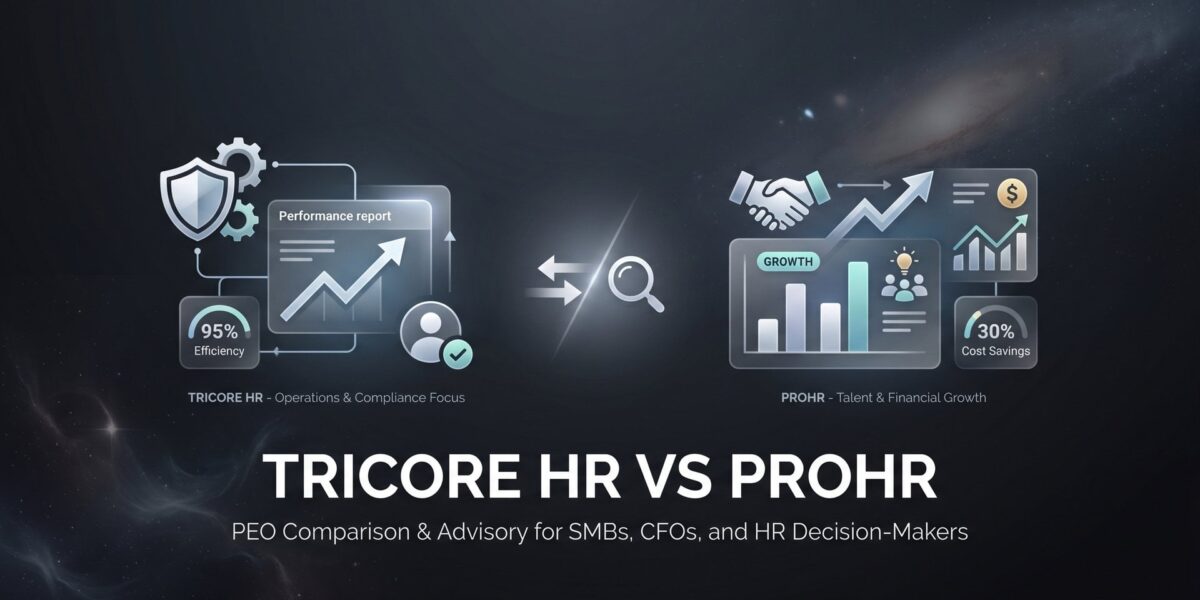
Both TriCore HR and ProHR serve small and mid-sized businesses looking to outsource HR, payroll, and benefits administration. But choosing between them requires more than a feature checklist. This comparison breaks down the real decision factors—pricing structures, service models, geographic strengths, and operational tradeoffs—so you can evaluate which provider fits your specific business situation. We’ll skip the marketing fluff and focus on what actually impacts your day-to-day operations and bottom line.
Understanding these differences matters because the wrong PEO choice creates friction in your daily operations, unexpected cost increases, and administrative headaches when you try to leave. The right choice becomes invisible infrastructure that just works.
1. Pricing Model Differences
The Challenge It Solves
PEO pricing isn’t standardized. Some providers charge a flat fee per employee. Others take a percentage of your total payroll. The structure you choose directly affects your monthly cash flow and how costs scale as you grow. Pick the wrong model, and you’ll overpay as headcount increases or payroll fluctuates seasonally.
The Pricing Structure Explained
Flat-fee models typically charge a set amount per employee per month, regardless of salary levels. This approach works well when you have high earners or significant payroll variability. You know exactly what you’ll pay each month based on headcount alone.
Percentage-based models charge a percentage of your gross payroll, typically ranging from 2% to 12% depending on services included and risk profile. This scales with your actual payroll expenses, which can be advantageous for businesses with lower average wages or seasonal fluctuations in hours worked.
The breakeven point matters. If you’re paying $150 per employee per month on a flat fee, that’s equivalent to about 3% of payroll for someone earning $60,000 annually. Higher earners make flat fees more attractive. Lower wages favor percentage models. Understanding these dynamics is similar to evaluating ADP TotalSource vs ProHR pricing structures where the same principles apply.
Implementation Steps
1. Calculate your average annual salary across all employees to determine which pricing model favors your wage structure.
2. Request detailed quotes from both providers showing total monthly costs under each model, including all administrative fees and add-ons.
3. Model both scenarios across a 12-month period accounting for any planned hiring, seasonal fluctuations, or wage increases.
Pro Tips
Ask whether the quoted rate includes workers’ compensation insurance or if that’s billed separately. Some providers bundle it into the percentage rate, others charge it as a separate line item. This significantly affects your true all-in cost and makes apples-to-apples comparisons difficult without clarification.
2. Geographic Coverage and State Compliance
The Challenge It Solves
Not all PEOs operate in all states. Some have stronger regional presence and deeper compliance expertise in specific markets. If you’re expanding across state lines or already operate in multiple jurisdictions, you need a provider with actual operational infrastructure in those states—not just theoretical capability.
The Strategy Explained
Geographic footprint determines how well a PEO handles state-specific payroll taxes, unemployment insurance, workers’ compensation regulations, and employment law compliance. A provider with established presence in your states typically has existing relationships with state agencies, understands local filing requirements, and can navigate compliance issues more efficiently.
Multi-state operations create complexity. Each state has different rules for wage and hour laws, paid leave requirements, unemployment insurance rates, and workers’ compensation classifications. A PEO without strong infrastructure in a particular state may handle basic payroll processing but struggle with nuanced compliance issues or state-specific benefits administration. This is why comparing TriCore HR vs PEO of Texas matters for businesses with regional footprints.
Regional providers often excel in their core markets but may lack depth elsewhere. National providers offer broader coverage but sometimes provide cookie-cutter service that doesn’t account for regional business practices or local regulatory relationships.
Implementation Steps
1. List every state where you currently have employees or plan to hire within the next 12 months.
2. Ask each provider specifically about their operational history in those states, including how long they’ve maintained active clients there and whether they have dedicated compliance staff familiar with local regulations.
3. Request references from current clients operating in the same states you need coverage for, particularly if you’re in heavily regulated states like California, New York, or Massachusetts.
Pro Tips
If you’re planning expansion into new states, confirm whether the PEO’s quoted pricing remains consistent across all states or if certain jurisdictions carry premium fees due to higher workers’ compensation costs or regulatory complexity. This prevents surprise cost increases when you hire your first employee in a new market.
3. Technology Platform Capabilities
The Challenge It Solves
You and your employees will interact with the PEO’s platform daily for time tracking, benefits enrollment, pay stubs, tax documents, and HR requests. A clunky system creates friction, generates support tickets, and wastes administrative time. The platform quality directly impacts your operational efficiency.
The Strategy Explained
Platform usability varies significantly across PEO providers. Some offer modern, intuitive interfaces with robust mobile apps. Others rely on outdated systems that require desktop access and multiple logins for different functions. Your employees’ experience with self-service features affects how much administrative burden falls back on your internal team.
Integration capabilities matter if you use other business systems. Can the PEO platform connect with your accounting software, applicant tracking system, or expense management tools? Native integrations reduce duplicate data entry and minimize reconciliation errors between systems. When evaluating TriCore HR vs Rippling PEO, technology capabilities often become the deciding factor.
Mobile access has become essential. Employees expect to view pay stubs, request time off, and update personal information from their phones. Managers need mobile approval workflows for timesheets and PTO requests. If the platform requires desktop access for basic tasks, you’ll face adoption resistance.
Implementation Steps
1. Request demo access to both platforms and have actual employees test common tasks like viewing pay stubs, enrolling in benefits, and submitting time-off requests.
2. Verify which third-party systems each platform integrates with natively and whether those integrations require additional fees or custom development.
3. Test the mobile app functionality for both employee self-service and manager approval workflows to ensure it handles your most frequent use cases.
Pro Tips
Ask about platform update frequency and whether new features require system downtime or data migration. Some PEOs run legacy systems that rarely receive updates. Others continuously improve their platforms but may force disruptive upgrades that require retraining your team on new workflows.
4. Benefits Access and Health Insurance
The Challenge It Solves
Small businesses struggle to access competitive health insurance rates and comprehensive benefits packages. PEOs pool multiple employers together to negotiate as a larger group, theoretically providing better rates and more plan options. But the quality of that access varies significantly between providers.
The Strategy Explained
Carrier networks determine which insurance companies and plan designs you can offer employees. Some PEOs have relationships with major national carriers. Others work primarily with regional insurers or a limited set of partners. The breadth of your carrier options affects plan flexibility, network coverage, and pricing competitiveness.
Plan variety matters beyond just health insurance. Can you offer multiple medical plan tiers to accommodate different employee preferences? What about dental, vision, life insurance, disability coverage, and voluntary benefits like critical illness or accident insurance? A robust benefits portfolio helps with recruitment and retention. The TriCore HR vs Vensure Employer Solutions comparison highlights how benefits access differs between providers.
The PEO’s risk pool composition affects your renewal rates. If you’re grouped with higher-risk employers or industries with expensive claims history, your rates may increase faster than if you were in a more favorable pool. Understanding how the PEO segments its risk pools gives you insight into future cost predictability.
Implementation Steps
1. Request a complete list of available carriers and plan options in your state, including current premium estimates for your employee demographics.
2. Ask how the PEO structures its risk pools and whether you’ll be grouped with similar-sized businesses in comparable industries or lumped into a general pool.
3. Clarify who handles benefits administration tasks like enrollment support, COBRA administration, and claims assistance—and whether those services are included or billed separately.
Pro Tips
Confirm whether you’re locked into the PEO’s carrier relationships or if you can bring your own broker and negotiate separately. Some PEOs require you to use their benefits platform exclusively. Others allow more flexibility, which matters if you’ve already established strong carrier relationships or want to preserve existing plan designs during the transition.
5. Service Model Structure
The Challenge It Solves
When payroll issues arise, compliance questions surface, or benefits problems need resolution, you need responsive support. The difference between dedicated account management and shared support queues directly impacts how quickly your problems get solved and whether you’re explaining your business context repeatedly to different representatives.
The Strategy Explained
Dedicated account managers provide consistent points of contact who learn your business, understand your employee situations, and can proactively address issues. This model works well when you value relationship continuity and personalized service. The tradeoff is that your access depends on one person’s availability and workload. Similar service model considerations apply when comparing Total HR Management vs ProHR options.
Shared support models route requests through general service queues where any available representative handles your inquiry. This approach can provide faster initial response times since you’re not waiting for a specific person. But you lose continuity, and representatives may lack context about your business or previous issues.
Hybrid models attempt to balance both approaches—providing a primary contact for strategic guidance while routing transactional requests through support teams. The effectiveness depends on how clearly the provider defines which issues go to which channel and how well information flows between them.
Implementation Steps
1. Ask each provider to explain their service model specifically, including average caseloads for account managers and typical response times for different request types.
2. Request references from current clients with similar business size and complexity to understand their actual experience with support responsiveness.
3. Clarify how after-hours support works, whether you have direct phone access or must submit tickets, and what constitutes an urgent issue that receives priority handling.
Pro Tips
Test responsiveness during the sales process. How quickly do they return calls? How thoroughly do they answer questions? The service quality you receive as a prospect typically exceeds what you’ll experience as a client. If they’re already slow or vague during the courtship phase, expect worse once you’ve signed.
6. Contract Terms and Exit Flexibility
The Challenge It Solves
PEO contracts often include provisions that make switching providers expensive or operationally difficult. Understanding termination clauses, data portability requirements, and final payment obligations before you sign prevents costly surprises if the relationship doesn’t work out or your business needs change.
The Strategy Explained
Contract length varies from one-year commitments to automatic renewals with specific notice periods. Some providers require 60 or 90 days’ advance notice to terminate without penalty. Others lock you into multi-year terms with early termination fees. The flexibility you negotiate upfront determines how easily you can exit if service quality declines or you find better pricing elsewhere.
Data portability affects your transition timeline. When you leave, you need complete employee records, payroll history, benefits information, and compliance documentation. Some PEOs provide this data in usable formats within days. Others drag out the process, charge extraction fees, or provide data in formats that require manual reformatting before you can import it into a new system. This becomes critical when evaluating Workforce Business Services vs ProHR transitions.
Final payment obligations can create cash flow surprises. You may owe prorated fees, unused PTO liabilities, workers’ compensation adjustments, or benefits reconciliation amounts. Understanding these potential costs helps you budget appropriately and avoid disputes during the transition.
Implementation Steps
1. Review the termination clause carefully and negotiate for shorter notice periods or the ability to terminate without cause at the end of each contract year.
2. Request written confirmation of data portability procedures, including formats provided, timeline for delivery, and any associated fees.
3. Ask for detailed examples of final billing scenarios to understand potential costs beyond your regular monthly fees when the relationship ends.
Pro Tips
Get contract terms in writing before signing. Don’t rely on verbal assurances from sales representatives about flexibility or fee waivers. If they promise something material like waived setup fees or guaranteed rate locks, ensure it’s explicitly stated in the contract language, not buried in side letters that may not be enforceable.
7. Industry Fit and Specialization
The Challenge It Solves
Different industries face unique compliance challenges, workers’ compensation risk profiles, and HR complexities. A PEO with deep experience in your industry understands these nuances and can provide more relevant guidance than a generalist provider applying cookie-cutter solutions across all clients.
The Strategy Explained
Industry specialization shows up in several ways. Providers with construction industry expertise understand certified payroll requirements, prevailing wage compliance, and multi-state contractor licensing. Those serving healthcare clients navigate credentialing, HIPAA compliance, and shift-based scheduling complexities. Restaurant and hospitality specialists handle tip reporting, fluctuating schedules, and high-turnover hiring processes.
Workers’ compensation classification accuracy matters significantly. Misclassified employees can result in audit penalties and unexpected premium increases. PEOs familiar with your industry assign correct classification codes from the start and understand how to document job duties to support those classifications during audits. The TriCore HR vs BBSI comparison illustrates how industry expertise varies between providers.
Regulatory knowledge depth varies by industry focus. A PEO serving primarily professional services firms may struggle with Department of Transportation regulations for trucking companies or OSHA requirements for manufacturing operations. Their general HR team can handle basics, but specialized compliance issues may expose gaps in their expertise.
Implementation Steps
1. Ask each provider what percentage of their client base operates in your industry and request references from businesses with similar operational models.
2. Present specific compliance scenarios relevant to your industry and evaluate how confidently and accurately they address the requirements.
3. Review their standard employee handbook and policy templates to see if they include industry-specific provisions or if you’ll need to heavily customize generic documents.
Pro Tips
If your industry has unique compliance requirements or elevated risk profiles, confirm whether the PEO’s workers’ compensation carrier has appetite for your classification codes. Some carriers exclude certain industries entirely or charge prohibitively high rates, which limits your PEO options regardless of other service quality factors.
Making the Right Choice for Your Business
Choosing between TriCore HR and ProHR comes down to your specific operational priorities and business context. If you’re a regional business with straightforward needs and prefer relationship-driven service, one provider may align better. If you’re scaling across multiple states or need specialized industry expertise, the other might offer stronger infrastructure.
Use these seven factors as your evaluation framework. Request detailed quotes from both providers that break down all fees, not just headline rates. Pay attention to contract terms and exit provisions before signing. Test their platforms with actual employees who will use them daily. Ask pointed questions about their experience in your industry and geographic markets.
The right PEO isn’t the one with the best marketing or the smoothest sales pitch. It’s the one that aligns with how your business actually operates, handles your specific compliance requirements competently, and provides transparent pricing without hidden fees or restrictive contract terms.
Before you renew your PEO agreement, compare your options. Most businesses overpay due to bundled fees and unclear administrative markups. We break down pricing, services, and contract structures so you can make a smarter decision.
Get quotes from both providers. Review contracts carefully. And choose based on operational fit, not sales pressure.