
Both TriNet and Justworks rank among the most recognized PEO providers, but they serve fundamentally different business profiles. TriNet built its reputation on industry-specific expertise and comprehensive HR support for growing mid-sized companies. Justworks carved out space as a streamlined, tech-forward option for startups and small teams prioritizing simplicity over customization.
The right choice depends less on which provider is “better” and more on which operational model fits how your company actually runs. This comparison breaks down the seven decision factors that separate these providers—not feature lists, but the real tradeoffs that affect your payroll costs, HR workload, and employee experience.
1. Pricing Model Analysis
The Challenge It Solves
PEO pricing isn’t straightforward. One provider charges a flat monthly rate per employee. The other takes a percentage of your total payroll. The difference sounds minor until you run the math on your actual roster—and realize the same service could cost you $3,000 per month or $7,000 per month depending on your salary distribution.
The Strategy Explained
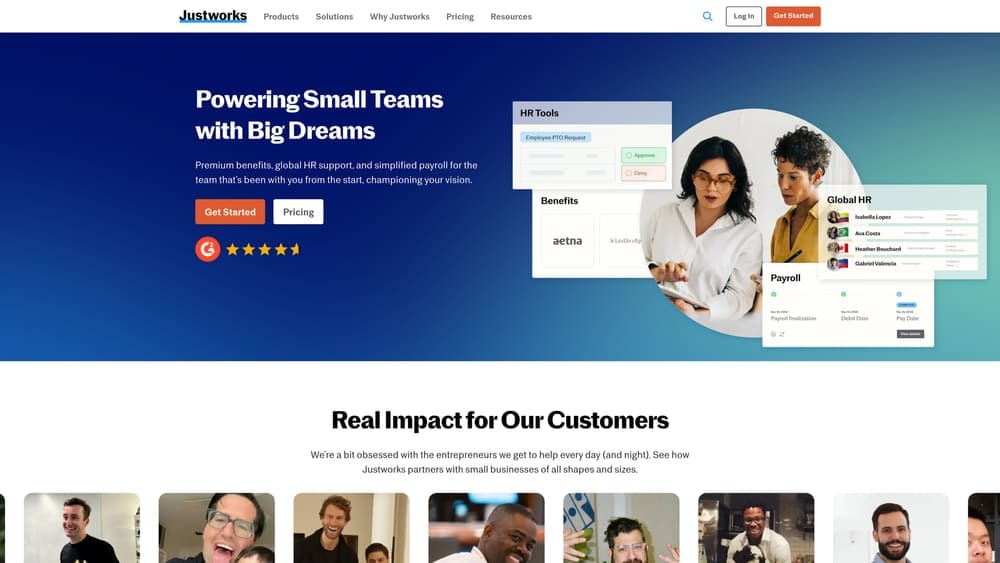
Justworks uses transparent flat-rate pricing. As of their current published rates, the Basic tier runs $59 per employee per month, while the Plus tier costs $99 per employee per month. You know exactly what you’ll pay before you sign anything.
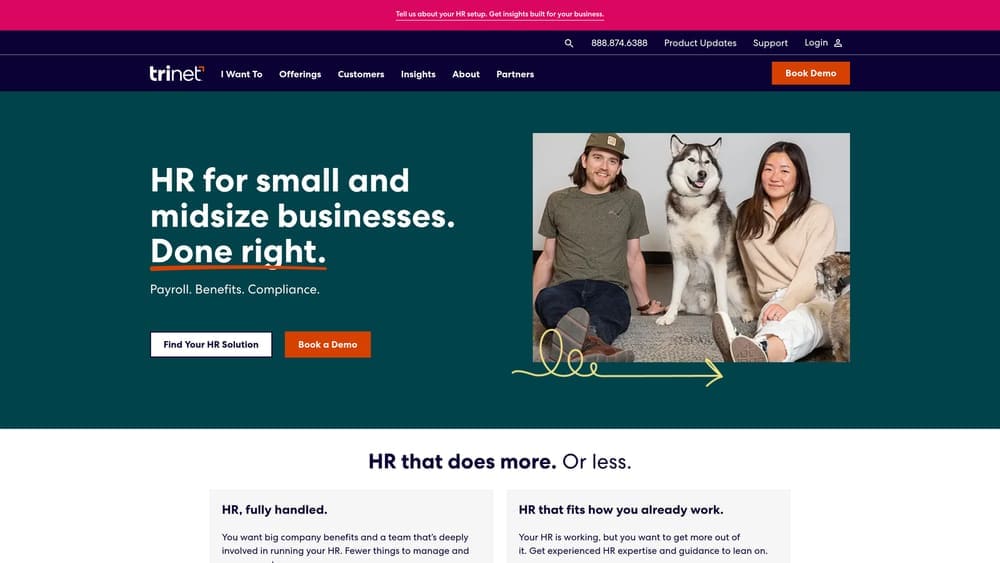
TriNet operates on percentage-based pricing, typically ranging from 2-12% of total payroll depending on your industry, employee count, and services selected. They don’t publish standard rates—every quote is customized. A company with 30 employees earning an average of $80,000 annually might pay 4-6% of payroll, translating to roughly $8,000-$12,000 monthly.
The salary mix matters more than most businesses realize. If you employ a mix of hourly workers and high-salary professionals, Justworks’ flat rate often wins. If your entire team earns below-market wages, percentage-based pricing might actually cost less.
Implementation Steps
1. Calculate your total annual payroll and divide by 12 to get monthly payroll spend.
2. Multiply that monthly figure by 4%, 6%, and 8% to estimate TriNet’s likely range based on industry standards.
3. Multiply your employee count by $59 and $99 to get Justworks’ Basic and Plus tier costs.
4. Compare the ranges and factor in how salary changes (raises, new hires at different levels) would affect costs over the next 24 months.
Pro Tips
Request detailed quotes from both providers using your actual employee roster and salary data. Generic estimates miss the nuances of your compensation structure. Understanding professional employer organization cost structures helps you negotiate better terms and avoid hidden fees.
2. Benefits Access Comparison
The Challenge It Solves
Small businesses struggle to offer competitive benefits packages. Large carriers won’t negotiate with companies under 50 employees. Even when you get access, the administrative burden of managing multiple carriers, renewals, and employee questions becomes a second job for whoever handles HR.
The Strategy Explained
TriNet provides access to enterprise-grade benefits through their master contracts with major carriers. You can customize plans across multiple tiers, add voluntary benefits, and adjust coverage levels by employee class. This flexibility matters for companies competing for talent in tight labor markets or operating in industries where benefits differentiation drives recruitment.
Justworks offers standardized benefits packages designed for simplicity. You get access to quality medical, dental, and vision coverage through national carriers, but customization options are limited. The tradeoff: streamlined enrollment, minimal administrative overhead, and clear pricing without surprise renewals or carrier negotiations.
The real difference shows up when you need specialized coverage. If you’re hiring in states with unique regulatory requirements or need industry-specific benefits (like professional liability coverage for life sciences companies), TriNet’s customization capabilities become essential. If your team values straightforward coverage without decision fatigue, Justworks’ curated approach works better.
Implementation Steps
1. List your current benefits offerings and identify which ones employees actually use versus which exist “just because.”
2. Survey your team (anonymously) about benefits priorities—you might discover medical coverage matters more than the FSA options you’ve been managing.
3. Identify any industry-specific or compliance-driven benefits requirements that limit your flexibility.
4. Evaluate whether benefits customization is a competitive advantage for your recruiting or just administrative complexity.
Pro Tips
Don’t assume more options equal better benefits. Many small businesses overcomplicate their benefits structure trying to match enterprise offerings, then watch utilization data show employees only care about three core benefits. The professional employer organization benefits you actually need depend on your workforce demographics and competitive landscape.
3. Industry Specialization
The Challenge It Solves
General-purpose HR platforms work fine until you hit industry-specific compliance requirements. A financial services firm dealing with FINRA regulations needs different HR support than a retail company managing hourly shift workers. The wrong PEO becomes a liability when they can’t navigate your industry’s regulatory landscape.
The Strategy Explained
TriNet built vertical expertise across specific industries: technology, life sciences, financial services, nonprofits, and retail. They assign HR consultants who understand industry-specific compliance requirements, common employment law challenges, and operational norms. If you’re a life sciences company navigating FDA regulations alongside HR compliance, that specialized knowledge prevents expensive mistakes.
Justworks takes a horizontal approach. They serve businesses across industries with standardized HR processes that work for most general business operations. You won’t get an HR consultant who specializes in your industry, but you also won’t pay for expertise you might not need if your HR challenges are straightforward.
The decision point: Does your industry create unique HR complexity? Financial services firms with licensing requirements, healthcare companies with credentialing needs, or nonprofits with specific employment classifications often justify TriNet’s specialized support. General professional services, marketing agencies, or e-commerce businesses typically don’t need industry-specific HR expertise.
Implementation Steps
1. Document any industry-specific compliance requirements your HR function currently manages (licensing, certifications, regulatory reporting).
2. Identify past HR issues that required industry knowledge to resolve correctly.
3. Evaluate whether your internal team has the expertise to handle industry-specific compliance or if you’re outsourcing that risk.
4. Consider your growth trajectory—will you stay within your current industry or diversify into new verticals?
Pro Tips
Industry specialization sounds valuable until you realize your actual HR challenges are generic: payroll processing, benefits administration, and basic compliance. Understanding the professional employer organization model helps you evaluate whether vertical expertise justifies the premium pricing.
4. HR Support Depth
The Challenge It Solves
HR emergencies don’t happen on a schedule. An employee files a discrimination complaint at 4 PM on Friday. Your California manager asks whether they can require exempt employees to track time. A workers’ comp claim comes in with conflicting injury reports. You need answers from someone who understands employment law, not a support ticket system.
The Strategy Explained
TriNet assigns dedicated HR consultant teams to your account. You get a named point of contact who learns your business, understands your policies, and provides proactive guidance on HR strategy. When complex situations arise—performance management issues, leave administration, compliance questions—you’re working with someone who has context on your company and authority to provide specific recommendations.
Justworks provides generalist HR support through their platform and support channels. You can access HR resources, compliance guides, and submit questions through their system. Response times are reasonable for routine questions, but you won’t have a dedicated consultant who knows your business intimately. The platform handles most administrative tasks well; the support model works for straightforward situations.
The tradeoff becomes obvious during complex HR situations. If you’re managing a reduction in force, navigating a harassment investigation, or implementing new performance management systems, TriNet’s dedicated support model provides hands-on guidance. If your HR needs center on payroll accuracy, benefits enrollment, and basic compliance, Justworks’ self-service approach with generalist support handles it efficiently.
Implementation Steps
1. Review the last 12 months of HR issues and categorize them: routine administrative tasks versus complex judgment calls requiring expertise.
2. Assess your internal HR capability—do you have someone with employment law knowledge or are you relying entirely on your PEO?
3. Identify your risk tolerance for HR mistakes. Errors in leave administration or termination procedures create legal exposure; payroll processing errors are fixable.
4. Consider your growth stage. Startups with simple structures need less HR depth than established companies with management layers and complex policies.
Pro Tips
Dedicated HR consultants add real value when you actually use them. Many companies pay for high-touch support, then handle everything internally anyway because it’s faster than scheduling consultant calls. If you’re weighing the PEO cost vs hiring an HR manager, factor in how much hands-on guidance you’ll realistically need.
5. Technology Experience
The Challenge It Solves
Your HR platform shouldn’t require a user manual. Employees need to update direct deposit information, request time off, and access pay stubs without IT support tickets. Managers need to approve requests, run reports, and process payroll changes without three-day training sessions. Clunky technology creates administrative drag that compounds across every pay period.
The Strategy Explained
Justworks built their platform with modern software design principles. The interface feels intuitive, mobile-responsive, and visually clean. Employees can navigate core functions without training. Managers can complete routine tasks quickly. The platform prioritizes user experience over feature density, which means fewer capabilities but smoother execution of essential functions.
TriNet offers a comprehensive platform with deeper functionality across HR, benefits, payroll, and compliance. You get more reporting options, greater customization, and integrated tools for complex workflows. The tradeoff: steeper learning curve, more clicks to complete routine tasks, and occasional interface inconsistency across modules.
The technology decision often reflects your team’s operational preferences. If you value comprehensive reporting, deep integration with other business systems, and customizable workflows, TriNet’s feature-rich platform justifies the complexity. If you prioritize employee self-service, minimal training requirements, and fast task completion, Justworks’ streamlined approach reduces friction.
Implementation Steps
1. Identify your most frequent HR platform interactions: payroll processing, time-off requests, benefits changes, reporting.
2. Evaluate how much time your team currently spends on routine HR administration and whether technology friction contributes to that workload.
3. Consider your employee population’s technical comfort level—younger teams adapt to any platform; mixed-age workforces benefit from simplicity.
4. Request demo access to both platforms and have actual users (not just decision-makers) test core workflows.
Pro Tips
Platform demonstrations always look smooth when vendors control the workflow. Insist on testing your actual use cases: processing an off-cycle payroll adjustment, running a custom benefits report, managing a complex leave scenario. Our guide to PEO HR technology platforms covers what to evaluate beyond the sales demo.
6. Scalability Fit
The Challenge It Solves
Your business won’t stay the same size forever. Switching PEO providers mid-growth creates operational disruption: payroll migration risks, benefits re-enrollment, compliance documentation transfers, and employee confusion. The right provider scales with your trajectory without forcing a platform change when you cross arbitrary headcount thresholds.
The Strategy Explained
Justworks works exceptionally well for startups and small businesses in rapid growth mode. The platform handles scaling from 10 to 100 employees smoothly. Pricing remains transparent as you add headcount. The technology supports distributed teams and multi-state operations without structural changes. However, companies approaching 200+ employees sometimes outgrow the standardized approach and need more customization than Justworks provides.
TriNet serves established companies with complex organizational structures more naturally. They handle multiple entities, diverse employee classifications, and sophisticated benefits configurations that emerge as companies mature. The infrastructure supports scaling from 50 to 500 employees without platform limitations. The tradeoff: smaller companies sometimes feel like they’re paying for enterprise capabilities they don’t yet need.
The scalability question depends on your growth trajectory and timeline. If you’re a 15-person startup projecting 100 employees in three years, Justworks scales with you efficiently. If you’re a 75-person company planning acquisition-driven growth or international expansion, TriNet’s infrastructure handles that complexity better.
Implementation Steps
1. Project realistic headcount growth over the next 24-36 months based on funding, revenue trajectory, or strategic plans.
2. Identify operational complexity that might emerge: multi-state expansion, international hiring, entity structures, diverse employee classifications.
3. Evaluate your tolerance for future PEO migration. Switching providers isn’t impossible, but it creates 60-90 days of administrative burden.
4. Consider whether your growth will be steady and predictable or lumpy and acquisition-driven—different patterns favor different providers.
Pro Tips
Don’t choose a PEO based solely on where you might be in five years. Business projections change. For early-stage companies, our guide on choosing a professional employer organization for startups covers growth-stage considerations that matter most.
7. Risk and Compliance Profile
The Challenge It Solves
Employment law violations create real financial exposure. Misclassifying exempt employees, miscalculating overtime, failing to provide required leave, or making payroll tax errors can trigger audits, penalties, and lawsuits. Your PEO relationship determines how much of that risk you’re sharing versus absorbing entirely on your own.
The Strategy Explained
Both TriNet and Justworks are IRS-certified PEOs (CPEOs), which means they assume certain employment tax liabilities under the co-employment relationship. This certification provides a baseline level of risk sharing that non-certified PEOs don’t offer. You can verify their CPEO status through the IRS public listing.
TriNet’s compliance coverage extends deeper into employment law guidance, policy development, and proactive risk management. Their dedicated HR consultants help you navigate complex compliance scenarios before they become problems. The higher service level means more hand-holding through regulatory changes, audit preparation, and policy updates.
Justworks provides solid compliance infrastructure—accurate payroll tax handling, benefits administration, and basic employment law resources. The self-service model means you’re responsible for understanding and applying compliance guidance to your specific situations. They’ll process things correctly if you make the right decisions; they won’t necessarily guide you through making those decisions.
The risk tolerance question matters here. Companies in highly regulated industries, operating across multiple states with complex employment laws, or lacking internal HR expertise often need TriNet’s deeper compliance partnership. Businesses with straightforward operations, knowledgeable leadership, and lower risk exposure can manage compliance effectively with Justworks’ infrastructure and resources.
Implementation Steps
1. Audit your current compliance posture: review employee classifications, overtime calculations, leave policies, and payroll tax filings for potential exposure.
2. Identify your internal compliance expertise. Do you have someone who understands employment law or are you entirely dependent on external guidance?
3. Evaluate your risk exposure based on industry, employee count, geographic footprint, and past compliance issues.
4. Consider your operational complexity. Multi-state operations, diverse employee types, and frequent policy changes increase compliance risk.
Pro Tips
CPEO certification matters more than most businesses realize. Understanding certified professional employer organization requirements helps you evaluate which providers offer genuine liability protection versus marketing claims. Verify certification status directly through IRS listings—don’t just trust marketing materials.
Putting It All Together
The TriNet vs Justworks decision typically comes down to one question: Does your business need specialized HR partnership or efficient HR administration?
Companies with industry-specific compliance requirements, complex benefits needs, or limited internal HR capacity often find TriNet’s higher costs justified. The dedicated consultant support, vertical expertise, and comprehensive platform capabilities address real operational challenges that create financial and legal exposure if handled incorrectly.
Teams prioritizing cost predictability, modern technology, and straightforward HR operations typically land with Justworks. The transparent pricing, streamlined platform, and self-service model work exceptionally well for businesses with competent leadership, simple organizational structures, and growth-stage priorities.
Before committing, request detailed pricing based on your actual employee roster and compensation levels. The percentage versus flat-rate difference can mean thousands annually depending on your salary distribution. Run the numbers across both models using realistic growth projections.
Test both platforms with actual users, not just decision-makers. The technology experience affects daily operations more than feature specifications suggest. Your team’s comfort with self-service versus consultant-supported workflows should influence the decision as much as pricing.
Before you renew your PEO agreement, compare your options. Most businesses overpay due to bundled fees and unclear administrative markups. We break down pricing, services, and contract structures so you can make a smarter decision.
Neither provider is universally better. TriNet serves established companies with complex needs more effectively. Justworks serves startups and small businesses prioritizing simplicity and cost transparency. The right choice depends entirely on which operational model matches how your company actually runs.