
Choosing between a PEO and an HRIS platform comes down to one question: do you want someone else to handle HR, or do you want better tools to handle it yourself? A PEO bundles HR services, benefits administration, payroll, and compliance under a co-employment model. An HRIS platform gives you software to manage those functions in-house.
This comparison breaks down top solutions across both categories. You’ll see real cost structures, what you actually control, and where each option creates friction. We’re covering PEOs that handle everything for you, HRIS platforms that give you the tools to manage internally, and hybrid models that let you choose your level of involvement.
Here are the solutions that matter most in 2026.
1. Clicks Geek PEO Comparison Platform
Best for: Business owners evaluating PEO providers without sales pressure or pricing games
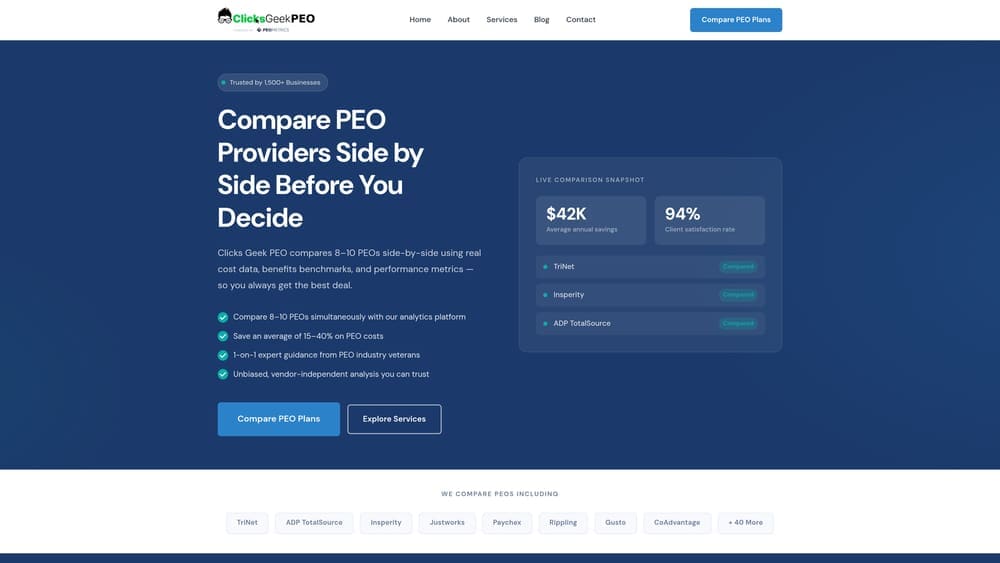
Clicks Geek PEO Comparison Platform is an independent resource that breaks down PEO pricing, services, and contract structures before you talk to sales teams.
Where This Tool Shines
Most PEO comparisons are thinly disguised lead generation funnels. This platform operates differently. You get side-by-side breakdowns of actual pricing models, administrative fee structures, and contract terms across major providers.
The transparency matters when you’re comparing proposals. PEO pricing isn’t standardized—some charge flat fees, others use percentage-of-payroll models, and many bury administrative costs in fine print. Having objective pricing analysis before renewal conversations gives you leverage.
Key Features
Provider Comparisons: Side-by-side breakdowns of services, pricing models, and contract structures across top PEO providers.
Pricing Transparency: Real cost analysis that identifies administrative markups and bundled fees most businesses miss.
Contract Analysis: Plain-language breakdowns of renewal terms, exit clauses, and service level commitments.
No Sales Pressure: Educational resources and comparison tools without forced sales calls or gated content.
Independent Partnership: Operates in partnership with PEO Metrics for data-driven provider evaluations.
Best For
CFOs and business owners evaluating or renewing PEO contracts who want objective cost analysis before engaging with sales teams. Particularly valuable if you’re comparing multiple providers or trying to understand why your current PEO costs more than expected.
Pricing
Free comparison resources and pricing analysis. No subscription fees or gated content.
2. Justworks
Best for: Startups and small businesses that want predictable PEO pricing without custom quotes
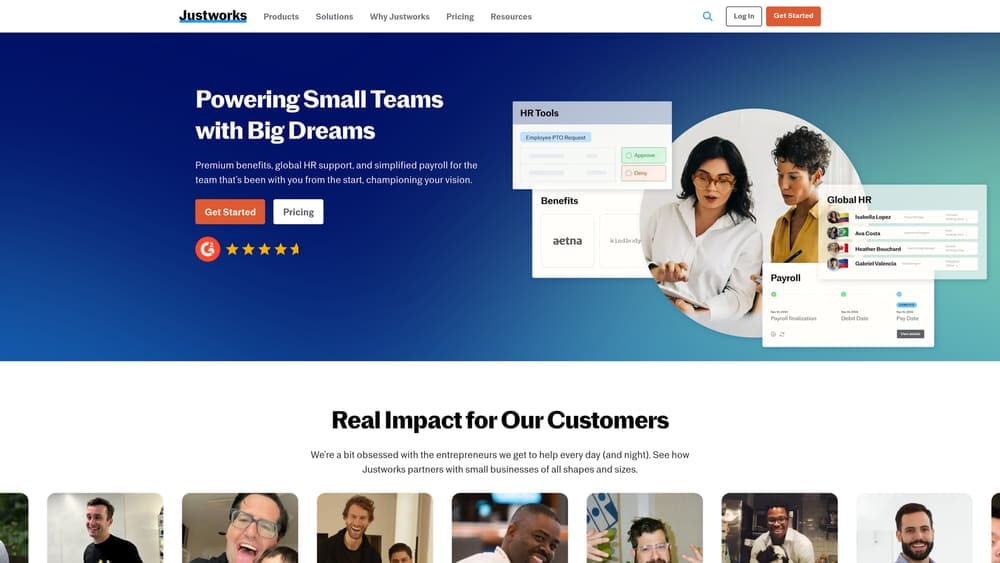
Justworks is a PEO built around transparent flat-rate pricing and simple benefits enrollment for growing teams.
Where This Tool Shines
Most PEOs hide pricing until you’re deep into the sales process. Justworks publishes flat per-employee monthly fees upfront. You know exactly what you’ll pay before the first conversation.
The simplicity extends beyond pricing. Benefits enrollment happens through a clean interface. Compliance tools are built in. Support is available 24/7. It’s designed for companies that want PEO services without complexity.
Key Features
Flat-Rate Pricing: Published monthly fees per employee with no percentage-of-payroll calculations or hidden administrative costs.
24/7 Support Access: Round-the-clock support team for payroll issues, compliance questions, and benefits administration.
Built-In Compliance Tools: Automated tax filings, workers’ compensation administration, and regulatory updates included in base pricing.
Simple Benefits Enrollment: Streamlined benefits selection process with access to national carrier networks through PEO group purchasing.
Payroll Integration: Full-service payroll processing included with direct deposit, tax withholding, and year-end reporting.
Best For
Companies with 5-75 employees that value pricing transparency and want comprehensive PEO services without navigating complex contracts. Works well for businesses without dedicated HR staff who need bundled compliance and benefits support.
Pricing
Starts at $59 per employee monthly for Basic tier or $99 per employee monthly for Plus tier with enhanced support and compliance features.
3. TriNet
Best for: Businesses in regulated industries needing vertical-specific compliance expertise
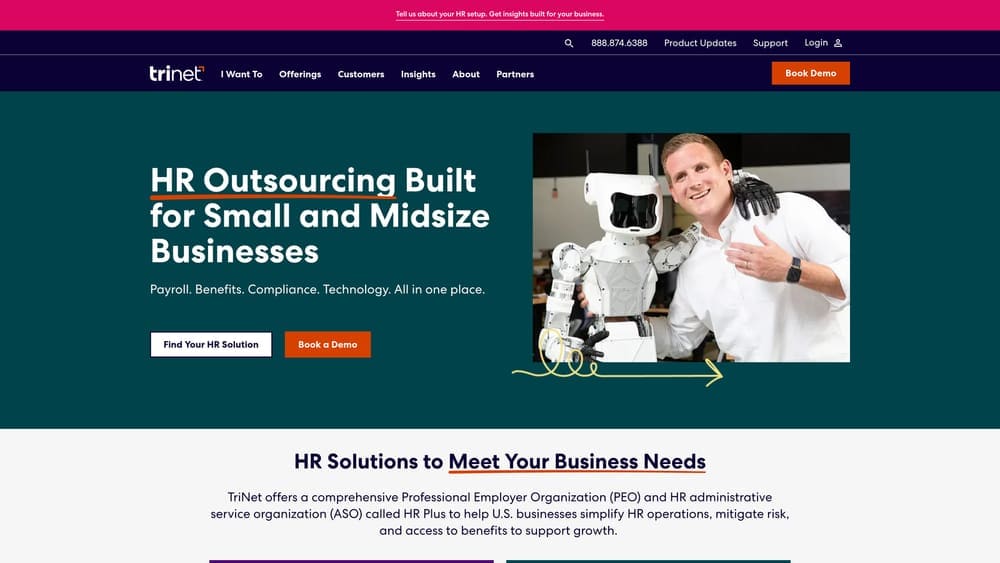
TriNet is a PEO offering industry-tailored HR solutions with specialized compliance guidance for sectors like technology, financial services, and healthcare.
Where This Tool Shines
Generic PEOs apply the same compliance framework across all clients. TriNet builds vertical expertise. If you’re in a regulated industry, you get compliance guidance specific to your sector—not generic HR advice.
The strategic HR consulting goes deeper than most PEOs. You’re not just getting payroll processing and benefits administration. You’re getting risk mitigation strategies and industry-specific employment practices that matter when you’re scaling in complex regulatory environments.
Key Features
Industry-Tailored Compliance: Vertical-specific guidance for technology, financial services, healthcare, nonprofits, and professional services sectors.
Risk Mitigation Services: Proactive compliance monitoring, employment practices liability support, and regulatory change management.
Strategic HR Consulting: Dedicated HR advisors with industry expertise who provide operational guidance beyond basic compliance.
Comprehensive Benefits Packages: Access to Fortune 500-level benefits through group purchasing with industry-appropriate plan designs.
Scalability Infrastructure: Systems designed to support companies from 5 to 500+ employees without platform migration.
Best For
Mid-sized companies in regulated industries that need more than basic PEO services. Particularly valuable for technology companies managing equity compensation, financial services firms navigating licensing requirements, or healthcare organizations dealing with credentialing complexity.
Pricing
Custom pricing based on headcount, industry vertical, and service requirements. Typically higher than flat-rate PEOs but includes specialized compliance support.
4. Rippling
Best for: Tech-forward companies wanting HRIS flexibility with optional PEO services
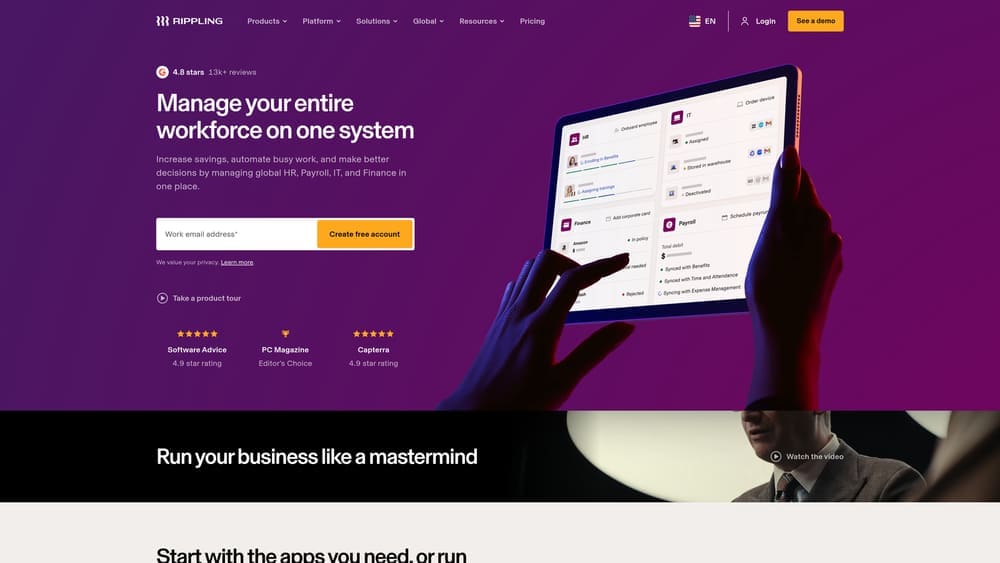
Rippling is a modular HR platform that unifies employee data across IT and HR systems with the option to add PEO services later.
Where This Tool Shines
Most platforms force you to choose: full PEO or standalone HRIS. Rippling lets you start with software and add PEO services when needed. The unified data model means employee information flows across payroll, benefits, IT provisioning, and device management without manual syncing.
The IT integration matters more than most HR platforms acknowledge. When you hire someone, Rippling can provision their laptop, grant application access, enroll them in benefits, and process payroll—all from one system. That workflow automation saves hours per new hire.
Key Features
Unified Employee Data: Single source of truth for employee information across HR, payroll, benefits, and IT systems.
IT and HR Integration: Automated device provisioning, application access management, and software license tracking tied to employee lifecycle.
Optional PEO Add-On: Start with HRIS functionality and upgrade to PEO services without changing platforms or migrating data.
Automated Workflows: Custom automation rules for onboarding, offboarding, role changes, and compliance tasks.
Global Payroll Support: International payroll processing and contractor payments across 100+ countries.
Best For
Technology companies and remote-first teams that need tight integration between HR and IT systems. Ideal for businesses that want HRIS control now but may need PEO services as they scale into new states or countries.
Pricing
Core platform starts at $8 per employee monthly. PEO services available as add-on with custom pricing based on headcount and service requirements.
5. BambooHR
Best for: Companies prioritizing employee experience and intuitive HR management
BambooHR is an HRIS platform focused on employee self-service and people management rather than administrative complexity.

Where This Tool Shines
Most HRIS platforms optimize for HR administrators. BambooHR optimizes for employees. The self-service portal feels consumer-grade—employees can update personal information, request time off, access documents, and view org charts without HR intervention.
The performance management tools integrate naturally with day-to-day work. Managers can set goals, document feedback, and run reviews without learning complex performance systems. It’s designed for companies that want better people management, not just better HR administration.
Key Features
Employee Self-Service Portal: Intuitive interface for personal data updates, time-off requests, document access, and benefits enrollment.
Performance Management Tools: Goal tracking, continuous feedback, and review cycles integrated with employee profiles.
Applicant Tracking System: Built-in recruiting tools with job posting, candidate pipeline management, and interview scheduling.
Time-Off Management: Automated PTO tracking, approval workflows, and balance calculations with calendar integration.
Reporting and Analytics: Customizable reports on headcount, turnover, compensation, and performance metrics.
Best For
Small to mid-sized businesses with 25-500 employees that have basic HR needs in-house but want better employee experience and manager enablement. Works well when you have HR expertise but need software to scale processes.
Pricing
Custom pricing based on headcount and modules selected. Typically ranges from $6-9 per employee monthly depending on feature requirements.
6. Gusto
Best for: Small businesses wanting payroll-first platform with HRIS features
Gusto is a payroll platform that expanded into HRIS functionality with benefits administration and compliance alerts.

Where This Tool Shines
Gusto started as payroll software and built HR features around that core. The result is exceptionally smooth payroll processing with HRIS capabilities layered on top. If payroll accuracy and ease of use matter more than advanced HR features, this approach works.
The benefits brokerage model is different from traditional HRIS platforms. Gusto helps you shop for health insurance and administers enrollment, but you’re not joining a PEO group plan. You maintain direct carrier relationships while Gusto handles the administrative work.
Key Features
Full-Service Payroll: Automated payroll processing with tax filing, direct deposit, and year-end reporting included in base pricing.
Benefits Administration: Health insurance shopping assistance, enrollment management, and carrier integration without PEO co-employment.
HR Tools and Compliance Alerts: Employee onboarding, document management, and automated alerts for tax deadlines and regulatory changes.
Contractor Payments: Separate payment workflows for 1099 contractors with automated tax form generation.
Time Tracking Integration: Optional time clock features that sync with payroll for hourly employees.
Best For
Businesses with 1-100 employees that need reliable payroll first and HR features second. Particularly strong for companies with mix of W-2 employees and contractors who want unified payment processing.
Pricing
Starts at $40 monthly base fee plus $6 per employee monthly. Additional costs for benefits administration and premium HR features.
7. Paychex Flex
Best for: Companies wanting flexibility to choose PEO or standalone HRIS
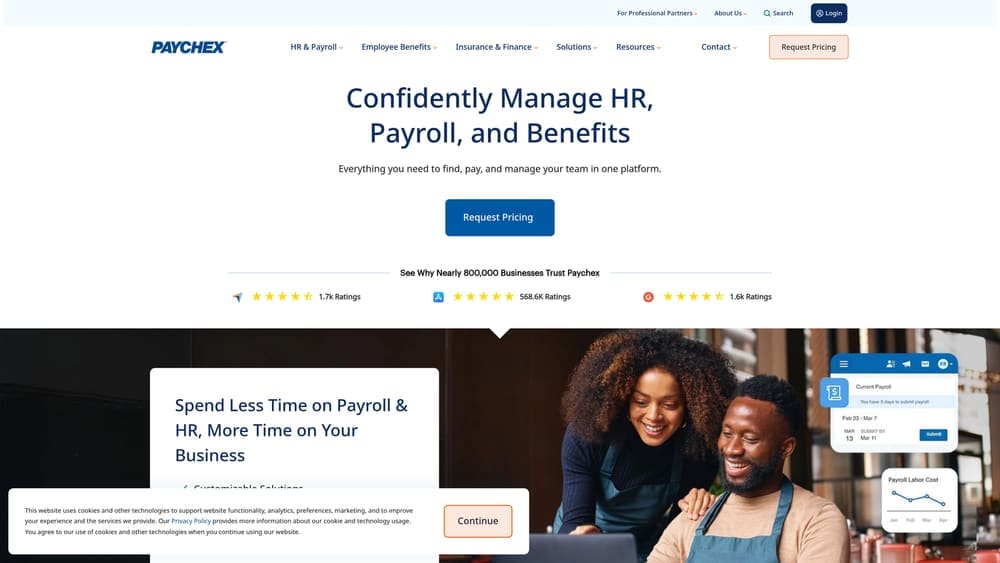
Paychex Flex is a scalable platform offering both full PEO services and standalone HRIS with payroll depending on your preference.
Where This Tool Shines
Paychex lets you choose your service model without changing platforms. Start with standalone payroll and HRIS, then migrate to PEO services if compliance burden increases. Or use PEO services in complex states while managing HR directly in others.
The dedicated HR support option bridges the gap between software-only and full PEO. You get access to HR advisors without co-employment structure. It’s useful when you need expertise occasionally but don’t want bundled PEO pricing.
Key Features
PEO or Payroll-Only Options: Choose full PEO co-employment or standalone payroll and HRIS based on your operational preferences.
Dedicated HR Support Available: Optional HR advisor access without full PEO commitment for compliance questions and employment guidance.
Retirement Services: 401(k) administration and fiduciary services integrated with payroll deductions.
Enterprise Compliance Tools: Multi-state tax management, labor law posters, and regulatory change tracking.
Scalability Across Models: Platform supports companies from 5 to 5,000+ employees with consistent user experience.
Best For
Businesses that want optionality between PEO and HRIS models or companies operating in multiple states with varying compliance complexity. Works well when you’re unsure which model fits long-term and want flexibility to adjust.
Pricing
Custom pricing based on service model selected, headcount, and geographic footprint. PEO services priced separately from standalone HRIS options.
8. Namely
Best for: Mid-market companies needing robust analytics and benefits administration
Namely is an HRIS platform built for companies with 50-1,000 employees that need comprehensive HR analytics and benefits management.
Where This Tool Shines
Namely’s analytics capabilities go deeper than most HRIS platforms. You can build custom reports on compensation trends, turnover patterns, performance distribution, and headcount planning without exporting to spreadsheets.
The benefits administration features are unusually comprehensive for an HRIS. You’re not just tracking enrollment—you’re managing carrier connections, handling qualifying life events, and running benefits analytics. It’s designed for companies that self-administer benefits rather than outsourcing to a PEO.
Key Features
Comprehensive HR Analytics: Custom reporting on compensation, performance, turnover, and workforce planning with visual dashboards.
Benefits Administration: Full benefits enrollment, carrier integration, COBRA management, and compliance reporting.
Payroll Processing: Integrated payroll with multi-state tax filing and direct deposit included in platform.
Talent Management Suite: Performance reviews, goal tracking, succession planning, and learning management in unified system.
Employee Engagement Tools: Surveys, recognition programs, and communication features to support culture initiatives.
Best For
Mid-market companies with internal HR teams that want enterprise-grade analytics and benefits administration without enterprise complexity. Particularly valuable for businesses self-administering benefits who need carrier integration and compliance tracking.
Pricing
Custom pricing based on headcount and module selection. Positioned for mid-market budgets, typically higher than small business HRIS platforms but below enterprise systems.
9. ADP (TotalSource PEO / Workforce Now HRIS)
Best for: Enterprise companies wanting migration path between PEO and HRIS models
ADP offers both full PEO services through TotalSource and standalone HRIS through Workforce Now, with migration capability between models.
Where This Tool Shines
ADP’s dual offering solves a common problem: companies outgrow PEO services but don’t want to change platforms. You can start with TotalSource PEO for compliance coverage, then migrate to Workforce Now HRIS as you build internal HR capacity—without data migration or system changes.
The global payroll capabilities matter for companies expanding internationally. ADP processes payroll in 140+ countries with local compliance expertise. You’re not cobbling together regional providers or managing multiple platforms for international teams.
Key Features
TotalSource for Full PEO: Comprehensive co-employment model with benefits, compliance, risk management, and dedicated HR support.
Workforce Now for HRIS: Standalone platform with payroll, benefits administration, talent management, and time tracking.
Migration Path Between Models: Ability to transition from PEO to HRIS or vice versa without changing platforms or losing historical data.
Global Payroll Capabilities: Multi-country payroll processing with local tax compliance and currency management.
Enterprise Compliance Infrastructure: Multi-state and international regulatory tracking with automated updates and filing support.
Best For
Larger companies with 100+ employees that need enterprise-grade infrastructure and want flexibility between PEO and HRIS models as business needs change. Strong fit for companies with international operations or complex multi-state compliance requirements.
Pricing
Custom enterprise pricing for both TotalSource PEO and Workforce Now HRIS. Pricing varies significantly based on headcount, geographic footprint, and service requirements.
Making the Right Choice
The PEO versus HRIS decision isn’t permanent. Many companies start with a PEO for compliance coverage and benefits access, then migrate to an HRIS as they build internal HR capacity. Others stay with PEOs indefinitely because the bundled services remain cost-effective relative to hiring HR staff.
Your headcount matters more than you think. Below 25 employees, PEOs often make sense—you get enterprise benefits and compliance expertise without hiring HR. Between 25-100 employees, the math gets murkier. HRIS platforms become cost-competitive, but you’re taking on compliance responsibility. Above 100 employees, most companies benefit from HRIS control unless they’re in heavily regulated industries or expanding internationally.
Consider your internal expertise honestly. If you don’t have HR experience and compliance mistakes create real risk in your industry, a PEO transfers that liability. If you have HR knowledge and want operational control, an HRIS gives you flexibility without co-employment constraints.
The hybrid models from Rippling and Paychex solve a real problem. You’re not locked into one approach. Start with software, add PEO services in specific states, or transition between models as needs change. That flexibility matters when you’re scaling unpredictably.
If you’re evaluating PEO options specifically, compare your options with objective pricing analysis before renewal conversations. Most businesses overpay due to bundled fees and unclear administrative markups. Understanding actual cost structures gives you leverage when negotiating or switching providers.