
Two mid-market PEOs, different strengths. CoAdvantage brings scale and national reach. Workforce Business Services offers regional focus and hands-on service. This comparison breaks down what actually matters: pricing structures, service models, contract terms, and which business profiles fit each provider. No fluff—just the decision factors you need to make the right call for your company.
1. CoAdvantage
Best for: Mid-sized businesses needing national coverage and integrated technology platforms
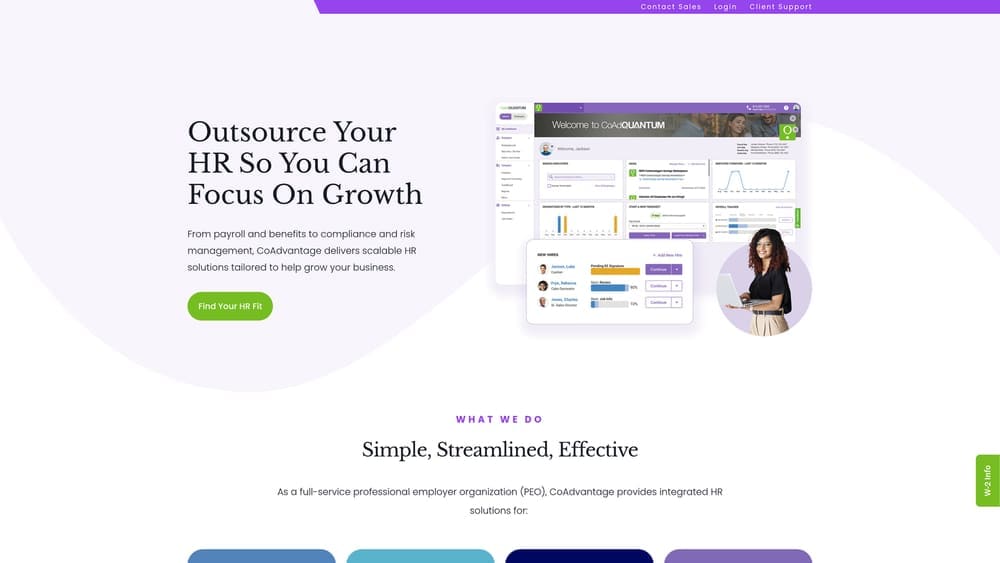
CoAdvantage is a national PEO provider offering bundled HR, payroll, benefits, and compliance services with emphasis on technology integration and scale.
Where This Tool Shines
CoAdvantage operates across multiple states, which matters if you’re hiring in different regions or planning to expand. Their technology platform integrates payroll, benefits administration, and compliance tracking in one system. This reduces the number of logins your team manages and creates a single source of truth for employee data.
The bundled service model works well for businesses that want predictable monthly costs without negotiating each service separately. Their benefits purchasing power comes from pooling thousands of employees, which can lower premium rates compared to what smaller companies access independently.
Key Features
National Coverage: Operations across multiple states with compliance expertise in each jurisdiction.
Integrated Technology Platform: Single system for payroll, benefits, time tracking, and HR documentation.
Bundled Service Packages: Pre-configured service tiers that include core HR functions without à la carte pricing.
Workers’ Compensation Programs: Managed programs with claims administration and safety consultation.
Benefits Administration: Access to larger group purchasing pools for health insurance and ancillary benefits.
Best For
Businesses with 50-500 employees operating in multiple states who value technology integration and prefer bundled pricing. Works well if you need consistent service delivery across different locations and want to minimize vendor management overhead. Less ideal if you require highly customized service configurations or prefer regional provider relationships.
Pricing
Typically percentage of payroll or per-employee-per-month (PEPM) model. Costs vary based on headcount, service tier selected, and industry risk factors. Expect bundled pricing with limited ability to remove individual services from the package.
2. Workforce Business Services
Best for: Small to mid-sized businesses prioritizing personalized service and flexible configurations
Workforce Business Services is a regional PEO provider emphasizing personalized service relationships and hands-on support for small to mid-sized businesses.

Where This Tool Shines
Workforce Business Services builds its model around dedicated account management. You get a specific contact who understands your business, not a rotating support team. This matters when you need quick answers during payroll processing or benefits enrollment periods.
Their regional focus means they understand local compliance requirements deeply and can adapt service configurations to match your specific operational needs. If you don’t need national infrastructure, you’re not paying for it. The flexibility extends to pricing—they’ll negotiate based on your business profile rather than forcing you into rigid service tiers.
Key Features
Regional Service Focus: Deep expertise in specific geographic markets with localized compliance knowledge.
Dedicated Account Management: Assigned relationship manager who handles your account directly.
Flexible Service Configurations: Ability to select specific services without mandatory bundling.
Personalized HR Support: Hands-on guidance for employee relations, policy development, and compliance questions.
Workers’ Compensation Administration: Claims management and safety program support tailored to your industry.
Best For
Businesses with 20-200 employees operating primarily in one or two states who value direct service relationships over technology platforms. Ideal if you need flexible service configurations and prefer working with the same contact consistently. Less suitable if you require multi-state coverage or prioritize technology integration above service accessibility.
Pricing
PEPM or percentage of payroll models, typically negotiable based on business profile and service selection. Pricing flexibility allows you to remove services you don’t need. Expect more transparent line-item breakdowns compared to bundled national providers.
Making the Right Choice
Both CoAdvantage and Workforce Business Services serve the mid-market PEO space, but they serve it differently. Your choice comes down to whether you prioritize national infrastructure and bundled scale or regional expertise and service accessibility.
CoAdvantage makes sense if you’re operating in multiple states, need integrated technology platforms, and prefer the simplicity of bundled pricing. Their scale delivers benefits purchasing power and consistent service delivery across locations. The tradeoff is less flexibility in service configuration and pricing negotiation.
Workforce Business Services fits businesses that value direct relationships and hands-on support. Their regional focus means deeper local expertise and more flexible service arrangements. You’ll likely get faster responses from your dedicated account manager compared to navigating a national provider’s support system. The limitation is geographic coverage—if you’re expanding nationally, you’ll eventually outgrow their service footprint.
Map your specific needs against each provider’s strengths. Consider headcount trajectory, geographic footprint, service priorities, and how much you value technology versus personal service relationships. Get itemized quotes from both and compare them line by line. Pay attention to what’s included in base pricing versus add-on fees.
Before you renew your PEO agreement, compare your options. Most businesses overpay due to bundled fees and unclear administrative markups. We break down pricing, services, and contract structures so you can make a smarter decision.
Neither provider may be the right fit depending on your circumstances. If you’re under 20 employees, you might not need a full PEO relationship yet. If you’re over 500 employees, you may have outgrown what mid-market providers offer. Evaluate whether unbundled HR services or an internal HR build makes more sense before committing to either option.