
You’re comparing CoAdvantage and NetPEO, but here’s what most comparison content won’t tell you upfront: you’re not actually comparing two PEO providers. CoAdvantage is a direct PEO that will co-employ your workforce and handle payroll, benefits, and compliance directly. NetPEO is a broker—a matchmaking service that connects you with PEO providers from their partner network. They don’t provide PEO services themselves.
This fundamental difference changes everything about how you should evaluate them.
The decision isn’t really “which PEO is better?” It’s “do I want to work directly with a PEO provider, or do I want a broker to help me compare multiple options?” Your answer depends on factors most businesses don’t consider until they’re already locked into a multi-year agreement.
This guide breaks down the 7 decision factors that actually matter when you’re choosing between a direct provider relationship and a broker-assisted search. We’ll cover pricing transparency, service accountability, contract terms, and the operational realities that surface after you sign. No theoretical comparisons—just the practical considerations that determine whether you’re getting the right fit for your business and your employees.
Because the wrong choice doesn’t just cost money. It affects every employee interaction, every benefits question, and every compliance issue for the next 2-3 years.
1. Understand the Fundamental Model Difference First
Why This Matters More Than Features
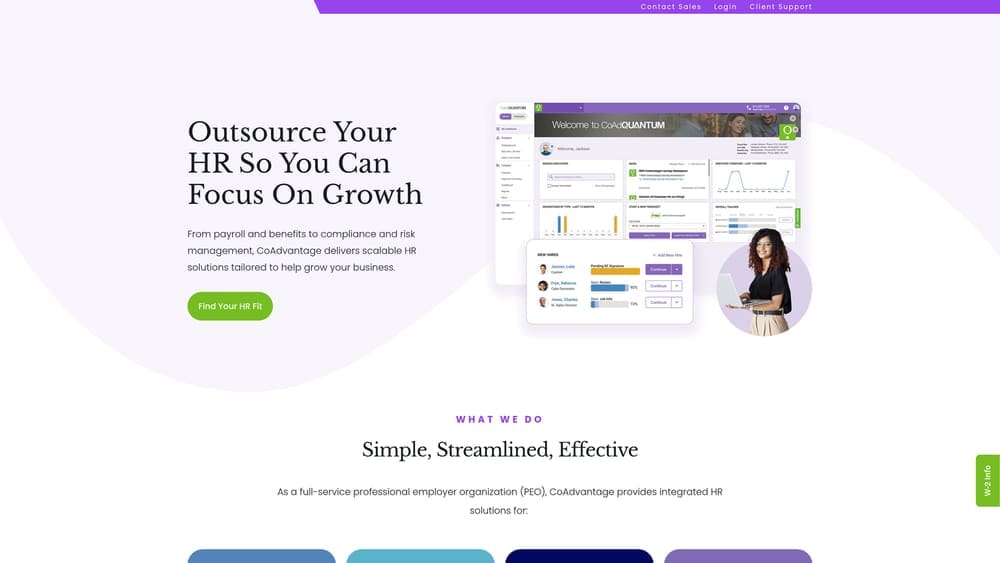
Before you compare pricing or services, you need to understand what you’re actually buying. CoAdvantage operates as an IRS-certified CPEO (Certified Professional Employer Organization). When you work with them, they become the employer of record for tax purposes. Your employees technically work for CoAdvantage on paper, while you maintain operational control. You negotiate terms directly with CoAdvantage, pay them directly, and resolve service issues directly with their team.
NetPEO operates as a broker or marketplace. They don’t co-employ your workforce. Instead, they assess your needs and connect you with PEO providers from their partner network. Think of them as a matchmaker—they facilitate introductions, but the actual PEO relationship exists between you and whichever provider NetPEO recommends.
How This Affects Your Decision Process
With CoAdvantage, you’re evaluating one provider’s specific services, pricing structure, technology platform, and support capabilities. Your research focuses on whether their offering matches your needs.
With NetPEO, you’re evaluating their ability to understand your requirements and match you with appropriate providers. You’ll still need to evaluate the actual PEO they recommend, but you’re adding an intermediary layer to the process.
The broker model can save time if you’re uncertain about which PEO fits your situation. The direct model eliminates the middleman if you already know you want a specific provider’s approach. Understanding how the co-employment model actually works helps clarify what you’re committing to with either path.
The Question You Should Ask First
Do you want to own the PEO selection process directly, or do you want expert guidance navigating multiple options?
If you have the bandwidth to research providers yourself and prefer direct relationships, the CoAdvantage-style direct engagement makes sense. If you’re overwhelmed by PEO options or want someone else to handle the comparison legwork, a broker like NetPEO offers efficiency.
Neither approach is inherently better. But mixing them up—expecting broker-level comparison from a direct provider, or expecting direct accountability from a broker—creates frustration.
2. Map Your Service Accountability Requirements
The Accountability Chain Question
When something goes wrong—a payroll error, a benefits enrollment issue, a workers’ comp claim problem—who do you call? More importantly, who is contractually responsible for fixing it?
With a direct PEO like CoAdvantage, accountability is straightforward. You have one contract with one entity. If payroll is late, you call CoAdvantage. If benefits aren’t processing correctly, you call CoAdvantage. If compliance documentation is missing, you call CoAdvantage. They own the outcome because they’re providing the service directly.
With a broker model like NetPEO, accountability splits. NetPEO is responsible for matching you with an appropriate provider. The actual PEO they recommend is responsible for delivering services. If something goes wrong, you might contact NetPEO first, but they’ll likely redirect you to the PEO. Or you might contact the PEO directly, bypassing NetPEO entirely.
Where This Becomes Operationally Important
The accountability structure matters most when things don’t go smoothly. If your assigned account manager leaves, who ensures continuity? If the technology platform changes, who manages your transition? If pricing increases unexpectedly, who do you negotiate with?
Direct relationships mean you negotiate and resolve issues with the entity providing the service. Broker relationships mean you may need to involve both the broker and the provider, depending on the nature of the issue. Understanding professional employer organization structure helps you anticipate these accountability dynamics.
Some businesses prefer the broker layer because it gives them an advocate when dealing with the PEO. Others find it adds unnecessary complexity to what should be straightforward service delivery.
Matching This to Your Operating Style
If your team values direct communication and clear ownership, you’ll likely prefer working straight with a provider. If you want someone in your corner who can help you switch providers if needed, the broker relationship offers flexibility.
Ask yourself: when service issues arise, do you want one phone number and one contract to reference, or do you want an intermediary who can help you navigate provider relationships?
3. Evaluate Pricing Transparency and Fee Structures
The Total Cost Question
PEO pricing is rarely simple, but adding a broker layer introduces additional cost considerations that aren’t always transparent upfront.
When you work directly with CoAdvantage, you’ll typically see per-employee-per-month (PEPM) administrative fees, workers’ comp pass-through costs, benefits costs, and potentially setup or technology fees. You negotiate these directly. A detailed PEO cost breakdown example shows what these line items actually look like in practice.
When you work through NetPEO, the broker typically earns commission from the PEO they place you with. This commission might be built into your quoted pricing, or it might come from the PEO’s margin. Either way, someone is paying for the broker’s service—and that cost doesn’t disappear.
What to Ask About Broker Compensation
If you’re considering the NetPEO route, ask directly: How does NetPEO get paid? Is their commission disclosed in your pricing? Does the PEO they recommend charge you more because they’re paying NetPEO a finder’s fee?
Some brokers are transparent about this. Others aren’t. The lack of clarity doesn’t necessarily mean you’re being overcharged, but it makes apples-to-apples comparison harder.
With direct providers, you’re negotiating fees directly. With brokers, you may be negotiating fees that include undisclosed commissions.
Comparing Total Cost of Ownership
Don’t just compare quoted PEPM rates. Factor in setup fees, technology costs, benefits markups, workers’ comp administration, and any ongoing consulting or support fees. Understanding professional employer organization cost structures helps you identify hidden expenses.
A direct provider might quote $150 PEPM all-in. A broker might connect you with a provider quoting $140 PEPM, but if the broker charges a separate consulting fee or the PEO builds in higher benefits markups to cover broker commission, your actual cost could be higher.
Get full cost breakdowns before you decide. Ask what’s included, what’s extra, and who gets paid for what.
4. Assess Your Geographic and Compliance Complexity
Why Your Footprint Matters
If you operate in multiple states with employees spread across different jurisdictions, compliance complexity increases significantly. State-specific employment laws, unemployment insurance rates, workers’ comp requirements, and payroll tax rules all vary.
CoAdvantage, as a direct PEO, maintains compliance infrastructure across the states they operate in. You’re relying on their specific compliance team, technology, and processes to handle multi-state requirements. Their capability is what you get. For businesses with distributed teams, reviewing PEO options for multi-state companies provides additional context.
NetPEO, as a broker, can theoretically match you with PEOs that specialize in your geographic footprint. If you operate in states where CoAdvantage has limited presence, NetPEO might connect you with a provider that has stronger infrastructure in those regions.
Industry-Specific Compliance Considerations
Certain industries face additional regulatory layers—healthcare, financial services, construction, manufacturing. Some PEOs specialize in specific industries and understand the nuances better than generalist providers.
If you’re in a highly regulated industry, ask whether CoAdvantage has deep experience in your sector. If they don’t, a broker might find you a PEO that does.
But specialized expertise comes at a cost. Industry-focused PEOs often charge premium pricing because they’ve invested in compliance infrastructure that generalist PEOs haven’t.
Matching Complexity to Model
If your compliance needs are straightforward—single state, common industry, standard workforce—either model works fine. The direct relationship is simpler.
If your compliance needs are complex—multi-state, regulated industry, unique workforce classifications—you might benefit from a broker’s ability to match you with specialized providers. But you’ll need to verify that the broker actually understands your complexity and isn’t just placing you with whoever pays the highest commission. Understanding compliance responsibilities helps you ask the right questions.
5. Factor in Your Benefits Negotiating Power
The Benefits Leverage Reality
One of the main reasons businesses use PEOs is access to better benefits pricing through pooled purchasing power. But the actual leverage varies significantly between providers.
CoAdvantage offers benefits through their established carrier relationships. The plans, pricing, and coverage options you’ll access are specific to their agreements. You’re joining their benefits pool, which includes all their other clients. The size and health profile of that pool determines your pricing.
NetPEO connects you with PEOs that each have their own carrier relationships and benefits pools. In theory, this gives you options to compare. In practice, you’re still limited to whatever the broker’s partner PEOs offer. Learning about professional employer organization benefits helps you evaluate what’s actually valuable.
Getting Real Benefits Quotes
Don’t accept generic claims about “access to Fortune 500-level benefits.” Get actual quotes for specific plans before you commit to either model.
Ask CoAdvantage: What are the exact medical plan options, carrier names, premium costs, deductibles, and coverage details for a company my size in my industry?
Ask NetPEO: Which PEO providers in your network offer the best benefits for my employee demographics, and can I see real quotes before deciding?
Benefits costs often represent 70% or more of total PEO expenses. A few percentage points difference in medical premiums can dwarf administrative fee savings.
Ongoing Benefits Management
Beyond initial pricing, consider how benefits are managed long-term. Who handles open enrollment? Who resolves employee benefits issues? Who negotiates renewals?
With a direct PEO, you’re working with their benefits team directly. With a broker model, you might have an additional layer between you and the benefits administrator, which can slow down issue resolution.
6. Consider Long-Term Switching Costs and Lock-In
The Exit Terms You Should Negotiate Upfront
PEO relationships rarely last forever. Businesses grow, needs change, pricing increases, and sometimes the fit just isn’t right. Before you sign with either CoAdvantage or a NetPEO-recommended provider, understand what happens if you need to leave.
What’s the contract term? Most PEOs require 1-3 year commitments. What are the termination provisions? Some contracts auto-renew unless you provide 60-90 days notice. What are the financial penalties for early termination? Knowing how to compare PEO contracts helps you spot unfavorable terms before signing.
With CoAdvantage, you’re negotiating exit terms directly with the provider. With NetPEO, the exit terms exist between you and whichever PEO they place you with—NetPEO typically isn’t part of that contract.
Data and System Migration
Switching PEOs means migrating payroll history, benefits data, employee records, and often integration connections with your accounting or HRIS systems. Some PEOs make this easy. Others don’t.
Ask upfront: If we decide to leave, what data do we get? In what format? How long does the transition typically take? What support do you provide during offboarding? Having a clear PEO exit strategy protects your business if the relationship doesn’t work out.
The broker model offers one potential advantage here: if your relationship with a NetPEO-recommended PEO isn’t working, you can theoretically go back to NetPEO and ask them to find you a different option. With a direct provider, you’re on your own to find the next solution.
The Real Cost of Switching
Beyond contract penalties, switching PEOs involves operational disruption. Employees need to re-enroll in benefits. Payroll schedules might shift. Integration work needs to be redone. The hidden cost is the time your team spends managing the transition.
Choose the model that minimizes the likelihood you’ll need to switch. If you’re confident in the direct provider’s fit, the simpler relationship reduces long-term complexity. If you’re uncertain and want flexibility, the broker model might offer easier pivots.
7. Match Decision Urgency to Evaluation Depth
The Timeline Question
How quickly do you need a PEO solution in place? Your timeline should influence which model makes sense.
If you’re facing an immediate deadline—your current PEO contract expires in 30 days, or you need benefits in place for new hires next month—the broker model can accelerate the process. NetPEO can present you with pre-vetted options faster than you could research and negotiate with multiple providers yourself.
If you have time to evaluate options thoroughly—3-6 months before you need to make a change—you can afford the direct provider research process. You’ll negotiate terms yourself, compare multiple PEOs independently, and make decisions without intermediary influence. Following a structured approach to how to choose a PEO ensures you don’t miss critical evaluation steps.
Depth vs. Speed Tradeoff
Brokers offer speed and convenience. You describe your needs, they present options, you choose. The process takes weeks instead of months.
Direct evaluation offers depth and control. You research providers at your own pace, ask detailed questions, negotiate terms directly, and understand exactly what you’re buying. The process takes longer but gives you more ownership.
Neither approach is wrong. But mismatching your timeline to your chosen model creates problems. If you rush a direct provider evaluation because you’re short on time, you’ll miss important details. If you drag out a broker process expecting deep customization, you’ll frustrate everyone involved.
What This Means Practically
If you’re renewing an existing PEO contract and have 90+ days to decide, take the time to evaluate CoAdvantage and other direct providers yourself. Compare pricing, test their technology, talk to references, and negotiate terms.
If you’re launching a new PEO relationship under time pressure, a broker like NetPEO can compress the selection timeline and present you with options that match your basic requirements. You’ll sacrifice some customization for speed.
Just don’t confuse the two approaches. Brokers aren’t designed for deep customization. Direct providers aren’t optimized for rapid deployment.
Making the Right Choice for Your Business
The CoAdvantage vs NetPEO decision isn’t about which option is objectively better. It’s about whether you want to work directly with a PEO provider or use a broker to access multiple options.
CoAdvantage makes sense if you value direct accountability, want to negotiate terms without intermediaries, and prefer a single long-term relationship with clear service ownership. You’re choosing a specific provider’s platform, team, and approach.
NetPEO makes sense if you want comparison shopping efficiency, need help navigating PEO options, or value having an advocate who can help you switch providers if the relationship doesn’t work. You’re choosing flexibility and guided selection over direct control.
The right fit depends on your operational complexity, decision timeline, comfort with intermediary relationships, and how you prefer to handle vendor management. Neither model is universally superior.
What matters most: understand what you’re actually buying before you sign. A direct PEO relationship and a broker-assisted placement are fundamentally different arrangements with different accountability structures, pricing models, and long-term implications.
Get full contract terms in writing. Verify benefits pricing with actual quotes. Understand exit provisions before you commit. And make sure the model you choose aligns with how your business actually operates.
Before you renew your PEO agreement, compare your options. Most businesses overpay due to bundled fees and unclear administrative markups. We break down pricing, services, and contract structures so you can make a smarter decision.