
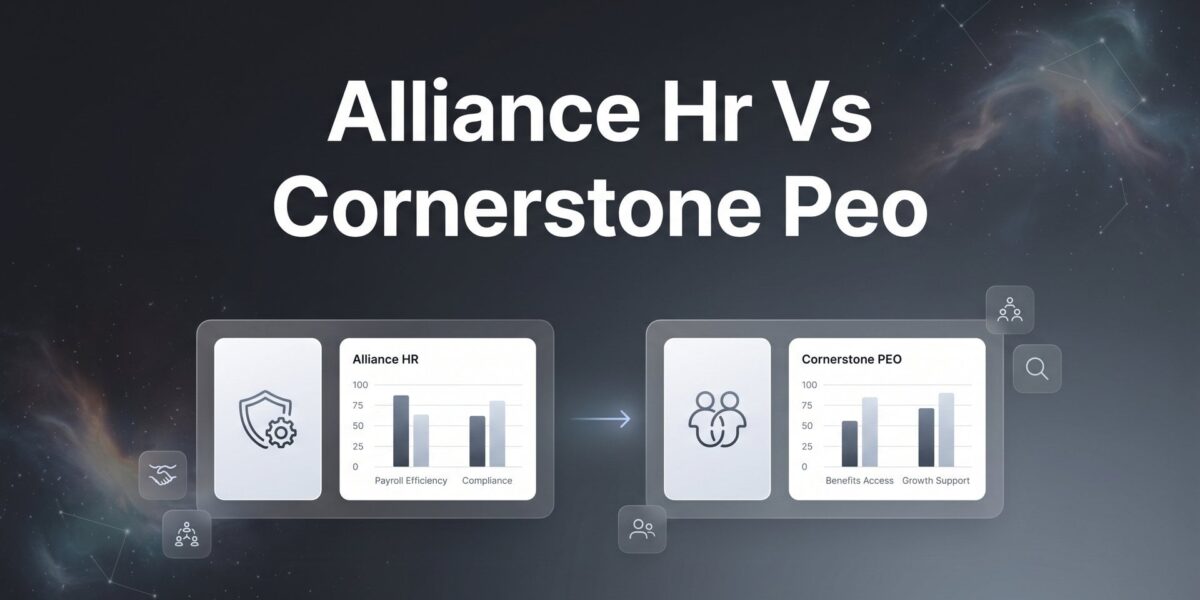
When you’re comparing Alliance HR and Cornerstone PEO, the marketing materials won’t tell you what you really need to know. Both providers serve small to mid-sized businesses with payroll, benefits, and compliance support—but the differences that matter most aren’t in the feature lists.
They’re in the contract details, pricing structures, service delivery models, and how each provider handles the situations that make or break a PEO relationship.
This comparison breaks down the specific factors that should drive your decision, based on how these providers actually operate rather than how they position themselves. If you’re evaluating these two providers or recently received renewal quotes from either, here’s how to cut through the noise and focus on what will impact your business day-to-day.
1. Geographic Coverage and State Compliance Capabilities
The Challenge It Solves
If you’re operating in multiple states or planning to expand, your PEO needs infrastructure that actually works across those jurisdictions. This isn’t just about whether they technically serve a state—it’s about whether they have established relationships with state agencies, understand local employment regulations, and can handle multi-state tax withholding without creating compliance headaches.
Alliance HR operates primarily as a regional PEO with concentrated presence in specific geographic markets. Cornerstone PEO positions itself as serving businesses across multiple states with broader national infrastructure.
What This Means for Your Decision
If you’re a single-state business with no expansion plans, regional depth often beats national breadth. A provider with strong local presence typically has better relationships with state unemployment offices, workers’ comp boards, and regulatory agencies. When issues arise, they get resolved faster.
Multi-state operations face different math. You need a provider that won’t force you to manage separate systems or workarounds for employees in different states. This includes unified payroll processing, consistent benefits access, and coordinated workers’ comp coverage across state lines. Understanding how a PEO works step by step can help clarify what infrastructure you actually need.
Implementation Steps
1. List every state where you currently have employees, plus any states where you might hire within the next 24 months.
2. Ask each provider specifically how they handle tax withholding, unemployment insurance, and workers’ comp in those exact states—not whether they “serve” them.
3. Request examples of how they’ve managed compliance issues in your specific states, particularly if you operate in states with complex employment regulations.
Pro Tips
Don’t assume national presence equals better service. Some regional PEOs deliver stronger support within their footprint than national providers spread too thin. The question isn’t how many states they cover—it’s how well they cover yours.
2. Pricing Model Transparency
The Challenge It Solves
PEO pricing creates confusion by design. Providers bundle services differently, use different fee structures, and often hide administrative costs inside percentage-of-payroll models. You’re comparing quotes that look different on paper but might cost nearly the same—or wildly different—once you account for how fees actually calculate against your specific payroll structure.
PEO pricing typically follows either per-employee-per-month flat fee models or percentage-of-payroll models. The structure that saves you money depends entirely on your wage distribution and headcount.
What This Means for Your Decision
PEPM models generally favor businesses with higher average wages. If you’re paying employees $80,000+ annually, a flat $150 per employee per month costs less than 2-3% of payroll. Percentage models may benefit those with lower wage structures, but they also scale up automatically when you give raises or hire higher-paid employees.
The real cost difference shows up in what’s included versus what’s billed separately. Some providers quote attractive base rates but charge extra for workers’ comp administration, benefits enrollment support, or compliance updates. Others bundle everything but start with higher headline pricing. If budget is a primary concern, explore strategies for finding an affordable PEO for small business operations.
Implementation Steps
1. Request itemized pricing showing base administrative fees, workers’ comp costs, benefits administration charges, and any technology or compliance fees separately.
2. Calculate total annual cost using your actual current payroll and headcount—don’t rely on the provider’s examples.
3. Ask what triggers price increases: is it headcount growth, wage increases, claims experience, or automatic annual escalators?
Pro Tips
The lowest quote isn’t always the best deal. A provider charging 2.5% of payroll with everything included might cost less than one charging 2% plus separate fees for workers’ comp admin, compliance support, and platform access. Do the math with your real numbers.
3. Benefits Access and Health Insurance Options
The Challenge It Solves
One of the main reasons businesses join PEOs is access to better health insurance rates through the PEO’s master policy. But not all PEOs deliver the same carrier networks, plan variety, or rate stability. Some offer genuinely competitive options. Others provide access to plans you could negotiate directly without meaningful savings.
The difference matters because health insurance represents your largest employee benefit cost, and switching PEOs mid-year can disrupt coverage.
What This Means for Your Decision
Ask which specific carriers each provider works with in your state and what plan types they offer. You need to know whether employees will have access to PPOs, HSA-compatible high-deductible plans, and networks that include their current doctors.
Rate stability matters as much as initial pricing. Some PEOs absorb part of annual increases to keep client retention high. Others pass through full carrier increases, which can mean 15-20% jumps in bad years. Ask about their rate increase history over the past three years. Similar considerations apply when comparing providers like Total HR Management vs Alliance HR.
Implementation Steps
1. Get specific carrier names and plan documents, not just general descriptions of coverage levels.
2. Compare the provider’s quoted rates against what you’re currently paying, adjusting for any differences in coverage levels or deductibles.
3. Ask how rate renewals work: do you get advance notice, what’s the typical increase range, and can you change plans mid-contract if rates spike?
Pro Tips
If your current health plan is working well and employees are satisfied, switching PEOs might create more disruption than savings. Calculate whether the administrative benefits justify forcing employees into new networks and dealing with mid-year coverage transitions.
4. Technology Platform and Day-to-Day Usability
The Challenge It Solves
You’ll interact with your PEO’s platform constantly—running payroll, managing time off, updating employee information, pulling reports, and handling benefits enrollment. A clunky system turns routine tasks into time sinks. A well-designed platform makes administration nearly invisible.
The gap between providers is significant. Some PEOs offer modern self-service portals with mobile access and integrations. Others rely on outdated systems that require contacting support for simple changes.
What This Means for Your Decision
Evaluate platforms based on tasks you’ll actually perform weekly. Can employees submit time-off requests and view pay stubs without calling HR? Can you process payroll changes, adjust deductions, and run reports without submitting tickets? Does the system integrate with your accounting software or require manual data entry?
Mobile access matters more than most businesses realize. If managers approve time off from their phones or employees check benefits details outside office hours, you avoid bottlenecks and reduce administrative interruptions. When weighing the pros and cons of PEO vs payroll company options, technology capabilities often tip the scale.
Implementation Steps
1. Request live platform demos showing your specific use cases: running payroll with multiple pay rates, managing PTO accruals, generating workers’ comp reports.
2. Ask about integrations with tools you currently use, particularly accounting systems, and whether those integrations require additional fees.
3. Test the employee self-service portal yourself—if it’s confusing during a demo, it’ll be worse under deadline pressure.
Pro Tips
Don’t accept canned demos. Insist on seeing the actual system you’ll use, with real scenarios that match your payroll complexity. If they can’t demonstrate something during the sales process, assume it doesn’t work smoothly in practice.
5. Workers’ Comp Administration and Claims Handling
The Challenge It Solves
Workers’ compensation represents significant cost and administrative burden for most businesses. PEOs promise to handle classification, premium calculation, claims management, and experience mod tracking. How well they actually deliver on that promise varies dramatically.
Poor workers’ comp administration shows up in misclassified employees, surprise audit bills, delayed claims processing, and experience mods that drift upward because nobody’s actively managing them.
What This Means for Your Decision
Effective workers’ comp management starts with accurate employee classification. Providers should review job descriptions and assign appropriate class codes, not just default to broad categories that inflate your premiums. They should also conduct regular payroll audits to catch misclassifications before annual audits create surprise bills.
Claims handling separates good PEOs from mediocre ones. When an employee gets injured, you need immediate support: helping with first report of injury, coordinating medical treatment, managing modified duty arrangements, and keeping claims costs contained through active case management. This is a key differentiator in comparisons like Workforce Business Services vs Alliance HR.
Implementation Steps
1. Ask how they assign workers’ comp class codes and whether they review classifications annually as job duties evolve.
2. Request their claims management process step-by-step, including response timeframes and who handles case management.
3. Get specifics on safety resources: do they provide on-site consultations, written safety programs, or just generic online materials?
Pro Tips
Your experience modification rate directly impacts workers’ comp costs for years after a claim. Ask whether the provider actively manages claims to minimize mod impact, or just processes paperwork. The difference can mean thousands in annual premium savings.
6. Contract Terms and Exit Flexibility
The Challenge It Solves
PEO contracts create long-term commitments with significant switching costs. If the relationship doesn’t work out, you need clear exit terms that don’t trap you in expensive service or create operational chaos during transition. Contract details around term length, renewal clauses, and termination requirements directly impact your negotiating leverage and exit options.
PEO contracts commonly include one to three year initial terms with auto-renewal clauses. Termination notice periods typically range from 30 to 90 days, and data portability varies significantly between providers.
What This Means for Your Decision
Shorter initial terms give you more flexibility but may come with higher pricing. Three-year contracts often include rate guarantees or caps on annual increases, which provides cost predictability but locks you in longer. The right choice depends on your confidence in the relationship and your tolerance for commitment. Learning how to compare PEO contracts systematically helps you avoid costly oversights.
Auto-renewal clauses are standard, but the notice period matters enormously. If you need to give 90 days notice before the contract anniversary, you’re making renewal decisions a full quarter before you have current pricing information. Some providers require notice 120+ days out, which forces early commitment before you can properly evaluate alternatives.
Implementation Steps
1. Review the exact termination notice requirement and mark your calendar for when that notice period begins relative to contract renewal.
2. Ask specifically about data portability: what employee information, payroll history, and benefits data you’ll receive, in what format, and within what timeframe.
3. Clarify any early termination penalties, final invoice timing, and whether you’re responsible for workers’ comp tail coverage or runout claims.
Pro Tips
Negotiate termination terms before signing, not when you’re trying to leave. Request contract language specifying data delivery formats, transition support expectations, and maximum timeframes for final invoicing. These details become critical leverage points if the relationship sours.
7. Service Model: Dedicated Support vs Shared Teams
The Challenge It Solves
When you need help with payroll corrections, benefits questions, or compliance issues, response time and support quality depend entirely on how the PEO structures client service. Some providers assign dedicated account managers who know your business. Others route requests through shared service teams where you explain your situation to different people each time.
The service model directly impacts how quickly issues get resolved and whether you’re constantly re-explaining your business context.
What This Means for Your Decision
Dedicated account managers provide continuity and familiarity with your business, but they’re only valuable if they’re actually responsive and empowered to solve problems. Some PEOs advertise dedicated support but assign one person to 50+ clients, making them effectively unavailable during busy periods.
Shared service teams can work well if the PEO has strong systems for documenting client details and routing requests to appropriate specialists. The tradeoff is less personal relationship but potentially faster response if you’re not waiting for one specific person’s availability. This service structure varies considerably across providers, as seen in comparisons like TriCore HR vs Cornerstone PEO.
Implementation Steps
1. Ask whether you’ll have a dedicated contact, how many clients they typically manage, and what their average response time looks like.
2. Request specifics on how urgent issues get handled: is there an escalation path, after-hours support for payroll emergencies, or direct contact information?
3. Talk to current clients if possible and ask about their actual experience getting support, not just what’s promised in the contract.
Pro Tips
Test responsiveness during the sales process. If it takes three days to get answers to straightforward questions before you’re a client, expect worse service after you’ve signed. Pay attention to whether the same person follows up or you’re handed off repeatedly.
Making the Right Choice
Choosing between Alliance HR and Cornerstone PEO comes down to your specific operational needs, not which provider has better marketing. If you’re a single-state operation with straightforward compliance needs, the provider with stronger regional presence and competitive pricing wins. If you’re managing multi-state employees or anticipating rapid growth, you need the provider with broader infrastructure and scalable systems.
Before signing with either, request a detailed fee breakdown showing all administrative costs, get specifics on your assigned support team structure, and review contract terms with particular attention to renewal and termination clauses.
The right PEO relationship should reduce your administrative burden without creating new operational headaches. That means transparent pricing, responsive support, and contract terms that don’t trap you if circumstances change.
Before you renew your PEO agreement, compare your options. Most businesses overpay due to bundled fees and unclear administrative markups. We break down pricing, services, and contract structures so you can make a smarter decision.