
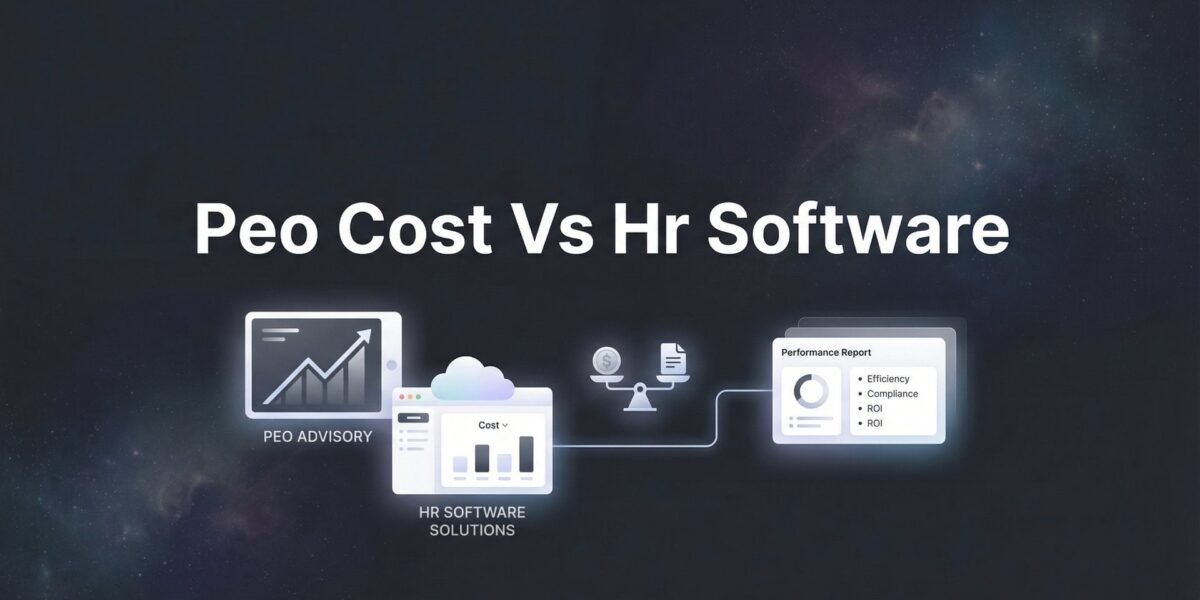
Choosing between a PEO and standalone HR software isn’t just a pricing decision—it’s a structural one. PEOs bundle payroll, benefits administration, compliance support, and HR services under a co-employment model. HR software gives you the tools to manage these functions yourself. The right choice depends on your headcount, risk tolerance, benefits needs, and how much HR bandwidth you actually have.
This comparison breaks down eight solutions across both categories, with real cost considerations and use-case guidance to help you make the call.
1. Clicks Geek PEO Comparison Platform
Best for: Businesses evaluating PEO options and needing transparent cost breakdowns before committing.
Clicks Geek PEO Comparison Platform is an independent comparison resource that helps you understand what you’re actually paying for when evaluating PEO providers.

Where This Tool Shines
Most businesses sign PEO contracts without understanding the full fee structure. Administrative fees, benefits markups, and percentage-of-payroll calculations can make true costs hard to compare.
This platform breaks down provider pricing side-by-side, explains contract terms, and helps you identify where hidden costs typically appear. It’s designed for business owners who want objective information before making or renewing a PEO decision.
Key Features
Side-by-Side Provider Comparisons: Compare multiple PEO providers on pricing structure, service scope, and contract flexibility.
Transparent Pricing Breakdowns: Understand administrative fees, benefits markups, and percentage-of-payroll models in plain terms.
Contract Term Analysis: Review typical contract lengths, renewal clauses, and exit conditions before you sign.
Independent Advisory: Get unbiased guidance without broker commissions influencing recommendations.
Educational Resources: Access guides on PEO cost structures, compliance considerations, and decision frameworks.
Best For
Small and mid-sized businesses evaluating their first PEO engagement, companies approaching PEO contract renewal, and CFOs or operations managers who need cost clarity before budget approval.
Pricing
Free comparison resources and educational content. No subscription fees or broker commissions.
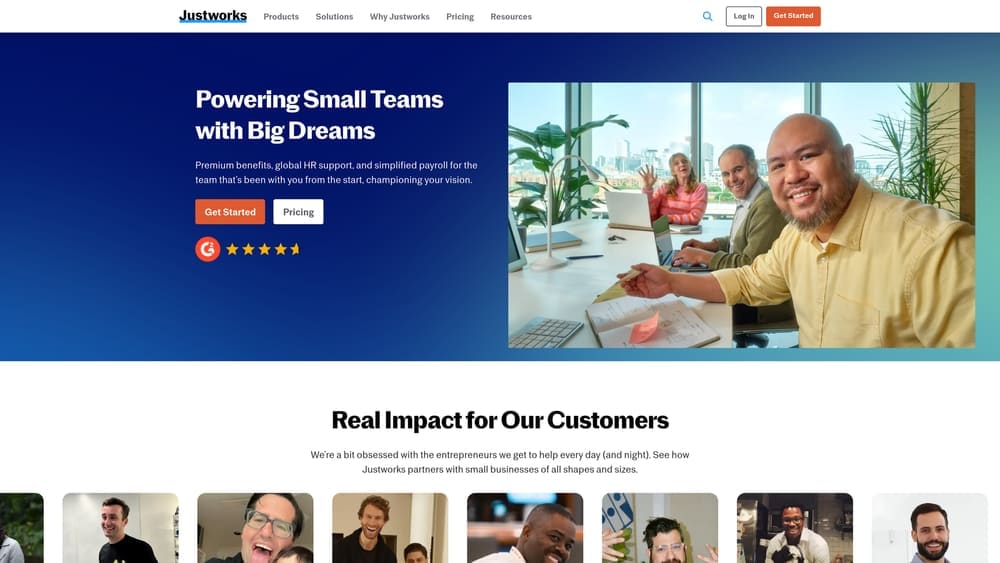
2. Justworks
Best for: Companies wanting PEO services with predictable, flat-rate monthly pricing instead of percentage-of-payroll models.
Justworks is a PEO that eliminates percentage-based pricing in favor of fixed monthly costs per employee.
Where This Tool Shines
Most PEOs charge a percentage of your total payroll, which means your costs fluctuate with raises, bonuses, and headcount changes. Justworks flips that model.
You pay a flat monthly rate per employee regardless of salary level. This makes budgeting easier and removes the penalty for compensating employees well. The platform handles payroll, benefits administration, and compliance support under a straightforward co-employment arrangement.
Key Features
Flat Monthly Per-Employee Pricing: Predictable costs that don’t increase when you give raises or pay bonuses.
Integrated Payroll and Benefits: One platform for payroll processing, health insurance, 401(k), and compliance filings.
Compliance Support Included: Workers’ comp, unemployment insurance, and tax filing handled as part of the service.
Simple Onboarding Process: Quick setup with minimal paperwork compared to traditional PEO providers.
Employee Self-Service Portal: Team members manage their own benefits elections, tax forms, and PTO requests.
Best For
Companies with 10-100 employees who want PEO services without percentage-based pricing, businesses with high-earning employees where percentage models get expensive, and teams that value transparent cost structures.
Pricing
Starts at $59 per employee monthly for Basic tier or $109 per employee monthly for Plus tier with expanded HR support.
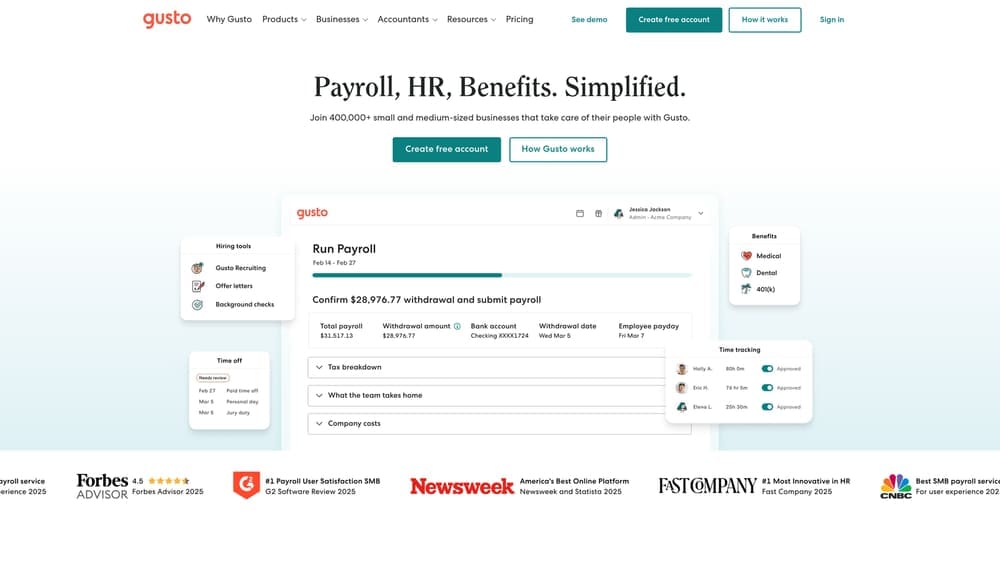
3. Gusto
Best for: Small businesses wanting payroll and HR software without committing to full PEO co-employment.
Gusto is an HR and payroll platform that gives you the tools to manage functions internally while offering optional benefits administration.
Where This Tool Shines
Gusto sits between basic payroll software and full PEO services. You maintain control over HR decisions and employment relationships while getting professional-grade payroll processing and benefits support.
The platform handles tax filings, direct deposits, and compliance alerts without requiring co-employment. Benefits administration is available if you want it, but you’re not locked into a PEO’s benefits packages or pricing structure.
Key Features
Full-Service Payroll Processing: Automated payroll runs, tax calculations, and direct deposits with same-day or next-day options.
Benefits Administration Available: Health insurance, 401(k), and commuter benefits management without PEO co-employment.
HR Resource Center and Compliance Alerts: Access to HR templates, policy guides, and deadline reminders for compliance tasks.
Integrations with Accounting Software: Connects with QuickBooks, Xero, and other accounting platforms for streamlined bookkeeping.
Contractor Payment Support: Manage W-2 employees and 1099 contractors in the same system.
Best For
Businesses with 5-50 employees who want better payroll tools but aren’t ready for PEO co-employment, companies with existing HR knowledge who need software support, and teams with mixed W-2 and contractor workforces.
Pricing
Starts at $40 monthly base fee plus $6 per employee monthly for the Simple plan. Higher tiers with benefits and HR advisory range from $12-18 per employee monthly.
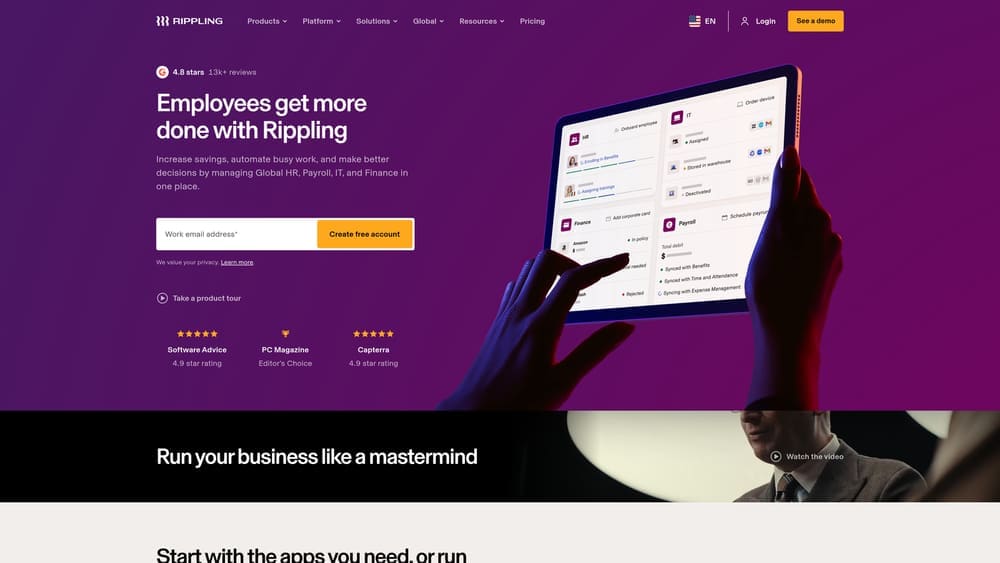
4. Rippling
Best for: Companies wanting modular HR software with the option to transition to PEO services later.
Rippling is a modular HR platform that lets you start with basic tools and add PEO services as your needs evolve.
Where This Tool Shines
Most platforms force you to choose between software-only or full PEO services upfront. Rippling lets you build your own stack.
Start with core HR and payroll, then add benefits administration, compliance modules, or IT device management as needed. If you eventually want full PEO support, you can transition without changing platforms. This flexibility works well for growing companies that aren’t sure how much HR outsourcing they’ll need long-term.
Key Features
Modular Pricing—Pay for What You Use: Add only the features you need instead of paying for bundled services you won’t use.
PEO Option Available for Full Outsourcing: Transition to co-employment model within the same platform when you’re ready.
IT and Device Management Integration: Manage employee laptops, software access, and app provisioning alongside HR functions.
Global Workforce Support: Handle international contractors and employees in multiple countries through one system.
Custom Workflow Automation: Build automated processes for onboarding, offboarding, and role changes.
Best For
Tech-forward companies that want control over their HR stack, businesses planning international expansion, and teams that need IT management integrated with HR functions.
Pricing
Starts at $8 per employee monthly for core HR features. Additional modules priced separately. PEO pricing varies based on services selected and employee count.
5. TriNet
Best for: Mid-sized companies needing industry-specific HR expertise and enterprise-grade benefits access.
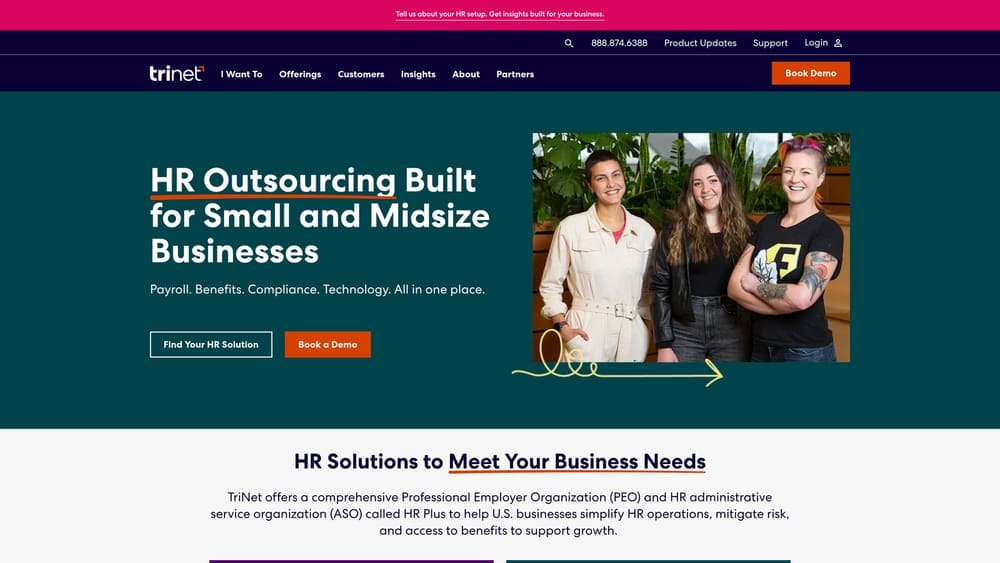
TriNet is a full-service PEO with specialized offerings for technology, financial services, healthcare, and other verticals.
Where This Tool Shines
TriNet organizes its services around industry verticals rather than generic HR support. You get dedicated HR consultants who understand your sector’s compliance requirements, talent challenges, and benefits expectations.
The benefits packages rival what Fortune 500 companies offer because TriNet pools thousands of employees across its client base. This matters if you’re competing for talent in industries where benefits packages influence hiring decisions.
Key Features
Industry-Vertical Specialization: HR consultants trained in your sector’s specific compliance and operational challenges.
Dedicated HR Consultants: Assigned support team familiar with your business rather than rotating call center representatives.
Enterprise-Grade Benefits Access: Health plans, 401(k) options, and insurance rates typically available only to large corporations.
Risk and Compliance Management: Co-employment structure transfers certain employment liabilities and compliance responsibilities.
Performance Management Tools: Goal tracking, review cycles, and compensation planning integrated into the platform.
Best For
Companies with 20-200 employees in competitive talent markets, businesses in highly regulated industries needing specialized compliance support, and teams where benefits quality directly impacts recruiting success.
Pricing
Custom pricing based on employee count, industry, and services required. Typically follows percentage-of-payroll model ranging from 3-8% depending on configuration.
6. BambooHR
Best for: Companies wanting people management software without payroll processing or PEO services.
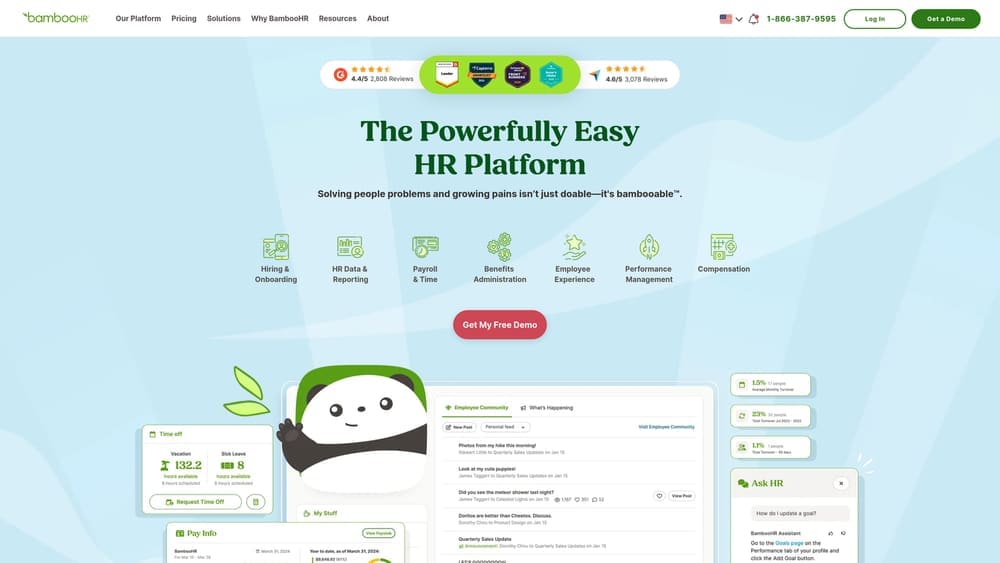
BambooHR is an HR information system focused on employee data management, workflows, and performance tracking.
Where This Tool Shines
BambooHR doesn’t try to be a payroll processor or PEO. It focuses on organizing employee information, streamlining HR workflows, and improving the employee experience.
This works well if you already have payroll handled through another provider and primarily need better tools for managing performance reviews, time-off requests, applicant tracking, and employee records. The platform excels at making HR processes less manual without requiring you to change your existing payroll or benefits setup.
Key Features
Employee Self-Service Portal: Team members update their own information, request time off, and access company documents.
Performance Management Tools: Structured review cycles, goal tracking, and feedback collection in one system.
Applicant Tracking System: Manage job postings, candidate pipelines, and interview scheduling without separate recruiting software.
Time-Off Management: Automated PTO accrual, approval workflows, and calendar visibility for managers.
Reporting and Analytics: Track headcount trends, turnover rates, and demographic data for compliance reporting.
Best For
Businesses with 25-500 employees who have payroll handled elsewhere, companies wanting to professionalize HR workflows without changing providers, and teams focused on improving employee experience and performance management.
Pricing
Custom pricing based on employee count and feature selection. Typically ranges from $6-9 per employee monthly depending on modules included.
7. Paychex Flex
Best for: Companies wanting flexibility to start with basic payroll and scale to full PEO services under one provider.
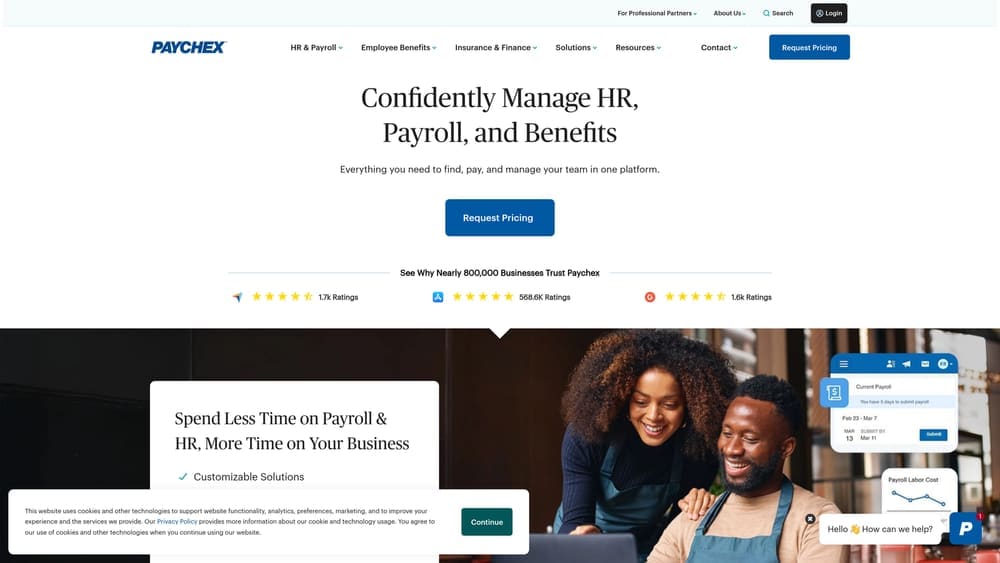
Paychex Flex is a scalable platform offering everything from payroll-only services to comprehensive PEO arrangements.
Where This Tool Shines
Paychex lets you start small and add services as your business grows without switching platforms. Begin with basic payroll processing, then layer in benefits administration, HR advisory, or full PEO co-employment when you’re ready.
This approach works well for businesses unsure how much HR support they’ll need long-term. You’re not locked into a PEO contract from day one, but the option exists when your complexity or risk tolerance changes.
Key Features
Payroll-Only to Full PEO Options: Choose your service level and upgrade as your needs change without migrating platforms.
Same Platform as You Scale: Employees and managers use consistent interfaces whether you’re on basic payroll or full PEO services.
Retirement Services Available: 401(k) administration and fiduciary support integrated with payroll processing.
HR Advisory Access at Higher Tiers: On-demand HR consultants available without committing to full PEO co-employment.
Time and Attendance Tracking: Optional modules for time clocks, scheduling, and labor cost management.
Best For
Growing companies that want flexibility to change service levels, businesses with seasonal workforce fluctuations, and teams that prefer working with established providers offering multiple service tiers.
Pricing
Payroll-only services start around $39 monthly base plus $5 per employee. PEO pricing custom based on services selected and typically follows percentage-of-payroll model.
8. Zenefits
Best for: Companies prioritizing benefits administration and insurance management over payroll complexity.
Zenefits is a benefits-first HR platform with integrated payroll and strong insurance administration capabilities.
Where This Tool Shines
Zenefits built its platform around benefits administration rather than adding it as an afterthought. The system excels at managing health insurance enrollments, carrier integrations, and compliance tracking for benefits programs.
If your primary HR challenge is benefits complexity rather than payroll processing, Zenefits offers stronger insurance administration tools than most competitors. The mobile-first design also works well for distributed teams where employees need self-service access from their phones.
Key Features
Benefits Administration Focus: Streamlined enrollment, carrier integrations, and compliance tracking for health, dental, and vision plans.
Integrated Payroll Available: Basic payroll processing included, though not as feature-rich as dedicated payroll platforms.
Compliance Calendar and Alerts: Automated reminders for benefits deadlines, reporting requirements, and regulatory filings.
Mobile-First Employee Experience: Employees manage benefits, time-off, and personal information through well-designed mobile apps.
Broker Integration Support: Works with insurance brokers to coordinate benefits offerings and renewals.
Best For
Companies with 10-100 employees where benefits management is the primary HR burden, businesses with distributed or remote teams needing mobile access, and organizations working with insurance brokers who need integrated platforms.
Pricing
Starts at $8 per employee monthly for Essentials tier. Higher tiers with expanded HR features and advisory support range from $16-27 per employee monthly.
Making the Right Choice
The cost comparison between PEOs and HR software isn’t straightforward because you’re comparing different service models. PEOs typically run 2-12% of payroll but include benefits access, compliance support, and risk sharing through co-employment. HR software runs $6-25 per employee monthly but requires you to source benefits, manage compliance, and handle HR decisions internally.
For businesses under 20 employees with limited HR expertise, PEOs often deliver better total value despite higher sticker prices. The compliance support, benefits purchasing power, and liability transfer can outweigh the cost difference when you factor in the internal burden of managing these functions yourself.
For companies with existing HR capabilities who primarily need better tools, standalone software makes more sense. You maintain control over employment decisions, avoid co-employment complications, and pay only for the software features you actually use.
The decision also depends on your risk tolerance. PEOs transfer certain employment liabilities through co-employment arrangements, which matters if you operate in highly regulated industries or have significant compliance exposure. Software gives you tools but leaves the legal responsibility in your hands.
Before you renew your PEO agreement, compare your options. Most businesses overpay due to bundled fees and unclear administrative markups. We break down pricing, services, and contract structures so you can make a smarter decision.
Start by calculating your total HR burden—not just software costs, but the time your team spends on payroll, benefits, compliance, and employee questions. Then compare that against PEO pricing with full transparency on what’s included. The right choice depends on whether you’re buying tools or buying capacity.