

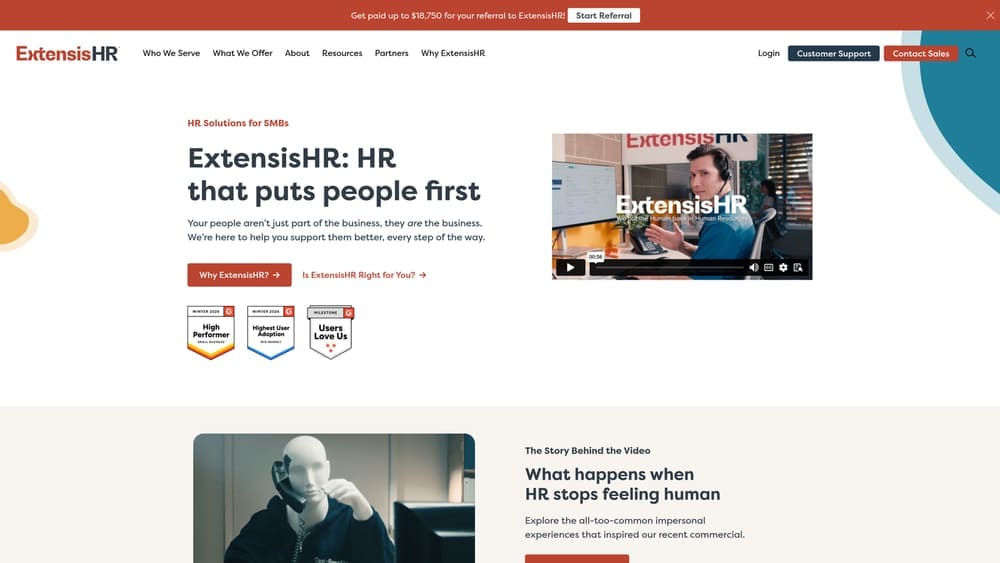
ExtensisHR positions itself as a tech-forward, benefits-heavy PEO with deep HR consulting capabilities. Questco takes a different approach—operational simplicity, transparent pricing, and no-frills service for businesses that want efficient payroll and compliance support without paying for features they won’t use. Both are IRS-certified PEOs (CPEOs), which means they assume tax liability and meet federal standards. But their service philosophies diverge significantly.
The real question isn’t which provider is objectively better. It’s which model matches your actual operational needs and whether you’ll use what you’re paying for. ExtensisHR makes sense if you need robust benefits access, strategic HR consulting, and a feature-rich platform. Questco fits businesses that prioritize cost predictability and straightforward execution over consulting depth.
This breakdown focuses on the decision factors that actually matter—not marketing claims. We’ll cover where each provider excels, where they fall short, and the specific scenarios where one clearly outperforms the other.
1. Benefits Access and Buying Power
The Challenge It Solves
Small and mid-sized businesses struggle to offer competitive benefits packages without paying enterprise-level premiums. A PEO’s pooled buying power can lower costs and expand carrier options—but only if the provider has genuine leverage with top-tier carriers and a benefits network that matches your workforce needs.
The difference between providers comes down to carrier relationships, plan diversity, and how much flexibility you have to customize offerings. Some PEOs lock you into limited carrier options. Others give you real choice but charge administrative fees that erase the savings.
The Strategy Explained
ExtensisHR emphasizes benefits administration as a core differentiator. They partner with major carriers and offer broader plan options, including voluntary benefits, HSA administration, and wellness programs. Their platform integrates benefits enrollment with payroll, which simplifies open enrollment and reduces administrative friction.
Questco offers solid benefits access but with less emphasis on customization. Their approach is straightforward—competitive medical, dental, and vision plans through established carriers, without the add-on wellness programs or voluntary benefits depth. If your goal is reliable coverage at predictable costs, Questco delivers. If you want to differentiate your benefits package to attract talent, ExtensisHR gives you more tools.
Implementation Steps
1. Request carrier lists and plan summaries from both providers. Ask specifically which carriers are available in your state and whether you’re locked into a single option or have genuine choice.
2. Compare employee contribution rates for equivalent coverage levels. A provider’s buying power only matters if it translates into lower premiums or richer benefits at the same cost.
3. Evaluate voluntary benefits and wellness programs only if you’ll actually use them. ExtensisHR’s broader offerings justify higher costs if they solve real retention or recruitment challenges. If your team won’t engage with wellness programs, you’re paying for unused services.
Pro Tips
Ask both providers how benefits pricing changes if your workforce grows or if you add locations. Benefits leverage can shift significantly with headcount changes. Also, confirm whether you can adjust carrier selections annually or if you’re locked in for the contract term. Flexibility matters when your workforce composition changes.
2. Pricing Transparency
The Challenge It Solves
PEO pricing is notoriously opaque. Some providers quote a percentage of payroll. Others use per-employee-per-month (PEPM) fees. Many bundle administrative fees, benefits markups, workers’ comp margins, and technology costs into a single number that’s impossible to validate. Without clear breakdowns, you can’t tell if you’re overpaying or compare proposals accurately.
The real cost isn’t the headline rate—it’s what’s included, what’s excluded, and how fees scale as your business changes. Hidden administrative markups and unclear cost allocation make it nearly impossible to budget accurately or evaluate alternatives. Understanding professional employer organization cost structures is essential before signing any agreement.
The Strategy Explained
Questco positions itself around pricing transparency. They typically use a flat PEPM fee structure, which makes budgeting straightforward. You know exactly what you’re paying per employee, and the fee doesn’t fluctuate with payroll changes. This model works well for businesses with stable headcount and predictable compensation structures.
ExtensisHR uses bundled pricing that combines payroll, benefits administration, HR consulting, and technology access into a single rate. This can be cost-effective if you use all the services, but it’s harder to isolate what you’re paying for each component. If you don’t need strategic HR consulting or advanced platform features, you’re subsidizing services you won’t use.
Implementation Steps
1. Request itemized pricing breakdowns from both providers. Don’t accept a single percentage or PEPM number. Ask specifically what’s included in the base fee, what costs extra, and how administrative markups are calculated.
2. Model pricing scenarios based on your actual payroll and headcount fluctuations. If your workforce is seasonal or commission-heavy, a percentage-of-payroll model can create unpredictable costs. Flat PEPM fees provide more stability.
3. Ask about hidden fees—implementation costs, annual platform fees, benefits enrollment charges, compliance updates, and exit fees. These can add 15-25% to the headline rate and aren’t always disclosed upfront.
Pro Tips
Get pricing in writing with specific fee breakdowns before you sign. Verbal quotes don’t hold up when invoices arrive. Also, ask how pricing changes if you add employees, expand to new states, or adjust benefits offerings mid-contract. Flexibility costs should be clear upfront, not discovered later.
3. Technology Platform and User Experience
The Challenge It Solves
Your PEO’s technology platform determines how efficiently your team handles payroll, benefits enrollment, time tracking, and reporting. A clunky platform wastes time and creates frustration. An overly complex system with features you don’t need adds cost without improving operations. The goal is matching platform capabilities to your actual usage patterns—not paying for enterprise-grade tools if you only need basic payroll execution.
The Strategy Explained
ExtensisHR integrates with isolved, a comprehensive HR technology platform that includes payroll, benefits administration, time and attendance tracking, performance management, and reporting tools. The platform is feature-rich and designed for businesses that want centralized HR operations. If your team will use advanced reporting, performance tracking, or integrated onboarding workflows, isolved delivers strong value.
Questco offers a simpler platform focused on core payroll and benefits administration. The interface is straightforward and easy to navigate, which reduces training time and minimizes user errors. If your primary need is efficient payroll processing and basic reporting, Questco’s platform handles it without unnecessary complexity. For businesses comparing technology-forward options, exploring how Questco compares to Rippling PEO can provide additional context.
Implementation Steps
1. Request demo access to both platforms before deciding. Test actual workflows your team will use daily—payroll entry, benefits changes, PTO requests, and report generation. Platform usability matters more than feature lists.
2. Evaluate integration capabilities if you use third-party tools like accounting software, applicant tracking systems, or expense management platforms. Ask specifically which integrations are native, which require custom development, and what ongoing costs apply.
3. Assess mobile functionality if your workforce includes remote or field employees. Platform access from mobile devices affects adoption and operational efficiency, especially for time tracking and PTO management.
Pro Tips
Don’t assume more features equal better value. If your team won’t use performance management tools or advanced analytics, ExtensisHR’s platform depth becomes a cost burden rather than an advantage. Match platform complexity to your actual operational needs and internal HR sophistication.
4. HR Consulting Depth vs Self-Service
The Challenge It Solves
Some businesses need strategic HR guidance—help with employee handbooks, performance improvement plans, termination procedures, and compliance interpretation. Others just need efficient payroll processing and basic support when issues arise. Paying for consulting depth you won’t use inflates costs. Choosing a provider without adequate support when you need it creates operational risk.
The decision comes down to whether you have internal HR expertise or if you’re relying on the PEO to fill that gap. If you don’t have an HR manager or experienced operations leader, consulting support becomes critical. If you do, you’re paying for redundancy.
The Strategy Explained
ExtensisHR emphasizes HR consulting as a core service. They assign dedicated HR consultants who help with policy development, compliance questions, employee relations issues, and strategic planning. If you’re navigating complex terminations, building performance management processes, or developing employee handbooks, ExtensisHR provides meaningful support.
Questco offers operational HR support focused on compliance and payroll execution. You’ll get help with wage and hour questions, benefits administration, and basic policy guidance. But if you need strategic HR consulting or hands-on support with employee relations challenges, Questco’s model assumes you’re handling that internally or working with an outside consultant.
Implementation Steps
1. Identify your actual HR support needs before evaluating providers. List the HR tasks you handle internally, the areas where you need guidance, and the frequency of complex employee relations issues. This clarity helps you match service depth to real requirements.
2. Ask both providers about response times, escalation processes, and access to senior HR consultants. Questco’s support model is efficient for routine questions. ExtensisHR’s consulting depth matters when you need strategic guidance or complex issue resolution.
3. Request examples of how each provider has helped clients in your industry navigate specific challenges—terminations, FMLA administration, ADA accommodations, or workplace investigations. Real case examples reveal service depth better than feature lists.
Pro Tips
If you have an experienced HR manager or operations leader, Questco’s self-service model saves money without sacrificing operational efficiency. If HR is handled by a finance person or office manager without deep expertise, ExtensisHR’s consulting support reduces risk and improves compliance outcomes.
5. Geographic Coverage and Multi-State Complexity
The Challenge It Solves
Operating in multiple states creates compliance complexity—different wage and hour laws, varying paid leave requirements, state-specific tax filings, and workers’ comp regulations. A PEO with deep expertise in your states reduces risk. A provider that’s strong in one region but unfamiliar with your footprint creates gaps that can lead to compliance violations.
The challenge is matching provider expertise to your actual locations and growth plans. If you’re expanding into new states, you need a PEO that can scale with you without requiring a provider switch.
The Strategy Explained
Questco started with a strong Texas presence and has expanded into surrounding states. Their expertise is deepest in Texas, Oklahoma, Louisiana, and Arkansas. If your operations are concentrated in these regions, Questco understands local compliance nuances and has established relationships with state agencies. For Texas-based businesses comparing regional options, the Questco vs PEO of Texas comparison offers useful insights. Their expansion into other states is more recent, which means less operational history in those markets.
ExtensisHR operates nationally with broader geographic coverage. They handle multi-state complexity across all 50 states, which makes them a stronger fit if you have dispersed locations or aggressive expansion plans. Their compliance infrastructure is built for complexity rather than regional concentration.
Implementation Steps
1. List your current locations and planned expansion states for the next 24 months. Ask both providers specifically about their experience in those states, how long they’ve operated there, and how many clients they support in each location.
2. Evaluate state-specific compliance support. Ask how each provider handles state unemployment tax filings, local wage and hour laws, and paid leave administration. Understanding PEO tax responsibilities helps you ask the right questions during provider evaluations. Generic answers suggest limited expertise. Detailed responses reveal operational depth.
3. Confirm workers’ comp coverage and pricing in each state where you operate. Workers’ comp costs vary significantly by state, and some PEOs have better leverage in certain markets. Regional providers often have stronger workers’ comp pricing in their core states.
Pro Tips
If your operations are concentrated in Texas and surrounding states with no immediate expansion plans, Questco’s regional expertise and pricing can outperform national providers. If you’re expanding into multiple new states or already operate in 10+ locations, ExtensisHR’s national infrastructure reduces operational friction.
6. Ideal Company Size and Growth Stage
The Challenge It Solves
PEOs have sweet spots—employee counts and growth stages where their service model delivers maximum value. Choose a provider built for 500+ employees when you have 25, and you’ll overpay for infrastructure you don’t need. Select a provider optimized for startups when you’re scaling rapidly, and you’ll outgrow their capabilities within 18 months.
The goal is matching provider scale to your current size and growth trajectory. If you’re stable at 40 employees with no expansion plans, your needs differ from a business growing from 30 to 100 employees in two years.
The Strategy Explained
Questco targets small to mid-sized businesses, typically in the 20-150 employee range. Their service model is built for businesses that need efficient payroll and compliance support without enterprise-grade complexity. If you’re in this range and not planning aggressive headcount growth, Questco’s pricing and service depth align well.
ExtensisHR serves a broader range, from small businesses up to 500+ employees. Their platform and consulting depth scale better as you grow. If you’re at 50 employees now but expect to reach 150 within two years, ExtensisHR’s infrastructure can absorb that growth without requiring a provider switch. Businesses evaluating enterprise-level alternatives often compare Paychex PEO vs ExtensisHR to understand how larger providers stack up.
Implementation Steps
1. Project your headcount realistically for the next 24-36 months. Consider hiring plans, seasonal fluctuations, and potential expansion. Share these projections with both providers and ask how their pricing and service model adapts.
2. Ask about minimum employee requirements and pricing tiers. Some PEOs have minimums that make them uneconomical for very small businesses. Others have tier structures where costs drop significantly at certain headcount thresholds.
3. Evaluate how each provider handles rapid growth. If you’re scaling quickly, you need a PEO that can onboard new employees efficiently, handle multi-state expansion, and adjust benefits offerings without creating operational bottlenecks.
Pro Tips
If you’re stable at 30-75 employees with predictable growth, Questco’s model keeps costs manageable without sacrificing service quality. If you’re in high-growth mode or expect significant headcount changes, ExtensisHR’s scalability reduces the risk of outgrowing your provider mid-contract.
7. Contract Terms and Exit Flexibility
The Challenge It Solves
PEO contracts often lock you in for 1-3 years with restrictive notice periods and unclear exit procedures. If the relationship doesn’t work—service quality declines, costs increase unexpectedly, or your business needs change—you need flexibility to switch providers without operational disruption or financial penalties.
The challenge is understanding what you’re committing to before you sign. Notice periods, data portability, client file access, and termination fees aren’t always disclosed clearly upfront. These terms determine whether you can exit cleanly or if you’re trapped in an underperforming relationship.
The Strategy Explained
Both ExtensisHR and Questco typically use annual contracts with auto-renewal clauses. The critical differences are notice periods, termination fees, and data access during transition. Some PEOs require 90-120 days’ notice to terminate, which means you’re paying for overlapping services while transitioning to a new provider. Others charge exit fees or withhold data access until final invoices are settled.
Before signing with either provider, read the contract terms carefully. Look specifically for notice period requirements, circumstances that trigger early termination fees, and how client data is handled during transition. Understanding workers compensation responsibilities is also critical since these obligations affect transition complexity. Vague language around these terms is a red flag.
Implementation Steps
1. Request contract samples from both providers before committing. Read the termination clause, notice period requirements, and any provisions around early exit fees. If the provider won’t share contract terms until you’re ready to sign, that’s a warning sign.
2. Ask about data portability and client file access. You need to know how payroll records, benefits information, employee files, and tax documents are transferred if you switch providers. Some PEOs make this seamless. Others create unnecessary friction.
3. Clarify auto-renewal terms and how to prevent unwanted contract extensions. Many PEO contracts auto-renew unless you provide written notice 60-90 days before the anniversary date. Missing that window locks you in for another year.
Pro Tips
Negotiate notice periods and exit terms before signing. Standard contracts favor the provider, but many terms are negotiable if you ask upfront. Also, document all verbal commitments in writing. If a sales rep promises flexibility that’s not in the contract, get it added as an amendment before signing.
Putting It All Together
The decision between ExtensisHR and Questco comes down to what you’re actually paying for and whether you’ll use it. ExtensisHR makes sense if you need robust benefits options, strategic HR consulting, and a feature-rich platform—and you’re willing to pay for that depth. Their model fits businesses with complex HR needs, multi-state operations, or aggressive growth plans that require scalable infrastructure.
Questco fits businesses that prioritize cost predictability, operational simplicity, and efficient support without paying for services they won’t use. If your operations are concentrated in Texas and surrounding states, your HR needs are straightforward, and you have internal expertise to handle strategic questions, Questco delivers strong value without unnecessary complexity.
Before signing with either provider, request itemized pricing, ask about contract flexibility, and talk to current clients in your industry. The right PEO isn’t the one with the best marketing—it’s the one that matches your actual operational needs.
Before you renew your PEO agreement, compare your options. Most businesses overpay due to bundled fees and unclear administrative markups. We break down pricing, services, and contract structures so you can make a smarter decision.