
ADP TotalSource and BBSI both position themselves as full-service PEOs, but they operate from fundamentally different service philosophies. ADP TotalSource leverages enterprise-grade technology platforms with support escalation models. BBSI deploys regional business partners who function more like fractional COOs embedded in your operations. The difference isn’t just operational—it affects how you’ll interact with your provider daily, how quickly you can resolve issues, and whether the relationship scales with complexity or headcount.
This matters because choosing the wrong service model creates friction that compounds over time. A technology-first platform works brilliantly if your team is comfortable navigating self-service tools and escalating when needed. A relationship-first model delivers value when you need strategic HR guidance beyond transactional support. Neither approach is inherently better—they’re optimized for different operational realities.
What follows are the decision factors that separate these providers in practice. We’re not comparing feature lists or repeating marketing claims. We’re examining the structural differences that determine whether a PEO fits how your business actually runs—not just your current headcount.
1. Service Model: Technology-First vs Relationship-First
The Challenge It Solves
Most PEO comparisons focus on what services are included rather than how those services are delivered. The delivery model determines your day-to-day experience more than the feature list. If you’re evaluating based on capabilities alone, you’re missing the operational reality of working with each provider.
The Strategy Explained
ADP TotalSource operates through a technology-first model. You access HR functions, payroll, benefits administration, and compliance tools through ADP’s platform ecosystem. Support comes through dedicated service teams, but the primary interface is digital. This works well if your team is comfortable with self-service tools and prefers on-demand access over scheduled check-ins.

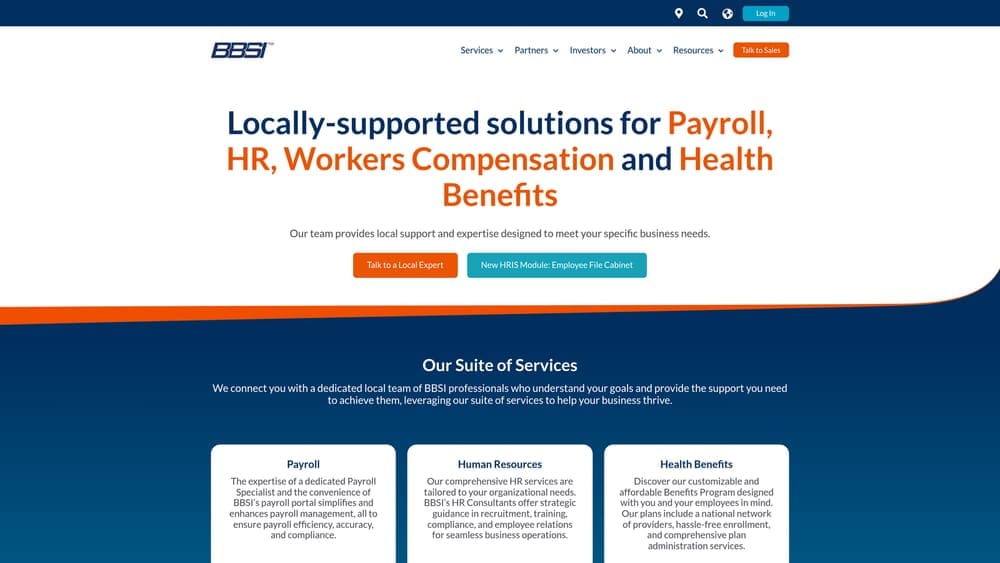
BBSI structures around regional business partners who function as strategic advisors. These partners engage more like fractional executives than account managers. They’re involved in workforce planning, operational decisions, and risk management—not just responding to support tickets. This model delivers more strategic engagement but requires you to value that relationship over platform independence.
Implementation Steps
1. Assess how your team currently handles HR and payroll tasks—do they prefer self-service platforms or direct advisor relationships?
2. Evaluate your internal HR capability—if you have experienced HR staff, technology-first may be sufficient; if HR is handled by operations or finance, relationship-first may fill gaps.
3. Consider your decision-making style—do you want a provider who advises proactively or one who executes what you direct?
Pro Tips
Ask each provider how service delivery changes as you grow. ADP’s model scales through platform access with tiered support. BBSI’s model scales through partner engagement, which means your relationship depth may shift with complexity rather than just headcount. Understanding the professional employer organization model helps clarify what to expect from each approach.
2. Geographic Coverage and State Compliance Depth
The Challenge It Solves
National reach sounds advantageous until you’re managing state-specific compliance issues and realize your provider’s expertise is thin in your operating states. Geographic coverage isn’t just about where a PEO can technically operate—it’s about where they have operational depth and regulatory experience.
The Strategy Explained
ADP TotalSource operates nationally with presence across all 50 states. This matters if you’re expanding into new markets or managing distributed teams across multiple states. Their compliance infrastructure is built to handle multi-state complexity at scale, supported by technology that tracks varying state regulations automatically.
BBSI concentrates primarily in Western states—California, Oregon, Washington, Utah, Arizona, Colorado, and several others. Their regional focus means deeper operational knowledge in those markets. If you operate primarily in BBSI’s footprint, you’re working with advisors who understand local regulatory nuances, industry-specific compliance issues, and regional market conditions.
Implementation Steps
1. Map your current and planned operating locations over the next three years—if expansion is national or into states outside BBSI’s footprint, ADP’s coverage becomes relevant.
2. Evaluate compliance complexity in your primary operating states—California employment law, for example, benefits from regional expertise rather than just national capability. Review how PEO compliance responsibilities are divided to understand what each provider handles.
3. Consider remote workforce distribution—if employees are scattered nationally, you need a provider with consistent service delivery across all locations.
Pro Tips
Don’t assume national reach equals better compliance support. A provider with concentrated regional presence often delivers more proactive guidance in complex states like California than a national provider spreading resources across 50 states. For businesses operating across state lines, explore PEO options for multi-state companies to understand your alternatives.
3. Pricing Structures and Hidden Cost Variables
The Challenge It Solves
PEO pricing looks straightforward during sales conversations, but cost structures differ significantly between providers. Understanding where costs can escalate—and what drives those increases—prevents budget surprises after you’ve committed.
The Strategy Explained
ADP TotalSource typically structures pricing as a per-employee-per-month (PEPM) rate. This creates predictability as you scale—your per-employee cost remains relatively stable. However, PEPM models can include tiered pricing based on headcount, and additional fees may apply for specific services, integrations, or compliance support beyond standard offerings.
BBSI often uses a percentage-of-payroll model. Your cost scales with total payroll rather than headcount, which means higher-paid employees cost more to cover. This can work favorably if you have lower average wages, but it creates variability as compensation increases. BBSI’s pricing also reflects their relationship-first model—you’re paying for strategic engagement, not just administrative services.
Implementation Steps
1. Model both pricing structures against your actual payroll data—run scenarios with current wages and projected increases to see where costs land. Understanding professional employer organization cost structures helps you compare apples to apples.
2. Identify what’s included in base pricing versus what triggers additional fees—benefits administration, compliance support, technology access, and workers’ comp administration should be clearly defined.
3. Understand renewal terms and how pricing adjusts year-over-year—some PEOs lock initial rates but increase significantly at renewal.
Pro Tips
Request detailed pricing breakdowns that separate administrative fees, benefits markups, workers’ comp costs, and state unemployment taxes. Many businesses focus on the headline rate without understanding how much they’re paying for each component. Transparency here matters more than the initial quote.
4. Workers’ Compensation Approach and Risk Management
The Challenge It Solves
Workers’ compensation represents one of the largest cost variables in a PEO relationship. How a provider structures coverage, manages claims, and approaches loss control directly impacts your total cost of employment—not just your premium.
The Strategy Explained
ADP TotalSource operates a master workers’ compensation policy covering all client companies. You’re pooled with other businesses in the PEO, which can benefit companies with poor claims history by accessing better rates through the master policy. However, you’re also affected by the overall pool’s performance. Claims management is handled through ADP’s infrastructure, which is process-driven and technology-enabled.
BBSI emphasizes loss control and risk management as core service components. Their business partners engage directly in safety programs, claims management, and workplace risk reduction. This approach works well if you have higher-risk operations or want to actively improve your safety record. BBSI’s model treats workers’ comp as a managed cost rather than just a transferred risk. Learn more about PEO workers compensation responsibilities to understand how coverage typically works.
Implementation Steps
1. Review your current workers’ comp experience modifier and claims history—if your record is poor, a master policy may offer immediate savings; if it’s strong, ensure you’re not subsidizing higher-risk businesses.
2. Assess your industry’s risk profile and whether proactive loss control would materially reduce claims—construction, manufacturing, and logistics benefit more from hands-on risk management than professional services.
3. Understand how each provider handles claims administration and return-to-work programs—reactive claims processing differs significantly from active case management.
Pro Tips
Ask how workers’ comp costs are allocated within the master policy. Some PEOs use experience-based pricing that adjusts your rate based on your claims performance, while others pool risk more broadly. If you’re committed to improving safety, choose a provider whose pricing model rewards that effort.
5. Technology Platform and Integration Capabilities
The Challenge It Solves
Your PEO doesn’t operate in isolation—it needs to connect with accounting systems, time tracking tools, expense management platforms, and other business software. Integration capabilities determine whether your PEO simplifies operations or creates data silos.
The Strategy Explained
ADP TotalSource benefits from ADP’s broader technology ecosystem. The platform integrates with ADP Workforce Now and connects to hundreds of third-party applications through ADP Marketplace. If you’re already using ADP products or need extensive integrations, this ecosystem advantage is significant. The platform is self-service focused, with mobile access and employee portals that reduce administrative workload.
BBSI operates a more focused technology platform designed around their service model. The system handles core PEO functions—payroll, benefits, compliance, HR administration—but doesn’t offer the same breadth of integrations. This works if you value simplicity over ecosystem connectivity, but it can create friction if you need tight integration with specialized business systems. Compare options using our guide to PEO HR technology platforms.
Implementation Steps
1. List your current business systems that need to exchange data with your PEO—accounting software, time tracking, applicant tracking, expense management, and industry-specific tools.
2. Verify integration availability and whether connections are native, API-based, or require manual data transfer—integration quality matters more than integration quantity. Understanding PEO payroll integration requirements helps you evaluate technical compatibility.
3. Evaluate your team’s technical capability—sophisticated platforms offer more flexibility but require more technical management.
Pro Tips
Test the actual user experience during evaluation. Request demo access and have your team navigate common tasks—running payroll, updating employee information, accessing reports. Platform sophistication means nothing if your team finds it difficult to use daily.
6. Contract Terms and Exit Flexibility
The Challenge It Solves
PEO contracts create significant operational dependency. Understanding terms before signing—especially around renewal, termination, and data portability—prevents costly surprises if the relationship doesn’t work or your needs change.
The Strategy Explained
Most PEO contracts run 12 months with automatic renewal unless you provide advance notice—typically 60 to 90 days before renewal. Termination outside the renewal window often triggers penalties or requires cause. ADP TotalSource contracts follow industry-standard structures, but their scale means less flexibility in negotiating non-standard terms. Review what to look for in a professional employer organization agreement before signing.
BBSI’s contracts operate similarly, but their relationship-first model can create more negotiation flexibility depending on your business partner and regional market. The risk with any PEO is operational disruption during transition—payroll, benefits, workers’ comp, and compliance all need to transfer cleanly if you leave.
Implementation Steps
1. Negotiate termination terms upfront—understand notice requirements, penalty structures, and what triggers early exit fees.
2. Clarify data ownership and portability—ensure you can extract employee records, payroll history, benefits data, and compliance documentation if you leave.
3. Map the transition process for worst-case scenarios—what happens to benefits coverage, workers’ comp policies, and payroll processing if you terminate mid-year?
Pro Tips
Request a detailed offboarding process document before signing. Knowing exactly how data transfers, benefits transition, and workers’ comp coverage continues during exit gives you leverage and reduces risk. Most businesses don’t think about leaving until they need to—by then, you’re negotiating from weakness.
7. Business Stage and Growth Trajectory Fit
The Challenge It Solves
Choosing a PEO based on current needs without considering your three-year trajectory creates misalignment as you grow. Some providers scale well with complexity, others with headcount, and some struggle with both.
The Strategy Explained
ADP TotalSource scales effectively with headcount and geographic expansion. Their technology infrastructure handles growth without requiring service model changes. This works well if you’re planning rapid hiring, multi-state expansion, or need consistent service delivery as you scale. However, strategic HR guidance doesn’t necessarily deepen as you grow—you’re still primarily interacting with a platform.
BBSI scales through relationship depth rather than just headcount. As your business becomes more complex—adding locations, entering new markets within their footprint, or facing operational challenges—your business partner’s engagement can adapt. This model works well for businesses that value strategic HR partnership over platform independence, but it may feel constraining if you prefer operational autonomy. Understanding how co-employment works helps clarify what each relationship structure means operationally.
Implementation Steps
1. Project your headcount and operational complexity over three years—if you’re planning aggressive growth, ensure your provider can scale without forcing a platform migration.
2. Assess whether your HR needs will become more strategic or remain transactional—if you’re building internal HR capability, technology-first may be sufficient; if HR will stay lean, relationship-first fills gaps.
3. Consider your exit strategy—if acquisition is likely, understand how each provider handles ownership transitions and whether PEO relationships complicate due diligence.
Pro Tips
Talk to businesses slightly larger than you currently are who use each provider. Understanding how service delivery changes as you scale reveals whether the provider grows with you or becomes a constraint. Most PEOs sell to your current state—evaluate based on where you’ll be in two years.
Putting It Into Practice
The choice between ADP TotalSource and BBSI comes down to service philosophy and operational fit—not feature lists. ADP delivers enterprise-grade technology with national scale. BBSI provides regional expertise through embedded business partners who engage strategically. Neither model is universally better.
Start by evaluating your service preference. If your team values platform independence and self-service tools, ADP’s technology-first approach aligns with that operational style. If you need strategic HR guidance and prefer advisor relationships, BBSI’s model delivers more engagement depth.
Then map your geographic footprint and growth trajectory. National expansion or distributed teams favor ADP’s coverage. Concentrated operations in Western states benefit from BBSI’s regional expertise.
Finally, model the economics. Run both pricing structures against your actual payroll data. Factor in workers’ comp costs, benefits markups, and administrative fees. The lowest headline rate rarely represents the lowest total cost.
Before you renew your PEO agreement, compare your options. Most businesses overpay due to bundled fees and unclear administrative markups. We break down pricing, services, and contract structures so you can make a smarter decision.