
You’re comparing ADP TotalSource and Engage PEO because you’ve outgrown basic payroll, need compliant benefits administration, and want someone else to handle the HR infrastructure. Both are legitimate options. ADP TotalSource brings the weight of a publicly traded enterprise with deep multi-state capabilities and standardized processes. Engage PEO positions itself as a mid-market specialist with more direct service relationships and flexibility.
But the real question isn’t which one ranks higher on some generic comparison chart. It’s which one fits your actual operational reality — your headcount, your growth trajectory, how you prefer to work with vendors, and what you’re willing to trade off.
This isn’t a “winner takes all” comparison. It’s a breakdown of the decision factors that will shape your day-to-day experience, influence your costs, and determine whether you feel supported or stuck in a year. No fluff. No manufactured rankings. Just the tradeoffs you need to weigh before signing anything.
If you need broader context on how PEO selection works before diving into this specific comparison, start with our guide on how to choose a PEO.
1. Company Size Sweet Spots
Where Each PEO Operates Best
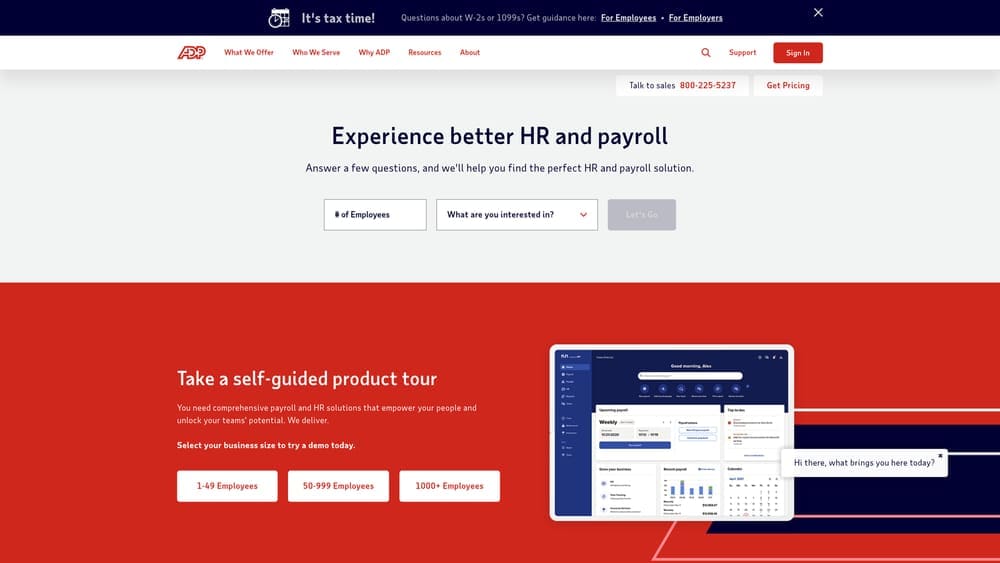
ADP TotalSource is built for scale. Their infrastructure, compliance systems, and service delivery model assume you’re operating with meaningful headcount — typically 50+ employees, with the strongest fit starting around 75-100. Below that threshold, you’re paying for enterprise capabilities you may not fully utilize, and you’ll likely experience more standardized service delivery.
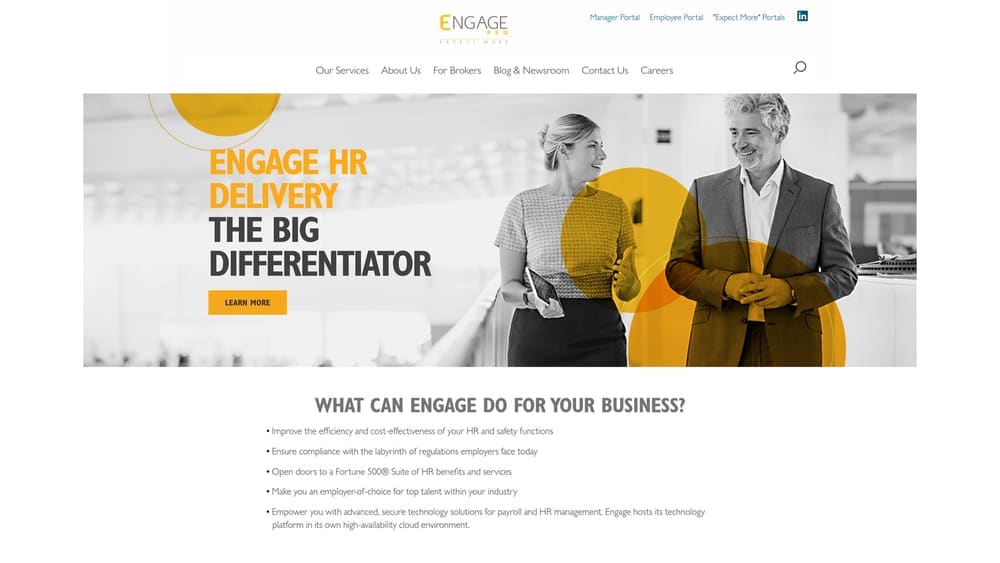
Engage PEO targets the 20-75 employee range more deliberately. Their service model is designed around businesses that need hands-on guidance but don’t require the full enterprise stack. If you’re at 15 employees, you’ll get more direct attention. If you’re pushing 150, you may start to feel the limitations of a smaller provider’s infrastructure.
What Happens Outside the Sweet Spot
With ADP TotalSource below 50 employees, you’re often assigned to a shared service model where your HR business partner manages multiple accounts. Response times stretch. Customization requests get deprioritized. You’re not a strategic account — you’re part of a portfolio.
With Engage PEO above 100 employees, you may encounter capacity constraints. Their technology platform may feel less robust for complex reporting needs. Multi-state expansion can become more manual. The personalized service that attracted you initially starts to thin out as their team stretches to support your growth.
The Practical Test
Ask each provider directly: What’s your median client size? How many clients does my assigned HR partner manage? What happens to my service level if I grow by 30% next year? The answers will tell you whether you’re in their operational comfort zone or an edge case they’ll struggle to serve well.
2. Pricing Structure Differences
How Each PEO Builds Their Fees
ADP TotalSource typically structures pricing as a percentage of payroll (often 4-8% depending on employee count and benefits selection) plus per-employee-per-month administrative fees. Their pricing tends to be more standardized with less room for negotiation on the base structure. You’re buying into an enterprise system with fixed cost allocations.
Engage PEO often uses a hybrid model — base administrative fees plus benefits markups. Their pricing can be more flexible, especially for businesses willing to negotiate or bring favorable employee demographics. Smaller PEOs sometimes have more discretion to adjust pricing to win or retain accounts.
Where Hidden Costs Emerge
With ADP TotalSource, watch for implementation fees, technology access tiers, and benefits administration markups that sit on top of the base percentage. Their workers’ compensation pricing is often bundled, which can be advantageous if your risk profile is high but expensive if you’re a low-claims business. Customization requests — like unique reporting or integrations — frequently trigger additional charges. Understanding these hidden PEO fees upfront can save you thousands annually.
With Engage PEO, scrutinize benefits markups carefully. Smaller PEOs sometimes build more margin into health insurance premiums or 401(k) administration because they lack the purchasing scale of enterprise providers. Administrative fees may look lower upfront, but total cost of ownership can shift depending on how they structure benefits pass-throughs.
The Real Cost Comparison
Don’t compare quoted percentages in isolation. Request a fully loaded cost projection based on your actual employee census, including benefits elections, workers’ comp estimates, and all administrative fees. The difference between a 5% and 6% payroll percentage means nothing if one provider is marking up your health insurance by 8% while the other negotiates direct carrier rates.
For a deeper breakdown of how PEO pricing actually works, see our guide on PEO cost structures.
3. Technology Platform Experience
Enterprise Infrastructure vs Streamlined Tools
ADP TotalSource gives you access to ADP’s broader technology ecosystem — robust reporting, integrations with enterprise accounting systems, mobile apps with deep functionality, and self-service portals for employees. The platform is powerful but comes with complexity. Expect a steeper learning curve for your team and more reliance on their support for advanced features.
Engage PEO typically uses a more streamlined platform designed for ease of use over feature depth. Onboarding is faster. Your team can navigate most functions without extensive training. But if you need custom reporting, API integrations, or advanced workforce analytics, you’ll hit limitations faster. Our breakdown of PEO HR technology platforms can help you evaluate what features actually matter.
What You’ll Actually Use
Most businesses use 20% of their PEO’s technology capabilities. If your needs are straightforward — payroll processing, benefits enrollment, basic compliance tracking — a simpler platform often delivers better day-to-day experience. You’re not hunting through nested menus to complete routine tasks.
If you’re running complex reporting for investors, managing multiple legal entities, or integrating HR data into business intelligence tools, ADP TotalSource’s infrastructure becomes more valuable. The question is whether you’ll actually leverage that depth or just pay for features you never touch.
Mobile and Employee Experience
ADP’s mobile app is generally more polished with better self-service functionality for employees. Engage PEO’s mobile experience tends to cover the basics — pay stubs, time off requests, benefits info — but may lack the refinement of a larger platform. If your workforce is primarily mobile or remote, test both platforms directly before deciding.
4. Service Model Reality
Dedicated vs Tiered Support
ADP TotalSource assigns HR business partners, but their workload and availability vary significantly based on your account size. Below 75 employees, expect shared support with longer response times during busy periods (open enrollment, year-end processing). Above 150 employees, you’ll typically get more dedicated attention and proactive outreach.
Engage PEO often provides more direct access to a smaller team that knows your business. You’re more likely to reach the same person consistently, and they’ll remember your specific situation without needing to review notes. But if your primary contact leaves or gets overloaded, backup support may be thinner.
What ‘Dedicated Support’ Actually Means
Having a named HR business partner doesn’t guarantee responsiveness. Ask both providers: What’s your HR partner’s typical client load? What’s the average response time for non-urgent requests? Who covers when my primary contact is unavailable? How often will we have scheduled check-ins? Our list of questions to ask a PEO provider covers these service-level inquiries in detail.
Smaller PEOs like Engage often deliver better relationship continuity. Larger PEOs like ADP TotalSource provide more systematic backup coverage but less personal familiarity. Neither is inherently better — it depends whether you value consistency of contact or depth of coverage.
Proactive vs Reactive Posture
ADP TotalSource’s service model tends to be more reactive at smaller account sizes. You’ll get compliance alerts and standard communications, but proactive strategic HR guidance requires you to initiate. Engage PEO’s smaller client base sometimes allows for more proactive outreach, but this varies significantly by individual account manager.
5. Benefits Access and Negotiating Power
Health Insurance and Carrier Options
ADP TotalSource leverages significant purchasing power across their large employee base. This can translate to better carrier access and more competitive rates, especially for businesses with challenging demographics or claims history. Their benefits team has established relationships with major carriers and can often secure options that smaller PEOs can’t access. ADP ranks among the largest PEO companies by worksite employees, which directly impacts their negotiating leverage.
Engage PEO works with regional and national carriers but with less purchasing leverage. For healthy employee populations in competitive markets, this may not matter much. For businesses with older workforces or pre-existing conditions, ADP’s scale can create meaningful cost advantages.
401(k) and Retirement Benefits
Both providers offer 401(k) administration, but the underlying platforms and fee structures differ. ADP TotalSource typically uses ADP Retirement Services with institutional pricing and robust plan options. Engage PEO partners with third-party 401(k) providers, which can offer flexibility but may involve additional vendor relationships to manage.
Compare total 401(k) costs carefully — including plan administration fees, investment expense ratios, and any revenue sharing arrangements. Larger PEOs sometimes negotiate better institutional pricing, but smaller PEOs may have more flexibility to switch providers if you’re unsatisfied.
Voluntary Benefits and Customization
ADP TotalSource offers a broader menu of voluntary benefits (supplemental life, disability, FSA/HSA options) with established carrier relationships. Engage PEO covers the core offerings but may have fewer options for specialized benefits. If your workforce values extensive voluntary benefits, ADP’s platform provides more choice. If you’re focused on core medical and retirement, the difference matters less.
6. Contract Flexibility and Exit Considerations
Initial Term and Auto-Renewal
ADP TotalSource typically requires a one-year initial term with automatic renewal unless you provide 60-90 days notice. Their contracts are more standardized with less room for negotiation on terms. Mid-contract termination often involves penalties or requires cause (service failures, compliance breaches).
Engage PEO may offer more flexibility on initial terms and renewal conditions, especially for businesses with seasonal workforce fluctuations or uncertain growth trajectories. Smaller PEOs sometimes accept shorter initial commitments or more favorable termination clauses to win accounts.
What Leaving Actually Involves
Exiting any PEO requires careful coordination — benefits continuity, payroll transition, workers’ comp policy transfer, and employee data migration. ADP TotalSource has established offboarding processes but can be rigid about timelines and data portability. Expect 60-90 days minimum for a clean transition. If you’re considering an exit, our PEO exit strategy guide walks through the full process.
Engage PEO’s smaller scale sometimes allows for more accommodating exit processes, but their systems may be less automated. You might get more hands-on help with the transition but also more manual work on your end. Either way, plan for complexity and don’t assume you can switch PEOs in 30 days.
Data Ownership and Portability
Clarify upfront what happens to your historical HR data, benefits records, and payroll history if you leave. ADP TotalSource provides data exports but in their system format, which may require conversion for your next provider. Engage PEO’s data portability depends on their underlying technology platform. Get written confirmation of what data you’ll receive and in what format before signing.
For more context on what to watch for in PEO agreements, see our breakdown of PEO contract terms.
7. Industry and Geographic Fit
Multi-State Complexity
ADP TotalSource handles multi-state operations more systematically. Their compliance infrastructure, state tax registrations, and workers’ comp coverage are built for businesses operating across numerous jurisdictions. If you’re in 10+ states or planning aggressive geographic expansion, their systems are designed to absorb that complexity without manual workarounds.
Engage PEO can manage multi-state clients but with more hands-on coordination required. For businesses in 3-5 states with stable footprints, this works fine. For rapid expansion or highly distributed workforces, you may encounter more friction as their team manually manages state-specific compliance requirements.
Industry-Specific Experience
ADP TotalSource serves clients across virtually every industry, which means broad experience but less specialization. If you’re in a highly regulated industry (healthcare, financial services, construction), their compliance systems are robust but may not offer industry-tailored guidance.
Engage PEO sometimes develops deeper expertise in specific industries based on their client concentration. If they have strong representation in your sector, you may benefit from more relevant guidance and peer benchmarking. Ask both providers: How many clients do you serve in our industry? What industry-specific compliance issues have you navigated recently?
Workers’ Comp and Risk Management
ADP TotalSource’s workers’ comp program is large-scale with established carrier relationships and claims management infrastructure. For high-risk industries, their safety resources and claims support can be valuable. For low-risk businesses, you may be subsidizing higher-risk clients in their pool. Understanding PEO shared liability helps clarify how risk pooling affects your costs.
Engage PEO’s workers’ comp pricing and risk management support varies based on their carrier partnerships and client mix. Smaller pools can work in your favor if the client base is low-risk, but you have less insulation from individual large claims impacting renewal pricing.
Making the Call
Neither ADP TotalSource nor Engage PEO is universally superior. The right choice depends on where you sit on the spectrum of company size, service expectations, technology needs, and operational complexity.
Lean toward ADP TotalSource if you’re 75+ employees, operating in multiple states, need enterprise-grade technology infrastructure, and value the stability of a large, established provider. You’ll trade some service personalization for systematic processes and deep compliance coverage.
Lean toward Engage PEO if you’re under 75 employees, want more direct service relationships, prefer flexibility over standardization, and don’t need the full enterprise stack. You’ll get more hands-on attention but potentially less technological sophistication and purchasing power.
The decision framework is straightforward: Request detailed quotes from both providers based on your actual employee census. Compare total cost of ownership — not just base percentages. Test their technology platforms directly. Speak with their proposed account teams and ask specific questions about response times, client loads, and service escalation processes.
Before you renew your PEO agreement, compare your options. Most businesses overpay due to bundled fees and unclear administrative markups. We break down pricing, services, and contract structures so you can make a smarter decision.
The PEO you choose will shape your HR operations, cost structure, and employee experience for at least the next year. Make the decision based on your specific operational reality — not generic rankings or sales pitches.