
When you’re comparing TriNet and Workforce Business Services, you’re really asking a bigger question: do I need a national PEO with enterprise-level tech, or a regional partner with hands-on service? Both models work, but for very different businesses. This comparison breaks down the real differences in pricing structure, service delivery, compliance support, and ideal company fit. No fluff, no sales pitch, just the information you need to make a decision that actually aligns with how your business operates.
1. TriNet
Best for: Mid-sized companies needing national compliance coverage and industry-specific HR expertise
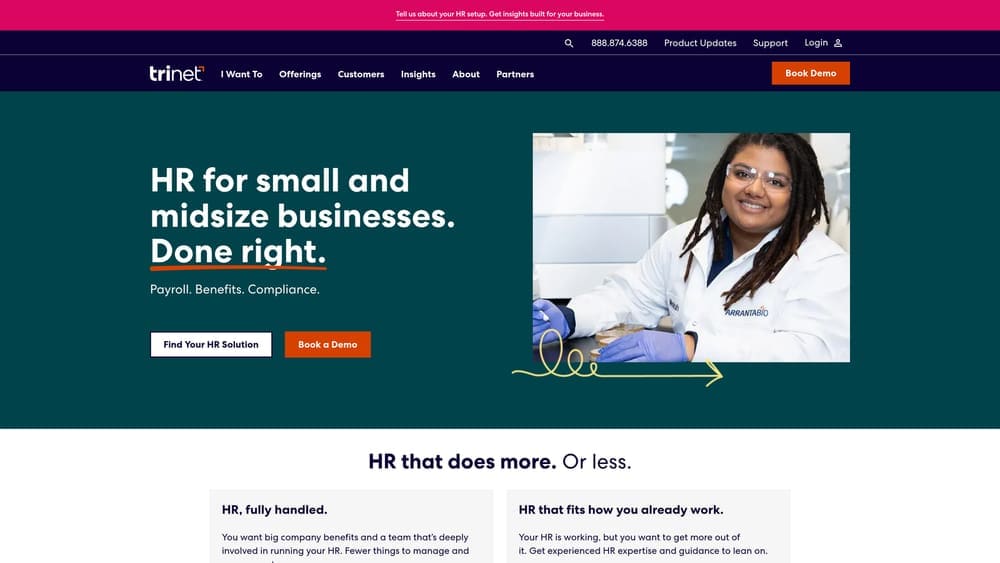
TriNet is a publicly traded national PEO serving approximately 22,000+ client companies across all 50 states, with particular strength in technology, financial services, and professional services sectors.
Where This Tool Shines
TriNet built its reputation on vertical specialization. Instead of treating every business the same, they package HR services around specific industry needs. If you’re running a tech startup or a professional services firm, you get compliance frameworks, benefit structures, and HR policies tailored to how those industries actually operate.
The platform handles everything through a single integrated system. Payroll, benefits administration, compliance tracking, and employee self-service all run through one interface. For businesses spread across multiple states, that national footprint eliminates the complexity of managing regional compliance variations on your own.
Key Features
Industry-Vertical Specialization: Pre-built HR frameworks designed for tech, finance, nonprofits, and professional services with industry-specific compliance templates.
Bundled Service Packages: All-inclusive pricing covers payroll, benefits, workers’ comp, compliance, and HR support without à la carte add-ons.
Enterprise Technology Platform: Self-service portal for employees with mobile access, automated workflows, and integrated reporting dashboards.
National Compliance Coverage: Handles multi-state employment regulations, tax filings, and labor law changes across all 50 states automatically.
Large Benefits Pool: Access to major carrier networks and Fortune 500-level benefit plans due to aggregated buying power across thousands of client companies.
Best For
TriNet works best for companies with 20 to 500 employees operating in multiple states. It’s particularly strong for businesses in regulated industries where compliance mistakes carry real financial risk. If you prefer a bundled approach where everything’s included and you don’t want to manage multiple vendors, TriNet’s model makes sense. Companies planning aggressive growth appreciate the scalability without needing to switch providers.
Pricing
Bundled per-employee pricing typically ranges from $150 to $250+ per employee per month depending on services, company size, and industry vertical. Pricing includes payroll, benefits administration, workers’ compensation, compliance support, and HR technology. No à la carte options—you pay for the full package whether you use every feature or not.
2. Workforce Business Services
Best for: Smaller businesses wanting personalized service and flexible pricing without paying for unused features
Workforce Business Services is a regional PEO offering customizable HR solutions with a focus on direct account management and hands-on support for businesses in specific geographic markets.

Where This Tool Shines
Workforce Business Services operates on the opposite end of the spectrum from national PEOs. You get a dedicated account manager who knows your business by name, not a ticket number in a queue. That relationship matters when you need immediate answers about a benefits question or a compliance issue that doesn’t fit a standard template.
The flexibility here is the real differentiator. You’re not forced into a bundled package with services you don’t need. If you only want payroll and workers’ comp but handle benefits internally, they’ll structure pricing around that. For businesses with tight margins, paying only for what you actually use makes a material difference in total cost.
Key Features
Dedicated Account Management: Direct access to a specific account manager who handles your questions without routing through call center tiers.
Flexible Service Customization: À la carte options let you choose specific services rather than paying for a bundled package with features you won’t use.
Regional Expertise: Deep knowledge of local compliance requirements, state-specific labor laws, and regional carrier relationships.
Personalized Onboarding: Hands-on implementation support tailored to your specific business operations rather than standardized onboarding workflows.
Competitive Pricing for Smaller Employers: Lower per-employee costs for businesses under 50 employees compared to national PEO bundled rates.
Best For
This model fits businesses with 5 to 75 employees operating primarily within a regional footprint. It’s particularly effective for companies that value direct relationships and need flexibility to adjust services as they grow. If you’re cost-conscious and don’t want to subsidize enterprise features you’ll never use, Workforce Business Services offers a more efficient pricing structure. Companies with straightforward HR needs who don’t require specialized industry verticals often find better value here.
Pricing
Customizable pricing structure based on services selected, often structured as a percentage of payroll or per-employee fees starting lower than national providers. Typical ranges fall between 2% to 8% of gross payroll or $75 to $150 per employee per month depending on service configuration. You pay only for the services you actually need rather than a bundled rate covering everything.
Making the Right Choice
Both TriNet and Workforce Business Services solve real problems, but for different types of businesses. TriNet makes sense when you need national scale, industry-specific compliance expertise, and prefer a bundled approach where everything’s handled under one roof. The technology platform is robust, the benefits pool is large, and you get Fortune 500-level infrastructure without building it yourself. You’ll pay more, but you’re buying comprehensive coverage and reduced operational complexity.
Workforce Business Services fits better when you want a regional partner who’ll know your business by name and customize services to what you actually need. The hands-on service model means faster response times and more flexibility to adjust as your needs change. For smaller businesses or those with straightforward HR requirements, the cost savings can be substantial because you’re not subsidizing enterprise features you won’t use.
The right choice depends on your headcount, growth trajectory, geographic footprint, and how much hands-on support you want. A 200-employee tech company expanding into multiple states will likely find TriNet’s bundled national model more efficient. A 30-employee regional business with stable operations might get better value and more responsive service from Workforce Business Services.
Before signing with either, get detailed pricing quotes based on your actual employee census and compare total cost, not just the per-employee rate they quote upfront. Look at what’s included versus what costs extra. Ask about contract length, termination clauses, and how pricing adjusts as headcount changes. Both providers will tell you they’re the right fit. Your job is to figure out which model actually aligns with how your business operates and where you’re headed in the next 24 months.
Before you renew your PEO agreement, compare your options. Most businesses overpay due to bundled fees and unclear administrative markups. We break down pricing, services, and contract structures so you can make a smarter decision.