
When you’re comparing TriNet and Premier Employer Services, you’re weighing two very different PEO approaches. TriNet is a national heavyweight with enterprise-grade technology and benefits access. Premier Employer Services operates as a regional player with hands-on service and flexible pricing. This comparison breaks down what actually matters for your decision: cost structures, service models, technology platforms, and the operational tradeoffs each brings.
We’ll cover where each provider excels, where they fall short, and which business profiles fit best with each option.
1. TriNet
Best for: Mid-sized companies needing enterprise-grade benefits, robust technology, and industry-specific solutions
TriNet is a publicly traded PEO (NYSE: TNET) serving approximately 24,000 client companies across all 50 states.
Where This Tool Shines
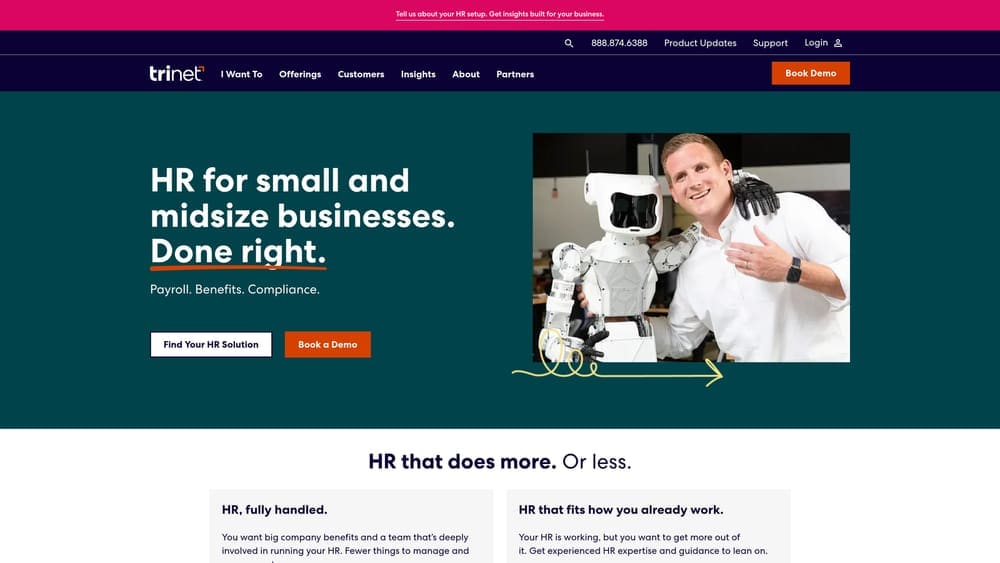
TriNet’s primary advantage is scale. As a national provider, they offer access to Fortune 500-level benefits packages that smaller companies couldn’t negotiate independently. Their health insurance options, retirement plans, and supplemental benefits rival what large corporations provide.
The technology platform is genuinely robust. Self-service functionality allows employees to manage benefits, access pay stubs, request time off, and update personal information without HR intervention. For growing companies tired of manual HR processes, this automation delivers real operational relief.
Key Features
Industry-Specific Vertical Solutions: TriNet structures services around specific industries including tech, life sciences, financial services, and professional services with compliance and benefits tailored to each sector.
Robust Self-Service Technology Platform: Comprehensive employee and manager portals reduce administrative burden and provide real-time access to HR data, payroll, and benefits information.
Access to Fortune 500-Level Benefits: Leverage TriNet’s buying power to offer health insurance, retirement plans, and supplemental benefits typically available only to much larger companies.
National Coverage Across All 50 States: Operate consistently across state lines without navigating different PEO relationships or compliance frameworks in each location.
IRS-Certified PEO (CPEO) Status: Provides tax liability protection—TriNet assumes responsibility for employment tax compliance and deposits, reducing your risk exposure.
Best For
TriNet fits mid-sized companies (typically 50-500 employees) that need sophisticated benefits to compete for talent, value technology over high-touch service, and can absorb premium pricing. Tech companies, life sciences firms, and professional services businesses with employees in multiple states get the most value from their industry-specific approach and national infrastructure.
Pricing
TriNet doesn’t publish pricing publicly. Quotes are customized based on headcount, industry, and services selected. Expect premium pricing in the PEO market—typically $150-250+ per employee per month depending on configuration. This positions them at the higher end compared to regional providers.
2. Premier Employer Services
Best for: Smaller businesses in the Southeast prioritizing personalized service and flexible pricing structures
Premier Employer Services operates as a regional PEO with a relationship-focused service model primarily serving the Southeast.
Where This Tool Shines
Premier’s differentiator is the service relationship. You’re not navigating a call center or ticketing system—you work with dedicated HR professionals who know your business. For owners who value responsiveness over technology bells and whistles, this matters significantly.
Pricing flexibility is another practical advantage. Premier structures contracts with more customization than national providers typically offer. You can often select à la carte services rather than paying for bundled features you won’t use. For cost-conscious businesses, this approach can deliver meaningful savings.
Key Features
Relationship-Focused Service Model: Work with dedicated HR professionals who know your business rather than navigating generic call centers or support ticket systems.
Flexible Pricing and Contract Structures: Choose from bundled packages or à la carte services based on actual needs rather than paying for features you won’t use.
Regional Expertise and Compliance Support: Deep familiarity with Southeast state regulations, local market conditions, and regional employment practices.
Personalized HR Guidance: Access to experienced HR advisors who provide practical guidance tailored to your specific situation rather than templated responses.
IRS-Certified PEO (CPEO) Status: Same tax liability protection as larger providers—Premier assumes responsibility for employment tax compliance and deposits.
Best For
Premier works well for smaller businesses (typically under 100 employees) operating primarily in the Southeast who prioritize service relationships over technology sophistication. Companies that need flexible pricing, personalized HR support, and don’t require multi-state complexity will find Premier’s approach more practical than national alternatives.
Pricing
Premier doesn’t publish standard pricing but generally offers more flexibility than national providers. Pricing structures include both bundled packages and à la carte options. Expect more negotiation room and customization compared to TriNet’s standardized approach, though exact costs depend on headcount and services selected.
Making the Right Choice Between TriNet and Premier
Both TriNet and Premier Employer Services serve legitimate needs in the PEO market—but they serve different business profiles.
TriNet makes sense when you need enterprise-grade benefits, sophisticated technology, and can absorb premium pricing. If you’re competing for talent in tech, life sciences, or professional services, the benefits access alone may justify the cost. Companies with employees in multiple states benefit from TriNet’s consistent national infrastructure. The technology platform genuinely reduces administrative burden for growing companies tired of manual HR processes.
Premier fits better when you prioritize relationship-based service, regional expertise, and pricing flexibility over national scale. Smaller businesses that don’t need multi-state coverage often find Premier’s personalized approach more practical than navigating a large provider’s systems. The ability to customize services and pricing can deliver real cost savings compared to paying for bundled features you won’t use.
The operational tradeoffs are straightforward. TriNet gives you more technology and benefits access but less service personalization and higher costs. Premier gives you more hands-on support and pricing flexibility but less technology sophistication and geographic reach.
Before signing with either provider, get quotes from both and at least one additional PEO. Pricing varies significantly based on headcount, industry, and specific services. What you’re quoted may differ substantially from what another similar business receives. Before you renew your PEO agreement, compare your options. Most businesses overpay due to bundled fees and unclear administrative markups. We break down pricing, services, and contract structures so you can make a smarter decision.
Ask specific questions about what’s included versus what costs extra. Many PEOs charge additional fees for workers’ compensation administration, benefits enrollment support, compliance assistance, and employee onboarding. These add-ons can increase your actual cost by 20-40% beyond the quoted per-employee rate.
The right PEO relationship can run for years—take the time to make an informed choice based on your actual operational needs rather than sales presentations.