
When you’re comparing Resourcing Edge and Workforce Business Services, you’re likely at a decision point—either evaluating PEOs for the first time or considering a switch. Both providers serve small to mid-sized businesses with payroll, HR, and benefits administration, but they approach the market differently.
This comparison breaks down where each PEO excels, where they fall short, and which business profiles align best with each option. No fluff, no sales pitch—just the decision factors that actually matter when you’re signing a multi-year co-employment agreement.
1. Resourcing Edge
Best for: Mid-sized businesses (25-150 employees) seeking dedicated account management and customizable HR solutions in the Southern/Central U.S.
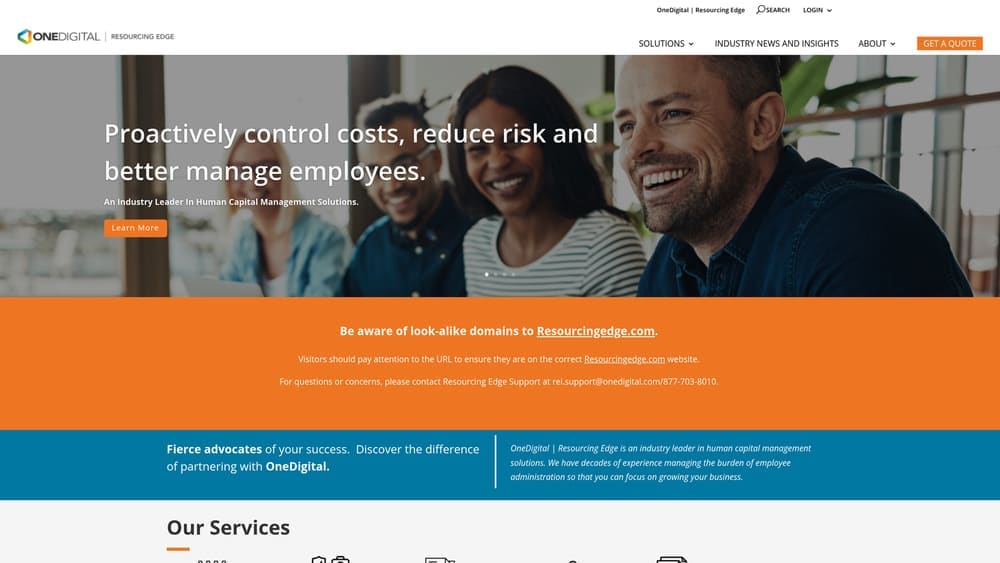
Resourcing Edge is a Texas-based PEO that positions itself as a high-touch provider with dedicated service teams and customizable HR packages.
Where This Provider Shines
Resourcing Edge differentiates itself through dedicated account management. You get assigned service teams rather than rotating through general support queues, which matters when you need consistent communication during benefits enrollment or compliance issues.
Their geographic focus in the Southern and Central U.S. means they understand regional labor laws, state-specific compliance requirements, and local benefits carrier relationships. If you operate primarily in Texas, Oklahoma, Arkansas, Louisiana, or surrounding states, this regional expertise translates to fewer compliance surprises.
Key Features
Dedicated Account Management Teams: Assigned HR professionals who learn your business operations and employee dynamics rather than generic call center support.
Customizable HR Service Packages: You can adjust service levels based on what you actually need—full HR outsourcing or specific compliance and benefits administration.
Regional Market Focus: Strong presence in Southern and Central states with established carrier relationships and local regulatory knowledge.
Mid-Market Specialization: Service model designed for businesses with 25-150 employees rather than trying to serve all headcount tiers equally.
Industry-Specific Experience: They work across multiple sectors but have developed particular expertise in construction, professional services, and light manufacturing.
Best For
Resourcing Edge works best for businesses that have outgrown basic payroll services and need more sophisticated HR support. If you’re managing 30+ employees across multiple states in the South/Central region and want consistent service relationships, this provider aligns with that operational profile. They’re less ideal if you’re under 20 employees or operate primarily outside their core geographic footprint.
Pricing
Resourcing Edge uses a percentage-of-payroll pricing model with custom quotes based on your actual employee count, industry risk classification, and service package selections. Pricing typically includes administrative fees plus workers’ compensation premiums. Get specific quotes based on your payroll data—not estimates—before comparing against other providers.
2. Workforce Business Services
Best for: Smaller businesses (10-75 employees) prioritizing straightforward core PEO services without extensive customization needs.
Workforce Business Services is a regional PEO focused on delivering core payroll, benefits, and compliance functions with a streamlined service approach.

Where This Provider Shines
Workforce Business Services keeps things straightforward. Their service model focuses on essential PEO functions—payroll processing, benefits administration, workers’ comp, and basic HR compliance—without layering in extensive customization options or premium service tiers.
This approach works well for smaller businesses that need reliable execution of core functions but don’t require dedicated account teams or complex HR consulting. If your priority is getting payroll right, maintaining compliance, and accessing group benefits at reasonable rates, their streamlined model delivers without unnecessary complexity.
Key Features
Streamlined Core PEO Services: Focus on payroll accuracy, benefits administration, and compliance fundamentals without extensive add-on service layers.
Small Business Market Focus: Service structure designed specifically for businesses with 10-75 employees rather than trying to scale across all company sizes.
Straightforward Service Delivery: Clear service expectations without complex tier structures or extensive customization options that complicate pricing.
Regional Coverage: Concentrated service area allows for more consistent execution within their operational footprint.
Benefits Access: Ability to offer group health insurance and other benefits that small businesses typically can’t access independently.
Best For
Workforce Business Services fits businesses under 75 employees that need core PEO functions handled reliably but don’t require extensive HR consulting or dedicated account management. If you have straightforward payroll needs, want access to group benefits, and prefer simplicity over customization, this provider aligns with that approach. Less suitable if you need sophisticated HR support or operate across multiple states with complex compliance requirements.
Pricing
Workforce Business Services provides custom pricing based on employee count and selected services. Contact them directly for quotes specific to your business. Pricing structures in this market segment typically bundle administrative fees with workers’ comp premiums, so request itemized breakdowns to understand exactly what you’re paying for each component.
Making the Right Choice
Choosing between Resourcing Edge and Workforce Business Services comes down to your specific operational needs, headcount, and how much hands-on HR support you actually require.
Resourcing Edge tends to serve businesses that want more customization and dedicated account management. If you’re managing 30-150 employees in the Southern/Central U.S. and need consistent HR support beyond basic payroll and compliance, their service model aligns with that profile. The tradeoff is typically higher cost for that dedicated service approach.
Workforce Business Services often appeals to smaller operations prioritizing straightforward service delivery. If you’re under 75 employees and need core PEO functions handled reliably without complex customization, their streamlined approach may be more appropriate. You sacrifice some service depth but gain simplicity and potentially lower costs for essential functions.
Neither provider is IRS-certified (CPEO), which means tax liability doesn’t transfer fully to the PEO. Understand what that means for your business—you remain ultimately responsible for employment taxes even under the co-employment relationship.
Decision Factors That Actually Matter
Before committing to either provider, get detailed pricing based on your actual payroll data—not estimates. Request itemized breakdowns showing administrative fees separate from workers’ comp premiums. Ask for your projected experience modification rate and how claims history affects future pricing.
Speak with current clients in your industry and headcount range. Ask specifically about service responsiveness during benefits enrollment, how quickly HR questions get answered, and whether the provider proactively addresses compliance changes or waits for you to ask.
Review the benefits carriers each provider works with. Compare plan quality, network coverage in your area, and employee contribution requirements. A PEO relationship affects your employees directly through their health insurance and retirement options—make sure those offerings actually work for your team.
Examine contract terms carefully. Understand termination clauses, notice periods, and what happens to your workers’ comp experience mod if you leave. Some PEO contracts include provisions that make switching providers more complicated than it should be.
When Neither Provider Fits
If Resourcing Edge feels like overkill for your headcount but Workforce Business Services seems too limited, you might be better served by a different provider entirely. Some businesses don’t need full PEO co-employment—they just need better payroll processing or HR consulting without the long-term commitment.
If you operate primarily outside the Southern/Central U.S., consider providers with stronger national footprints. Regional PEOs work well within their service areas but can struggle with multi-state compliance when you expand beyond their core markets.
Before you renew your PEO agreement, compare your options. Most businesses overpay due to bundled fees and unclear administrative markups. We break down pricing, services, and contract structures so you can make a smarter decision.
The right PEO relationship should simplify your operations and reduce risk—not create new administrative headaches or lock you into unfavorable terms. Take the time to evaluate both providers against your specific needs before signing anything.