
Both Paychex PEO and Justworks position themselves as SMB-friendly Professional Employer Organizations, but they solve different operational problems. Paychex brings decades of legacy infrastructure, deep customization options, and dedicated account management. Justworks offers transparent pricing, a mobile-first platform, and minimal implementation friction. Neither is universally better—the right choice depends on your company size, growth trajectory, internal HR capacity, and how much complexity you’re managing.
Most comparison guides focus on feature checklists. This one focuses on decision factors that actually change outcomes: cost structure, service model, contract flexibility, and operational fit. If you’re evaluating these two providers, you’re likely choosing between streamlined simplicity and configurable depth. Understanding where each provider excels—and where they create friction—helps you avoid costly mismatches.
This guide breaks down seven factors that materially affect your experience and total cost. If you need broader context on how PEOs work before diving into provider specifics, start with our foundational guide on what a professional employer organization actually does.
1. Pricing Structure: Per-Employee Flat Rate vs. Percentage-Based Models
The Challenge It Solves
Pricing opacity is one of the most frustrating parts of PEO evaluation. Many providers use percentage-of-payroll models that make it difficult to forecast costs as you grow or adjust compensation. Others bundle administrative fees into opaque markups. Understanding the pricing structure upfront determines whether you can accurately budget for HR costs or whether you’ll face surprise increases when payroll fluctuates.
The Strategy Explained
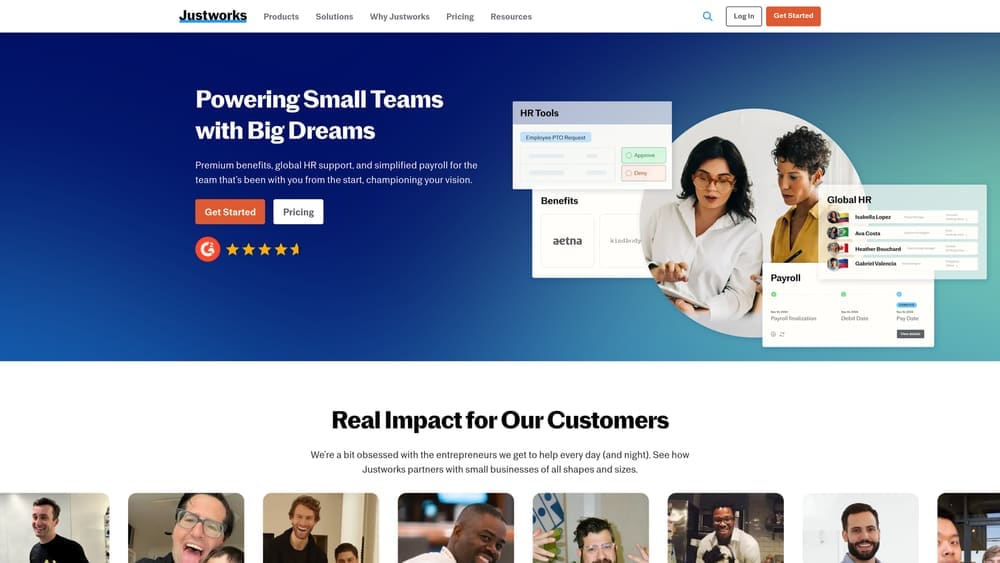
Justworks uses publicly listed flat-rate pricing. As of their current pricing structure, the Basic plan costs $59 per employee per month and includes payroll, compliance tools, and HR administration. The Plus plan costs $99 per employee per month and adds access to medical, dental, and vision benefits through their group health plans. This model makes budgeting straightforward: multiply your headcount by the per-employee rate, and you know your monthly cost.
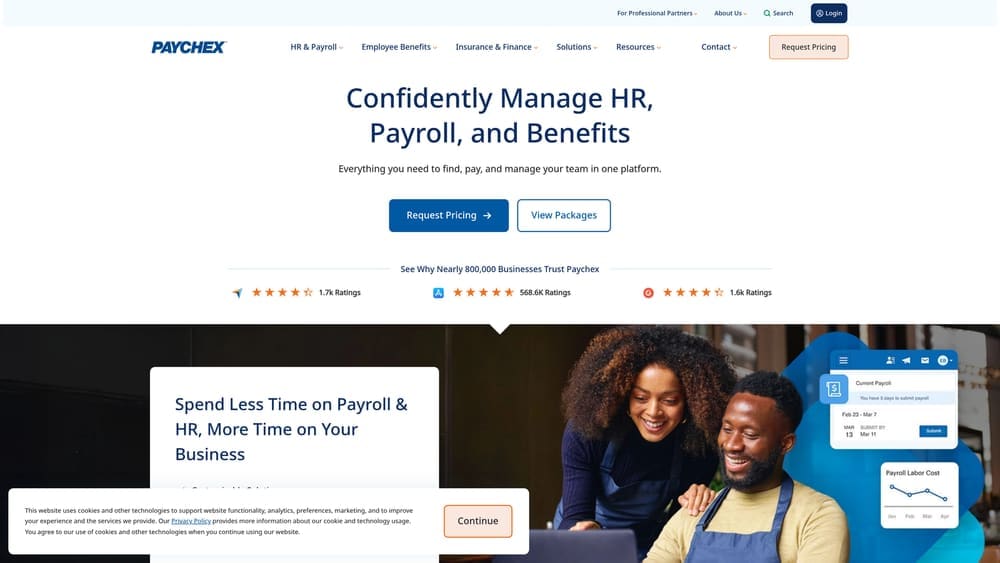
Paychex PEO uses a quote-based model, typically structured as a percentage of total payroll. While they don’t publish rates publicly, industry-standard PEO pricing generally ranges from 2% to 12% of gross payroll depending on services, headcount, and risk profile. Paychex is an IRS-certified PEO (CPEO), which provides additional tax liability protection but doesn’t necessarily change the pricing model.
The practical difference: if you pay a $60,000 annual salary employee, Justworks costs $708–$1,188 annually depending on plan. A percentage-based model at 4% of payroll costs $2,400 annually for that same employee. But percentage models often include more bundled services, so direct comparisons require understanding what’s included. For a deeper dive into hidden PEO fees, review what providers typically don’t disclose upfront.
Implementation Steps
1. Calculate your total annual payroll and current headcount to model both pricing structures accurately.
2. Request a detailed Paychex quote that breaks out base fees, administrative charges, and any per-employee minimums or caps.
3. Compare the Justworks flat rate against the Paychex percentage model using realistic payroll scenarios, including planned raises or headcount growth over the next 12–24 months.
Pro Tips
If your payroll fluctuates significantly due to commissions, bonuses, or seasonal hiring, flat-rate pricing provides more predictable budgeting. If you have high-earning employees, percentage-based models can become expensive quickly. Always ask whether workers’ comp premiums and health insurance premiums are included or billed separately—this often accounts for the biggest cost difference between quotes.
2. Company Size and Growth Stage Fit
The Challenge It Solves
PEOs target different company profiles. Some excel at early-stage simplicity; others handle complexity better as you scale. Choosing a provider that doesn’t match your growth trajectory creates friction: either you outgrow their capabilities quickly, or you pay for infrastructure you don’t need yet. Understanding where each provider operates most effectively helps you avoid costly migrations within 18 months.
The Strategy Explained
Justworks was built for startups and growing SMBs, typically serving companies with 5–200 employees. Their platform prioritizes ease of onboarding, minimal setup friction, and self-service workflows. If you’re a 15-person team scaling to 50, Justworks handles that growth without requiring significant reconfiguration. Their minimum is 2 employees, making them accessible to very small teams.
Paychex PEO serves a broader range, from small businesses to mid-market companies with several hundred employees. They handle more complex organizational structures: multiple entities, varied pay schedules, union environments, and industry-specific compliance requirements. If you’re managing 200+ employees across multiple states with different benefit tiers, Paychex’s infrastructure accommodates that complexity more naturally.
The practical difference: Justworks feels like a tech product designed for fast-moving teams. Paychex feels like an HR service provider with comprehensive tooling. If you’re pre-Series A and prioritizing speed, Justworks fits. If you’re managing layered complexity or planning to exceed 200 employees within two years, Paychex scales better. For teams evaluating options at smaller headcounts, our guide on choosing a PEO with just 10 employees covers size-specific considerations.
Implementation Steps
1. Map your current headcount and projected growth over the next 24 months to identify whether you’ll stay within Justworks’ typical range or need Paychex’s broader capacity.
2. Assess your organizational complexity: single entity or multiple? Uniform pay schedules or varied? Simple benefits structure or tiered plans by role or location?
3. Ask each provider about their typical client profile and whether they’ve successfully supported companies at your current size and your target size.
Pro Tips
If you’re planning aggressive headcount growth, ask about pricing stability and whether rates change as you cross size thresholds. Some PEOs increase fees when you move into new headcount brackets. Also consider whether you’ll need dedicated account management as you scale—Justworks leans toward self-service, while Paychex assigns representatives more consistently.
3. Benefits Access and Health Insurance Options
The Challenge It Solves
One of the primary reasons businesses join a PEO is access to better health insurance rates through group buying power. But not all PEOs offer the same carrier access, plan variety, or cost structure. Some pass through actual premiums with minimal markup; others bundle administrative fees into health costs, making it difficult to understand true pricing. Evaluating benefits access upfront determines whether a PEO actually improves your insurance situation or just adds administrative overhead.
The Strategy Explained
Justworks offers access to major carriers including Aetna, Blue Cross Blue Shield, Cigna, and Oxford, depending on your state. Their Plus plan ($99/employee/month) includes benefits administration and access to these group health plans. Premiums are billed separately based on employee enrollment and plan selection. Justworks handles benefits enrollment, COBRA administration, and compliance tracking, but you’re still responsible for the actual insurance premiums.
Paychex PEO provides access to a broad range of carriers and can accommodate more customized benefits structures. They handle benefits administration as part of their service, including HSA and FSA management, retirement plan administration, and supplemental benefits like life and disability insurance. Because Paychex serves larger clients, they often negotiate more plan options within a given carrier, allowing for tiered benefits by employee class or location. Understanding how to manage open enrollment through your PEO helps you maximize these benefits options.
The practical difference: Justworks simplifies benefits access for smaller teams who want solid carrier options without complex customization. Paychex accommodates businesses that need multiple plan tiers, varied contribution structures, or industry-specific benefits packages. If you’re offering uniform benefits to a small team, Justworks works. If you’re managing different benefits for hourly vs. salaried employees across multiple states, Paychex handles that complexity better.
Implementation Steps
1. Request carrier availability and plan options from both providers for your specific state and employee locations.
2. Compare current health insurance premiums against quotes from each PEO to determine whether group buying power actually reduces costs or whether administrative fees offset savings.
3. Evaluate whether you need benefits customization (tiered plans, varied employer contributions, supplemental benefits) or whether a standardized approach works for your team.
Pro Tips
Ask how benefits premiums are billed—some PEOs bundle them into payroll deductions transparently, while others add administrative markups that aren’t immediately visible. Also confirm whether the PEO handles benefits compliance (ACA reporting, COBRA notices, state continuation requirements) or whether you retain any administrative responsibility. If your team values benefits flexibility, prioritize carrier variety and plan options over cost alone.
4. Technology Platform and Day-to-Day Usability
The Challenge It Solves
You’ll interact with your PEO’s platform constantly: running payroll, managing time-off requests, onboarding new hires, updating employee information, and pulling reports. A clunky interface creates friction for both HR admins and employees. A well-designed platform reduces administrative overhead and improves adoption. Understanding how each provider’s technology actually works in daily operations helps you avoid platforms that look good in demos but frustrate users in practice.
The Strategy Explained
Justworks built their platform with a consumer-tech approach. The interface is clean, mobile-responsive, and designed for self-service. Employees can view pay stubs, request time off, update direct deposit information, and enroll in benefits without needing HR intervention. Admins can run payroll, approve requests, and manage compliance tasks through a streamlined dashboard. The platform prioritizes ease of use over configurability—there are fewer settings to adjust, which means less flexibility but faster adoption.
Paychex Flex is a comprehensive HR platform that handles payroll, benefits, time tracking, applicant tracking, and performance management. It offers more configuration options, which means more power but also more complexity. The interface reflects its enterprise heritage: more menus, more settings, more steps to complete tasks. Employees and admins have access to extensive functionality, but the learning curve is steeper. If you need deep reporting, custom workflows, or integration with other enterprise systems, Paychex Flex accommodates that. For a broader comparison of platform capabilities, see our roundup of PEO HR technology platforms.
The practical difference: Justworks feels like a modern SaaS product. Paychex Flex feels like an enterprise HR suite. If your team values intuitive design and quick onboarding, Justworks wins. If you need robust reporting, custom approval workflows, or integration with accounting systems, Paychex provides more tooling.
Implementation Steps
1. Request live demos (not recorded walkthroughs) of both platforms and test common workflows: running payroll, onboarding a new hire, approving time-off requests, and pulling a headcount report.
2. Ask current employees or HR admins to participate in demos and provide feedback on usability—they’ll be the ones using the system daily.
3. Evaluate mobile functionality if your team works remotely or in the field—Justworks’ mobile app is stronger than Paychex’s in most user reviews.
Pro Tips
Platform usability directly affects adoption. If employees find the system confusing, they’ll escalate simple tasks to HR instead of self-serving. Ask about employee onboarding experience specifically—how easy is it for a new hire to complete I-9, tax forms, and benefits enrollment without HR hand-holding? Also confirm whether the platform integrates with your accounting software (QuickBooks, Xero, NetSuite) to avoid duplicate data entry.
5. Multi-State Operations and Compliance Complexity
The Challenge It Solves
Operating in multiple states introduces compliance complexity: state-specific tax registrations, unemployment insurance, workers’ comp requirements, paid leave mandates, and wage-and-hour rules. Managing this internally requires tracking regulatory changes across jurisdictions and ensuring payroll systems stay current. A PEO absorbs much of this burden, but not all PEOs handle multi-state compliance equally. Understanding each provider’s infrastructure for geographic expansion helps you avoid compliance gaps as you grow.
The Strategy Explained
Justworks handles multi-state compliance by managing state tax registrations, unemployment insurance filings, and state-mandated paid leave programs (New York Paid Family Leave, California Paid Sick Leave, etc.). They monitor regulatory changes and update their platform accordingly. For businesses with employees in 5–10 states, Justworks manages the compliance workload without requiring significant internal HR expertise. Their compliance team handles filings, but you’re still responsible for understanding state-specific employment laws that affect policies and handbooks.
Paychex PEO operates in all 50 states and has deeper infrastructure for complex multi-state scenarios. If you’re managing employees across 20+ states, varied workers’ comp classifications, or industry-specific regulations (healthcare, construction, hospitality), Paychex’s compliance team provides more hands-on support. They assist with policy development, handbook customization, and state-specific employment law guidance. Their compliance infrastructure is built for businesses that operate nationally or have complex regulatory requirements beyond payroll and tax filings. For businesses needing broad geographic coverage, our guide to national PEO companies provides additional options.
The practical difference: Justworks automates compliance for straightforward multi-state operations. Paychex provides more consultative support for businesses navigating complex regulatory environments. If you’re a tech company with remote employees in 8 states, Justworks handles it efficiently. If you’re a healthcare staffing firm with employees in 30 states and varied licensing requirements, Paychex’s compliance depth matters more.
Implementation Steps
1. List all states where you currently employ workers and states where you plan to hire within the next 12–24 months.
2. Ask each provider how they handle state-specific compliance: Do they monitor regulatory changes automatically? Do they update payroll tax tables in real time? Do they provide guidance on state employment law beyond payroll?
3. Confirm whether the PEO registers as the employer of record in each state or whether you retain any compliance responsibility—this affects liability exposure.
Pro Tips
Multi-state compliance isn’t just about payroll taxes. Ask how each provider handles state-mandated paid leave programs, workers’ comp across jurisdictions, and unemployment insurance claims. Also confirm whether they provide employment law guidance for state-specific issues like meal-and-rest breaks, overtime exemptions, and final paycheck timing—these vary significantly by state and create real operational risk if mishandled.
6. Service Model: Self-Service vs. Dedicated Support
The Challenge It Solves
Your internal HR capacity determines how much support you need from a PEO. If you have an experienced HR leader, you may prefer a self-service platform that provides tools without heavy hand-holding. If you lack internal HR expertise, you need a provider that offers consultative support and proactive guidance. Mismatching your support needs with a provider’s service model creates frustration: either you’re paying for support you don’t use, or you’re struggling to get answers when issues arise.
The Strategy Explained
Justworks operates primarily as a tech-enabled self-service platform. You have access to customer support via email and chat, and they provide onboarding assistance when you first join. But the model assumes you can navigate most HR tasks independently using their platform and knowledge base. If you need strategic HR guidance—policy development, employee relations issues, performance management coaching—Justworks provides limited consultative support. Their strength is making self-service efficient, not replacing an HR department.
Paychex PEO assigns dedicated HR representatives to client accounts. You have a consistent point of contact for questions, compliance guidance, and operational support. If you’re dealing with a complex employee issue, policy question, or regulatory change, you can reach your rep directly. Paychex also provides access to HR consultants for strategic projects: handbook development, job description creation, compensation benchmarking, and employee relations coaching. The service model assumes you need ongoing HR support beyond platform access. If you’re weighing whether to outsource HR to a PEO entirely, understanding these service differences is critical.
The practical difference: Justworks works best when you have internal HR capability and want efficient tools. Paychex works better when you’re outsourcing HR strategy and need consultative support. If you’re a 30-person startup with a sharp operations manager handling HR, Justworks provides what you need. If you’re a 75-person manufacturer without dedicated HR staff, Paychex’s support model reduces operational risk.
Implementation Steps
1. Assess your current internal HR capacity: Do you have someone who understands employment law, policy development, and employee relations? Or are you handling HR reactively without formal expertise?
2. Ask each provider about their support model: What’s included in base pricing? What requires additional fees? How quickly do they respond to questions? Do you get a dedicated contact or shared support queue?
3. Test responsiveness during the evaluation process—how they handle pre-sale questions often reflects how they’ll handle post-sale support.
Pro Tips
Service model affects total cost beyond platform fees. If you need extensive HR support, Paychex’s higher cost may be justified by reduced need for external consultants or additional HR hires. If you’re self-sufficient, paying for dedicated support you won’t use wastes budget. Also ask about support availability: Is it business hours only? Do they offer phone support or just email/chat? Response time expectations matter when you’re dealing with urgent payroll or compliance issues.
7. Contract Terms and Exit Flexibility
The Challenge It Solves
PEO contracts vary significantly in commitment length, auto-renewal clauses, termination fees, and data portability. Signing a multi-year agreement with restrictive exit terms locks you into a provider even if your needs change or service quality declines. Understanding contract flexibility upfront determines whether you can switch providers without financial penalties or operational disruption. This becomes critical if you outgrow the PEO, get acquired, or decide to bring HR in-house.
The Strategy Explained
Justworks publicly states they offer month-to-month contracts with no long-term commitment. You can cancel with 30 days’ notice, and they provide data export functionality to help you transition to another provider or in-house system. This flexibility reduces risk during evaluation—if Justworks doesn’t fit your needs after six months, you can exit without penalty. The trade-off: month-to-month pricing may be slightly higher than annual contracts, though Justworks doesn’t publicly differentiate pricing by commitment length.
Paychex PEO contracts vary by agreement. Some clients sign annual contracts with auto-renewal clauses; others negotiate multi-year terms with pricing guarantees. Termination terms depend on your specific agreement, and some contracts include fees for early termination or require notice periods of 60–90 days. Data portability is typically available, but the process for exporting employee records, payroll history, and benefits data may require coordination with your account rep. For detailed guidance on evaluating terms, see our guide on how to compare PEO contracts.
The practical difference: Justworks prioritizes contract flexibility as a competitive advantage. Paychex negotiates terms based on client size and complexity. If you value easy exit options, Justworks provides more transparency. If you’re willing to commit long-term in exchange for pricing stability or enhanced service, Paychex may offer better terms through negotiation.
Implementation Steps
1. Request full contract terms from both providers before signing, including commitment length, auto-renewal clauses, termination notice requirements, and any early exit fees.
2. Ask about data portability: What employee data can you export? In what format? How long does the transition process take if you decide to leave?
3. Confirm whether the contract includes pricing escalation clauses—some PEOs increase fees annually based on inflation, headcount growth, or service changes.
Pro Tips
Contract flexibility matters most if your business is in transition: rapid growth, potential acquisition, or uncertain headcount trajectory. If you’re stable and planning to stay with a PEO long-term, multi-year contracts with pricing guarantees may provide better value. Also ask about what happens to benefits coverage if you terminate mid-year—some PEOs require you to maintain coverage through the end of the plan year, while others allow mid-year transitions. This affects your ability to switch providers without disrupting employee benefits. If you’re considering a mid-contract exit, our guide on leaving a PEO mid-contract walks through the process.
Putting It All Together
Choosing between Paychex PEO and Justworks comes down to operational profile, not marketing claims. Justworks typically fits growing startups and SMBs that value transparent pricing, intuitive technology, and minimal implementation friction. Their flat-rate model makes budgeting straightforward, and their month-to-month contracts reduce commitment risk. If you’re a 20–100 person team with straightforward HR needs and internal operational capacity, Justworks provides efficient infrastructure without unnecessary complexity.
Paychex PEO fits businesses managing more complexity: multi-state operations with varied compliance requirements, tiered benefits structures, or limited internal HR expertise. Their dedicated support model and deeper service infrastructure justify higher costs when you need consultative guidance and hands-on account management. If you’re scaling beyond 200 employees, operating in 15+ states, or navigating industry-specific regulations, Paychex’s breadth matters more than Justworks’ simplicity.
Neither provider is universally better. The right choice depends on your specific priorities: cost predictability vs. service depth, self-service efficiency vs. dedicated support, contract flexibility vs. long-term pricing stability. Before committing, get detailed quotes from both providers, test their platforms with actual workflows, and evaluate contract terms carefully.
Most businesses renewing or switching PEO agreements don’t realize they’re overpaying due to bundled fees and unclear administrative markups. Before you sign, compare your options objectively. We break down pricing structures, service models, and contract terms so you can make a decision based on your operational reality—not provider marketing. If you need a broader framework for evaluating PEOs beyond these two providers, see our guide on how to choose a PEO that actually fits your business.