
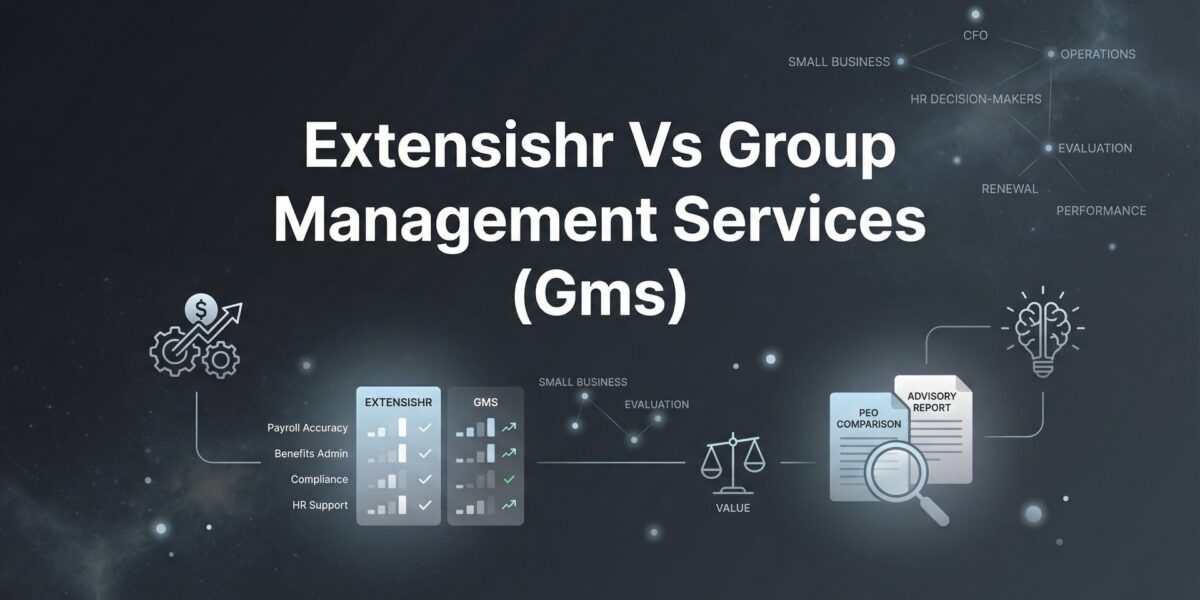
If you’re down to ExtensisHR and Group Management Services on your PEO shortlist, you’re comparing two credible mid-market providers with different operational philosophies. ExtensisHR leans toward technology integration and dedicated service teams, appealing to professional services firms and growing tech companies. GMS emphasizes risk management and safety programs, with deep roots in manufacturing, construction, and traditional industries. Both are IRS-certified PEOs, which means tax liability protection is table stakes. The real question is which service model, technology platform, and pricing structure matches your business—and where each provider’s limitations might create friction down the road.
This comparison covers service delivery models, technology capabilities, benefits access, pricing transparency, and the operational trade-offs that matter when you’re signing a multi-year agreement. We’ll also address when neither provider is the right fit.
ExtensisHR
Best for: Professional services firms and tech companies prioritizing dedicated HR support and modern technology integration.
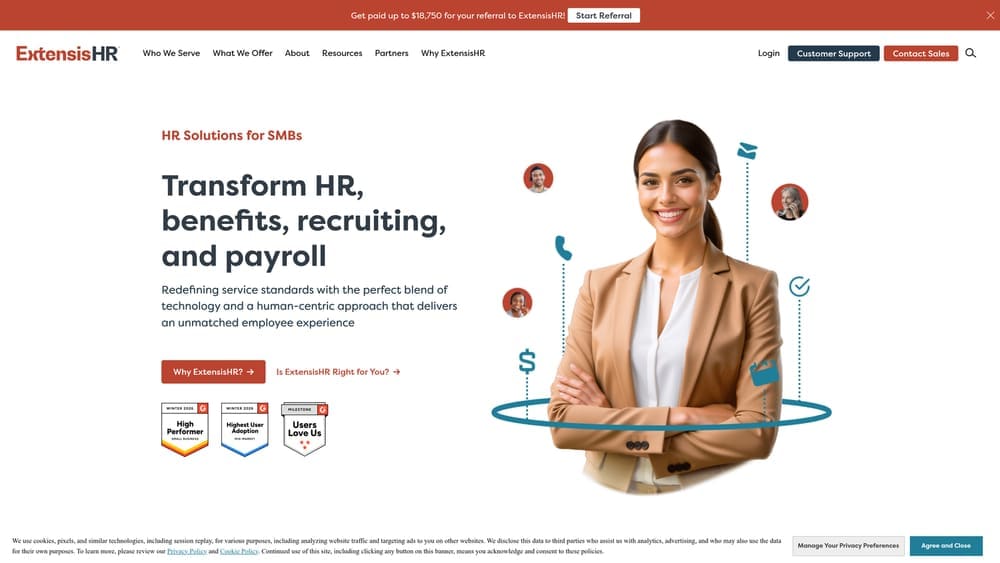
ExtensisHR positions itself as a mid-market PEO with a white-glove service approach. The company emphasizes dedicated HR manager assignments and technology platform integration, targeting businesses that want consistent point-of-contact relationships rather than rotating support queues.
Where This Provider Shines
ExtensisHR’s dedicated HR manager model means you work with the same person consistently, which reduces onboarding friction and improves institutional knowledge over time. This matters more than it sounds—switching between support reps every call creates repetitive explanations and slows issue resolution.
The technology platform integrates with common business systems, which helps if you’re already using specific accounting or project management tools. Smaller companies often benefit from ExtensisHR’s benefits pooling, which can improve plan options and pricing compared to standalone small group coverage.
Key Features
Dedicated HR Manager Model: Assigned point of contact for ongoing HR support and compliance guidance.
Technology Platform Integration: Modern HRIS with API connections to common business systems and payroll tools.
Benefits Access: Pooled benefits purchasing for smaller groups, improving plan options and pricing leverage.
IRS-Certified PEO (CPEO): Federal tax liability protection through certified PEO status.
Professional Services Focus: Service model and technology approach tailored toward consulting, marketing, and tech firms.
Best For
ExtensisHR fits professional services firms, consulting practices, marketing agencies, and tech companies between 20 and 200 employees. The dedicated manager model works well if you value relationship consistency and need frequent HR consultation. It’s less ideal if you operate in high-risk industries or need deep safety program expertise.
Pricing
ExtensisHR uses custom quotes based on headcount, industry, and benefits configuration. Pricing typically follows a percentage-of-payroll model. You’ll need to request a formal proposal to see actual numbers. Administrative fees and per-employee charges vary depending on service tier and add-on modules.
Operational Considerations
The dedicated manager model depends heavily on the individual assigned to your account. If that person leaves or gets reassigned, you’re starting relationship-building from scratch. Technology integration quality varies depending on which systems you’re connecting—ask for a technical demo with your specific tools before signing.
Contract terms matter here. Review termination clauses carefully, particularly around mid-year exits and benefits continuation obligations. Some clients report that pricing increases during renewal cycles can be significant, especially if your headcount grows or claims experience changes.
Group Management Services (GMS)
Best for: Manufacturing, construction, and traditional industries requiring strong risk management and workers compensation programs.
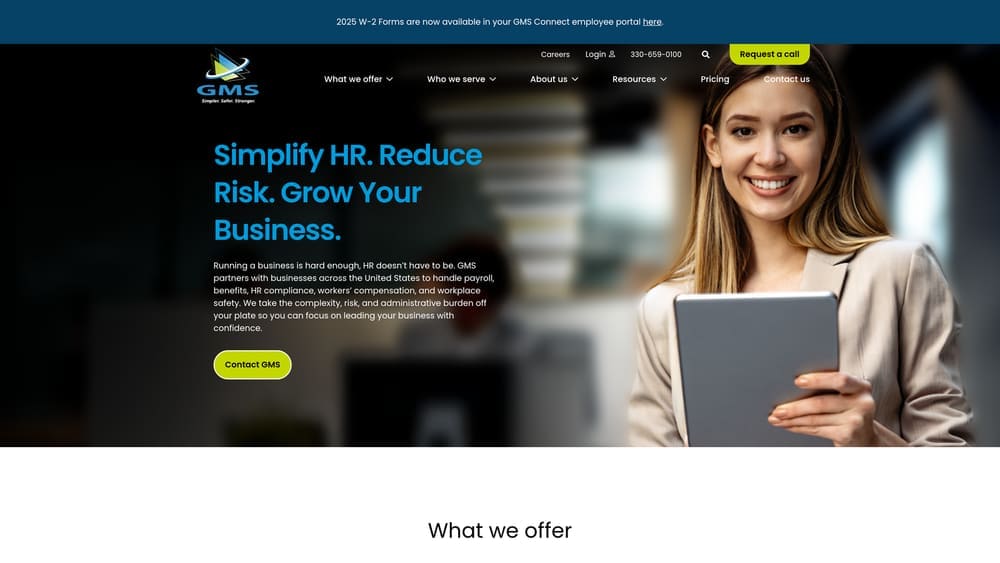
Group Management Services is an Ohio-based PEO with regional strength in the Midwest and a service model built around risk management. GMS focuses on industries with higher workers compensation exposure, offering safety programs and claims management as core competencies rather than add-ons.
Where This Provider Shines
GMS brings real depth in workers compensation management and workplace safety programs. If you operate in manufacturing, construction, or other industries with significant injury risk, this expertise translates to better claims outcomes and potentially lower insurance costs over time.
The Midwest regional focus means GMS understands state-specific compliance requirements in Ohio, Michigan, Indiana, and surrounding states. This matters more in industries with complex state-level safety regulations and workers comp frameworks.
Key Features
Risk Management Emphasis: Safety program development, workplace audits, and proactive risk reduction strategies.
Workers Compensation Programs: Strong claims management and direct carrier relationships for high-risk industries.
Midwest Regional Expertise: Deep knowledge of state compliance requirements and regulatory environments in core Midwest states.
IRS-Certified PEO (CPEO): Federal tax liability protection through certified PEO status.
Traditional Industry Focus: Service model and expertise tailored toward manufacturing, construction, and industrial operations.
Best For
GMS fits manufacturing facilities, construction companies, industrial operations, and traditional businesses with workers compensation concerns. The risk management focus works well if you need help reducing workplace injuries and managing claims. It’s less ideal if you’re a professional services firm or tech company looking for modern technology integration.
Pricing
GMS requires custom quotes, with pricing influenced heavily by industry risk profile and workers compensation exposure. Higher-risk industries typically see higher percentage-of-payroll rates. Administrative fees and per-employee charges vary depending on services included. Expect pricing to fluctuate based on claims experience during renewal cycles.
Operational Considerations
GMS’s technology platform is functional but not cutting-edge. If you’re expecting modern API integrations and mobile-first interfaces, you may find the system dated compared to newer PEO platforms. The trade-off is operational expertise in risk management—decide whether technology or industry-specific knowledge matters more for your business.
Geographic coverage is another factor. While GMS serves clients outside the Midwest, their strongest relationships and deepest expertise concentrate in their home region. If you operate across multiple states or plan significant geographic expansion, confirm that GMS can support your footprint effectively.
Direct Comparison: Key Decision Factors
Service Model Philosophy
ExtensisHR emphasizes dedicated relationship management with assigned HR managers. GMS prioritizes risk management and safety program expertise. Your preference depends on whether you value consistent point-of-contact relationships or deep industry-specific operational knowledge.
Technology Platform Maturity
ExtensisHR offers a more modern technology platform with better integration capabilities. GMS’s platform is functional but less sophisticated. If technology experience matters to your team, ExtensisHR has the advantage. If you care more about workers comp outcomes than interface design, technology gaps become less relevant.
Industry Specialization
ExtensisHR positions toward professional services, consulting, and tech companies. GMS specializes in manufacturing, construction, and traditional industries. Choosing a provider with experience in your industry type typically improves service quality and reduces friction around industry-specific compliance issues.
Geographic Coverage
ExtensisHR operates nationally with less regional concentration. GMS has strong Midwest presence but thinner coverage elsewhere. If you operate primarily in Ohio, Michigan, or Indiana, GMS’s regional expertise adds value. If you’re spread across multiple regions or planning expansion, ExtensisHR’s broader footprint may fit better.
Pricing Transparency
Neither provider publishes standard pricing publicly. Both require custom quotes based on headcount, industry, and benefits configuration. This makes independent comparison difficult without requesting formal proposals from both providers. Pricing structures differ—ExtensisHR typically uses percentage-of-payroll models while GMS pricing varies more significantly based on industry risk profile.
When Neither Provider Is the Right Fit
If you’re under 15 employees, both providers may be too expensive relative to value delivered. Smaller businesses often get better economics from standalone payroll providers with HR add-ons rather than full PEO co-employment models.
If you operate in multiple states with complex regulatory environments and need deep compliance expertise across all jurisdictions, consider national PEO providers with larger compliance teams and broader geographic coverage.
If pricing transparency matters significantly to your decision process, both ExtensisHR and GMS require custom quotes without published rate cards. Some businesses prefer providers with more transparent pricing structures, even if it means sacrificing some service customization.
If you’re planning rapid headcount growth or significant geographic expansion, confirm that your chosen provider can scale with you effectively. Mid-market PEOs sometimes struggle to maintain service quality during rapid client growth periods.
Making the Right Choice
ExtensisHR fits professional services firms and tech companies that value dedicated HR manager relationships and modern technology platforms. GMS fits manufacturing, construction, and traditional industries that need strong risk management and workers compensation expertise. Neither is objectively better—the right choice depends on your industry, geographic footprint, and operational priorities.
Before you sign, request detailed proposals from both providers. Compare not just pricing but contract terms, termination clauses, and service level commitments. Ask specific questions about what happens if your assigned HR manager leaves, how pricing adjustments work during renewal cycles, and what geographic limitations might affect future expansion plans.
Most businesses overpay for PEO services because they don’t compare their options thoroughly. Bundled fees and unclear administrative markups create pricing opacity that benefits providers, not clients. Independent comparison resources help you understand actual costs, service structures, and contract terms before you commit to a multi-year agreement. The right PEO decision comes from understanding your specific operational needs—not from accepting marketing claims at face value.