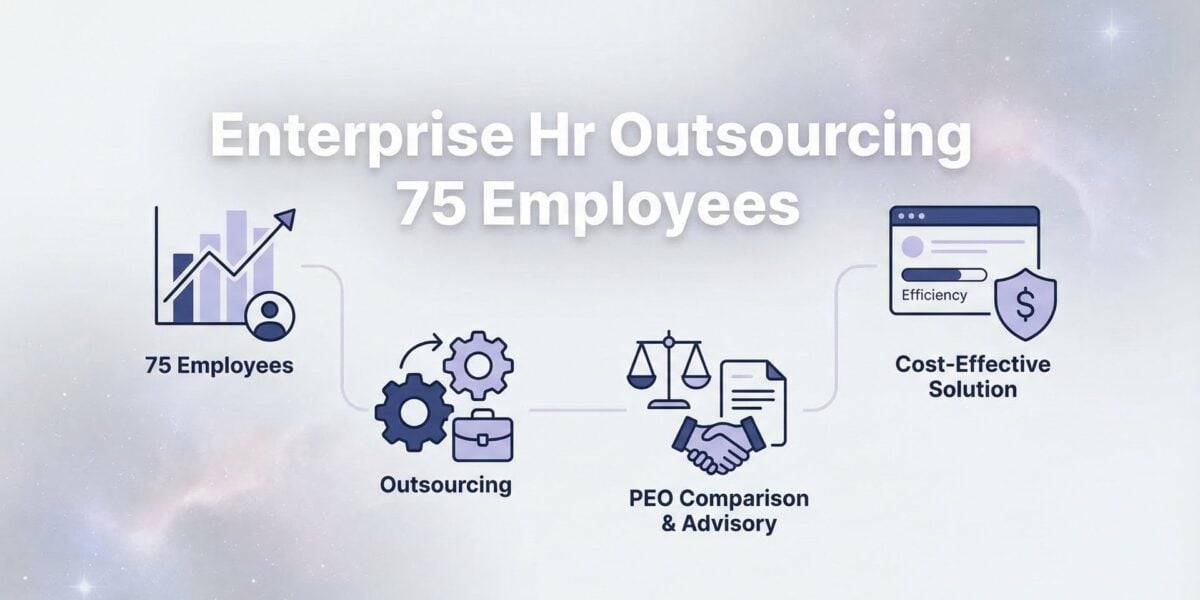
At 75 employees, you’re in a strange middle ground. Too big for scrappy small-business HR tools. Too small for the enterprise sales teams at major HCM platforms to take seriously. You need outsourcing solutions that actually scale to your size—not ones that treat you like an afterthought or charge enterprise rates for features you’ll never use.
This guide breaks down top HR outsourcing options built for companies at your headcount, covering PEOs, ASOs, and hybrid platforms. We’ll focus on what actually matters: pricing structures that make sense at 75 heads, compliance support that matches your complexity, and technology that doesn’t require a dedicated admin to manage.
1. Clicks Geek PEO
Best for: Companies evaluating multiple PEO providers without sales pressure or biased recommendations
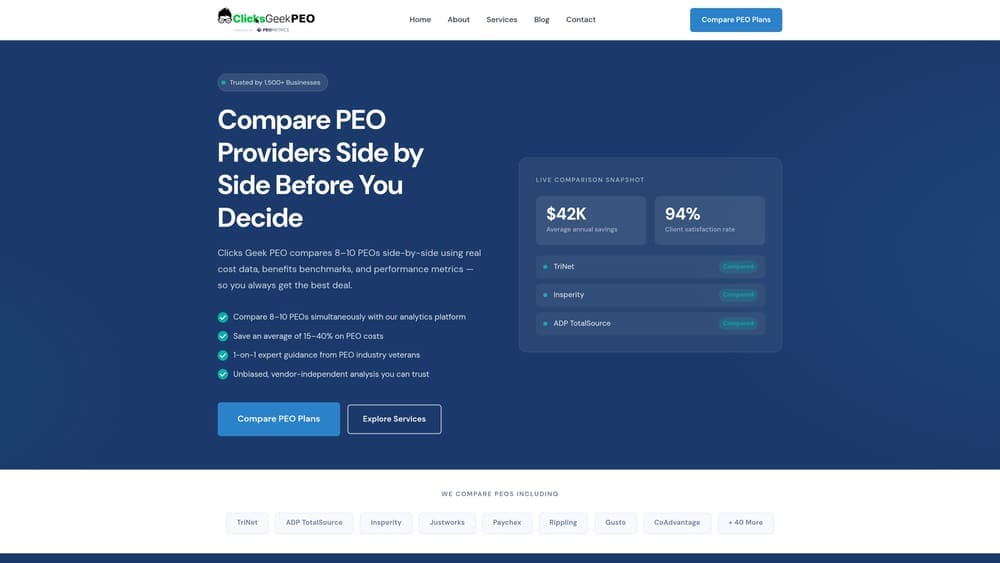
Clicks Geek PEO is an independent comparison platform that helps you evaluate HR outsourcing providers objectively.
Where This Tool Shines
Most businesses choose a PEO based on whoever called first or had the slickest demo. That’s how you end up overpaying or locked into services you don’t need. Clicks Geek cuts through the noise by breaking down what each provider actually charges, what’s included in the base fee, and where the hidden markups live.
At 75 employees, you’re at a headcount where pricing models diverge significantly. Some PEOs charge percentage-of-payroll that becomes expensive as your average wages increase. Others use flat per-employee rates that make more sense at your scale. This platform shows you the math.
Key Features
Independent Provider Comparisons: Side-by-side breakdowns of major PEOs without affiliate bias or sales commissions influencing recommendations.
Transparent Pricing Analysis: Detailed cost structures showing base fees, administrative markups, and total cost projections specific to your headcount.
Contract Term Analysis: Clear explanations of commitment periods, renewal terms, and termination clauses that many providers bury in fine print.
Headcount-Specific Recommendations: Guidance tailored to companies at your exact size, not generic advice that assumes you’re either 10 employees or 500.
Negotiation Insights: Practical information on what’s negotiable in PEO contracts and where you actually have leverage at 75 employees.
Best For
Companies evaluating their first PEO relationship or considering switching providers. Especially valuable if you’ve been burned by unclear pricing before or want to understand total cost of ownership before signing anything. Works well for CFOs and operations leaders who need to justify the decision internally with real numbers.
Pricing
Free comparison resources and educational content. Advisory services available for companies that want deeper analysis or implementation support.
2. TriNet
Best for: Companies wanting industry-specific HR expertise and enterprise-level benefits access
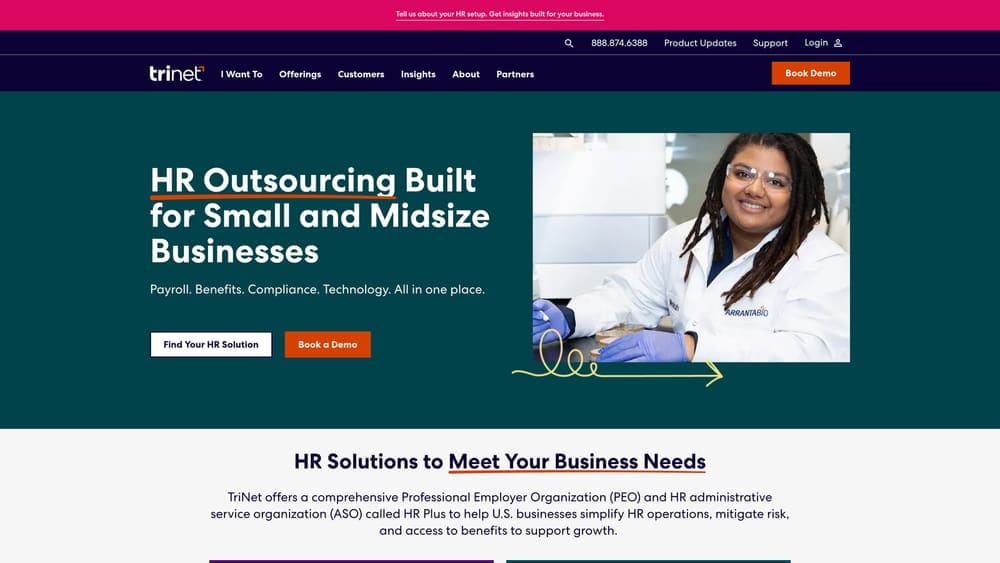
TriNet is a full-service PEO that organizes its offerings around industry verticals rather than generic HR services.
Where This Tool Shines
TriNet doesn’t pretend every company needs the same HR support. Their vertical approach means you get assigned to a team that actually understands your industry’s specific compliance requirements and talent challenges. If you’re in tech, you’re not getting advice designed for construction companies.
The benefits access is legitimately enterprise-grade. At 75 employees, you’re typically stuck with small-group health plans that cost more and offer fewer options. TriNet’s pooled buying power gets you into plans that would normally require 500+ employees.
Key Features
Industry-Vertical Specialization: Dedicated teams for technology, financial services, life sciences, and other sectors with specialized compliance needs.
Premium Benefits Access: Multiple carrier options for health insurance, including plans with broader networks and lower deductibles than typical small-group offerings.
Risk Mitigation Support: Proactive compliance monitoring and policy updates that adjust based on your specific industry regulations.
Integrated Technology Platform: Self-service HR system that handles most routine tasks without requiring constant admin involvement.
Workers’ Comp Pooling: Access to better workers’ comp rates through their master policy, particularly valuable for higher-risk industries.
Best For
Companies in specialized industries where generic HR advice falls short. Works well if benefits quality is a retention priority and you’re competing for talent against larger employers. The industry-vertical model makes most sense when your compliance requirements differ significantly from standard office environments.
Pricing
Percentage-of-payroll model that typically requires a custom quote. Pricing becomes less favorable as your average wages increase, so run the actual numbers before committing. Expect total costs in the range of 3-8% of gross payroll depending on services selected.
3. Insperity
Best for: Companies wanting dedicated HR specialist support with comprehensive workforce optimization services
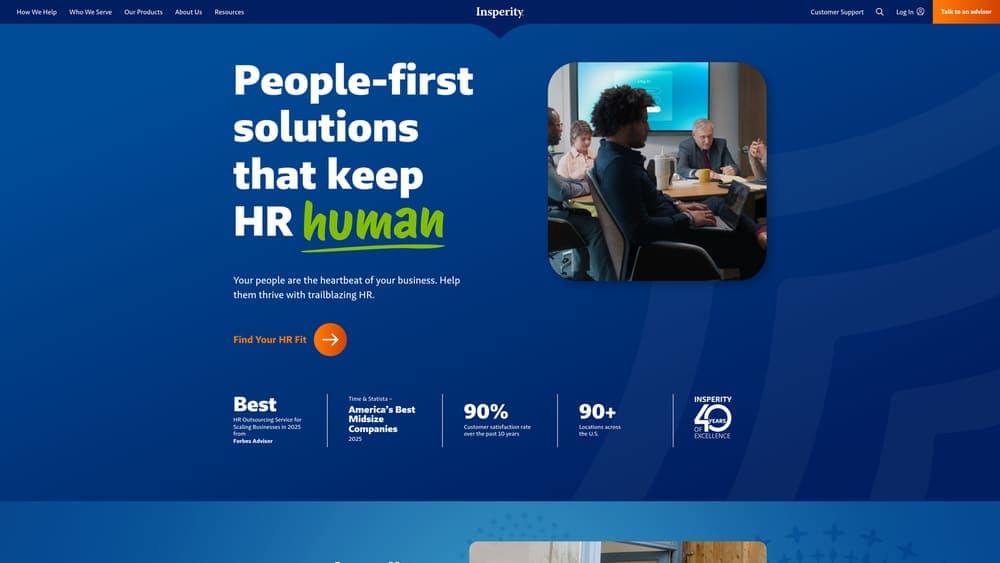
Insperity is an established PEO that emphasizes the human relationship over technology automation.
Where This Tool Shines
You get an actual named HR specialist assigned to your account. Not a rotating support queue. Not a chatbot. A person who learns your business and becomes an extension of your team. At 75 employees, this matters because you’re dealing with real HR complexity but probably can’t justify a full-time HR director salary.
Insperity’s approach works well when you need strategic HR guidance, not just transactional processing. They’ll help with performance management frameworks, compensation planning, and organizational development—areas where many PEOs just hand you templates and wish you luck.
Key Features
Named HR Specialist: Dedicated professional who knows your company, your industry, and your specific challenges without needing to be briefed every time you call.
Performance Management Resources: Structured frameworks for reviews, goal-setting, and development planning that go beyond basic compliance.
Comprehensive Benefits Administration: Full management of enrollment, changes, COBRA, and carrier communications without internal HR staff involvement.
Recruiting and Retention Support: Practical guidance on compensation benchmarking, job descriptions, and retention strategies tailored to your market.
Training and Development: Access to management training, compliance courses, and professional development resources for your leadership team.
Best For
Companies that value relationship-driven service over pure technology efficiency. Works well if you need strategic HR guidance, not just payroll processing. Makes sense when your leadership team wants an experienced HR advisor they can actually talk to about complex situations.
Pricing
Per-employee-per-month pricing that requires consultation for a specific quote. Generally positioned at the higher end of the PEO market, but the dedicated support model justifies the premium if you’ll actually use it. Expect pricing in the $100-150 per employee range depending on services.
4. ADP TotalSource
Best for: Companies wanting Fortune 500 benefits access with scalable technology infrastructure
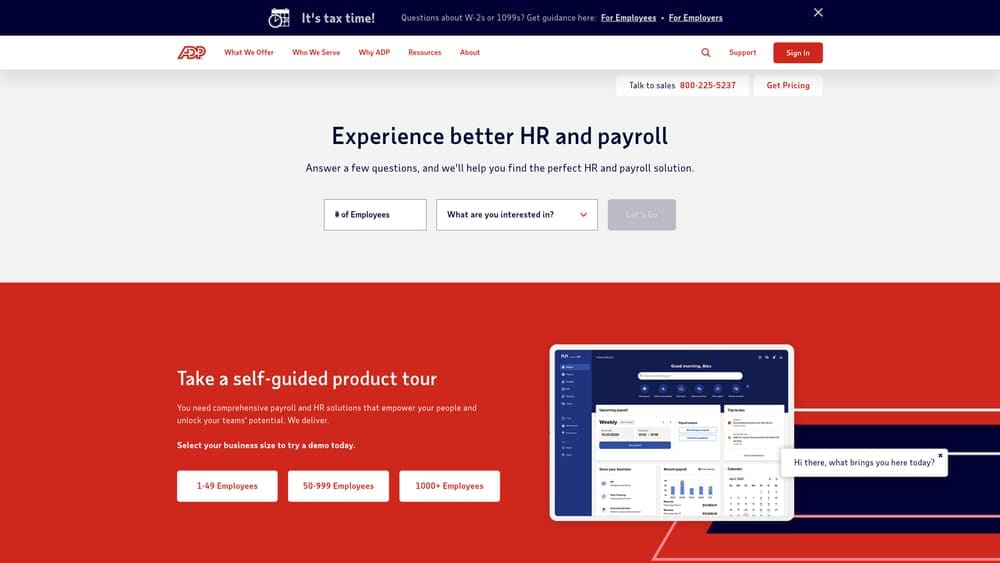
ADP TotalSource is the PEO arm of ADP, combining enterprise-grade infrastructure with co-employment benefits access.
Where This Tool Shines
The ADP name carries weight. Their technology infrastructure is built to handle companies with 50,000 employees, which means it won’t break when you grow from 75 to 150. You’re not betting on a platform that might struggle to scale or get acquired in two years.
Benefits access rivals what Fortune 500 companies offer. At 75 employees, your team gets health plans, 401(k) options, and supplemental benefits that would normally require 10x your headcount. The technology integration is seamless if you’re already in the ADP ecosystem or plan to expand into other ADP services as you grow.
Key Features
Enterprise Benefits Access: Health insurance, retirement plans, and voluntary benefits typically reserved for much larger employers.
Seamless Scaling: Technology and service model designed to grow with you without requiring platform migrations or service disruptions.
Robust Compliance Management: Proactive monitoring of federal, state, and local requirements with automatic policy updates and documentation.
ADP Ecosystem Integration: Natural fit if you use or plan to use other ADP services like time tracking, expense management, or talent acquisition tools.
Multi-State Support: Strong infrastructure for companies with employees across multiple states, handling varying tax and compliance requirements efficiently.
Best For
Companies planning significant growth who want infrastructure that won’t require replacement in two years. Makes sense if you value brand stability and technology reliability over boutique service. Works well for multi-state operations where compliance complexity justifies enterprise-grade systems.
Pricing
Custom pricing based on headcount and services selected. The enterprise backing means pricing tends toward the higher end, but you’re paying for infrastructure that won’t break. Expect total costs comparable to other full-service PEOs once you factor in all services.
5. Justworks
Best for: Companies wanting transparent pricing and streamlined self-service platform experience
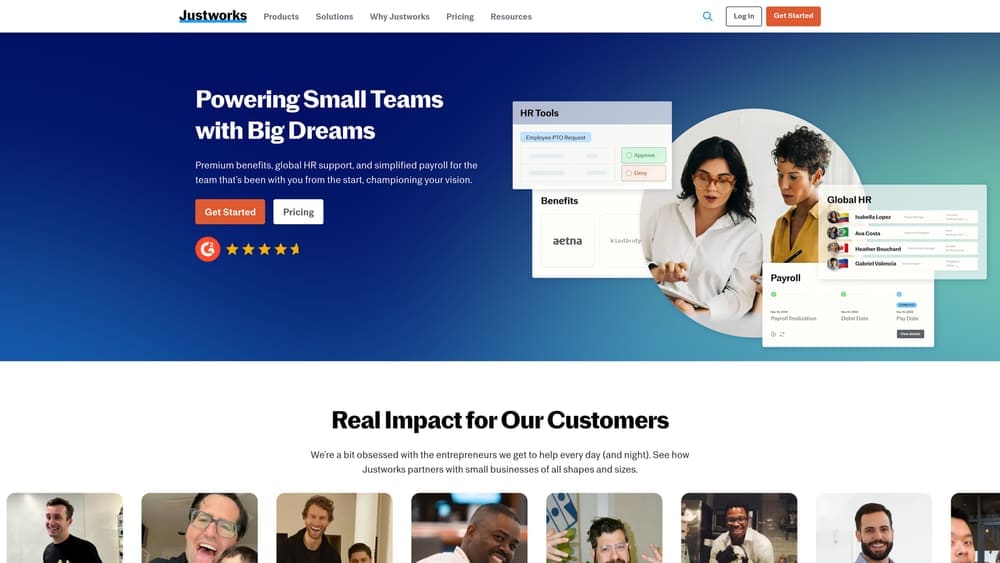
Justworks is a modern PEO platform that emphasizes pricing clarity and user experience over complex service tiers.
Where This Tool Shines
The pricing is actually transparent. You can see what you’ll pay before talking to sales. At 75 employees, this matters because you can model total costs without playing the “request a quote” game with five different providers. No hidden administrative fees. No surprise markups. Just flat per-employee pricing.
The platform is built for self-service. If you’re comfortable with modern software and don’t need hand-holding for every HR task, Justworks gets out of your way. The interface is clean, tasks are intuitive, and you can handle most routine HR functions without waiting for support callbacks.
Key Features
Flat Per-Employee Pricing: Clear monthly rates with no percentage-of-payroll calculations or hidden administrative markups.
Clean Self-Service Platform: Intuitive interface designed for users who prefer to handle tasks themselves rather than submitting tickets.
24/7 Support Access: Always-available support team for when you do need help, without restricting access to business hours.
Straightforward Benefits Enrollment: Simple benefits administration without unnecessary complexity or confusing carrier portals.
Compliance Automation: Automated tax filings, wage reporting, and regulatory documentation without manual intervention.
Best For
Companies that value pricing transparency and prefer self-service tools over high-touch support relationships. Works well for tech-savvy teams comfortable with modern software. Makes sense when you want solid HR infrastructure without paying for white-glove service you won’t use.
Pricing
Basic plan at $59 per employee per month. Plus plan at $109 per employee per month with expanded benefits options and support. At 75 employees, you’re looking at roughly $4,400-8,200 monthly depending on tier. No hidden fees or percentage markups.
6. Paychex PEO
Best for: Companies wanting flexibility to shift between PEO and ASO models within the same relationship
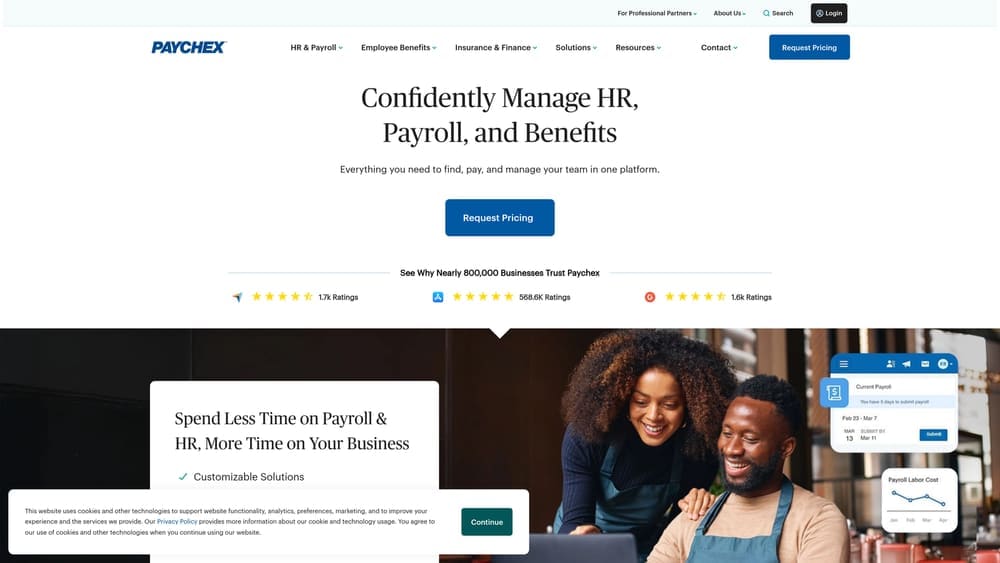
Paychex PEO is a flexible HR outsourcing provider offering both full PEO co-employment and lighter ASO arrangements.
Where This Tool Shines
The flexibility is real. Some companies at 75 employees want full PEO co-employment for benefits access and compliance support. Others prefer to maintain direct employer status through an ASO model. Paychex lets you choose without switching providers, and you can adjust as your needs change.
Multi-state compliance support is strong. If you have employees across several states, Paychex handles the varying tax requirements, unemployment insurance, and state-specific regulations without requiring separate registrations or manual tracking. The payroll technology is mature and reliable—they’ve been doing this longer than most competitors.
Key Features
PEO and ASO Flexibility: Ability to choose co-employment or direct employment models based on your specific needs and preferences.
Extensive Payroll Technology: Mature payroll processing infrastructure with strong accuracy track record and reliable tax filing.
Scalable Service Levels: Options to add or reduce services as your needs change without switching providers entirely.
Multi-State Compliance Support: Robust handling of companies with employees in multiple states, including complex tax and regulatory requirements.
HR Advisory Services: Access to HR professionals for guidance on policies, procedures, and employee relations issues.
Best For
Companies uncertain whether they want full PEO co-employment or prefer maintaining direct employer status. Works well for multi-state operations where compliance complexity justifies professional management. Makes sense when you want flexibility to adjust service levels as your business evolves.
Pricing
Custom pricing with both percentage-of-payroll and per-employee models available depending on services selected. The flexibility means pricing varies significantly based on whether you choose PEO or ASO and which service modules you include. Request specific quotes for both models to compare.
7. Rippling PEO
Best for: Tech-forward companies wanting unified HR, IT, and device management in one platform
Rippling PEO combines traditional PEO services with IT management capabilities in a highly integrated platform.
Where This Tool Shines
Rippling treats HR and IT as connected systems, not separate departments. When you hire someone, the platform can automatically provision their laptop, set up email access, assign software licenses, and enroll them in benefits—all from one workflow. At 75 employees, this level of automation eliminates administrative bottlenecks.
The technology is genuinely modern. If you’re tired of clunky HR platforms built in 2005, Rippling feels like software designed this decade. The workflow automation is powerful, the API integrations are extensive, and the mobile experience actually works. You can customize almost everything without needing IT support.
Key Features
Unified HR and IT Management: Single platform handling employee data, payroll, benefits, device provisioning, and app access control.
Automated Device Provisioning: Automatic laptop setup, software installation, and access configuration when new employees start.
Customizable Workflow Automation: Powerful tools to automate repetitive tasks and create custom workflows without coding.
Modern API-First Architecture: Extensive integration capabilities with other business tools and systems you already use.
Employee Self-Service: Clean interface where employees can manage their own information, benefits, and requests without admin involvement.
Best For
Tech-forward companies that want modern software and automation capabilities. Works particularly well for remote or distributed teams where device management and app access are ongoing challenges. Makes sense when you’re comfortable with technology and want to eliminate manual administrative work.
Pricing
Modular pricing starting around $35 per employee per month for base platform, with additional costs for PEO services, benefits administration, and IT management features. Total cost depends heavily on which modules you activate. More transparent than traditional PEOs but requires careful planning to understand full costs.
8. G&A Partners
Best for: Companies wanting personalized regional service with local compliance expertise
G&A Partners is a regional PEO specializing in mid-market companies that value relationship-driven service.
Where This Tool Shines
The regional focus means your service team understands local market conditions, state-specific regulations, and regional business culture. If you’re based in Texas or the Southeast, you’re not getting generic advice from someone who’s never worked in your state. They know the local landscape.
The service model is genuinely personalized. At 75 employees, you’re a meaningful client, not a small account they’ll ignore. The implementation support is thorough, with dedicated teams that walk you through the transition rather than handing you documentation and disappearing. If you value relationships over pure technology efficiency, this approach works.
Key Features
Regional Expertise: Deep knowledge of local compliance requirements, market conditions, and business practices in their core geographic areas.
Dedicated Client Service Teams: Named service teams assigned to your account who learn your business and provide consistent support.
Flexible Benefits Options: Customizable benefit plan designs that can be tailored to your specific workforce and budget requirements.
White-Glove Implementation: Thorough onboarding process with dedicated support throughout the transition from your current systems.
Proactive HR Guidance: Regular check-ins and proactive recommendations rather than purely reactive support when problems arise.
Best For
Companies in G&A’s core regions (primarily Texas and Southeast) that value personalized service and local expertise. Works well when you want a service relationship that feels like a partnership rather than a vendor transaction. Makes sense if implementation support and ongoing guidance matter more than cutting-edge technology.
Pricing
Custom pricing based on services selected and headcount. The personalized service model typically positions them in the mid-to-upper pricing range, but the relationship-driven approach justifies the cost if you’ll leverage the support. Request detailed quotes that break down base fees and per-employee costs clearly.
Putting It All Together: Matching Your 75-Employee Reality to the Right Partner
At 75 employees, you’re past the point where basic payroll tools cut it. You’ve crossed the ACA reporting threshold. You’re dealing with multi-state compliance. Your benefits administration is too complex for spreadsheets. But you’re not big enough for enterprise HR platforms to treat you like a priority account.
The right outsourcing partner depends on what’s actually broken. If benefits costs are killing you and retention is a problem, prioritize providers with strong benefits access like TriNet or ADP TotalSource. If you need strategic HR guidance and value relationships over technology, Insperity or G&A Partners make sense. If pricing transparency matters and you’re comfortable with self-service tools, Justworks or Rippling fit better.
Pricing models diverge significantly at your headcount. Percentage-of-payroll arrangements become expensive as average wages increase. If your team skews toward higher salaries, flat per-employee pricing typically delivers better value. Run the actual math with your real payroll numbers, not hypothetical examples.
Contract terms matter more than most companies realize. Multi-year commitments with auto-renewal clauses lock you in even when service quality drops. Termination fees can be substantial. Before you sign, understand exactly what you’re committing to and what it costs to leave if things don’t work out.
The co-employment model inherent to PEOs provides real advantages—workers’ comp pooling, benefits access, compliance support—that ASO arrangements can’t match. But some companies prefer maintaining direct employer status for cultural or operational reasons. If co-employment concerns you, explore the ASO options from providers like Paychex that offer both models.
Before you renew your PEO agreement, compare your options. Most businesses overpay due to bundled fees and unclear administrative markups. We break down pricing, services, and contract structures so you can make a smarter decision.
Your HR outsourcing choice impacts every employee and touches payroll, benefits, compliance, and risk management. Take the time to evaluate properly. The wrong provider creates ongoing frustration and hidden costs. The right one becomes infrastructure you don’t think about—which is exactly the point.