
Choosing between Workforce Business Services and Worklogic HR comes down to your operational priorities, headcount, and how much hands-on support you actually need. Both are regional PEOs with solid reputations, but they serve different business profiles. This comparison breaks down where each provider excels, where they fall short, and which scenarios favor one over the other. No fluff—just the practical differences that matter when you’re signing a multi-year co-employment agreement.
1. Workforce Business Services
Best for: Businesses in the Southeast and Texas markets that prioritize relationship-driven HR support over technology.
Workforce Business Services operates as a traditional regional PEO with a strong presence in Southeast and Texas markets.
Where This Provider Shines
Workforce Business Services built its reputation on personalized account management and direct client relationships. You get a dedicated account manager who understands your business and regional compliance requirements.
The provider excels in markets where local carrier relationships matter. Their benefits packages reflect regional healthcare networks and workers compensation programs specific to Southeast and Texas employers.
Key Features
Full-Service Payroll and Tax Administration: Handles multi-state payroll processing, quarterly tax filings, and year-end reporting without requiring additional software.
Benefits Administration with Regional Carrier Access: Negotiates group rates with regional insurance carriers and manages enrollment, changes, and compliance documentation.
HR Compliance Support: Provides guidance on employment law, workplace policies, and regulatory changes affecting your specific states of operation.
Workers Compensation Management: Administers claims, coordinates with carriers, and handles experience modification rate tracking.
Dedicated Account Management: Assigns a single point of contact for ongoing questions, issues, and strategic HR planning.
Best For
Workforce Business Services works well for businesses with 10-100 employees operating primarily in the Southeast or Texas. The service model fits companies that value direct phone access to their account manager over self-service technology portals. If your team prefers working with the same person consistently rather than navigating online systems, this approach makes sense.
Pricing
Pricing requires custom quotes. Most regional PEOs in this category charge either a per-employee monthly fee or a percentage of total payroll. Expect pricing discussions to include headcount projections, benefits participation rates, and workers compensation class codes.
2. Worklogic HR
Best for: Small to mid-sized businesses that want integrated HR technology with strong compliance and risk management features.
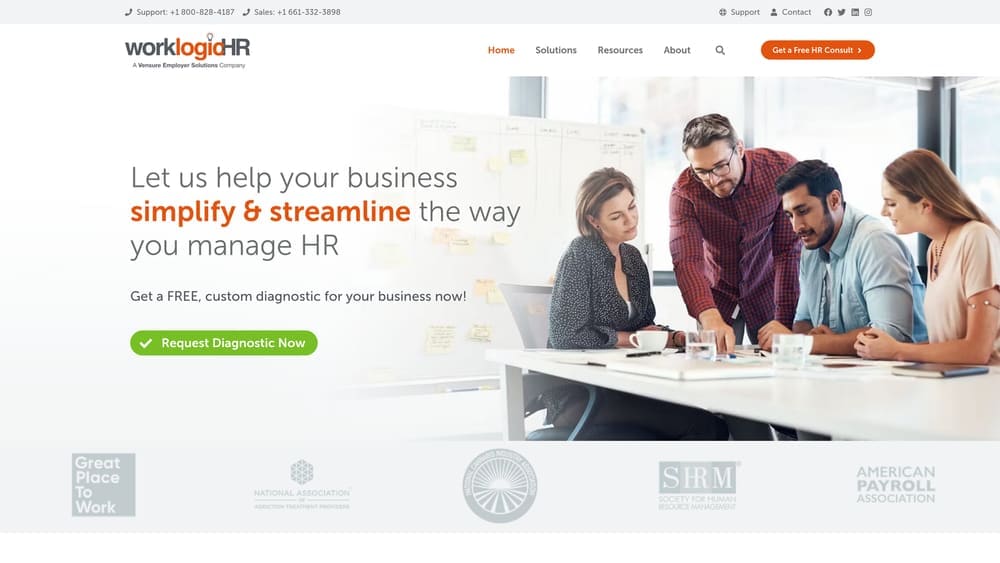
Worklogic HR positions itself as a technology-forward PEO emphasizing compliance and risk management for growing businesses.
Where This Provider Shines
Worklogic HR differentiates through its integrated HR technology platform. Instead of relying primarily on phone-based account management, they provide self-service tools for routine HR tasks.
The compliance and risk management focus shows up in their platform features. You get built-in tracking for policy acknowledgments, training completion, and regulatory deadlines that help reduce exposure in audits or employment disputes.
Key Features
Integrated HR Technology Platform: Centralizes employee data, payroll processing, benefits administration, and compliance tracking in a single system.
Compliance and Risk Management Focus: Includes tools for policy distribution, training tracking, incident documentation, and regulatory deadline management.
Payroll Processing and Tax Filing: Automates payroll calculations, tax withholdings, and quarterly filings with built-in validation to catch errors before submission.
Benefits Administration: Manages open enrollment, plan changes, and carrier communications through the platform with employee self-service options.
Employee Self-Service Portal: Allows employees to access pay stubs, update personal information, request time off, and view benefits without HR involvement.
Best For
Worklogic HR fits businesses with 15-150 employees that want to reduce manual HR administration through technology. The platform works best when your team is comfortable with online systems and prefers self-service options over phone calls. Companies facing complex compliance requirements or higher employment litigation risk benefit from the documentation and tracking capabilities.
Pricing
Pricing varies by service tier and headcount. Like most PEOs, Worklogic HR requires custom quotes based on your specific configuration. The technology platform typically justifies higher per-employee fees compared to basic service models, but may reduce overall administrative costs if it eliminates other software subscriptions.
Making the Right Choice Between These Providers
The decision between Workforce Business Services and Worklogic HR ultimately comes down to how you want to interact with your PEO and what operational gaps you need filled.
Workforce Business Services makes sense if you operate primarily in the Southeast or Texas, value direct relationships with your account manager, and prefer phone-based support over navigating software platforms. The traditional service model works well for businesses where HR complexity is manageable but you need expert backup for compliance questions and benefits negotiation.
Worklogic HR fits better if you want to centralize HR administration in a technology platform, need stronger compliance documentation and tracking, or have a team comfortable with self-service systems. The integrated approach reduces manual work but requires your staff to adopt the platform consistently.
Neither provider publishes transparent pricing, which means you’re negotiating fees without clear market benchmarks. Most PEOs charge either a per-employee monthly fee or a percentage of payroll. The difference in annual costs between providers can reach five figures for a 50-person company, making comparison critical.
Geographic service areas matter more than most businesses realize during initial evaluation. Workforce Business Services built its carrier relationships and compliance expertise around Southeast and Texas markets. If you operate outside those regions or plan to expand nationally, verify coverage before signing.
Contract terms deserve close attention with any PEO. Multi-year agreements, auto-renewal clauses, and termination penalties can lock you into unfavorable arrangements. Read the fine print on what happens if you outgrow the provider or need to switch mid-contract.
Before you compare your options, understand what you’re actually paying for. Most businesses overpay due to bundled fees and unclear administrative markups. We break down pricing, services, and contract structures so you can make a smarter decision.
The right PEO should reduce administrative burden and compliance risk without creating new operational dependencies. If you’re unclear on how these providers stack up against others in your region, get pricing transparency before committing to any co-employment agreement.