
Most TriNet vs HROi comparisons give you feature lists. What they don’t tell you is how these providers actually operate when you need support at 4pm on a Friday, or what happens when your benefits renewal comes back 40% higher than expected, or how much it costs to leave if things don’t work out.
TriNet operates as a national PEO with standardized service tiers and established technology infrastructure. HROi positions itself as a regional specialist with more personalized service models. Both handle payroll, benefits, and compliance. But the experience of working with each—and the costs involved—can differ significantly.
The real decision isn’t about which provider has more features. It’s about which operational model fits your business reality. Do you need national infrastructure and self-service technology, or regional expertise and hands-on support? Can you navigate standardized pricing tiers, or do you need flexibility to negotiate? Will your team adapt to a platform-first approach, or do they need direct access to knowledgeable people?
These seven decision factors cut through the marketing language and focus on what actually matters when you’re writing checks every month and relying on a PEO to keep your business compliant.
1. Pricing Model Transparency
Why Pricing Structure Matters More Than Quoted Rates
PEO pricing isn’t just about the percentage of payroll you pay. It’s about understanding what’s included in that percentage, what triggers additional fees, and how costs change as your business grows or contracts.
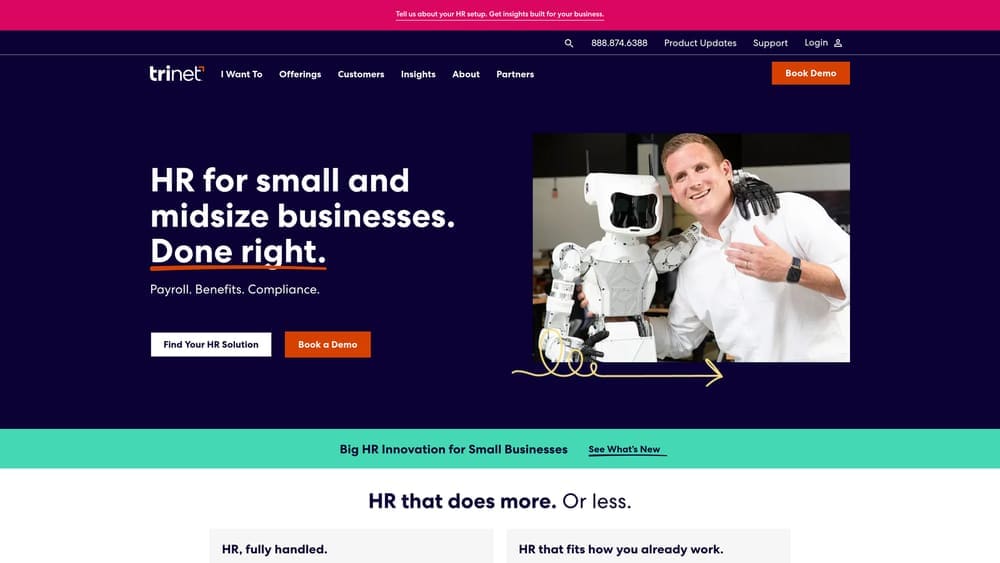
TriNet typically operates with tiered pricing structures tied to service levels. You select a plan—Essentials, Growth, or Zenefits—and your pricing reflects that tier plus your employee count and benefits elections. The advantage is predictability. The downside is limited flexibility if your needs don’t align neatly with a predefined tier.
HROi generally offers more negotiable pricing structures, particularly for businesses within their regional footprint. Because they operate at a smaller scale, they can often customize pricing based on your specific situation—industry risk profile, headcount, benefits preferences, and service requirements.
Hidden Cost Structures to Identify
Both providers charge administrative fees, but how those fees are structured varies significantly.
Ask about per-employee-per-month (PEPM) fees versus percentage-of-payroll models. Some providers quote a low percentage but add substantial PEPM charges that increase total costs. Understanding professional employer organization cost structures helps you compare apples to apples.
Implementation fees matter. TriNet’s onboarding costs are typically standardized based on your service tier. HROi may negotiate implementation fees based on complexity and timeline.
Benefits markups are where many businesses get surprised. PEOs negotiate carrier rates, then add administrative markups. The difference between a 5% and 15% markup on health insurance premiums compounds significantly across your workforce. Request explicit disclosure of benefits markups from both providers before signing.
Questions That Reveal Real Costs
What exactly is included in your quoted percentage? Does it cover all compliance support, or are multi-state filings extra? Does it include benefits administration, or just access to the platform?
How do costs change if you add employees mid-year? What happens if you reduce headcount? Some PEOs lock you into minimum fees regardless of workforce changes.
What triggers additional charges? Off-cycle payroll runs, retroactive adjustments, workers’ comp audits, and state registration fees can all generate unexpected invoices.
2. Service Delivery Model
National Scale vs Regional Depth
TriNet operates across all 50 states with a centralized service model. You get access to a large support team, but you’re typically routed through tiered support channels rather than working with a dedicated contact. For straightforward questions, this works efficiently. For complex situations requiring context about your business, it can feel impersonal.
HROi focuses on specific regional markets where they maintain deeper relationships with local brokers, carriers, and regulatory contacts. If you operate within their footprint, you’re more likely to work with people who understand your state’s specific requirements and can provide proactive guidance. Outside their core regions, their capabilities diminish.
What Support Actually Looks Like
TriNet’s platform-first approach means you’re expected to handle routine tasks through self-service tools. Payroll adjustments, benefits changes, and basic reporting happen through their system. You escalate to human support when the platform can’t resolve your issue.
HROi typically assigns dedicated contacts who handle more tasks on your behalf. If you prefer direct relationships and hands-on service, this model fits better. Understanding how the co-employment model works helps clarify what you can expect from either approach.
Neither approach is objectively better. It depends on your team’s capacity and preferences. Do you have someone internally who can manage a PEO platform effectively? Or do you need a provider who handles more operational details directly?
Response Time Expectations
Ask both providers about guaranteed response times for different issue types. Payroll emergencies, compliance questions, and benefits enrollment problems all require different urgency levels.
TriNet’s larger infrastructure generally means someone is available quickly, but you may not reach the same person twice. HROi’s regional model often provides more consistent contacts, but availability may be more limited outside business hours.
Request references from current clients in your industry and size range. Ask specifically about service responsiveness during critical periods—open enrollment, year-end processing, compliance audits.
3. Technology Platform Capabilities
Platform Functionality and User Experience
TriNet acquired Zenefits in 2022, significantly expanding their technology capabilities. Their platform now includes integrated HR, payroll, benefits, time tracking, and performance management tools. The interface is modern and designed for self-service. If your team is comfortable with cloud software, they’ll adapt quickly.
HROi’s technology infrastructure is more traditional. Their platform handles core functions effectively but offers fewer integrated modules. Comparing PEO HR technology platforms can help you understand what features matter most for your operations.
Integration Requirements
Most businesses don’t operate exclusively within a PEO platform. You have accounting software, project management tools, CRM systems, and industry-specific applications that need payroll and HR data.
TriNet offers more pre-built integrations with common business software. Their API documentation is more extensive, making custom integrations more feasible if you have development resources.
HROi typically requires more manual data exchange or custom integration work. For businesses with simpler tech stacks, this isn’t a major limitation. For companies with complex integration requirements, learning how to set up PEO payroll integration becomes essential.
Data Portability and Ownership
What happens to your data if you leave? This matters more than most businesses realize until they’re trying to transition to a new provider.
Both providers should provide complete data exports, but the format and completeness vary. Request sample data exports during evaluation. Verify that you can extract complete payroll history, benefits enrollment details, compliance documentation, and employee records in usable formats.
Some PEOs make data extraction difficult or expensive during termination. Clarify exactly what data you can access, in what format, and at what cost before signing.
4. Benefits Administration
Carrier Relationships and Plan Options
PEOs aggregate employees across multiple client companies to negotiate better insurance rates. But the carriers they work with and the plans they offer vary significantly.
TriNet maintains relationships with major national carriers. Their size gives them negotiating leverage, but you’re typically selecting from their pre-negotiated plan options rather than building custom arrangements.
HROi’s regional focus often means stronger relationships with regional carriers and brokers. In some markets, this produces better rates or more flexible plan designs. Understanding the full scope of professional employer organization benefits helps you evaluate what each provider actually delivers.
Renewal Dynamics
Benefits renewals are where many businesses experience sticker shock with PEOs. Rates increase, plan options change, and you have limited time to evaluate alternatives.
Ask both providers about their renewal process. How much advance notice do you receive? Can you shop alternative carriers if renewal rates are unacceptable? What happens if you want to change plan designs mid-contract?
Some PEOs lock you into their benefits arrangements with limited flexibility. Others allow you to explore alternatives if renewals come back unfavorably. This flexibility matters significantly over multi-year relationships.
Benefits Markup Transparency
PEOs don’t just pass through carrier costs. They add administrative markups that represent significant revenue.
Request explicit disclosure of benefits markups from both providers. Some quote markups as flat percentages. Others use more complex formulas tied to plan types or employee tiers.
A seemingly small difference in benefits markups compounds substantially. On a $500,000 annual benefits spend, a 5% markup costs $25,000 annually. A 12% markup costs $60,000. Over a three-year contract, that’s a $105,000 difference.
5. Compliance Support Depth
Multi-State Expertise
If you operate in multiple states, compliance complexity increases exponentially. State-specific wage laws, paid leave requirements, unemployment insurance, workers’ compensation, and tax obligations all vary.
TriNet’s national infrastructure handles multi-state compliance systematically. They maintain registrations, file required reports, and manage state-specific obligations across all jurisdictions. For businesses expanding geographically, reviewing PEO options for multi-state companies provides valuable context.
HROi’s regional model works well within their core markets but may require more client involvement in states outside their primary footprint. If you operate exclusively within their region, this isn’t a limitation. If you’re expanding nationally, it becomes one.
Proactive vs Reactive Guidance
Compliance support isn’t just about filing forms correctly. It’s about understanding regulatory changes before they affect you and adjusting policies proactively.
Ask both providers how they communicate regulatory updates. Do you receive proactive alerts about changes affecting your industry or states? Or are you responsible for monitoring compliance developments independently?
TriNet typically provides more systematic compliance communications through their platform and email updates. Understanding PEO compliance responsibilities clarifies what falls on the provider versus what remains your obligation.
Audit Support
When you face a workers’ comp audit, unemployment claim, or wage-hour investigation, does your PEO provide substantive support or just documentation?
Clarify exactly what happens during audits and investigations. Will someone from the PEO participate in conversations with regulators? Do they prepare responses and documentation? Or do they simply provide records and leave you to manage the process?
The difference between active support and passive documentation becomes painfully clear when you’re facing a six-figure workers’ comp audit adjustment.
6. Contract Terms and Exit Flexibility
Contract Length and Auto-Renewal
Most PEO contracts run one to three years with automatic renewal clauses. The renewal terms matter significantly.
TriNet typically uses annual contracts with 60-90 day termination notice requirements. If you miss the notice window, you’re automatically renewed for another year.
HROi’s contract terms vary more based on negotiation. Some clients secure more flexible termination provisions. Others face similar annual commitments.
Read the auto-renewal clause carefully. Reviewing what’s typically included in a professional employer organization agreement helps you know what to watch for before signing.
Termination Costs
What does it cost to leave? Some PEOs charge substantial termination fees. Others allow termination at contract end without penalty but make data transition difficult.
Request explicit disclosure of all termination-related costs. Implementation fee clawbacks, data export charges, benefits continuation requirements, and final payroll processing fees can all generate unexpected expenses.
Some contracts include provisions that make mid-contract termination prohibitively expensive. If service quality deteriorates or your business needs change, you may be stuck until contract expiration.
Transition Support
When you terminate a PEO relationship, you need complete data, clean handoffs to new providers, and continued compliance coverage through the transition.
Ask both providers about their transition support process. Do they provide dedicated resources to facilitate clean exits? Or do you manage the transition independently while still paying for services?
Some PEOs make transitions unnecessarily difficult—slow data exports, incomplete documentation, delayed final processing. Others recognize that professional transitions protect their reputation and provide substantive support.
7. Headcount Fit
Where Each Provider Performs Best
PEOs operate most efficiently within specific size ranges. Outside those ranges, pricing increases or service quality declines.
TriNet generally performs well for businesses with 10-500 employees. Below 10 employees, their pricing may be less competitive compared to simpler payroll providers. Above 500 employees, you may have leverage to negotiate better terms with other PEOs or consider in-house HR infrastructure.
HROi typically focuses on businesses with 20-200 employees within their regional markets. Smaller companies may find their pricing competitive. Exploring PEO options for small business helps you identify providers that specialize in your size range.
Growth Trajectory Considerations
Where do you expect to be in three years? If you’re growing rapidly, your PEO relationship needs to scale effectively.
TriNet’s infrastructure handles growth well if you’re expanding within their service model. Adding employees, entering new states, and increasing complexity don’t fundamentally change their delivery approach.
HROi’s regional model works well for steady growth within their footprint. Rapid national expansion may strain their capabilities or require supplemental compliance resources.
Contraction Scenarios
What happens if you need to reduce headcount significantly? Some PEO contracts include minimum fee commitments that continue regardless of workforce size.
Ask both providers about their policies for workforce reductions. Do fees scale proportionally with headcount? Are there minimum commitments that continue even if you reduce to a skeleton crew?
Businesses facing difficult market conditions have found themselves locked into substantial PEO fees despite reducing staff by 50% or more. Understand these provisions before signing.
Making the Decision That Fits Your Business
Choosing between TriNet and HROi isn’t about identifying the objectively superior provider. It’s about matching operational models to your specific situation.
If you prioritize national infrastructure, established technology, and standardized service at scale, TriNet deserves serious consideration. Their platform capabilities are more developed, their multi-state compliance infrastructure is comprehensive, and their size provides stability.
If regional expertise, hands-on service relationships, and pricing flexibility matter more, HROi may align better. Their personalized approach works well for businesses that value direct relationships over self-service platforms, particularly within their core geographic markets.
Before signing with either provider, get detailed pricing breakdowns that disclose all fees—administrative percentages, PEPM charges, benefits markups, implementation costs, and termination provisions. Request these in writing, not verbal estimates.
Speak with current clients in your industry and size range. Ask specifically about service responsiveness during critical periods, benefits renewal experiences, and how the provider handled unexpected situations.
Clarify exactly what happens when you need to exit. Review termination clauses, data access provisions, and transition support commitments. The relationship should simplify your operations, not create dependencies you’ll regret when circumstances change.
Before you renew your PEO agreement, compare your options. Most businesses overpay due to bundled fees and unclear administrative markups. We break down pricing, services, and contract structures so you can make a smarter decision.
The right PEO relationship should feel like a genuine operational partnership, not a vendor relationship you’re stuck managing. Take the time to evaluate thoroughly before committing.