
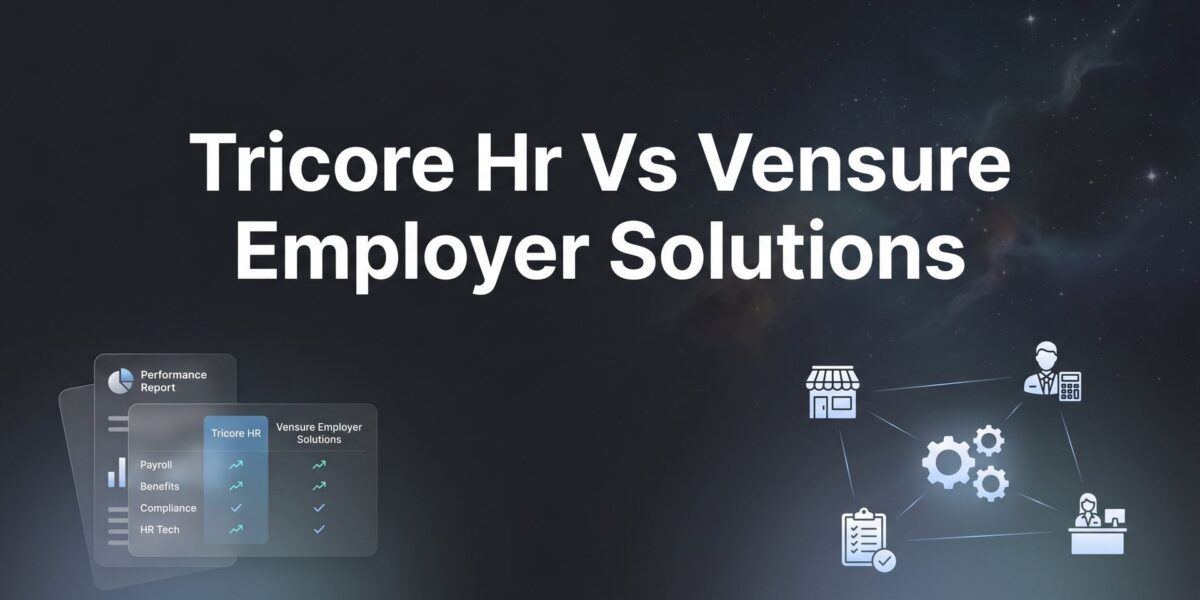
When you’re comparing TriCore HR and Vensure Employer Solutions, you’re looking at two fundamentally different PEO models. TriCore operates as a regional provider with deep roots in the Southwest, built around relationship-focused service. Vensure has grown into one of the largest PEOs in the country through aggressive acquisitions, operating multiple brands under one corporate umbrella. The choice between them isn’t about which is “better”—it’s about which model fits how your business actually operates. This comparison breaks down pricing structures, service delivery, technology platforms, and the real operational tradeoffs you’ll face with either choice.
Understanding these differences matters because switching PEOs is disruptive. You’re moving payroll, benefits, workers’ comp, and compliance functions all at once. Getting it wrong means service gaps, employee frustration, and potential regulatory issues during transition.
1. TriCore HR
Best for: Southwest-based businesses prioritizing regional expertise and consistent service relationships
TriCore HR is a regional PEO headquartered in New Mexico, serving primarily Southwest businesses with a relationship-focused service model.
Where This Provider Shines
TriCore’s regional focus means they understand Southwest-specific employment dynamics. They know New Mexico’s unique workers’ comp environment, understand Arizona’s wage and hour nuances, and navigate Texas multi-state employer complications daily. This isn’t theoretical knowledge—it’s operational expertise built over decades in these markets.
Their service model centers on dedicated teams rather than rotating call centers. You work with the same payroll specialist, benefits coordinator, and HR consultant consistently. When you call with a question, the person answering already knows your company, your employees, and your history. For businesses that value relationship continuity, this matters significantly.
Key Features
Regional Southwest Focus: Deep expertise in New Mexico, Arizona, Texas, and surrounding states with local market knowledge.
Dedicated Service Teams: Consistent points of contact across payroll, benefits, and HR rather than rotating support staff.
Payroll and HR Administration: Core payroll processing with tax filing, wage garnishments, and basic HR compliance support.
Workers’ Compensation Management: Workers’ comp coverage with claims management and safety program support tailored to Southwest industries.
Benefits Administration: Health insurance, retirement plans, and voluntary benefits with regional carrier relationships.
Operational Considerations
TriCore’s regional strength becomes a limitation if you expand significantly outside the Southwest. Their expertise, carrier relationships, and service infrastructure concentrate in their core markets. A company with locations in Georgia, Illinois, and California will likely find better fit elsewhere.
Technology is functional but not cutting-edge. You’ll get what you need for payroll, time tracking, and benefits enrollment, but don’t expect the polish or mobile experience of enterprise HR platforms. For most small businesses, this tradeoff is acceptable—core functionality matters more than interface design.
Pricing tends to be more transparent than national aggregators. You’re dealing with one company, one pricing structure, and fewer layers of administrative markup. That said, “transparent” doesn’t automatically mean “cheaper”—it means you can see what you’re paying for.
Best For
TriCore works well for businesses with 20–200 employees primarily located in the Southwest who value consistent service relationships and regional expertise. Companies in construction, hospitality, healthcare, and professional services find good fit here. If your leadership team prefers working with the same people rather than navigating enterprise support systems, TriCore’s model makes sense.
Pricing
Custom pricing based on headcount and services selected. Typically structured as a percentage of payroll or per-employee-per-month fee. Expect pricing conversations to focus on your specific employee count, benefits participation rates, and workers’ comp risk profile rather than standardized tier pricing.
2. Vensure Employer Solutions
Best for: Multi-state businesses needing national coverage or specific industry expertise from Vensure’s acquired brands
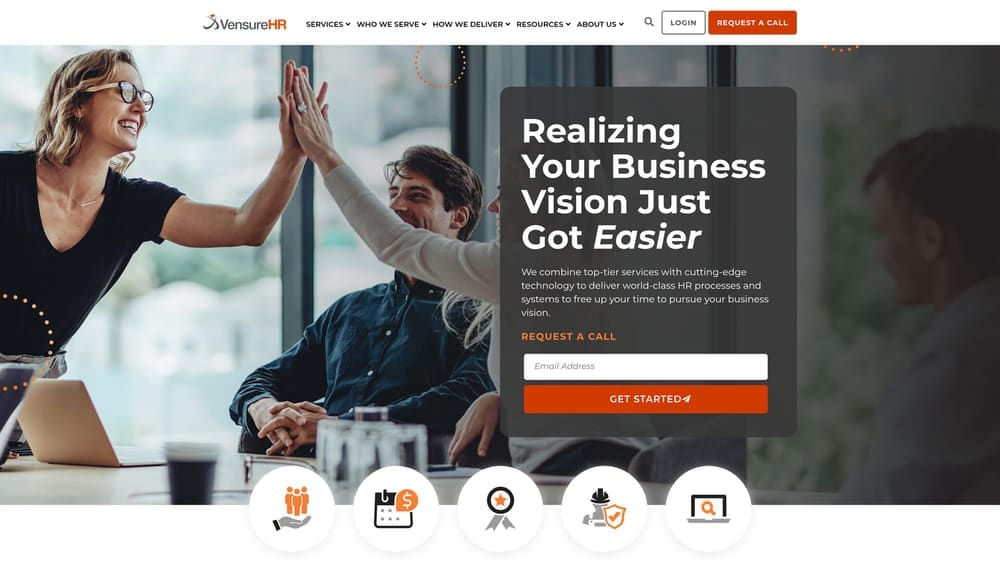
Vensure Employer Solutions is a large national PEO operating multiple acquired brands, serving diverse industries across all 50 states.
Where This Provider Shines
Vensure’s growth through acquisitions gives them national scale and industry-specific expertise through their portfolio companies. They’ve absorbed regional PEOs with deep knowledge in specific verticals—healthcare staffing, hospitality, manufacturing, professional services. If your business fits one of these specialized niches, you may benefit from that focused expertise.
National coverage means consistent service across all 50 states. A company with employees in Arizona, Florida, Ohio, and Washington gets unified payroll, benefits, and compliance support without coordinating multiple vendors. This administrative simplification has real value for growing companies expanding into new markets.
Key Features
National Coverage: Service infrastructure across all 50 states with multi-state compliance support and unified administration.
Multiple Specialized Brands: Portfolio of acquired PEOs with industry-specific expertise in healthcare, hospitality, manufacturing, and professional services.
Comprehensive HR and Payroll Services: Full-service payroll processing, tax compliance, HR administration, and regulatory support.
Risk Management and Workers’ Comp: Workers’ compensation coverage with safety programs, claims management, and loss control services.
Benefits Administration: Large group purchasing power for health insurance, retirement plans, and voluntary benefits across national carrier networks.
Operational Considerations
Vensure’s multi-brand structure creates complexity. You might technically be a client of one of their acquired companies rather than “Vensure” directly. This affects everything from technology platforms to service delivery to contract terms. Different acquired brands operate on different systems with different service models.
Service consistency varies significantly. Some businesses report excellent dedicated support. Others describe rotating contacts, slow response times, and difficulty getting answers across organizational silos. Your experience depends heavily on which acquired brand you’re assigned to and how well they’ve integrated into Vensure’s corporate structure.
Technology integration is ongoing. Vensure hasn’t fully unified their acquired companies onto a single platform. You may find yourself using different systems for payroll, benefits, and HR depending on which brand services your account. For companies prioritizing seamless technology experience, this fragmentation creates friction.
Pricing structures differ across Vensure’s portfolio. One acquired brand might use percentage-of-payroll pricing while another uses per-employee-per-month fees. Administrative markups and service fees vary. Getting clear pricing comparisons requires understanding exactly which Vensure entity you’re evaluating.
Best For
Vensure fits businesses with 50+ employees operating in multiple states who need national compliance support and can navigate a more complex organizational structure. Companies in industries where Vensure has specialized acquired brands—healthcare staffing, hospitality groups, multi-location retail—may find value in that vertical expertise. This model works better for businesses comfortable with enterprise vendor relationships rather than those prioritizing simplicity and relationship continuity.
Pricing
Varies significantly by acquired brand and service package. Pricing structures differ across Vensure’s portfolio companies—some use percentage of payroll, others use per-employee-per-month fees, and administrative markups vary. Expect pricing conversations to depend heavily on which Vensure brand services your account and their specific fee structure.
Making the Right Choice
Both TriCore HR and Vensure Employer Solutions serve legitimate market needs, but they’re built for different business profiles. The decision comes down to geographic footprint, service model preference, and organizational complexity tolerance.
TriCore works best for companies that value regional expertise, consistent service contacts, and straightforward pricing. If your operations concentrate in the Southwest, you prefer working with the same people consistently, and you want transparency in what you’re paying for, TriCore’s model makes sense. Their limitations are clear: weaker fit for multi-region expansion, less sophisticated technology, and smaller benefits purchasing power than national aggregators.
Vensure fits businesses needing national scale, specific industry expertise from their acquired brands, or multi-state compliance support. If you’re expanding into new states, need specialized vertical knowledge, or can navigate a more complex organizational structure, Vensure’s capabilities justify the tradeoffs. The downsides are equally clear: inconsistent service quality across brands, fragmented technology platforms, and pricing complexity that requires careful evaluation.
Before signing with either provider, get specific answers about your dedicated service team structure, technology migration timelines, and contract renewal terms. Ask which specific Vensure brand would service your account if you’re considering them. Understand exactly what happens during implementation and who your day-to-day contacts will be.
The biggest mistake is choosing based on brand recognition or sales presentation quality rather than operational fit. A PEO relationship affects payroll, benefits, workers’ comp, and compliance simultaneously. Switching later is disruptive and expensive. Take the time to understand how each provider actually operates, not just what they promise.
Before you renew your PEO agreement, compare your options. Most businesses overpay due to bundled fees and unclear administrative markups. We break down pricing, services, and contract structures so you can make a smarter decision. Getting objective comparison data before you commit helps you negotiate better terms and choose the provider that actually fits how your business operates.