

You’re comparing two PEOs that couldn’t be more different. SouthEast Personnel Leasing built its reputation one relationship at a time in Florida and the Southeast, focusing on high-risk industries where workers’ comp expertise actually matters. Vensure Employer Solutions grew by buying up dozens of regional providers, stitching together national coverage through acquisition.
Neither approach is inherently better. The question is which model fits your business—and that depends on where you operate, what industries you serve, and whether you prioritize deep regional expertise or broad geographic reach.
Here’s what actually differentiates these providers beyond the marketing language.
1. SouthEast Personnel Leasing
Best for: Southeast-based businesses in construction, staffing, or hospitality needing strong workers’ comp management
SouthEast Personnel Leasing is a regional PEO that operates primarily in Florida and surrounding Southeast states, with a service model built around industry-specific expertise and direct account relationships.

Where This Tool Shines
SouthEast Personnel Leasing focuses on industries where workers’ compensation is complicated and expensive—construction, staffing agencies, hospitality, and similar high-risk sectors. Their regional concentration means they understand Southeast-specific regulatory nuances, state workers’ comp systems, and local benefit markets better than national providers trying to serve all 50 states.
The relationship model matters here. You typically work with the same account team throughout your contract, not a rotating cast of support reps. For businesses where payroll errors or benefits administration mistakes create real operational problems, that consistency has value.
Key Features
Southeast Regional Expertise: Deep knowledge of Florida workers’ comp regulations, state employment law, and regional benefit markets rather than generic national coverage.
Workers’ Compensation Management: Focused claims management, safety program development, and return-to-work coordination for high-risk industries where comp costs significantly impact profitability.
Dedicated Account Management: Direct access to assigned account reps rather than tiered support queues or rotating customer service teams.
Industry Specialization: Tailored service models for construction contractors, staffing agencies, hospitality operators, and similar sectors with complex risk profiles.
Safety Program Development: Proactive safety consulting and training designed to reduce workplace incidents and lower workers’ comp experience mods over time.
Best For
Southeast-based businesses in construction, staffing, hospitality, or other industries where workers’ compensation is a major cost driver. Works well for companies that value relationship continuity and regional expertise over national brand recognition. Particularly relevant if your growth plans stay within the Southeast rather than expanding nationally.
Pricing
Typically structured as per-employee-per-month fees, with pricing varying significantly based on industry risk classification and workers’ comp experience. Higher-risk industries pay more due to increased insurance exposure. Get specific quotes based on your actual employee count and industry classification.
2. Vensure Employer Solutions
Best for: Multi-state businesses needing broad geographic coverage and diverse benefit plan options
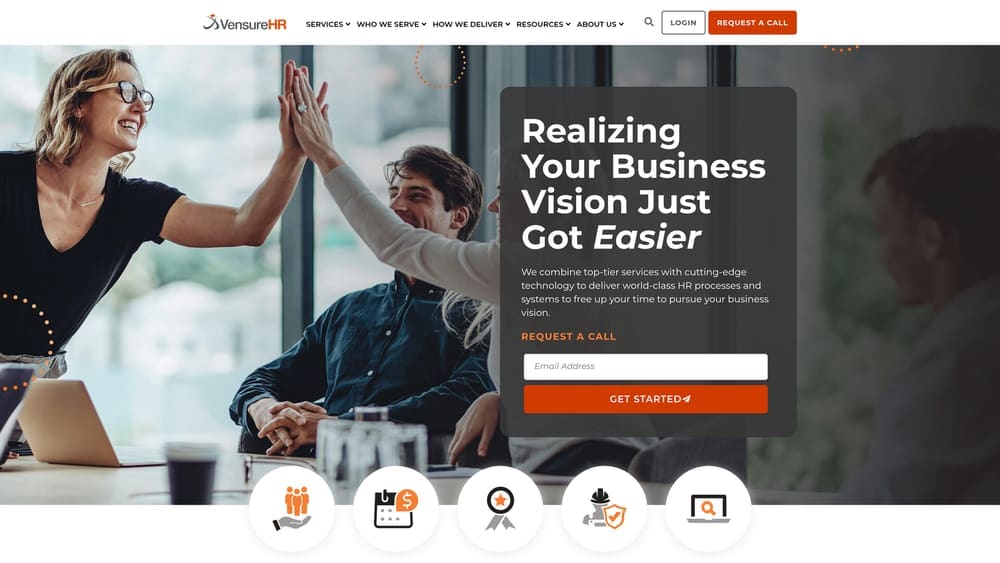
Vensure Employer Solutions is a national PEO built through aggressive acquisition of regional providers, offering coast-to-coast coverage and scale-driven purchasing power.
Where This Tool Shines
Vensure’s rollup strategy created something most regional PEOs can’t match—true multi-state coverage without relying on third-party partnerships. If you operate in multiple states or plan to expand nationally, working with a provider that already has infrastructure in those markets eliminates coordination headaches.
The acquisition approach also gives Vensure significant scale in benefit negotiations. Larger employee pools mean better leverage with insurance carriers, which can translate to more plan options and potentially better rates. The tradeoff is service consistency—acquired companies integrate at different speeds, so your experience may vary depending on which legacy brand serves your account.
Key Features
National Multi-State Coverage: Direct service across most U.S. states through acquired regional providers rather than third-party partnerships or limited geographic footprints.
Large Benefit Plan Selection: Extensive health insurance options, retirement plans, and supplemental benefits due to combined purchasing power across acquired companies.
Scale-Driven Pricing Power: Negotiating leverage with carriers and vendors based on total covered employee count across all acquired brands.
Multiple Service Tiers: Varying levels of HR support, technology access, and account management depending on company size and budget.
Technology Platform Access: HR software, payroll systems, and employee self-service portals, though specific platforms may vary by acquired brand.
Best For
Businesses operating in multiple states or planning national expansion who need a single PEO relationship rather than coordinating regional providers. Works for companies prioritizing benefit plan variety and national infrastructure over deep regional expertise. Best fit if you’re comfortable with tiered service models and don’t require dedicated account team continuity.
Pricing
Pricing models vary depending on which acquired brand serves your account. Most commonly structured as per-employee-per-month fees or percentage-of-payroll models. Expect pricing to reflect service tier selection and benefit plan choices. Request detailed breakdowns of administrative fees versus pass-through insurance costs.
Making the Right Choice
This isn’t a question of which PEO is objectively better. It’s about which model fits your specific situation.
SouthEast Personnel Leasing makes sense if you operate primarily in the Southeast, work in a high-risk industry where workers’ comp expertise matters, and value relationship continuity with your account team. Their regional focus means they understand local regulations and market conditions deeply, but you’re limited geographically if expansion plans take you outside their footprint.
Vensure Employer Solutions fits businesses with multi-state operations or national growth plans who need broad geographic coverage and diverse benefit options. The scale advantages are real, but service consistency can vary as acquired companies integrate. You’re trading regional depth for national breadth.
Key questions to ask both providers during evaluation: What happens if you expand outside their core service area? How are account teams structured, and what guarantees exist around service continuity? What are the actual exit terms if the relationship doesn’t work? How do they handle workers’ comp claims in your specific industry?
Get quotes from both. Compare total all-in costs, not just the headline per-employee fees. Ask about administrative markups, benefit plan pricing, workers’ comp experience mod impacts, and any additional fees buried in the contract.
Before you renew your PEO agreement, compare your options. Most businesses overpay due to bundled fees and unclear administrative markups. We break down pricing, services, and contract structures so you can make a smarter decision.
The right PEO depends on where you operate, where you’re growing, and what you actually need from the relationship. Neither provider checks every box for every business—that’s why the comparison matters.