
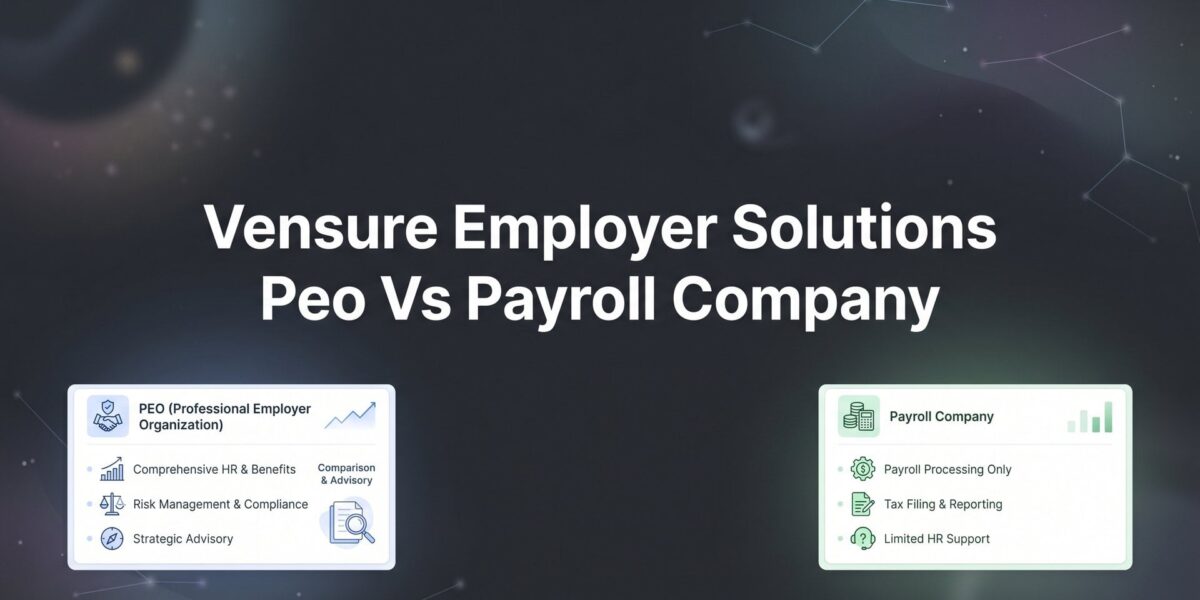
If you’re evaluating Vensure Employer Solutions but also wondering whether a standalone payroll company would do the job at lower cost, you’re asking exactly the right question. The PEO vs. payroll decision isn’t about which model is better in the abstract. It’s about what your business actually needs right now.
Full co-employment through a PEO bundles payroll, benefits, compliance, workers’ comp, and HR support under one roof. That’s valuable if you need it. But if you’re a 12-person company with straightforward payroll and decent benefits already, you may be paying for infrastructure you’ll never use. The tools below span both models so you can see what each delivers, what it costs, and where the real tradeoffs are.
1. Clicks Geek PEO Comparison Platform
Best for: Business owners who want independent, unbiased guidance before choosing or renewing a PEO
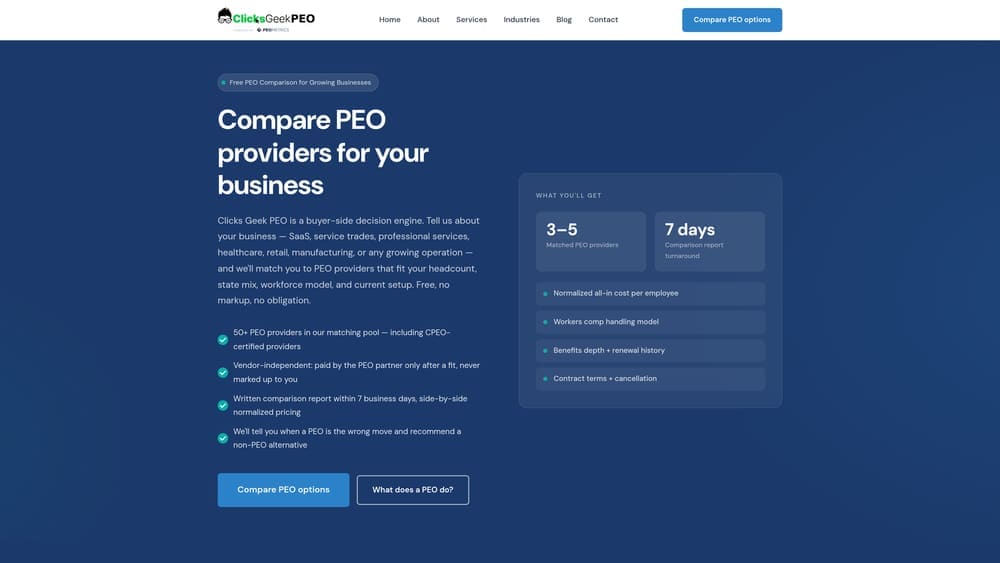
Clicks Geek PEO is an independent comparison and advisory platform built for businesses evaluating PEO providers or deciding whether a PEO is the right fit at all.
Where This Tool Shines
Most resources that help you “compare PEOs” are actually lead generation tools for PEO brokers. They get paid when you sign with a provider, which creates an obvious incentive problem. Clicks Geek operates differently. There’s no commission structure pushing you toward a particular provider, which means the analysis you get reflects your situation rather than someone else’s sales quota.
The platform is particularly useful if you’re mid-contract with a PEO like Vensure and wondering whether you’re getting fair value, or if you’re evaluating for the first time and don’t know where to start. The PEO vs. payroll decision resources help you think through the actual cost and operational tradeoffs before committing to either model.
Key Features
Side-by-Side Provider Comparisons: Evaluate multiple PEO providers across services, pricing structures, and contract terms in one place.
Transparent Pricing Breakdowns: Understand how PEO pricing actually works, including administrative fees, benefits markups, and workers’ comp bundling.
Independent Advisory: No PEO sales incentives. The platform’s methodology is published openly so you know how providers are evaluated.
PEO vs. Payroll Decision Resources: Structured guidance on when co-employment makes sense and when a payroll-only model is the smarter, lower-cost path.
Provider Review Standards: Evaluation criteria are transparent, not black-box scoring designed to favor partners.
Best For
Business owners, CFOs, and HR decision-makers who want to understand what they’re actually buying before signing a multi-year PEO agreement. Especially useful for companies evaluating Vensure renewals or comparing it against other providers.
Pricing
Free comparison resources and tools. No subscription required to access the core advisory content.
2. Vensure Employer Solutions
Best for: Mid-sized businesses that want full-service PEO with bundled compliance, benefits, and workers’ comp under one contract
Vensure Employer Solutions is one of the largest PEOs in the country by client count, built through aggressive acquisition of regional PEO and HR firms over the past decade.
Where This Tool Shines
Vensure covers the full co-employment spectrum: payroll, benefits administration, HR compliance, workers’ comp, and risk management. For businesses operating across multiple states or in industries with significant workers’ comp exposure, the bundled model can simplify a lot of administrative complexity in one contract.
One thing worth knowing: Vensure has grown primarily through acquisitions. Depending on which legacy brand you were originally onboarded through (VensureHR, EmployerOptions, and others), your service experience may vary. Some clients report strong account management. Others describe inconsistency as legacy systems get integrated. It’s worth asking pointed questions about service continuity during your evaluation.
Key Features
Full Co-Employment PEO Model: Shared employer responsibilities covering payroll, HR, and compliance across your workforce.
Workers’ Comp Administration: Bundled workers’ comp coverage and risk management, which can be a significant cost advantage for certain industries.
Benefits Access: Health insurance and other benefits through pooled employer groups, often at rates smaller businesses can’t access independently.
Multi-State Compliance Support: Payroll tax filing and regulatory compliance across multiple states.
HR Consulting: Employee relations support and HR guidance through dedicated or shared HR representatives.
Best For
Companies with 25 or more employees operating in multiple states or industries with complex workers’ comp needs. Less ideal for very small businesses or those with simple, single-state payroll.
Pricing
Custom quotes only. Pricing is typically structured as a percentage of payroll or a per-employee-per-month fee. Request a quote directly through Vensure’s website.
3. Gusto
Best for: Small businesses that want modern, full-service payroll without co-employment complexity
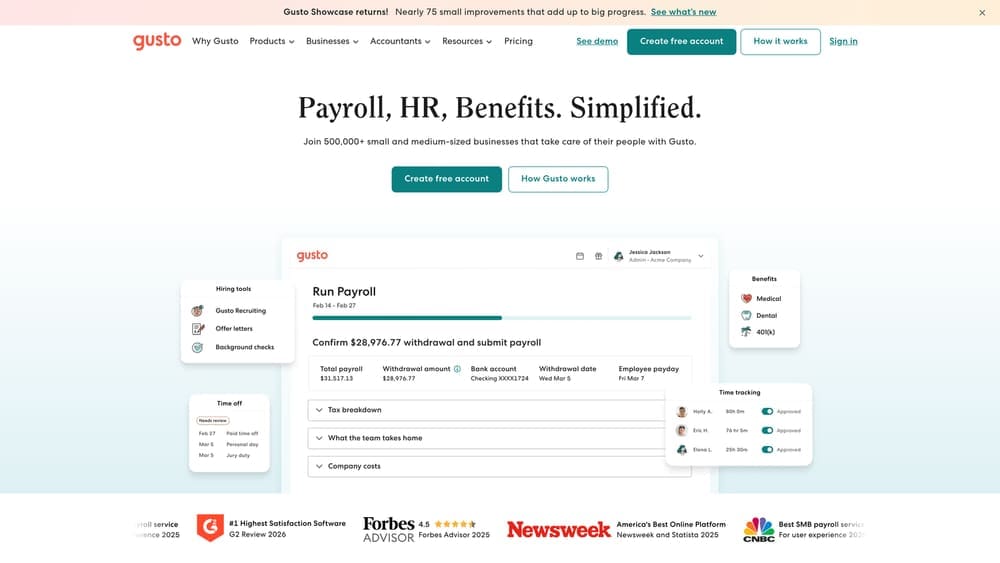
Gusto is a payroll-first platform built for small businesses, combining automated tax filing, benefits brokerage, and HR tools in a clean, approachable interface.
Where This Tool Shines
Gusto handles the payroll fundamentals extremely well: direct deposit, automated federal and state tax filings, year-end W-2 and 1099 processing. For businesses under 50 employees that don’t need the full co-employment structure of a PEO, Gusto often covers 80% of what they actually use at a fraction of the cost.
The benefits brokerage layer is genuinely useful for small teams. You can shop and administer health insurance through the same platform without layering on a separate broker relationship. It’s not the same as the group rate access a PEO provides, but for many small businesses the difference is smaller than PEO sales pitches suggest.
Key Features
Automated Tax Filing: Federal, state, and local payroll tax filing handled automatically with every payroll run.
Benefits Brokerage: Health insurance, dental, vision, and 401(k) options administered directly through the platform.
Employee Self-Service Portal: Employees manage their own onboarding, pay stubs, and benefits elections without HR intervention.
Time Tracking and PTO: Built-in time tracking and PTO management that feeds directly into payroll.
Contractor Payments: 1099 contractor payments and annual filings included, which is useful for businesses with mixed workforces.
Best For
Small businesses with 5 to 50 employees that want clean, reliable payroll with optional benefits administration. Not a PEO, so you retain full employer-of-record status and liability.
Pricing
Simple plan starts at $40/month base plus $6 per person per month. Higher-tier plans with additional HR features are available at increased per-employee rates.
4. ADP TotalSource
Best for: Growing companies that want enterprise-grade PEO infrastructure with CPEO certification and Fortune 500 benefits access
ADP TotalSource is ADP’s full-service PEO offering, carrying IRS-certified CPEO status and the compliance infrastructure you’d expect from one of the largest HR companies in the world.
Where This Tool Shines
CPEO certification matters for specific tax treatment under the Tax Cuts and Jobs Act. If your business is structured in a way where the certified PEO designation affects your tax liability, TotalSource is one of the few providers with that credential. Combined with ADP’s nationwide compliance team, it’s a serious option for companies that have outgrown mid-market PEOs.
The benefits access is genuinely differentiated. ADP’s scale means pooled plans that smaller PEOs simply can’t match. If your team is competing for talent and benefits are a real factor in hiring, the gap between what TotalSource offers and what a regional PEO offers can be meaningful.
Key Features
IRS-Certified CPEO Status: Provides specific federal tax treatment advantages not available through non-certified PEOs.
Fortune 500-Caliber Benefits: Access to large-group health, dental, vision, life, and retirement plans at competitive rates.
Dedicated HR Business Partner: Named HR support contact assigned to your account, not a shared call center.
Full Payroll and Tax Administration: Multi-state payroll processing with complete tax filing and compliance management.
Workers’ Comp and Risk Management: Integrated workers’ comp administration with risk mitigation support.
Best For
Companies with 50 or more employees that need enterprise compliance infrastructure, strong benefits packages for talent retention, and the credibility of a nationally recognized provider.
Pricing
Custom quotes. Generally priced higher than mid-market PEOs. Designed for larger organizations where the benefits and compliance value justifies the cost.
5. Paychex Flex
Best for: Businesses that want to start with payroll and scale into PEO services without switching vendors
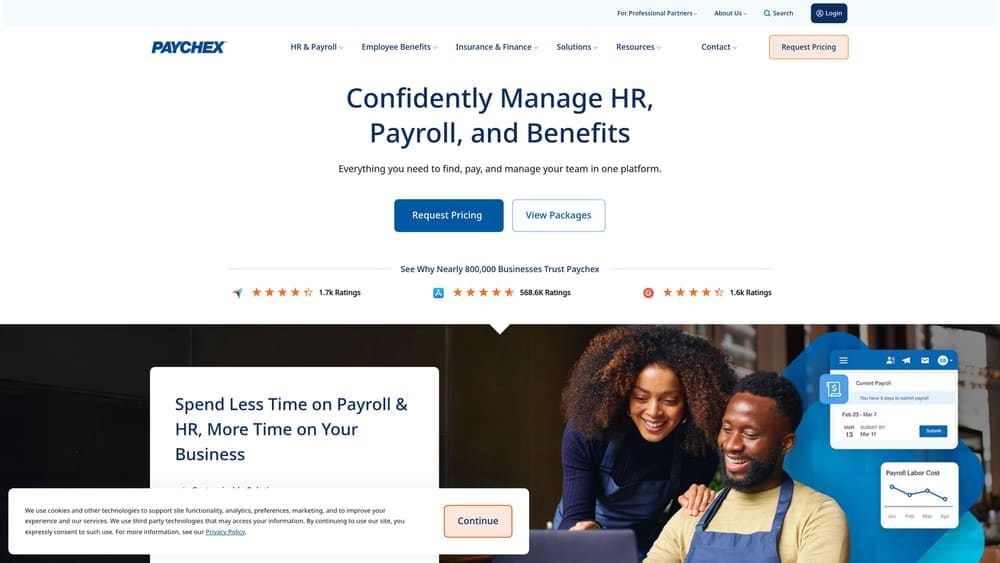
Paychex Flex is a modular payroll and HR platform that lets businesses grow from basic payroll into full PEO co-employment through Paychex PEO, all within the same vendor relationship.
Where This Tool Shines
The modular structure is the real differentiator here. You’re not forced to commit to full co-employment on day one. Start with payroll, add time and attendance, layer in HR tools, and transition to PEO when your headcount and complexity justify it. That continuity matters — switching payroll vendors is painful, and Paychex lets you avoid it as you grow.
The pay-as-you-go workers’ comp option is worth noting for businesses in industries with variable risk exposure. Rather than paying a large upfront premium, workers’ comp is calculated per payroll run based on actual wages, which improves cash flow for seasonal or project-based businesses.
Key Features
Scalable Architecture: Move from payroll-only to full PEO services without changing platforms or re-onboarding your workforce.
Pay-As-You-Go Workers’ Comp: Workers’ comp premiums calculated per payroll run rather than estimated annually.
Multi-State Payroll: Tax filing and compliance across multiple states handled within the same platform.
Integrated HR and Benefits: Time tracking, benefits administration, and HR tools available as add-ons or bundled in PEO tiers.
Dedicated Payroll Specialist: Named support contact for payroll questions, not just a general help desk.
Best For
Businesses in growth mode that want flexibility to scale HR services over time without the disruption of switching vendors. Also strong for industries where workers’ comp cash flow management matters.
Pricing
Payroll starts around $39/month plus $5 per employee. PEO pricing through Paychex PEO is custom quoted and varies by headcount and services selected.
6. Justworks
Best for: Startups and remote-first teams that want PEO benefits access with transparent, predictable pricing
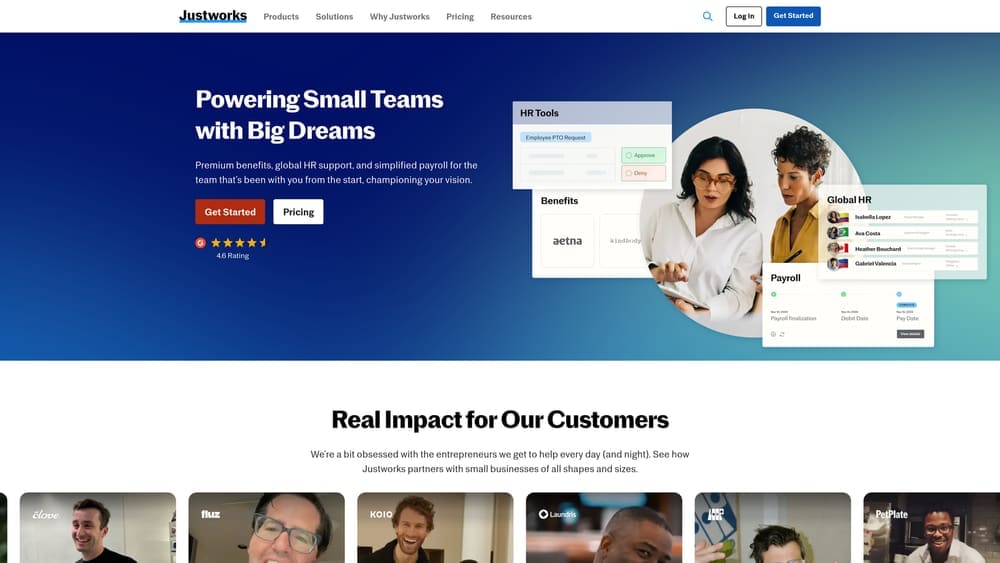
Justworks is a PEO built specifically for smaller, distributed teams that want access to large-group benefits without the complexity and opaque pricing that often comes with traditional PEO contracts.
Where This Tool Shines
Transparent pricing is genuinely rare in the PEO industry. Most providers require a custom quote before you can evaluate whether the cost makes sense for your business. Justworks publishes its per-employee pricing publicly, which makes budgeting straightforward and removes the negotiation theater that characterizes most PEO sales processes.
For startups competing with larger companies for talent, the benefits access through Justworks is the primary draw. Being able to offer large-group health insurance rates to a 15-person team changes the recruiting conversation. The 24/7 support model via Slack and email also fits how distributed teams actually operate.
Key Features
Published Per-Employee Pricing: No custom quote required to understand what you’ll pay, which is uncommon in the PEO space.
Large-Group Health Insurance Access: Group rates typically unavailable to small businesses on their own.
Full PEO Platform: Payroll, compliance, HR tools, and benefits administration under co-employment in one interface.
24/7 Multi-Channel Support: Support available via Slack, email, and phone around the clock.
Remote Team Onboarding: Built for distributed workforces with simple digital onboarding for employees in multiple locations.
Best For
Startups and small businesses with 5 to 100 employees, especially remote-first teams where benefits access and compliance support are more important than deep HR customization.
Pricing
Basic plan at $59 per employee per month. Plus plan at $109 per employee per month with expanded benefits and HR features.
7. OnPay
Best for: Micro-businesses and small teams that want reliable payroll at a flat, predictable rate with no upsells
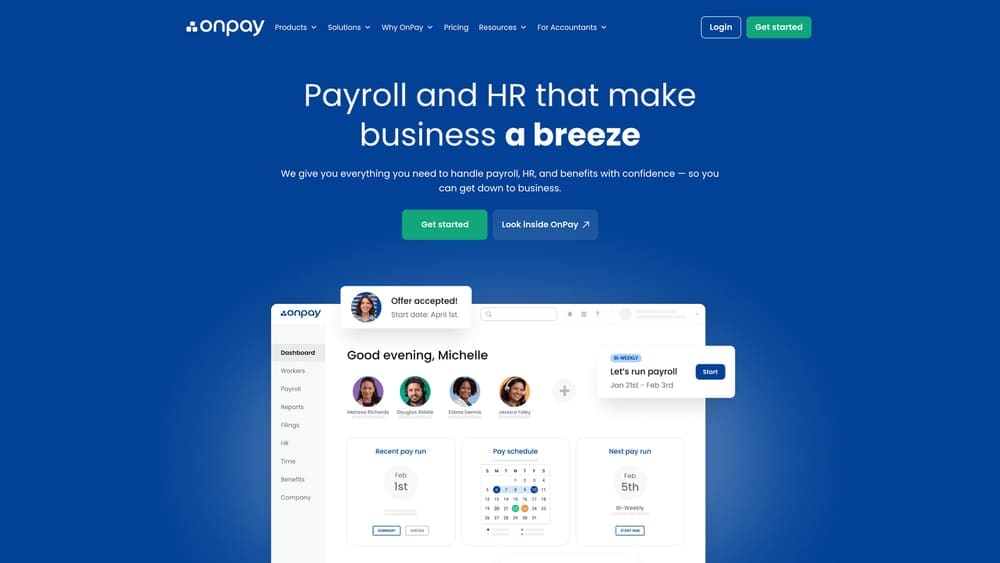
OnPay is a straightforward payroll provider with a single pricing plan, strong tax filing accuracy, and enough HR tools to handle most small business needs without a PEO.
Where This Tool Shines
OnPay doesn’t try to be everything. It runs payroll well, files taxes accurately, and includes a reasonable set of HR tools without forcing you into tiered plans or add-on fees. That simplicity has real value for business owners who don’t want to spend time managing a complex software relationship.
The single-plan pricing model is refreshingly honest. You pay the base fee plus a per-person rate, and you get all the features. No negotiating for features that should be standard. For businesses under 20 employees that have decided they don’t need co-employment, OnPay is one of the cleanest options on the market.
Key Features
Full-Service Payroll: Direct deposit, federal and state tax filing, year-end W-2 and 1099 processing all included.
Single Pricing Plan: One plan with all features included. No tiers, no upsells, no feature gating.
Benefits Administration: Health, dental, vision, and 401(k) administration available through the platform.
Employee Self-Service: Employees access pay stubs, tax documents, and onboarding materials through a self-service portal.
HR Document Storage: Basic HR tools including document management and onboarding checklists built in.
Best For
Small businesses and micro-teams under 25 employees that want reliable payroll without co-employment. Particularly good for businesses with straightforward payroll and no need for PEO-level benefits access.
Pricing
$40/month base plus $6 per person per month. Single plan, all features included. No additional tiers.
8. TriNet
Best for: Professional services, tech, and finance companies that want industry-specific HR and benefits packages
TriNet is a PEO that differentiates itself through industry-vertical specialization, offering HR teams and benefits packages tailored to specific sectors rather than a one-size-fits-all approach.
Where This Tool Shines
Most PEOs offer generic HR support. TriNet assigns HR specialists with backgrounds in your specific industry, which matters when you’re navigating compliance questions or employee relations issues that are genuinely sector-specific. A tech startup and a professional services firm have different HR needs, and TriNet’s vertical model reflects that.
The benefits curation by industry is also worth noting. Rather than a single large-group plan offered to everyone, TriNet tailors benefit options to what employees in a given sector actually value. For companies where talent competition is intense and benefits differentiation matters, this approach can be more effective than a generic PEO benefits menu.
Key Features
Industry-Specific HR Teams: HR specialists with sector-relevant experience assigned based on your industry vertical.
Curated Benefits by Vertical: Benefits packages designed around what employees in your specific industry expect and value.
Full Co-Employment PEO: Complete payroll, tax administration, and compliance under the co-employment model.
Risk and Workers’ Comp Management: Integrated risk mitigation and workers’ comp administration.
Cloud-Based HR Platform: Mobile-accessible HR tools for managing employees, time off, and compliance documentation.
Best For
Companies in tech, finance, professional services, or other knowledge-economy sectors where industry-specific HR expertise and competitive benefits matter more than cost optimization.
Pricing
Custom quotes. Pricing is per-employee-per-month and varies by industry vertical and headcount. Generally mid-to-high range among PEO providers.
9. Rippling
Best for: Tech-forward businesses that want unified payroll, HR, and IT management without co-employment
Rippling is a workforce management platform that combines payroll, HR, benefits, IT device management, and app provisioning in a single system, without requiring co-employment.
Where This Tool Shines
Rippling’s differentiator isn’t just payroll. It’s the operational automation across HR and IT simultaneously. When you onboard a new employee, Rippling can provision their laptop, set up their software access, enroll them in benefits, and add them to payroll in the same workflow. When someone leaves, the offboarding runs in reverse. For growing companies where IT and HR are both stretched, that automation has real operational value.
The global payroll capability is also meaningful for companies with international contractors or employees. Managing multi-country payroll through a single platform without stitching together separate vendors is a genuine advantage that most PEOs and payroll-only providers can’t match.
Key Features
Unified Payroll and IT Management: Payroll, HR, device management, and app provisioning in one platform with automated cross-system workflows.
Automated Onboarding and Offboarding: Employee lifecycle management across HR and IT systems simultaneously.
Benefits Administration Without Co-Employment: Health and retirement benefits administered through the platform while you retain full employer-of-record status.
Global Payroll: Multi-country payroll capabilities for businesses with international teams.
500+ Integrations: Deep integration library connecting to the tools most businesses already use.
Best For
Tech companies and operationally complex businesses that want automation across HR and IT without entering co-employment. Strong fit for companies scaling quickly across multiple locations or countries.
Pricing
Starts at $8 per employee per month for the core platform. Modular pricing means you add payroll, benefits, and IT management as separate components based on what you need.
Making the Right Call for Your Business
Here’s the honest breakdown: a PEO like Vensure, ADP TotalSource, TriNet, or Justworks makes the most sense when you genuinely need what co-employment delivers. That means access to better benefits rates than you can get independently, multi-state compliance complexity that would overwhelm an internal team, workers’ comp bundling in a high-risk industry, or HR infrastructure you’re not staffed to manage on your own.
If your operation is under 20 employees, runs in one or two states, and doesn’t have significant workers’ comp exposure, a payroll company like Gusto, OnPay, or Rippling will likely handle everything you actually need at a fraction of the cost and with far fewer contractual commitments. You keep full employer-of-record status, you pay for what you use, and you’re not locked into a co-employment agreement that requires formal exit procedures to unwind.
Paychex sits in the middle if you want the flexibility to grow into PEO services without switching platforms. Rippling is worth a serious look if IT automation and global payroll are part of your equation.
The hardest part of this decision isn’t understanding the models. It’s knowing whether you’re getting fair pricing and the right structure for your specific situation. Most businesses overpay due to bundled fees, administrative markups, and benefits rates that aren’t as competitive as the sales pitch suggested.
Before you sign or renew anything, take the time to compare your options with a clear view of what you’re actually paying for. That’s exactly what the Clicks Geek PEO comparison platform is built to help you do.