
Both Engage PEO and ModernHR target the same business profile—companies with 10 to 150 employees looking for bundled HR, payroll, and benefits administration. On paper, they sound similar. In practice, they diverge in ways that directly affect your costs, operational efficiency, and how much control you retain over your workforce management.
This isn’t about declaring a winner. It’s about identifying which provider aligns with your specific operational reality: where your employees work, how your payroll fluctuates, what level of service access you actually need, and how much flexibility you want in your contract terms.
We’ll walk through seven decision factors that separate these providers in ways that matter when you’re writing the check each month and dealing with day-to-day HR issues. No generic PEO explanations. Just the comparison points that impact your bottom line and operational workflow.
1. Geographic Coverage and State-Level Compliance Support
Why This Matters First
PEO service quality isn’t uniform across all 50 states. Some providers have deep compliance infrastructure in certain regions and minimal presence in others. If you operate in multiple states—or plan to expand—you need to know where each provider actually has operational strength, not just where they’re technically licensed to operate.
The difference shows up in state-specific compliance support: unemployment insurance management, state disability programs, local tax filings, and wage-hour law changes. A provider with established infrastructure in your states handles these automatically. A provider stretching into new territory may require more manual intervention from your side. For businesses operating across state lines, national PEO companies often provide the most consistent multi-state coverage.
What to Evaluate
Ask each provider how many active clients they support in your specific states. Not just whether they’re licensed there—how many businesses they actually service. Request examples of how they’ve handled recent state-level regulatory changes in those locations.
If you’re in California, New York, or another high-complexity state, ask about dedicated compliance resources for those jurisdictions. Some PEOs assign state-specific specialists. Others use generalist teams that cover multiple regions.
The Cost Implication
Geographic coverage affects pricing indirectly. Providers with limited presence in your state may quote higher fees to offset their compliance risk exposure. They’re pricing in the operational uncertainty of managing regulations they handle less frequently.
If you plan to expand into new states within the next 12-24 months, ask how each provider handles geographic expansion. Some require contract amendments or fee adjustments. Others include multi-state coverage in their base pricing.
2. Pricing Model Transparency
The Structural Difference
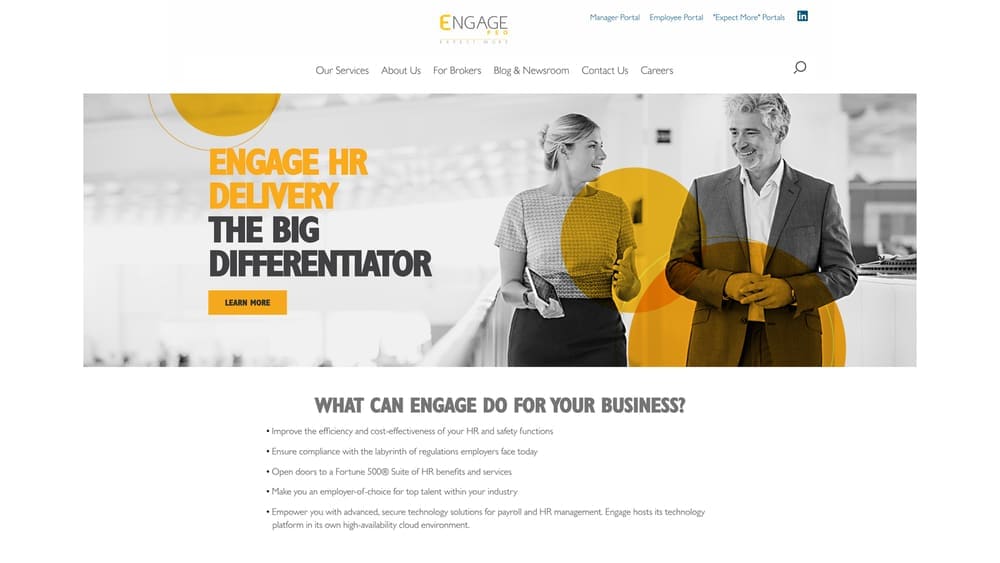
Engage PEO and ModernHR may use different pricing models entirely—and this fundamentally changes how your costs scale. Some PEOs charge a flat per-employee-per-month (PEPM) fee. Others use a percentage-of-payroll model. The structure you choose determines whether your PEO costs increase with raises, bonuses, and seasonal payroll fluctuations.
A PEPM model keeps costs predictable. You pay the same amount whether an employee earns $40,000 or $90,000 annually. A percentage-of-payroll model scales with compensation—which can work in your favor if you have many lower-paid employees, but becomes expensive as salaries increase or you issue performance bonuses. Understanding the full PEO cost breakdown helps you anticipate what you’re actually paying for.
What Gets Hidden in Bundled Pricing
Request a fully itemized proposal from both providers. Break out the administrative fee, workers’ compensation markup, benefits administration fee, and any technology platform charges. Some PEOs bundle everything into one number. Others separate components, giving you visibility into where your money actually goes.
Ask specifically about workers’ comp markup. PEOs buy workers’ compensation coverage at master policy rates, then charge you a markup. That markup can range from 8% to 25% depending on the provider and your industry risk profile. Many businesses discover hidden PEO fees only after signing—don’t let that happen to you.
Implementation and Exit Fees
Don’t overlook one-time charges. Some PEOs charge implementation fees ranging from $1,500 to $5,000 to onboard your company. Others waive this to win the contract. Similarly, ask about early termination fees and what triggers them. You need to know the full cost of walking away if the relationship doesn’t work.
3. Benefits Access and Health Insurance Options
Carrier Networks Aren’t Equal
PEOs aggregate employees across their entire client base to negotiate with insurance carriers. But the carriers they work with—and the plan options available—vary significantly. One provider might offer access to five national carriers with 20+ plan designs. Another might have relationships with three carriers and limited plan variety.
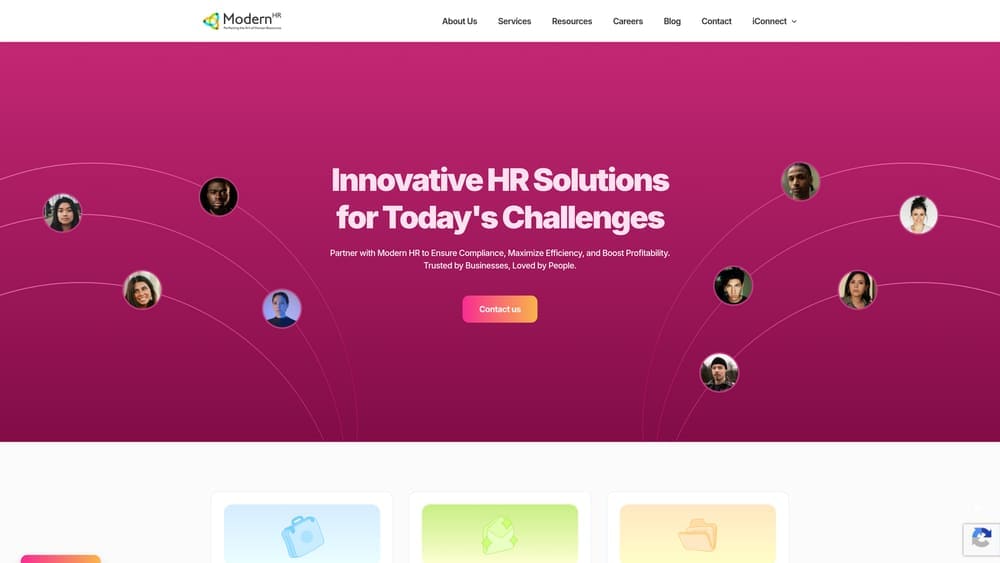
Request the specific carrier names and plan summaries from each provider. Don’t accept vague promises about “competitive benefits access.” You need to see actual plan documents, premium estimates for your employee demographics, and network coverage in your geographic areas.
Plan Quality vs Cost Tradeoffs
Some PEOs prioritize low-cost, high-deductible plans to keep premiums down. Others offer richer plan options with higher premiums. Neither approach is inherently better—it depends on what your employees value and what you’re willing to contribute.
Ask how each provider handles annual renewals. Do they present multiple carrier options each year, or do they default to renewing with the same carrier unless you push for alternatives? Learning how to manage open enrollment through your PEO ensures you maximize benefits value each year.
Ancillary Benefits and Voluntary Options
Beyond health insurance, evaluate dental, vision, life insurance, disability coverage, and voluntary benefits like accident insurance or critical illness plans. Some PEOs offer robust ancillary options. Others provide bare-minimum coverage.
If retention matters in your industry, ask about perks and non-insurance benefits: commuter benefits, FSA/HSA administration, employee assistance programs, and professional development stipends. These aren’t deal-breakers, but they differentiate providers when core offerings look similar.
4. Technology Platform and Day-to-Day Usability
Where You’ll Actually Spend Time
You’ll interact with your PEO’s technology platform constantly—running payroll, updating employee information, managing time-off requests, pulling reports, and handling benefits enrollment. A clunky platform creates friction in routine tasks. A well-designed system saves hours each pay period.
Request demo access to both platforms before deciding. Don’t rely on sales presentations that show curated workflows. Log in yourself and test common tasks: processing an off-cycle payroll run, generating a headcount report, updating an employee’s withholding status, and approving a time-off request. The best PEO HR technology platforms make these tasks intuitive rather than frustrating.
Integration and Data Flow
Ask about integrations with your existing tools—accounting software, time-tracking systems, applicant tracking platforms, and expense management tools. Some PEOs offer native integrations with popular platforms. Others require manual data exports and imports, which increases administrative burden and error risk.
If you use QuickBooks, Xero, or NetSuite for accounting, confirm that payroll data flows automatically into your general ledger. Setting up proper PEO payroll integration from the start prevents reconciliation headaches down the road.
Employee Self-Service Capabilities
Evaluate what employees can do independently through the platform: view pay stubs, update direct deposit information, download tax forms, manage benefits elections, and submit time-off requests. The more employees can handle themselves, the less administrative work falls on your HR team.
Mobile access matters if you have field employees or remote workers. Ask whether the platform includes a functional mobile app or just a mobile-responsive website. There’s a usability difference.
5. Service Model: Dedicated Support vs Tiered Access
How You’ll Actually Get Help
PEO service models fall into two categories: dedicated account management or tiered support pools. With dedicated support, you work with the same HR specialist and payroll contact consistently. With tiered support, you call a general line and speak with whoever is available.
Ask each provider explicitly: “Will I have a dedicated HR contact, or do I call a support queue?” If they promise dedicated support, ask how backup coverage works when your contact is unavailable. You need to know whether you’ll wait hours or days for responses during your contact’s vacation or sick leave.
Response Time and Escalation Paths
Request their service level agreement (SLA) for response times. Some PEOs commit to responding within four business hours for standard inquiries and one hour for payroll issues. Others offer no formal SLA, which means response times vary unpredictably.
Ask about escalation procedures. If your dedicated contact can’t resolve an issue, what’s the next step? Is there a supervisor you can reach directly, or do you submit a ticket and wait for someone to call you back? Understanding how a PEO works step by step helps you set realistic expectations for service interactions.
Proactive vs Reactive Support
Some PEOs provide proactive compliance alerts—notifying you about upcoming regulatory changes, new filing requirements, or benefits enrollment deadlines before they become urgent. Others operate reactively, addressing issues only when you raise them.
Ask for examples of proactive support they’ve provided to similar clients. If they can’t give specific examples, assume their model is primarily reactive.
6. Contract Terms and Exit Flexibility
Commitment Length and Auto-Renewal Clauses
PEO contracts typically run 12 months with auto-renewal provisions. But the details matter. Some contracts auto-renew for another full year unless you provide 60-90 days’ notice before the anniversary date. Others allow you to terminate with 30 days’ notice after the initial term.
Read the termination clause carefully. Ask each provider: “If I want to leave after the first year, how much notice do I need to provide, and are there any penalties?” Some PEOs charge early termination fees equivalent to two or three months of service fees. Others let you walk away with proper notice and no financial penalty. Our guide on how to compare PEO contracts walks you through the key clauses to scrutinize.
Price Increase Protections
Ask whether your administrative fee is locked for the contract term or subject to annual increases. Some PEOs include language allowing them to raise fees with 30 days’ notice. Others guarantee pricing for the full initial term.
Benefits costs will increase annually based on carrier renewals—that’s unavoidable. But your administrative fee shouldn’t change mid-contract unless your headcount or service scope changes significantly.
What Happens If You Outgrow the Provider
If your company grows beyond the provider’s typical client profile—say you scale from 50 employees to 200—ask how they handle that transition. Some PEOs support companies up to 500+ employees. Others start encouraging you to move to a larger provider once you exceed 150-200 headcount.
Understand the exit process before you sign. What data do you receive when you leave? How long does the transition take? Having a clear PEO exit strategy protects you if the relationship doesn’t work out.
7. Industry Fit and Risk Classification Handling
Workers’ Comp Risk Appetite
Not all PEOs accept all industries. If you operate in construction, manufacturing, healthcare, or another higher-risk sector, ask each provider directly whether they have experience with your industry and whether your risk profile affects pricing or acceptance.
Some PEOs specialize in low-risk professional services firms and avoid higher-risk industries entirely. Others have dedicated programs for construction, healthcare, or hospitality. Businesses in physical labor industries should explore PEOs for construction companies that understand their unique risk profiles.
How They Handle Claims and Safety Programs
Ask about their workers’ compensation claims management process. Do they have in-house claims specialists, or do they outsource to a third-party administrator? How quickly do injured employees receive support, and what role do you play in the claims process?
If workplace safety matters in your industry, ask whether the provider offers safety training, on-site assessments, or loss control consulting. Building a strong PEO safety program can significantly reduce your workers’ comp costs over time.
Industry-Specific Compliance Knowledge
Certain industries face unique regulatory requirements—healthcare has HIPAA and credentialing, construction has certified payroll and prevailing wage, restaurants have tip reporting and pooling rules. Ask each provider how they handle compliance specific to your industry.
If they don’t have clear answers or relevant client examples, that’s a signal they lack depth in your sector. You’ll end up educating them about your compliance requirements instead of relying on their expertise.
Putting It All Together
The right choice between Engage PEO and ModernHR depends entirely on your specific situation. If you operate in multiple states and need strong compliance infrastructure in those locations, prioritize the provider with deeper geographic presence. If cost predictability matters most, favor the provider offering transparent PEPM pricing over percentage-of-payroll models.
If your employees value benefits quality and variety, choose the provider with better carrier relationships and plan options. If you need hands-on support and consistent contact access, select the provider offering dedicated account management rather than pooled support queues.
Contract flexibility matters if you’re uncertain about long-term fit or expect rapid growth. Industry specialization matters if you operate in a higher-risk sector where workers’ comp costs and claims management significantly impact your bottom line.
Request detailed proposals from both providers. Use these seven factors as your evaluation scorecard. Compare not just the headline pricing, but the full cost structure, service model, technology capabilities, and contract terms. Ask specific questions. Push for itemized breakdowns. Don’t accept vague answers about “competitive pricing” or “dedicated support” without seeing the details in writing.
Before you commit to either provider—or before you renew your existing PEO agreement—take time to compare your options. Most businesses overpay due to bundled fees and unclear administrative markups. We break down pricing, services, and contract structures so you can make a smarter decision based on your actual operational needs and budget constraints.