
When you’re weighing GMS against Total HR Management, you’re comparing two regional PEOs with different strengths and service philosophies. Both serve small to mid-sized businesses, but they approach pricing, technology, and client support differently. This head-to-head breakdown cuts through the marketing fluff to help you understand which provider aligns with your headcount, industry, and operational priorities.
We’ll cover pricing structures, service scope, technology platforms, and the specific scenarios where each PEO tends to outperform the other.
1. Group Management Services (GMS)
Best for: Businesses needing robust workers’ compensation management and multi-state HR compliance support
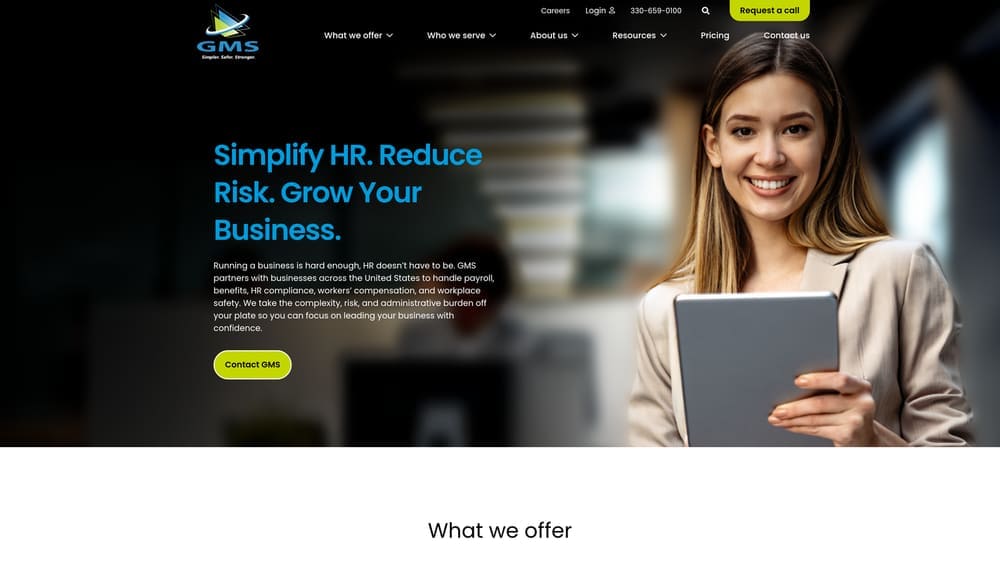
Group Management Services is an Ohio-based PEO founded in 1996 that serves clients across multiple states with emphasis on workers’ compensation solutions and HR compliance.
Where This Tool Shines
GMS built its reputation on workers’ compensation management. If you operate in industries with higher risk profiles—construction, manufacturing, warehousing—their pay-as-you-go workers’ comp structure can smooth out cash flow compared to traditional upfront premium models.
Their multi-state compliance support matters if you’re expanding beyond your home state. They handle the regulatory complexity of employing people across different jurisdictions without requiring you to become an expert in every state’s employment law.
Key Features
Workers’ Compensation Program: Pay-as-you-go options that align premium payments with actual payroll cycles rather than requiring large upfront deposits.
HR Compliance and Risk Management: Support for federal and state employment law compliance, policy development, and workplace safety programs.
Benefits Administration: Access to multiple carrier options for health insurance, retirement plans, and voluntary benefits with consolidated enrollment management.
Payroll Processing: Full-service payroll with tax filing, direct deposit, and year-end reporting across all service states.
Employee Self-Service Portal: Digital platform where employees can access pay stubs, tax documents, and benefits information without HR involvement.
Best For
GMS fits businesses with 15 to 200 employees operating in industries where workers’ compensation costs are a significant concern. They’re particularly relevant if you’re expanding into multiple states and need coordinated compliance support without building an internal HR legal team. Their model works well for companies that value operational stability over cutting-edge technology.
Pricing
GMS typically uses a per-employee-per-month pricing model. Actual costs depend on your headcount, industry risk classification, and geographic spread. Expect quotes to vary based on your workers’ compensation exposure and benefits selections.
2. Total HR Management
Best for: Smaller businesses prioritizing personalized service and hands-on account management over platform sophistication
Total HR Management is a regional PEO that emphasizes direct client relationships and customized support for businesses that need more than automated solutions.
Where This Tool Shines
Total HR Management operates on a relationship-first model. You get a dedicated account manager who actually knows your business—not a rotating support queue. This matters when you’re dealing with complex employee situations that don’t fit into standard playbooks.
Their approach works particularly well for businesses transitioning from DIY HR management to professional support. They’ll help you build HR infrastructure rather than just handing you a platform and expecting you to figure it out.
Key Features
Dedicated Account Management: Assigned point of contact who handles your account directly rather than routing you through tiered support.
Payroll and Tax Administration: Complete payroll processing with federal and state tax compliance, filing, and remittance.
Benefits Procurement and Administration: Benefits carrier selection, enrollment coordination, and ongoing plan management with employee communication support.
HR Consulting and Compliance Guidance: Proactive HR advice on policy development, employee relations issues, and regulatory compliance requirements.
Workers’ Compensation Coverage: Standard PEO workers’ comp coverage with claims management support.
Best For
Total HR Management suits businesses with 10 to 75 employees who value direct access to their service team over self-service technology. They’re a strong fit if you’re in a service-based industry where employee relations and HR judgment calls matter more than automated workflows. Expect more phone conversations and fewer portal logins.
Pricing
Pricing varies based on client size and service scope. Total HR Management typically requires direct quotes rather than publishing standardized rate cards. Costs generally reflect the higher-touch service model with dedicated account management.
Making the Right Choice
The GMS versus Total HR Management decision comes down to what you actually need from a PEO relationship.
GMS makes sense if workers’ compensation is a major cost driver in your business, you’re operating across multiple states, or you have the headcount to justify their infrastructure. Their strength is operational coverage and multi-state compliance management. You’re paying for breadth and established systems.
Total HR Management fits better if you’re a smaller operation that needs real human support when HR issues come up. Their dedicated account management model works when you value relationship continuity over platform features. You’re paying for personalized service and direct access.
Neither provider is objectively better. GMS handles complexity and scale more effectively. Total HR Management delivers more personalized attention for smaller client bases.
Before you sign with either provider, get detailed quotes based on your actual employee census. Understand the contract exit terms—PEO agreements often include notice periods and final reconciliation requirements that affect your ability to switch providers. Talk to current clients in your industry about their actual experience, not just what the sales process promised.
If you want an objective comparison that includes pricing transparency and contract analysis, compare your options using our PEO comparison tools. We break down pricing, services, and contract structures so you can evaluate these providers alongside other options that might fit your profile. Most businesses overpay due to bundled fees and unclear administrative markups. Getting the comparison right matters more than getting it done quickly.