
If you’re choosing between Justworks and Workforce Business Services, you’re actually comparing two completely different philosophies on how PEO services should work. Justworks built its platform for founders who want clean software, transparent pricing, and minimal hand-holding. Workforce Business Services operates more like a traditional HR consulting firm that happens to offer PEO services—think dedicated account managers, custom pricing conversations, and personalized onboarding. Neither approach is inherently better. It depends entirely on how you want to run HR in your business.
This breakdown covers what each provider actually does well, where they fall short, and which business profiles fit each model. We’ll also flag when neither option makes sense and you should look elsewhere.
1. Justworks
Best for: Startups and small businesses (5-100 employees) wanting self-service HR technology with transparent pricing.
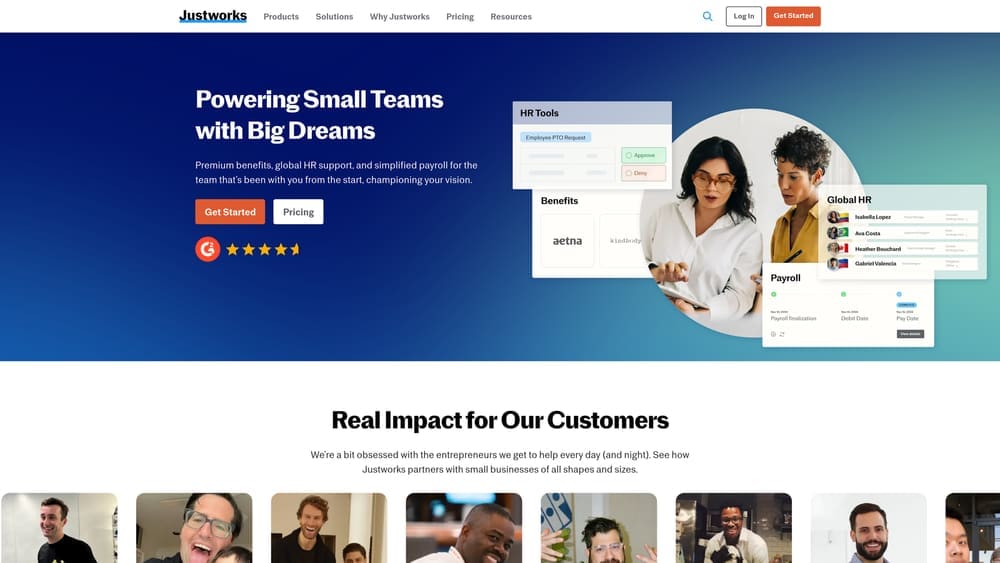
Justworks is a certified PEO (CPEO) that prioritizes software-first delivery and pricing transparency. They publish starting rates on their website and build their platform around founders who prefer managing HR themselves through modern tools rather than relying on dedicated account reps.
Where This Tool Shines
Justworks earned IRS certification as a CPEO, which means they meet higher compliance and financial standards than non-certified PEOs. This certification matters because it shifts tax liability protection directly to the PEO rather than leaving your business exposed if payroll taxes aren’t filed correctly.
Their platform feels like modern SaaS—clean interface, intuitive workflows, minimal learning curve. If you’ve used tools like Gusto or Rippling, Justworks operates in that same design philosophy. Remote teams particularly benefit from their multi-state payroll handling and benefits administration that doesn’t require constant HR intervention.
Key Features
Transparent Per-Employee Pricing: Starting at $59/employee/month for their basic plan, publicly listed without requiring a sales call.
IRS-Certified PEO Status: CPEO certification provides additional tax liability protection and demonstrates financial stability.
Self-Service Platform: Employees manage their own benefits enrollment, PTO requests, and profile updates without HR gatekeeping.
Integrated Payroll and Benefits: Single platform handles payroll processing, health insurance, 401(k), commuter benefits, and compliance filings.
Remote Workforce Support: Built-in multi-state payroll and benefits compliance for distributed teams without manual coordination.
Best For
Justworks works best for tech-comfortable founders running lean teams who don’t want to hire a full-time HR person yet. If you prefer software solutions over phone calls and value pricing transparency over custom negotiations, this model fits. Companies with 5-100 employees see the strongest value, particularly if most of your team works remotely across multiple states.
Pricing
Basic plan starts at $59/employee/month. Plus plan (includes compliance support and HR consulting access) runs higher but exact pricing requires a quote. Pricing scales with employee count and selected benefit tiers.
2. Workforce Business Services
Best for: Businesses wanting dedicated HR consulting relationships with personalized account management rather than self-service software.
Workforce Business Services operates as a regional PEO emphasizing high-touch service delivery. They assign dedicated account managers and build custom HR strategies rather than pushing clients toward standardized software workflows.

Where This Tool Shines
Workforce Business Services appeals to business owners who want someone they can call when HR questions arise—not a chatbot or help desk ticket system. Their account managers function more like outsourced HR directors who learn your business operations and provide proactive guidance rather than reactive support.
Their consultative approach means onboarding isn’t a self-guided software tutorial. They walk through your existing HR processes, identify compliance gaps, and build implementation plans tailored to your specific operational needs. This matters more for businesses in regulated industries or those with complex employee classifications.
Key Features
Dedicated Account Management: Assigned account manager serves as your primary HR contact rather than rotating through support teams.
Consultative HR Approach: Proactive guidance on compliance, employee relations, and HR strategy rather than purely transactional service delivery.
Custom Pricing Structures: Pricing negotiated based on employee count, risk profile, and service level rather than published per-employee rates.
Personalized Onboarding: Hands-on implementation process with dedicated support rather than self-service software setup.
Regional Market Expertise: Deep understanding of local compliance requirements and market-specific HR challenges.
Best For
This model fits businesses that value relationship-driven service over software efficiency. If you prefer picking up the phone and talking through HR decisions rather than searching knowledge bases, Workforce Business Services delivers that experience. Companies in industries with complex compliance requirements or those uncomfortable managing HR through software alone see stronger value here.
Pricing
Custom quotes required. Typically structured as percentage of payroll rather than flat per-employee fees. Pricing varies based on employee count, industry risk factors, and selected service levels.
Which Model Actually Fits Your Business?
The real decision isn’t about feature checklists. It’s about how you want to operate HR day-to-day.
Choose Justworks if you want software that gets out of your way. Their model works when you’re comfortable managing HR tasks yourself through a platform and don’t need regular consulting calls. The pricing transparency and CPEO certification provide clear value for startups and small teams prioritizing cost predictability and compliance protection.
Choose Workforce Business Services if you want a dedicated HR partner who knows your business. Their consultative approach delivers more value when you need proactive guidance, prefer human interaction over software workflows, or operate in industries where compliance complexity justifies higher service costs.
Neither option fits if you’re running a larger organization (200+ employees) needing enterprise-grade customization, or if you’re a micro-business (under 5 employees) where PEO costs don’t justify the value yet. In those cases, you’re better off with either a larger national PEO or staying with standalone payroll and benefits providers.
Before you commit to either provider, compare your options against other PEOs in the market. Most businesses overpay because they don’t understand how PEO pricing structures actually work—bundled fees, administrative markups, and contract terms vary significantly across providers. Get clarity on what you’re actually paying for before signing a multi-year agreement.