
Two PEOs. One national platform with infrastructure across all 50 states. One regional provider built specifically for Texas businesses. Both are IRS-certified CPEOs. Both handle payroll, benefits, and compliance. But the way they operate—and who they serve best—differs significantly.
This comparison matters if you’re a Texas-based business weighing regional expertise against national reach. It’s particularly relevant for companies between 10-150 employees deciding whether localized depth or broad infrastructure better fits their operational needs.
ExtensisHR brings a national service model with standardized processes and multi-state capability. PEO of Texas operates with Texas-specific focus and regional relationships. Neither is universally “better.” The question is which operational philosophy aligns with how your business actually functions.
What follows isn’t a scorecard. It’s a decision framework covering service philosophy, benefits access, pricing transparency, compliance depth, technology capabilities, client service models, and specific scenarios where each provider makes more sense. Use this to structure your evaluation—not to pick a winner before understanding your own requirements.
1. Service Model Philosophy: National Platform vs Regional Focus
The Operational Difference
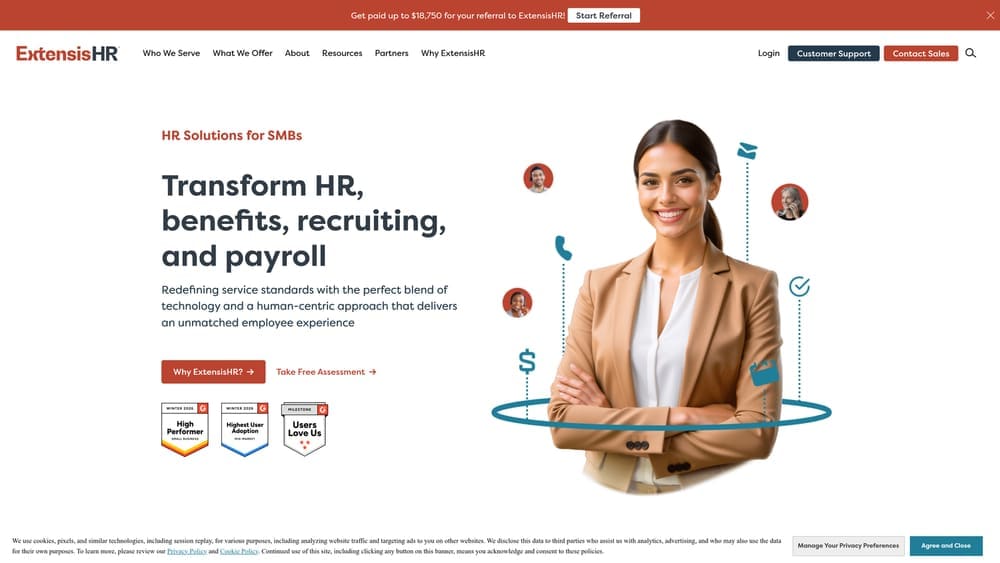
ExtensisHR operates as a national PEO with standardized processes designed to work across all 50 states. Their service model prioritizes consistency—same technology platform, similar service protocols, centralized support infrastructure. If you have employees in multiple states or anticipate multi-state expansion, that infrastructure matters.
PEO of Texas built their entire operation around Texas employment law, Texas carrier relationships, and Texas regulatory requirements. They don’t maintain infrastructure for 49 other states. That focus allows deeper regional expertise but limits geographic flexibility.
What This Means Operationally
With a national provider, you get access to established processes for multi-state payroll tax filing, benefits administration across state lines, and compliance protocols that account for varying state requirements. The tradeoff: standardization sometimes means less flexibility for regional nuances.
With a regional provider, you get service teams who understand Texas-specific issues without translation—Texas Workforce Commission reporting quirks, non-subscription workers’ comp structuring, Texas payday law requirements. The tradeoff: if you expand outside Texas, you’ll likely need to switch providers or add separate infrastructure.
Decision Factor
If your business operates exclusively in Texas with no near-term multi-state plans, regional focus may deliver more relevant expertise. If you have employees in multiple states or growth plans that cross state lines, national infrastructure becomes operationally necessary.
Don’t choose based on theoretical future expansion. Choose based on where your employees actually work today and where you’re realistically hiring in the next 12-18 months.
2. Benefits Access and Carrier Options
The Carrier Network Question
Benefits access represents one of the primary reasons businesses use PEOs—gaining access to carrier networks and plan options typically reserved for larger employers. Both providers offer this, but the carrier relationships and plan structures differ.
ExtensisHR’s national platform provides access to carrier networks that operate across multiple states. Their plan options reflect a broader geographic footprint, which can matter if you have employees in different regions or if you value consistency across locations.
Texas-Specific Carrier Relationships
PEO of Texas focuses on carriers with strong Texas networks and provider relationships. Their benefits team understands which plans work well in specific Texas metro areas, which carriers have better hospital networks in Houston versus Dallas, and how plan structures align with Texas healthcare delivery patterns.
This regional focus can translate to more relevant plan recommendations and better-matched provider networks for Texas-based employees. The limitation: if you expand outside Texas, those carrier relationships may not extend to other states with the same depth.
Administration and Enrollment
Both providers handle benefits administration, but implementation details matter. Ask about:
1. How many carrier options you’ll actually have access to (not just which carriers they work with, but how many plan options within each carrier)
2. Whether you can bring your own broker or if you must use their benefits team
3. How mid-year changes, qualifying events, and COBRA administration actually work in practice
4. What happens to your benefits if you leave the PEO
Cost Structure Transparency
Benefits represent the largest cost component in most PEO relationships. Both providers earn revenue through benefits administration, but the transparency around markup structures varies.
Ask each provider directly: What is your administrative fee for benefits? How much of the premium goes to the carrier versus PEO administrative costs? Can you show me the actual carrier rate versus what I’m paying? Understanding hidden PEO fees helps you evaluate these answers critically.
3. Pricing Structure and Cost Transparency
Industry-Standard Models
Most PEOs use either per-employee-per-month (PEPM) pricing or percentage-of-payroll models. ExtensisHR and PEO of Texas both operate within these standard structures, but the details—and transparency—differ significantly.
PEPM pricing charges a flat monthly fee per employee, regardless of salary. This can favor businesses with higher-paid employees but may feel expensive for companies with many part-time or lower-wage workers.
Percentage-of-payroll pricing charges a percentage of total payroll, typically ranging from 2-12% depending on services, risk profile, and employee count. This scales with payroll size but can create cost uncertainty as wages increase.
The Hidden Cost Areas
Base pricing rarely tells the full story. Implementation fees, technology access fees, benefits administration markups, workers’ comp premiums, state unemployment insurance rates, and per-transaction charges all affect total cost.
Some PEOs bundle these costs into a single rate. Others break them out separately. Neither approach is inherently better, but you need to understand total cost—not just the headline rate.
Contract Terms That Affect Cost
Annual contracts with auto-renewal clauses are standard in the PEO industry. What matters:
1. Notice period required to terminate (typically 30-90 days before renewal)
2. Whether rates can increase mid-contract or only at renewal
3. What happens to your data, benefits, and payroll history if you leave
4. Whether you’re locked into specific benefit plans for the contract term
Comparing Proposals
When evaluating quotes from ExtensisHR and PEO of Texas, create a spreadsheet that captures:
Base administrative fee (PEPM or percentage)
Estimated workers’ comp premium
Benefits administration fees or markup
Technology or platform fees
Implementation or onboarding costs
Any per-transaction or per-employee charges
Then calculate total annual cost based on your current employee count and payroll. Learning how to compare PEO contracts gives you an apples-to-apples comparison beyond headline rates.
4. Texas Compliance Expertise
Where Regional Knowledge Actually Matters
Texas operates differently from most states in several employment law areas. Non-subscription workers’ comp, Texas Workforce Commission reporting requirements, and specific payday law provisions create compliance nuances that generic national protocols don’t always capture well.
PEO of Texas built their compliance infrastructure specifically around Texas requirements. Their team doesn’t need to translate Texas rules through a national framework—they operate within Texas regulatory context from the start.
National Compliance Infrastructure
ExtensisHR maintains compliance protocols for all 50 states. They have Texas-specific procedures, but those procedures exist within a broader multi-state compliance system. For straightforward Texas compliance needs, this works fine. For complex Texas-specific situations, you may encounter longer resolution times as issues route through national support channels.
Practical Compliance Scenarios
Consider how each provider would handle:
A Texas Workforce Commission audit of your unemployment insurance reporting
Structuring non-subscription workers’ comp coverage appropriately for your risk profile
Navigating Texas payday law requirements when changing pay schedules
Responding to a Texas-specific employment law inquiry
The provider who can walk you through these scenarios with specific Texas regulatory references—not generic compliance talking points—demonstrates deeper regional expertise. Understanding PEO shared liability helps you evaluate how each provider handles compliance responsibilities.
When National Compliance Matters More
If you have employees in multiple states, Texas-only expertise becomes insufficient. You need a provider who can handle California meal break rules, New York paid sick leave, and Texas payday law simultaneously without creating compliance gaps.
In that scenario, ExtensisHR’s multi-state infrastructure becomes operationally necessary, even if their Texas-specific depth doesn’t match a regional provider.
5. Technology Platform and Integration Capabilities
Platform Maturity and Investment
ExtensisHR operates a proprietary HR technology platform designed to serve their national client base. The system handles payroll processing, benefits administration, time tracking, and HR record-keeping through a unified interface. Platform investment reflects their scale—larger PEOs typically have more resources for technology development and ongoing platform improvements.
PEO of Texas uses technology platforms that support their service model, but as a regional provider, their technology investment operates at a different scale. This doesn’t necessarily mean inferior technology—it means prioritization differs. Reviewing the best PEO HR technology platforms can help you understand what capabilities to expect.
Integration Requirements
Most businesses don’t operate on a single platform. You likely use accounting software, time tracking systems, applicant tracking tools, or industry-specific operational software. How well the PEO’s platform integrates with your existing systems affects operational efficiency.
Ask both providers:
1. Which accounting platforms integrate directly (QuickBooks, Xero, NetSuite, etc.)?
2. How does time tracking data flow into payroll processing?
3. Can you export data in formats that work with your existing systems?
4. What APIs or data connections are available for custom integrations?
Data Portability and Ownership
What happens to your data if you leave the PEO? This question matters more than most businesses realize during the selection process.
Some PEOs provide full data exports in standard formats. Others make data extraction difficult or charge fees for historical data access. Some maintain data ownership provisions in contracts that limit your ability to use historical information after termination.
Clarify data ownership and export capabilities before signing. If a provider hesitates on this question, that hesitation tells you something important about their retention strategy. Having a clear PEO exit strategy protects your business.
User Experience Considerations
Your employees will interact with the PEO’s platform for benefits enrollment, pay stub access, tax document retrieval, and PTO requests. The platform’s usability affects employee satisfaction and reduces administrative questions directed to your internal team.
Request demo access to both platforms. Have a few employees test the interface. Evaluate whether the experience feels modern and intuitive or clunky and dated. This matters more than feature checklists suggest.
6. Client Service Model and Account Management
Service Structure Differences
ExtensisHR operates with a tiered service model common among national PEOs. You’ll typically have an account manager as your primary contact, with specialized support teams handling payroll, benefits, compliance, and HR questions. This structure provides access to specialized expertise but can create coordination challenges when issues span multiple service areas.
PEO of Texas structures service around regional account teams with broader responsibility ranges. Your primary contact may handle a wider range of questions directly rather than routing everything to specialized departments. This can mean faster resolution for straightforward issues but potentially less specialized expertise for complex situations.
Response Time Expectations
Service level agreements sound similar on paper—both providers promise responsive support, dedicated account management, and accessible HR expertise. What matters is actual response time when you have a payroll issue on Friday afternoon or a compliance question before a deadline.
Ask current clients of each provider:
How quickly do you typically get responses to time-sensitive questions?
When you call your account manager, do you reach them directly or leave messages?
How often do you get routed to different people for related issues?
Have you experienced service quality changes during high-volume periods (year-end, benefits enrollment)?
Account Manager Continuity
Account manager turnover disrupts service quality. Every time your primary contact changes, you lose institutional knowledge about your business, repeat explanations of your specific situation, and rebuild relationship trust.
Ask both providers about account manager tenure and turnover rates. If they won’t provide this information, that avoidance signals something about their retention challenges. Having a list of questions to ask a PEO provider ensures you cover these critical service topics.
Local Presence and Accessibility
PEO of Texas maintains Texas-based service teams, which can matter for businesses that value local accessibility or prefer working with providers who understand regional business culture.
ExtensisHR operates from their New Jersey headquarters with distributed service teams. For most day-to-day interactions, physical location matters less than responsiveness and expertise. But some businesses prefer working with regionally-based providers for relationship and cultural fit reasons.
This is a preference question, not a capability question. Neither approach is objectively better—it depends on how your business values local presence versus national infrastructure.
7. Scenarios Where Each Provider Makes More Sense
When PEO of Texas Fits Better
You operate exclusively in Texas with no near-term multi-state expansion plans. All employees work in Texas, and you’re hiring only within Texas for the foreseeable future.
You value deep Texas compliance expertise over multi-state capability. You want a service team that understands Texas Workforce Commission processes, non-subscription workers’ comp structuring, and Texas-specific employment law without needing to consult multi-state compliance manuals.
You prefer working with a regional provider and value local business relationships. The idea of a Texas-based account team who understands regional business culture matters to you beyond just service capability.
Your industry or operational model has Texas-specific compliance considerations that benefit from regional expertise rather than national standardization.
When ExtensisHR Fits Better
You have employees in multiple states or concrete plans to expand beyond Texas within the next 12-18 months. You need a provider who can handle multi-state payroll tax filing, varying state compliance requirements, and benefits administration across state lines without requiring you to switch providers or add separate infrastructure.
You value standardized processes and national platform consistency over regional customization. You want the same technology interface, service protocols, and compliance procedures regardless of where your employees work.
Your business operates in an industry where national carrier relationships or multi-state benefits access provides operational advantage.
You anticipate significant growth that may eventually exceed what a regional provider can support effectively, and you prefer not to switch PEOs as you scale.
When Neither May Be Right
If you’re below 10 employees, PEO economics often don’t make sense yet. The administrative cost per employee typically exceeds the value delivered at that scale. Consider payroll services with HR support instead. Our analysis of whether a PEO is worth it for 3 employees breaks down this decision.
If you have highly specialized compliance needs or operate in a heavily regulated industry, you may need a PEO with specific industry expertise rather than choosing based on geography alone.
If cost transparency and contract flexibility are top priorities, both providers operate within standard PEO contract structures that may not align with your preferences. In that case, exploring alternative HR service models might make more sense.
The Evaluation Process
Get detailed proposals from both providers. Don’t accept generic quotes—request pricing based on your actual employee count, payroll, and benefit needs.
Ask for client references in your industry and size range. Talk to those references about service quality, cost transparency, and whether the provider delivered on initial promises.
Review contracts carefully before signing. Pay specific attention to termination provisions, rate increase clauses, data ownership terms, and what happens to your benefits if you leave. Understanding how to negotiate your PEO contract gives you leverage in these discussions.
Test their responsiveness during the sales process. If you can’t get clear answers to direct questions before signing, that pattern will likely continue after you become a client.
Making the Decision That Fits Your Business
There’s no universal winner in this comparison. ExtensisHR brings national infrastructure and multi-state capability. PEO of Texas offers regional depth and Texas-specific expertise. The right choice depends entirely on where your employees work, how you plan to grow, and which operational priorities matter most to your business.
If you operate exclusively in Texas with no multi-state plans, regional expertise may deliver more relevant value. If you have or anticipate multi-state operations, national infrastructure becomes operationally necessary. If you’re somewhere in between, the decision gets more nuanced.
Use this comparison as a framework for structured conversations with both providers. Ask specific questions about pricing transparency, service structure, technology capabilities, and contract terms. Request client references and actually call them. Review proposals line by line to understand total cost beyond headline rates.
Before you renew your PEO agreement, compare your options. Most businesses overpay due to bundled fees and unclear administrative markups. We break down pricing, services, and contract structures so you can make a smarter decision.
The best PEO for your business is the one that aligns with your actual operational needs—not the one with the most polished marketing or the lowest initial quote. Take the time to evaluate both providers against your specific requirements. The decision matters too much to rush.