

When you’re comparing Paychex PEO against Worklogic HR, the standard feature checklist approach fails you. Both providers handle payroll, benefits, and compliance—that’s table stakes. The real question is which one fits how your business actually operates.
This guide skips the marketing fluff and focuses on the decision strategies that separate a good PEO fit from a costly mismatch. We’ll walk through seven practical evaluation approaches that address what matters: cost transparency, operational fit, scalability, and the specific tradeoffs each provider brings to the table.
Whether you’re a 15-person startup or a 150-employee regional operation, these strategies will help you cut through the noise and make a decision you won’t regret in 18 months.
1. Map Your Actual HR Pain Points Before Comparing Features
The Challenge It Solves
Most business owners start their PEO evaluation by comparing feature lists. That’s backwards. You end up prioritizing capabilities you don’t need while overlooking gaps in areas that actually cause you problems.
If your biggest headache is benefits administration during open enrollment, a provider’s advanced applicant tracking system doesn’t help you. If you’re drowning in multi-state payroll tax filings, their robust onboarding portal is irrelevant.
The Strategy Explained
Start by documenting where your HR function breaks down today. Are you spending hours each pay period fixing payroll errors? Missing compliance deadlines because you can’t track changing regulations? Losing good employees because your benefits options are weak?
Write down the three operational problems that cost you the most time, money, or employee satisfaction. Then evaluate Paychex and Worklogic HR specifically against those pain points.
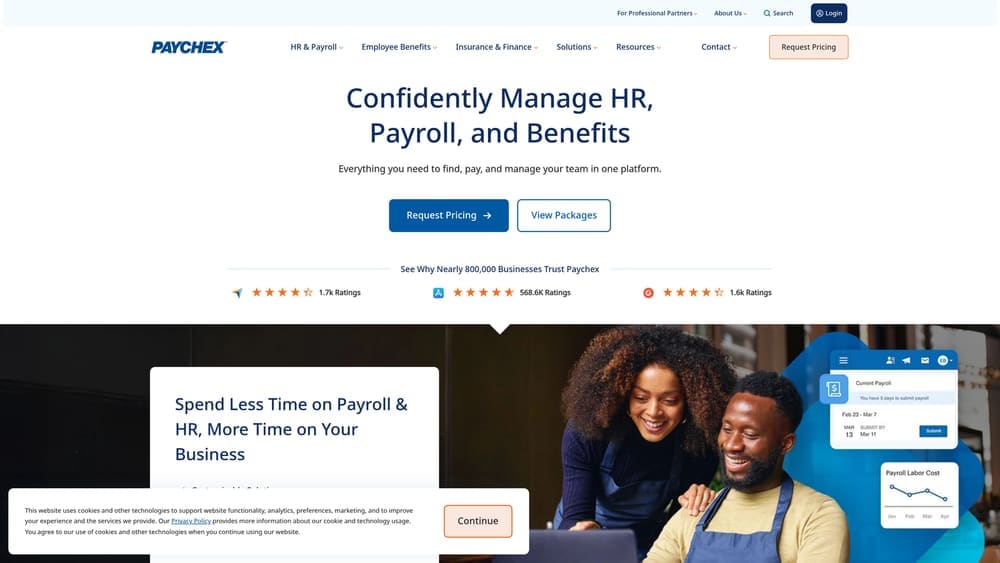
Paychex PEO operates through the Paychex Flex platform, which emphasizes technology-driven self-service. If your pain point is administrative burden and you want employees to handle more tasks independently, that architecture matters. Understanding how a PEO works step by step helps you evaluate whether their operational model fits your needs.
Worklogic HR positions itself around high-touch service relationships. If your pain point is getting answers quickly when something goes wrong, their service model becomes the differentiator.

Implementation Steps
1. List your top three HR operational problems in order of business impact, not importance to you personally.
2. For each problem, identify what specific capability or service approach would actually solve it.
3. Ask both providers to explain how they address those specific problems, not how they handle HR generally.
4. Request references from clients who had similar pain points before switching.
Pro Tips
Don’t let sales teams redirect you back to their standard feature presentation. Stay focused on your documented problems. If they can’t explain how they solve your actual issues, that’s your answer.
2. Decode the Real Cost Structure Beyond the Per-Employee Quote
The Challenge It Solves
PEO pricing looks deceptively simple until you’re six months into the contract. You get a per-employee-per-month quote, sign the agreement, then discover implementation fees, minimum commitments, benefits administration markups, and add-on charges that weren’t clearly disclosed upfront.
The difference between quoted cost and actual cost can easily reach 20-30% once you factor in all the line items that appear after you’re locked in. Our guide on hidden PEO fees explained breaks down exactly what to watch for.
The Strategy Explained
Both Paychex PEO and Worklogic HR use different pricing architectures, and understanding those differences matters more than comparing headline rates.
Paychex typically structures pricing around their technology platform with tiered service levels. You might get a base PEPM rate, but enhanced support, advanced reporting, or specific compliance modules often come as add-ons. Their scale allows competitive benefits rates, but administrative fees can accumulate across different service categories.
Worklogic HR generally bundles more services into their core pricing but may have higher baseline rates to support their service-intensive model. You’re paying for accessibility and responsiveness, not just technology access.
Neither approach is inherently better. The question is which cost structure aligns with how you’ll actually use the service.
Implementation Steps
1. Request a complete fee schedule that includes implementation, setup, benefits administration markups, and any minimum monthly commitments.
2. Ask for a 12-month cost projection based on your actual employee count, turnover rate, and anticipated service usage.
3. Identify which services are included in the base rate versus charged separately.
4. Clarify how pricing adjusts if you add employees, expand to new states, or need additional compliance support mid-contract.
Pro Tips
Get the pricing breakdown in writing before the proposal stage. If a provider won’t disclose their full fee structure until after you’ve invested time in the evaluation process, that’s a red flag about transparency.
3. Evaluate Technology Fit Against Your Current Stack
The Challenge It Solves
Switching to a PEO means adopting their technology platform for payroll, benefits, time tracking, and HR administration. If that platform doesn’t integrate with your accounting system, applicant tracking software, or scheduling tools, you’re creating new operational problems while trying to solve old ones.
Technology friction costs you time every pay period and frustrates employees who now have to navigate multiple disconnected systems.
The Strategy Explained
Paychex Flex is a comprehensive platform designed to handle most HR functions internally. It includes payroll, time and attendance, benefits administration, onboarding, and reporting. The advantage is consolidation. The tradeoff is you’re working within Paychex’s ecosystem, and integration with external tools depends on their API capabilities and partnership agreements.
Worklogic HR typically takes a more flexible approach to technology, often working with best-of-breed tools rather than forcing everything through a proprietary platform. This can mean better integration with your existing systems but potentially less seamless internal workflows. Our roundup of PEO HR technology platforms covers what to look for in platform capabilities.
The right choice depends on whether you value consolidation or flexibility more.
Implementation Steps
1. List every software tool your finance, HR, and operations teams use that touches employee data.
2. Ask both providers specifically how they integrate with each tool on your list.
3. Request demonstrations of data flow between their platform and your critical systems.
4. Talk to current clients who use similar technology stacks and ask about integration challenges they’ve encountered.
Pro Tips
Don’t accept “we integrate with that” as a complete answer. Ask whether it’s a native integration, API connection, or manual data export. The difference determines how much administrative work you’ll still be doing.
4. Stress-Test Benefits Access for Your Employee Demographics
The Challenge It Solves
One of the primary reasons businesses choose a PEO is access to better benefits through collective buying power. But not all PEO benefits arrangements deliver the same value for every workforce demographic.
If you have a young, healthy workforce, you need different plan options than a company with older employees or families. If you’re in a high-cost-of-living area, regional carrier networks matter more than national brand recognition.
The Strategy Explained
Paychex PEO leverages significant scale to negotiate with national carriers. This typically means access to recognizable insurance brands and broad provider networks. For businesses with geographically distributed employees or those who value brand-name carriers, that scale matters. You can see how they stack up against other large providers in our largest PEO companies analysis.
Worklogic HR often works with regional carriers and may offer more customized plan designs for specific markets. If your employees are concentrated in particular regions, regional carrier relationships can sometimes deliver better rates and more responsive service than national arrangements.
The critical question is whether the benefits buying power actually translates to better options for your specific employee population.
Implementation Steps
1. Request actual plan options, carrier names, and premium ranges for your employee demographics and locations.
2. Compare deductibles, co-pays, and provider networks against your current benefits or what your employees actually need.
3. Ask what percentage of their client base has similar employee demographics to yours and how satisfaction trends for that segment.
4. Review how plan options change year-over-year and what flexibility exists if your workforce composition shifts.
Pro Tips
Don’t evaluate benefits in isolation. A slightly higher PEO fee might be worth it if the benefits access is genuinely better. Conversely, impressive carrier names don’t matter if the actual plan designs are worse than what you have now.
5. Assess Service Model Fit: National Infrastructure vs Regional Focus
The Challenge It Solves
When something breaks—a payroll error, a benefits enrollment problem, a compliance question—how quickly you get help and how well that help actually solves your problem determines whether your PEO is a strategic partner or an operational liability.
Service model differences between large national providers and regional firms are real, and they affect your day-to-day experience more than any feature comparison.
The Strategy Explained
Paychex operates with national scale and standardized service processes. You’ll typically work through a dedicated account team, but support infrastructure is designed for consistency across thousands of clients. This means reliable processes, extensive self-service resources, and coverage across all time zones. The tradeoff is less flexibility and potentially longer resolution times for non-standard issues. Our comparison of national PEO companies explores these tradeoffs in detail.
Worklogic HR emphasizes direct access and relationship-driven support. You’re more likely to have a primary contact who knows your business and can address problems without escalating through multiple support tiers. The tradeoff is less infrastructure redundancy and potential limitations if you grow beyond their typical client profile.
Neither model is universally better. The question is which one matches how your team actually works.
Implementation Steps
1. Ask both providers to describe their support structure: who you contact, how issues get escalated, and what response time commitments they make.
2. Request references specifically about service responsiveness and problem resolution, not just general satisfaction.
3. Test their support during the evaluation process by asking detailed questions and noting how quickly and thoroughly they respond.
4. Clarify what happens if your primary contact leaves and how continuity gets maintained.
Pro Tips
Pay attention to how providers handle questions during the sales process. If they’re slow or vague now, it won’t improve after you sign. Responsiveness during evaluation is your best predictor of ongoing service quality.
6. Analyze Contract Terms and Exit Flexibility
The Challenge It Solves
PEO contracts typically lock you in for one to three years with automatic renewal provisions. If the relationship doesn’t work out, getting your data back and transitioning to a new provider can be complicated and expensive.
Understanding exit terms before you sign prevents you from being trapped in an underperforming relationship because the cost of leaving is too high.
The Strategy Explained
Both Paychex PEO and Worklogic HR will have standard contract terms, but those terms are often negotiable before you sign. After you’re in, you have almost no leverage.
Key contract provisions that matter: initial term length, automatic renewal clauses, termination notice requirements, early termination fees, data portability commitments, and what happens to benefits coverage during a transition. Our guide on how to compare PEO contracts walks through each provision in detail.
Larger providers like Paychex typically have more standardized contracts with less flexibility. Regional providers like Worklogic HR may offer more negotiating room, particularly on term length and renewal provisions.
Implementation Steps
1. Request the full service agreement before you reach the final decision stage.
2. Identify any automatic renewal clauses and how much notice you must provide to avoid renewal.
3. Ask specifically about data export formats, timing, and any fees associated with transitioning away.
4. Clarify early termination provisions and whether fees decrease over time or remain constant.
Pro Tips
Don’t wait until you’re ready to sign to review contract terms. Get the agreement early in your evaluation and have your attorney review it before you’ve mentally committed. Negotiating changes is exponentially easier before they think you’ve decided.
7. Run a Compliance Fit Check for Your Specific Situation
The Challenge It Solves
Compliance support is a primary PEO value proposition, but not all compliance capabilities are created equal. If you operate in multiple states, work in a heavily regulated industry, or face specific employment law risks, generic compliance support doesn’t cut it.
The wrong provider leaves you exposed to regulatory penalties despite paying for compliance coverage.
The Strategy Explained
Paychex PEO holds IRS Certified Professional Employer Organization (CPEO) status, which provides specific federal tax compliance assurances. Understanding whether a certified PEO is safer helps you evaluate what that designation actually protects. Their national footprint means they handle multi-state compliance regularly, but their approach tends toward standardized processes rather than industry-specific customization.
Worklogic HR’s regional focus can be an advantage if your compliance challenges are concentrated in specific states where they have deep expertise. Their smaller client base may allow more customized compliance support, but you need to verify they have actual experience with your specific regulatory environment.
The critical question is whether their compliance capabilities match your actual exposure areas.
Implementation Steps
1. List every state where you have employees and identify any industry-specific regulations that apply to your business.
2. Ask both providers to explain how they handle compliance in your specific states and industries.
3. Request documentation of their compliance monitoring processes and how they communicate regulatory changes.
4. Clarify what compliance responsibilities remain with you versus what they assume under the co-employment arrangement.
Pro Tips
Compliance coverage sounds comprehensive until you need it. Ask for specific examples of how they’ve helped clients navigate situations similar to yours. If they can’t provide relevant examples, their compliance support may be more theoretical than practical.
Making the Decision That Fits Your Business
Choosing between Paychex PEO and Worklogic HR isn’t about finding the objectively better provider. It’s about finding the better fit for your specific situation.
Start with your actual pain points, not their feature lists. If you need technology-driven efficiency and self-service capabilities, Paychex’s platform infrastructure makes sense. If you value responsive, relationship-driven support and need flexibility in how services are delivered, Worklogic HR’s model may serve you better.
Dig into the real cost structure before you sign. A lower per-employee quote means nothing if hidden fees and add-on charges push your actual cost 25% higher than projected. Get complete fee schedules in writing and run 12-month cost projections based on realistic usage.
Don’t underestimate the importance of service model alignment. A responsive regional partner might outperform a national giant if your needs require hands-on support and quick problem resolution. Conversely, if you operate across many states and need consistent processes everywhere, national infrastructure becomes the advantage.
Before you renew your PEO agreement, compare your options. Most businesses overpay due to bundled fees and unclear administrative markups. We break down pricing, services, and contract structures so you can make a smarter decision.
Use these seven strategies as your evaluation framework, and you’ll make a decision based on substance rather than sales presentations. The right PEO partner reduces your administrative burden and compliance risk. The wrong one just adds a new layer of operational complexity you’re paying for.