
Most Paychex PEO vs. CoAdvantage comparisons give you feature lists and pricing ranges that don’t tell you much. What actually matters is how each provider operates when you’re three months into the relationship and dealing with a workers’ comp claim, a benefits renewal that doesn’t match what you were quoted, or trying to extract your data because you want to switch.
Paychex brings national infrastructure and a recognizable brand. CoAdvantage offers regional flexibility and often more direct access to decision-makers. Both are ESAC-accredited. Both handle payroll, benefits, and compliance. The differences show up in how they structure pricing, handle service delivery, and what happens when things don’t go as planned.
This breakdown focuses on the operational realities that separate these providers—not marketing claims. We’ll cover where each excels, where each creates friction, and how to pressure-test your assumptions before signing a multi-year agreement.
1. Company Scale and Service Model
What You’re Actually Comparing
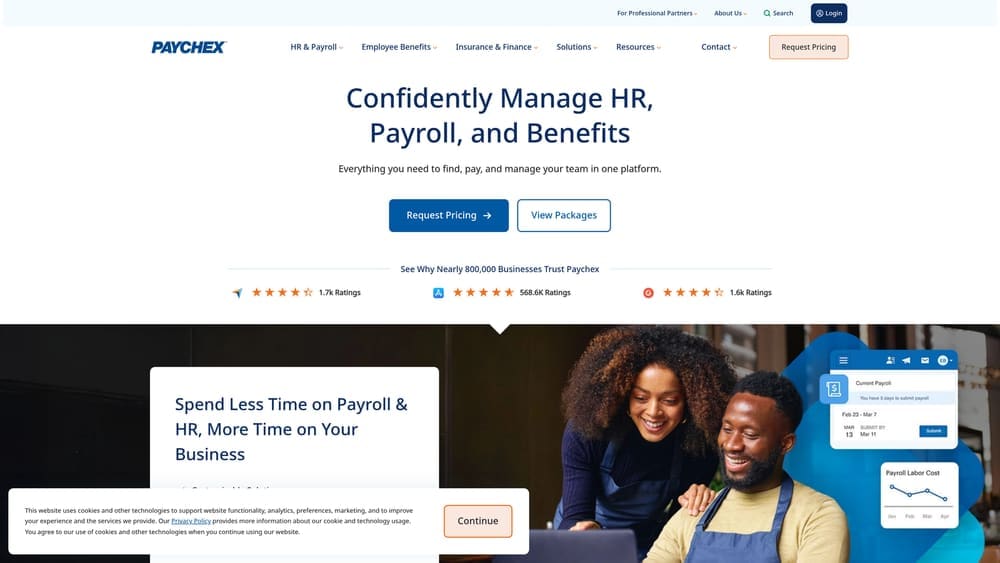
Paychex is a publicly-traded company (NASDAQ: PAYX) with multiple service lines beyond PEO. Their PEO division operates as one segment of a broader HR technology and outsourcing business. You’re working with a large national infrastructure, standardized processes, and a brand that most CFOs and boards recognize.
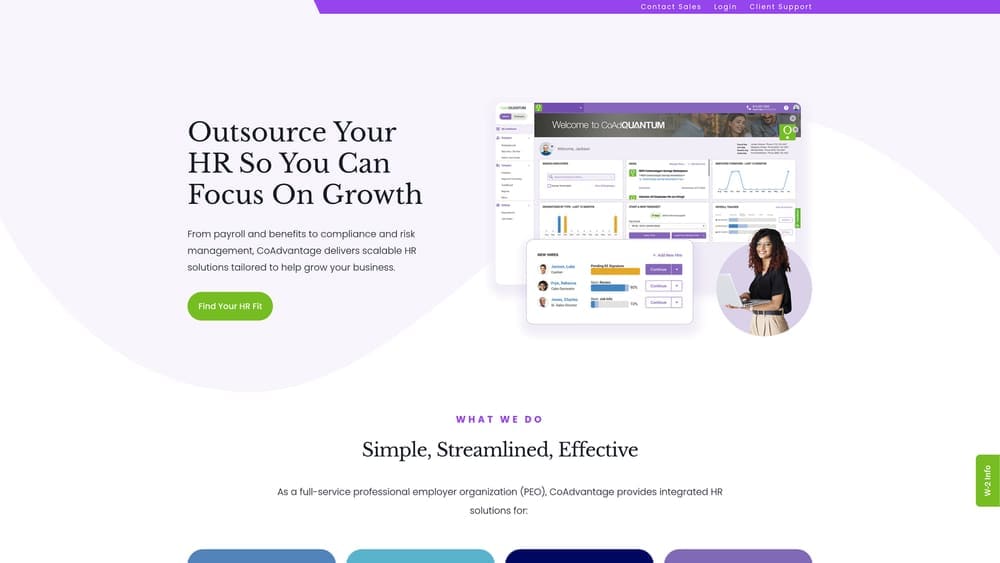
CoAdvantage is a privately-held PEO based in Bradenton, Florida. Smaller footprint, more regional focus, and a service model built around direct client relationships rather than tiered support structures.
How This Affects Your Experience
With Paychex, you typically get assigned to a dedicated HR representative, but that person operates within a structured system. Escalations go through defined channels. Policy exceptions require internal approvals. The upside is consistency—you’re not dependent on one person’s availability or expertise. The downside is rigidity when your situation doesn’t fit their standard workflows.
CoAdvantage tends to offer more direct access to decision-makers and more flexibility in how they handle non-standard situations. If you need a custom benefits arrangement or have an unusual workers’ comp scenario, you’re more likely to get creative problem-solving. The tradeoff is that you’re more dependent on specific people within the organization.
When Scale Matters
If you’re expanding into multiple states quickly, Paychex’s national infrastructure handles that more smoothly. Understanding how national PEO companies operate can help you evaluate whether that scale matches your growth plans. If you’re operating in a niche industry with specific compliance requirements, CoAdvantage’s flexibility often serves you better. Think about whether you value predictability or adaptability more.
2. Pricing Structure Reality Check
The Models They Use
Paychex typically structures PEO pricing as a percentage of total payroll, often in the range of 2-8% depending on your headcount, risk profile, and benefits configuration. This model scales with your payroll growth, which can be advantageous if you’re managing costs tightly or problematic if you’re growing quickly and didn’t account for the compounding effect.
CoAdvantage often uses a per-employee-per-month (PEPM) model, which gives you more predictable costs regardless of salary fluctuations. If you have high-wage employees or significant seasonal payroll variation, PEPM can work in your favor. If you have lower-wage workers, percentage-of-payroll might be cheaper.
Hidden Cost Drivers
Both providers bundle administrative fees, technology access, and compliance support into their base pricing. Where costs diverge is in how they handle workers’ comp premiums, benefits administration markups, and add-on services. Understanding hidden PEO fees before you sign can save you thousands annually.
Paychex includes workers’ comp within the PEO agreement but may build in a margin that’s not always transparent. CoAdvantage structures it similarly, but pricing transparency varies based on how aggressively you negotiate upfront.
Benefits administration is another area where costs hide. Both providers pool clients for health insurance access, but the administrative markup on premiums and the flexibility to choose carriers differs. Get specific quotes that break out base fees, workers’ comp estimates, and benefits admin charges separately.
What to Pressure-Test
Ask both providers for a total cost projection based on your actual census data—not just a percentage range. Include anticipated headcount growth, average salary increases, and any planned benefits changes. Compare the total annual cost, not just the base fee structure. And clarify what happens to pricing if you add employees mid-year or experience payroll fluctuations.
3. Technology Platform Depth
Paychex’s Integrated Suite
Paychex offers a broader technology platform because they operate multiple HR service lines. Their PEO clients get access to Paychex Flex, which integrates payroll, time tracking, benefits administration, and reporting. The platform handles most routine tasks well and connects with common accounting systems.
The advantage is consolidation—you’re not managing multiple logins or reconciling data across systems. The disadvantage is that you’re locked into their ecosystem. If you want to use a specialized time-tracking tool or a different HRIS for performance management, integration options are limited.
CoAdvantage’s Core Functionality
CoAdvantage provides core payroll and HR technology, but the platform is less expansive. You get what you need for payroll processing, benefits enrollment, and compliance tracking. The interface is functional but not as polished as larger providers.
The tradeoff is that CoAdvantage tends to be more flexible about integrating with third-party tools. If you already use a specific time-tracking system or want to maintain your existing HRIS for performance reviews, they’re more likely to accommodate that. Reviewing the best PEO HR technology platforms can help you understand what features matter most for your operations.
Data Portability Concerns
Before committing to either provider, clarify how you extract your data if you leave. Paychex’s broader platform means more data lives in their system, which can make transitions more complex. CoAdvantage’s lighter tech footprint makes data extraction simpler but means you may need to rebuild integrations if you switch providers.
Ask both providers for sample data export formats and confirm what historical data you retain access to after termination.
4. Workers’ Compensation Approaches
How Risk Gets Managed
Both providers use master workers’ comp policies that cover all PEO clients, which gives you access to better rates than you’d likely get on your own. The difference is in how they handle claims administration and how much control you retain over safety programs.
Paychex manages workers’ comp through their broader risk management infrastructure. Claims go through their system, and you work with their claims administrators. This standardization works well if you have straightforward claims, but it can feel impersonal if you’re dealing with a complex injury or disputed claim.
CoAdvantage offers more direct involvement in claims management. You’re more likely to work with the same person throughout the process, and they tend to be more flexible about customizing safety programs for your specific operations.
Cost Implications
Workers’ comp premiums are based on your industry classification, payroll, and claims history. Both providers factor in a margin for administering the policy, but how much they charge and how transparent they are about it varies.
Get a breakdown of your estimated workers’ comp costs separate from the base PEO fee. Ask how your experience modification rate (EMR) affects pricing and what happens if you have a claim. Clarify whether you get any credits or refunds if your claims experience is better than projected.
When You Have High-Risk Operations
If you’re in construction, manufacturing, or another high-risk industry, workers’ comp becomes a bigger part of the decision. Paychex’s larger risk pool may offer more stability, but CoAdvantage’s flexibility in structuring safety programs can reduce your long-term costs if you’re willing to invest in risk management. Learning how to build a PEO safety program that actually reduces costs is worth the effort regardless of which provider you choose.
5. Benefits Access and Administration
Pooling Arrangements
Both providers pool clients to negotiate better health insurance rates than you’d get as a standalone small business. The size and composition of the pool affects what carriers are available and how stable your renewal pricing is year-over-year.
Paychex’s larger client base means a bigger pool, which can offer more carrier options and more predictable renewals. CoAdvantage’s smaller pool may have fewer carrier relationships, but they often provide more flexibility in plan design and more direct involvement in renewal negotiations.
Carrier Flexibility
Ask both providers which carriers they work with in your region and whether you can choose between multiple options. Some PEOs lock you into a single carrier, which limits your ability to shop rates at renewal.
Clarify how much control you have over plan design. If you want to offer an HSA-compatible high-deductible plan or add voluntary benefits like supplemental life insurance, make sure the provider supports that configuration.
Renewal Transparency
Benefits renewals are where many businesses get surprised. The initial quote looks competitive, but year-two renewals jump significantly because the PEO’s administrative markup increases or the carrier raises rates more than expected.
Ask both providers how they handle renewals. Do you get advance notice of rate changes? Can you shop alternative carriers within their network? What’s the administrative markup on premiums, and is it fixed or variable? Understanding how to manage open enrollment through your PEO helps you stay ahead of these surprises.
Get specifics on what happens if you’re unhappy with renewal pricing. Some PEOs make it difficult to switch carriers mid-contract, which locks you into unfavorable rates.
6. Contract Terms and Exit Flexibility
Termination Provisions
Most PEO contracts run 12-24 months with auto-renewal clauses. The critical details are in the termination provisions—how much notice you must give, whether there are early termination penalties, and what happens to your data and benefits coverage during the transition.
Paychex’s contracts tend to be more standardized with defined termination windows. You’ll typically need to provide 30-60 days’ notice before the renewal date, and early termination may trigger penalties based on remaining contract value.
CoAdvantage’s contracts are often more negotiable, particularly around termination terms. If you’re concerned about flexibility, push for shorter initial terms or clearer exit provisions upfront. Knowing how to compare PEO contracts before signing protects you from unfavorable terms.
Data Extraction
When you leave a PEO, you need access to payroll records, tax filings, benefits enrollment data, and employee files. Some providers make this easy. Others charge extraction fees or provide data in formats that require significant cleanup before you can use it.
Ask both providers how they handle data extraction. What format do you receive? How much historical data do you retain access to? Are there fees for data exports or ongoing access after termination?
Transition Support
Switching PEOs or moving back to in-house payroll is operationally complex. You’re changing payroll systems, re-enrolling employees in benefits, updating tax filings, and coordinating workers’ comp coverage transitions. Having a clear PEO exit strategy before you sign makes the eventual transition much smoother.
Clarify what transition support each provider offers if you leave. Do they help with COBRA administration for departing employees? Do they coordinate with your new provider to ensure continuity? Or are you on your own once you give notice?
The easier they make it to leave, the more confident you can be in the relationship.
7. When Each Provider Is Wrong
When Paychex Doesn’t Fit
Paychex works well if you value brand recognition, want a comprehensive technology platform, and prefer standardized processes. It’s less effective if you need significant customization, operate in a niche industry with unusual compliance requirements, or want direct access to decision-makers without navigating tiered support structures.
If you’re a 10-person professional services firm that needs flexible benefits administration and hands-on support, Paychex’s scale becomes a disadvantage. You’ll pay for infrastructure you don’t need and deal with processes designed for larger clients. Exploring regional PEO companies might give you the personalized attention you’re looking for.
When CoAdvantage Doesn’t Fit
CoAdvantage excels if you want personalized service, need flexibility in how your PEO relationship operates, and value direct relationships over standardized systems. It’s less effective if you’re expanding rapidly into multiple states, need cutting-edge HR technology, or want the reassurance of a nationally recognized brand for board presentations or investor discussions.
If you’re a 75-person company scaling quickly and need a provider that can handle multi-state expansion without manual workarounds, CoAdvantage’s regional focus may create operational friction.
When Neither Is Right
If you’re below 10 employees, the cost of either PEO may not justify the administrative savings. If you’re above 100 employees with in-house HR expertise, you may get better value from an ASO (Administrative Services Organization) that unbundles services and gives you more control. Understanding the ASO vs PEO decision helps you determine which model fits your situation.
If your primary concern is reducing health insurance costs, joining a PEO may help, but it’s not guaranteed. Sometimes a professional employer organization creates new dependencies without solving the underlying cost drivers.
Making the Call
The Paychex vs. CoAdvantage decision comes down to operational fit, not abstract quality comparisons. Paychex offers national scale, brand credibility, and a comprehensive technology platform. CoAdvantage provides flexibility, personalized service, and often more direct access to the people managing your account.
Before committing, get actual pricing quotes based on your census data—not ranges or estimates. Talk to current clients in your industry and ask about their experience with claims handling, benefits renewals, and contract flexibility. Pressure-test the exit terms, because the easiest PEO to leave is often the best one to join.
The right PEO reduces your administrative burden without creating new dependencies you’ll regret. The wrong one locks you into a multi-year relationship that costs more than expected and delivers less flexibility than you need.
Before you renew your PEO agreement, compare your options. Most businesses overpay due to bundled fees and unclear administrative markups. We break down pricing, services, and contract structures so you can make a smarter decision.