

Most Insperity vs Rippling comparisons treat these as interchangeable PEO options. They’re not. You’re choosing between fundamentally different operational philosophies.
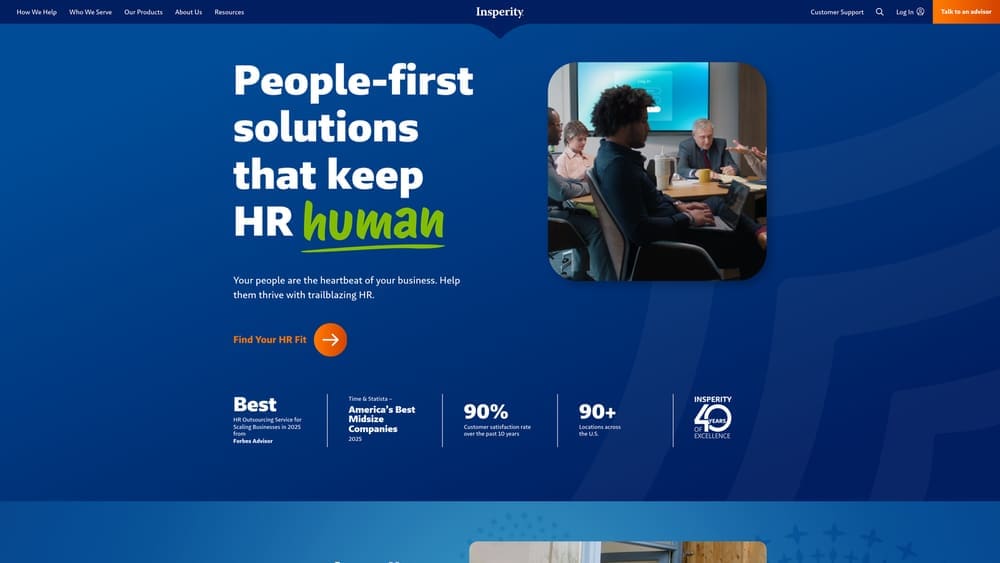
Insperity is a traditional PEO built for established SMBs that want hands-on HR partnership. Think dedicated HR business partners, proactive compliance guidance, and bundled service delivery. They’ve operated since 1986 with a model centered on human expertise.
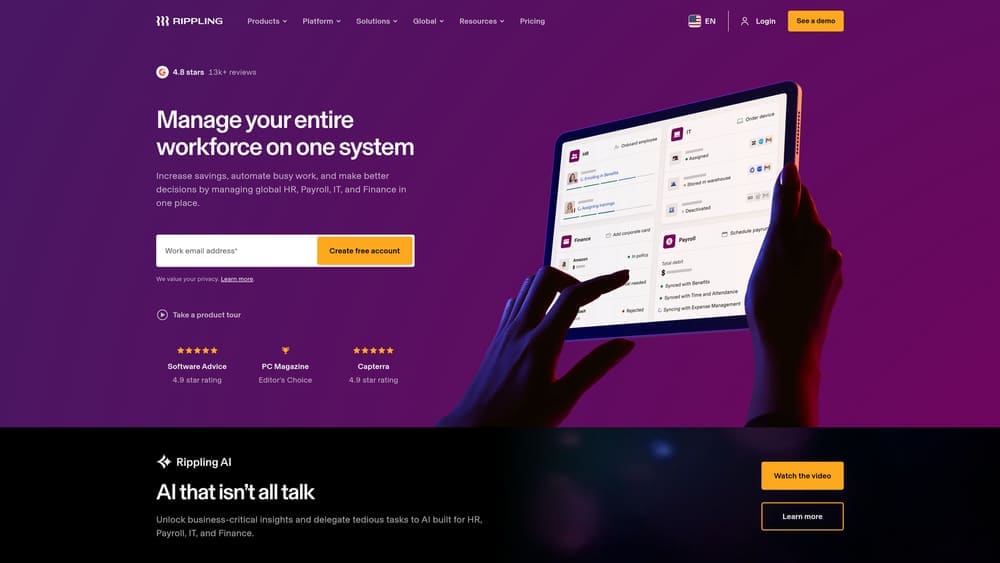
Rippling is a tech-first workforce platform that added PEO capabilities. Founded in 2016 by Parker Conrad, it’s built for companies prioritizing automation, integrations, and software control. The PEO is one module within a broader system designed around API-first architecture.
The real decision isn’t which provider is “better.” It’s which operational model fits your company’s HR philosophy, internal capabilities, and growth trajectory. Do you want HR expertise you can call when complex situations arise? Or do you want software tools that let you handle most HR tasks yourself?
This matters because the wrong fit creates friction. If you lack internal HR bandwidth, Rippling’s self-service model becomes a burden. If you have strong HR capabilities, Insperity’s bundled approach may feel like paying for services you don’t need.
Here’s how to evaluate which provider actually matches your operational reality.
1. Service Model Philosophy: High-Touch HR vs Self-Service Automation
The Challenge It Solves
When HR issues surface, you need resolution. But how you prefer to get that resolution varies dramatically by company.
Some businesses want a phone number to call when workers’ comp claims get complicated, when employee terminations involve legal risk, or when state labor law changes affect their operations. Others want software dashboards, knowledge base articles, and the ability to configure solutions themselves without waiting for a human response.
This isn’t about better or worse. It’s about operational fit and internal capability.
The Strategy Explained
Insperity assigns dedicated HR business partners to accounts. You get named contacts who learn your business, proactively reach out about compliance changes, and provide consultative guidance on HR strategy. Their model assumes you want expert partnership rather than just tools.
This approach works well when you lack internal HR expertise, face complex employee situations regularly, or operate in regulated industries where compliance mistakes carry significant risk. You’re essentially outsourcing HR judgment, not just administration.
Rippling provides software tools with support available when needed. Their platform gives you dashboards, automated workflows, and self-service configuration. Support exists but operates more like traditional SaaS customer service than ongoing HR partnership.
This model fits companies with internal HR capability who want efficiency tools rather than external expertise. You maintain control and decision-making authority while the platform handles administrative execution.
Implementation Steps
1. Assess your internal HR capability honestly. Do you have someone who understands employment law, benefits administration, and compliance requirements? Or are you figuring this out as you go?
2. Review your HR issue history. Look at the past year. How often did complex situations require expert guidance vs straightforward administrative tasks?
3. Consider your operational preference. When problems arise, do you want to pick up the phone and talk through options with an expert? Or do you prefer researching solutions yourself using software tools?
Pro Tips
The service model you choose affects everything downstream—pricing, implementation complexity, and day-to-day operations. Companies often underestimate how much they’ll miss human guidance after switching to self-service platforms, or overestimate how much they’ll use high-touch support they’re paying for.
Test this during sales conversations. Ask Insperity reps specific compliance questions relevant to your business. Ask Rippling to show you how their platform handles the same scenarios through software.
2. Technology Stack Reality: Legacy Platform vs Modern Architecture
The Challenge It Solves
Your PEO doesn’t operate in isolation. It needs to connect with accounting software, time tracking systems, applicant tracking platforms, and potentially dozens of other tools your business relies on.
Poor integration capability creates manual data entry, reconciliation headaches, and information silos. Strong integration architecture makes your entire tech stack work together seamlessly.
The Strategy Explained
Rippling built its platform with API-first architecture from day one. The system is designed around the concept that workforce data should flow automatically between systems. Rippling claims 500+ integrations, though the depth and reliability of each integration varies.
This matters most for tech-forward companies already using modern SaaS tools. If you run QuickBooks Online, use Slack for communication, manage projects in Asana, and track time in a cloud-based system, Rippling’s integration ecosystem likely connects everything with minimal manual work.
Insperity operates a more traditional platform architecture. They offer integrations with major accounting and payroll systems, but the approach centers on their platform as the system of record rather than a node in a broader ecosystem.
This works fine if you’re willing to use Insperity’s tools as your primary HR system. But if you need extensive data flow between multiple platforms, you’ll likely face more manual export/import work or custom integration development. Companies evaluating their options should understand PEO HR technology platforms before committing.
Implementation Steps
1. Map your current tech stack. List every software tool that touches employee data, payroll information, or HR workflows. Include accounting, time tracking, project management, benefits, and communication platforms.
2. Identify critical integration points. Which data flows are essential to your operations? Where does manual data entry currently create problems or risk?
3. Ask both providers specifically about your tools. Don’t accept vague “yes, we integrate” answers. Request demonstrations of actual data flow between your specific systems and their platform.
Pro Tips
Integration quality matters more than integration quantity. A provider claiming 500 integrations doesn’t help if the three tools you actually use aren’t well-supported. During evaluation, ask existing customers in your industry which integrations they use and how reliable the data sync actually is.
Also consider your IT capability. Modern API architecture gives you flexibility but requires more technical knowledge to configure and maintain. Traditional platforms offer less flexibility but typically include more implementation support.
3. Pricing Structure Transparency: What You’re Actually Paying For
The Challenge It Solves
PEO pricing is notoriously opaque. Providers quote “per employee per month” rates that don’t tell you what’s included, what costs extra, or how fees change as you grow.
Understanding true cost requires breaking down bundled vs modular pricing, identifying administrative markups on benefits, and calculating total cost of ownership including implementation and switching costs.
The Strategy Explained
Insperity uses bundled pricing. You pay a per-employee-per-month fee that includes HR support, payroll processing, benefits administration, compliance assistance, and access to their technology platform. The rate varies based on your employee count, industry, and risk profile.
This bundled approach simplifies budgeting but makes it harder to determine what you’re paying for each component. You can’t opt out of services you don’t need to reduce costs. The model works best when you want comprehensive HR support and value predictable pricing over modular flexibility.
Rippling uses modular pricing. The PEO is one product you can purchase alongside or separately from their payroll, benefits, IT management, and other modules. You pay for what you use, which gives you cost control but requires more decision-making about which modules you actually need.
This approach fits companies with clear requirements who want to avoid paying for unused services. But it also means your total cost depends on how many modules you ultimately need to make the system functional for your operations.
Implementation Steps
1. Request detailed pricing breakdowns from both providers. Don’t accept summary quotes. Ask for line-item costs showing base fees, per-employee charges, benefits administration markups, and any additional service fees.
2. Calculate your current HR cost baseline. Include internal HR salaries, benefits broker fees, payroll processing costs, compliance consulting, and technology subscriptions. You need this baseline to evaluate whether PEO pricing represents savings or additional cost.
3. Model pricing at different headcounts. If you plan to grow from 25 to 50 employees over two years, how does each provider’s pricing scale? Some providers offer better rates at certain size thresholds.
Pro Tips
Administrative markups on health insurance often represent the largest hidden cost in PEO arrangements. Ask both providers specifically: “What is your administrative fee on health insurance premiums?” Some PEOs mark up premiums by 3-8%, which compounds significantly on expensive plans. Understanding hidden PEO fees helps you negotiate better terms.
Also clarify contract terms. What’s the commitment period? What are termination fees? How much notice is required to switch providers? These terms affect your true cost if the relationship doesn’t work out.
4. Benefits Administration: Carrier Access and Plan Flexibility
The Challenge It Solves
Health insurance quality and cost directly impact employee satisfaction and your bottom line. But PEO benefits arrangements are complex—you’re joining a master plan rather than shopping the market independently.
The question isn’t just “do they offer benefits?” It’s whether you get access to quality carriers, competitive rates, and plan designs that match your workforce needs.
The Strategy Explained
Insperity operates as an IRS-certified PEO (CPEO), which means they meet specific financial and operational requirements. They negotiate master health insurance contracts with major carriers and offer those plans to all client companies in their PEO arrangement.
Your employees join Insperity’s master plan, which can provide better rates than you’d get independently if you’re a small company. But you’re limited to the carriers and plan designs Insperity has negotiated. If your workforce has specific healthcare needs or strong preferences for certain provider networks, you may face constraints.
Rippling partners with benefits brokers and insurance carriers to offer health plans through their platform. The approach gives you more flexibility to shop plans, but you’re not necessarily accessing the same master plan leverage a traditional PEO provides.
This matters most for companies with unique benefits needs or strong existing carrier relationships. If you’ve built benefits around a specific provider network, switching to a PEO master plan may disrupt employee satisfaction even if costs decrease. Learn more about managing open enrollment through your PEO to minimize disruption.
Implementation Steps
1. Review your current benefits utilization. Which employees use which providers? Are there specialists or facilities your team relies on? Ensure any PEO arrangement maintains access to these networks.
2. Request actual plan documents and rate quotes from both providers. Don’t evaluate benefits based on feature lists. Review deductibles, copays, out-of-pocket maximums, and provider networks for plans you’d actually offer.
3. Calculate total benefits cost including administrative fees. Some PEOs offer attractive base rates but add significant administrative markups. Others build admin costs into quoted rates. Compare apples to apples.
Pro Tips
Benefits quality often matters more to employee retention than small differences in salary. Before switching PEO providers, survey your team about healthcare priorities. If most employees are happy with current coverage and provider access, disrupting that relationship to save 5% on premiums may backfire.
Also consider 401(k) handling. Both providers offer retirement plan administration, but the investment lineups, recordkeeping quality, and employee education support vary. Request details on actual plan costs and fiduciary responsibilities.
5. Compliance Support Depth: Proactive Guidance vs Reactive Tools
The Challenge It Solves
Employment law compliance is complex and constantly changing. Mistakes create legal exposure, financial penalties, and operational disruption. But the level of compliance support you need depends on your risk profile and internal expertise.
Some companies need proactive guidance—someone monitoring regulatory changes and telling them what actions to take. Others just need tools that flag potential issues so internal teams can research and respond.
The Strategy Explained
Insperity provides proactive compliance support as a core part of their service model. HR business partners monitor federal and state law changes, alert you to new requirements, and guide you through implementation. When new regulations affect your business, they typically reach out before you ask.
This approach reduces compliance risk for companies without dedicated HR expertise. You’re essentially outsourcing compliance monitoring and interpretation to professionals who handle this full-time across hundreds of clients.
Rippling offers compliance tools within their platform—automated tax filing, labor law posters, policy templates, and alerts about regulatory changes. You get the infrastructure to stay compliant, but you’re responsible for understanding requirements and taking action.
This model works when you have internal HR capability or work with outside employment counsel. The platform handles administrative compliance (tax filings, reporting) while you manage strategic compliance decisions. Understanding PEO shared liability helps clarify what each party is responsible for.
Implementation Steps
1. Assess your compliance risk profile. Do you operate in multiple states? Do you have employees in highly regulated roles? Have you faced compliance issues or audits in the past? Higher risk profiles benefit more from proactive guidance.
2. Evaluate your internal compliance capability. Does anyone on your team have formal HR training or employment law knowledge? Or are you relying on Google searches and hoping for the best?
3. Ask specific compliance scenarios during provider demos. Present situations relevant to your business—multi-state employment, leave management, classification questions—and evaluate how each provider would support you through those issues.
Pro Tips
Compliance support quality is hard to evaluate until you need it. Ask both providers for references from companies in your industry and similar size. Talk to those references specifically about compliance situations they’ve faced and how well the provider supported them.
Remember that PEO co-employment arrangements shift some compliance liability to the provider, but you retain significant responsibility. Don’t assume the PEO eliminates all your compliance risk—understand exactly what they cover and what remains your obligation.
6. Scalability and Growth Fit: Who Each Provider Actually Serves Best
The Challenge It Solves
PEO relationships typically last 3-5 years minimum due to implementation complexity and switching costs. You need a provider that fits not just your current size but where you’re headed.
Choosing a provider optimized for 20-employee companies when you plan to reach 200 employees creates friction. Choosing one built for 500-employee companies when you’re at 15 means paying for capabilities you don’t need.
The Strategy Explained
Insperity serves businesses typically in the 5-5,000 employee range, with their sweet spot around 25-250 employees. Below 10 employees, their pricing often doesn’t make economic sense. Above 500 employees, companies frequently move to dedicated HR teams and unbundled service providers.
Their model works best for established businesses with stable operations who want HR partnership without building internal HR infrastructure. If you’re a 40-person manufacturing company planning steady growth to 100 employees over five years, that’s Insperity’s core market.
Rippling serves a broader range—from startups with 5 employees to companies with several hundred. Their modular approach scales more flexibly because you add capabilities as you grow rather than being locked into a bundled service package.
This fits companies with unpredictable growth trajectories or those who want to maintain control as they scale. Tech startups that might grow from 20 to 200 employees in two years often prefer platforms that scale without forcing a provider switch. If you’re currently at 25 employees, review strategies for choosing a PEO at that size.
Implementation Steps
1. Project your realistic headcount trajectory over the next 3-5 years. Don’t use best-case scenarios. Use conservative growth estimates based on your actual hiring capacity and funding.
2. Ask both providers where you fall in their typical client size distribution. Are you at the small end of their range? The large end? Mid-range clients typically get the best service and pricing.
3. Understand what changes as you grow. Will you get assigned to different service teams? Will pricing structures change? Will you need to migrate to different platform tiers? Plan for these transitions now.
Pro Tips
Companies often outgrow PEOs faster than expected. If you’re planning aggressive growth, consider whether you’ll hit a size where building internal HR capabilities becomes more cost-effective than PEO fees. That inflection point typically occurs somewhere between 100-250 employees, depending on your industry and complexity.
Also consider geographic expansion plans. If you’re currently in one state but plan to hire across multiple states, ensure your PEO provider handles multi-state employment smoothly. Some providers are stronger in certain regions than others.
7. Implementation and Transition: What the Switch Actually Requires
The Challenge It Solves
Switching PEO providers isn’t like changing software subscriptions. You’re migrating employee data, benefits enrollments, payroll history, tax filings, and potentially workers’ comp policies. The transition requires internal bandwidth and creates disruption risk.
Understanding realistic implementation timelines and resource requirements helps you plan the switch without derailing operations or creating employee frustration.
The Strategy Explained
Insperity typically requires 45-90 days for full implementation. Their process involves dedicated implementation specialists who guide you through data migration, benefits enrollment, payroll setup, and HR policy documentation. The hands-on approach reduces your internal workload but means following their structured timeline.
You’ll need to provide employee data, historical payroll information, current benefits details, and policy documentation. Insperity handles most of the technical migration work, but you’re responsible for employee communication and managing internal change management.
Rippling implementation timelines vary based on which modules you’re adopting and your existing tech stack. If you’re just adding PEO to existing Rippling payroll, the transition can happen in weeks. If you’re migrating from another provider entirely, expect 60-90 days.
Their platform approach means more self-service configuration work on your end. You get flexibility to customize workflows and integrations, but you need internal bandwidth to manage implementation decisions and testing. Review the PEO onboarding process to understand what happens after you sign.
Implementation Steps
1. Audit your current data quality before starting implementation. Clean up employee records, verify tax information, and ensure benefits enrollment data is accurate. Poor data quality extends implementation timelines significantly.
2. Assign internal ownership for the implementation project. Don’t treat this as something that happens in the background. Someone needs to manage the transition, communicate with employees, and coordinate between your current provider and new provider.
3. Plan implementation timing strategically. Avoid switching providers during open enrollment periods, year-end payroll processing, or busy operational seasons. Mid-year transitions after benefits enrollment typically work best.
Pro Tips
Employee communication during PEO transitions is often underestimated. Your team will have questions about how the switch affects their paychecks, benefits access, PTO balances, and 401(k) contributions. Prepare clear communication materials before the transition begins, and hold Q&A sessions to address concerns.
Also clarify what happens to historical data. Some PEOs maintain access to historical payroll and HR records after you leave. Others require you to export and archive everything. Understand data retention policies before switching so you don’t lose access to information you need for audits or legal matters.
Making the Call
Here’s your decision framework: Choose Insperity if you want HR partnership, value human expertise over software tools, and operate in the 25-250 employee range with stable operations. You’re paying for proactive guidance, bundled services, and someone to call when complex situations arise.
Choose Rippling if you want operational control, have internal HR capability, prioritize technology integration, and need flexibility to scale quickly. You’re paying for software infrastructure that lets you handle HR administration efficiently without extensive external support.
Neither option is universally better. The right choice depends entirely on your operational philosophy and internal capabilities.
If you lack HR expertise and face compliance complexity, Insperity’s high-touch model reduces risk. If you have strong internal HR capabilities and want efficiency tools, Rippling’s platform gives you control without paying for services you don’t need.
Consider your realistic trajectory. If you’re at 15 employees planning to reach 150, think about which model still fits at that size. If you’re at 75 employees considering internal HR hires, evaluate whether you’re approaching the point where PEO economics stop making sense.
Also recognize what both providers are not. Neither eliminates all HR work from your plate. Neither removes all compliance liability. Neither solves fundamental people management challenges that require leadership attention.
Before you renew your PEO agreement, compare your options. Most businesses overpay due to bundled fees and unclear administrative markups. We break down pricing, services, and contract structures so you can make a smarter decision.
The comparison matters because switching PEOs later creates significant disruption. Get the decision right now by understanding which operational model actually matches your business reality.