
Most ADP TotalSource vs Justworks comparisons get it backward. They compare feature lists like you’re shopping for software when you’re actually making a structural decision about how your business handles payroll, benefits, and compliance. These aren’t interchangeable products with different price tags — they’re fundamentally different service models built for different business profiles.
ADP TotalSource is a full-service enterprise PEO. It’s backed by one of the largest payroll companies in the world, built for businesses that need dedicated support, complex benefits administration, and multi-state compliance help. Justworks is a tech-forward, flat-rate PEO designed for startups and small teams who want modern software, transparent pricing, and minimal friction.
The real question isn’t which one has more features. It’s which pricing structure fits your payroll reality, which service model matches how your team actually operates, and which contract terms won’t trap you if your business changes direction.
Here are the seven decision factors that separate these providers in ways that actually affect your business. No marketing fluff. Just the practical tradeoffs you need to weigh before signing a contract.
1. Pricing Structure: Per-Employee Flat Rate vs. Percentage of Payroll
Why This Matters More Than You Think
Pricing structure isn’t just about the number on your invoice. It determines whether your PEO costs scale linearly with headcount or exponentially with compensation levels. This affects budgeting predictability, hiring decisions, and whether bringing on senior talent suddenly makes your HR admin costs spike.
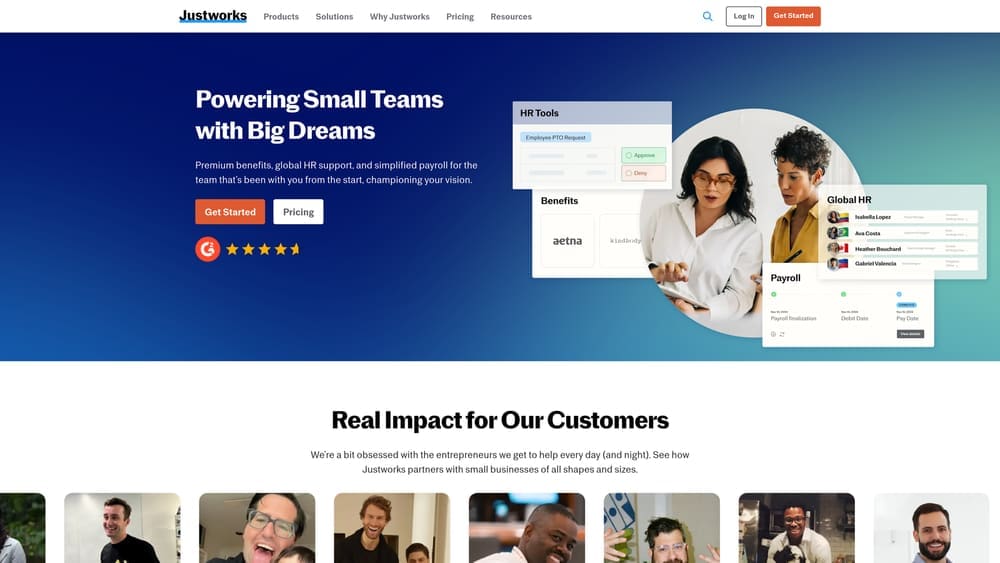
Justworks uses flat-rate pricing published directly on their website: $59 per employee per month for Basic, $99 per employee per month for Plus. You pay the same amount whether that employee earns $40,000 or $180,000. ADP TotalSource uses percentage-of-payroll pricing, typically ranging from 2% to 12% depending on company size, industry risk, and services selected. Quotes are customized and not published publicly.
How It Plays Out in Practice
If you’re a 15-person startup with mostly junior roles earning $50,000–$70,000, Justworks’ flat rate is straightforward and predictable. Your monthly PEO cost is fixed regardless of raises or bonuses. But if you’re a 50-person company with senior engineers earning $150,000+, percentage-of-payroll pricing can become expensive fast. A 4% rate on a $150,000 salary costs $6,000 annually per employee — far more than Justworks’ $1,188 annual flat rate.
The crossover point depends on your average compensation. Higher-paid teams often find flat-rate pricing more cost-effective. Lower-paid teams in industries like retail or hospitality may find percentage-based pricing competitive, especially if ADP’s quote comes in at the lower end of their range. Understanding professional employer organization cost structures helps you anticipate these differences before requesting quotes.
What to Do Before Deciding
Run the math with your actual payroll numbers. Calculate Justworks’ flat rate for your headcount. Then get a formal quote from ADP TotalSource and compare total annual cost — not just the percentage rate. Factor in expected headcount growth and compensation changes over the contract term. The pricing model that works today may not work in 18 months if you’re planning aggressive hiring or significant raises.
2. Company Size Sweet Spot
Where Each PEO Is Actually Optimized
PEOs design their infrastructure, pricing, and service models around specific headcount ranges. Operating outside that sweet spot doesn’t mean the service won’t work — it means you’re either overpaying for capabilities you don’t need or underserved because you’re too small to justify dedicated resources.
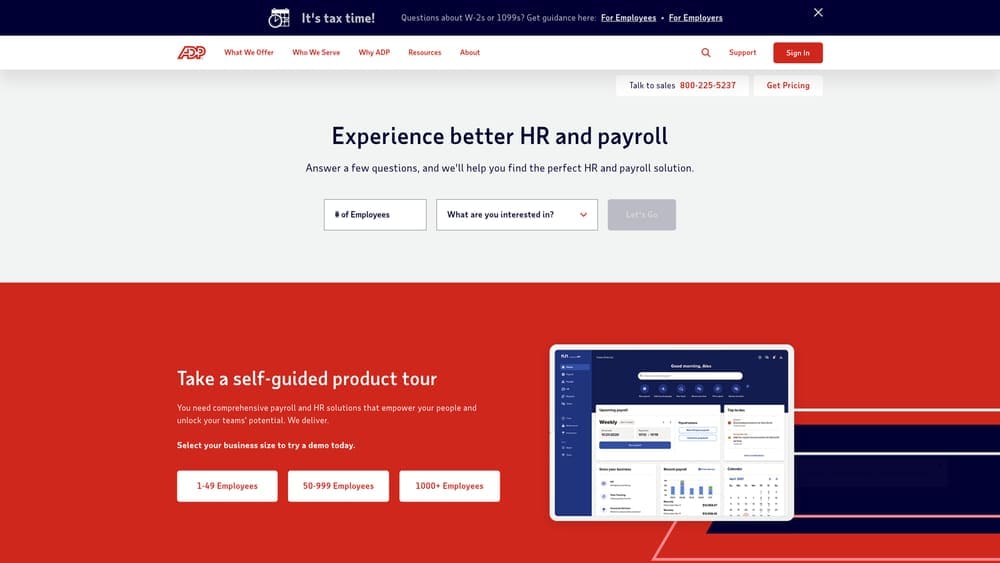
Justworks targets startups and small businesses, typically 5 to 75 employees. Their platform, pricing transparency, and self-service model reflect that focus. ADP TotalSource serves mid-market and larger companies, generally 50 to 1,000+ employees. Their infrastructure is built for complexity, multi-location operations, and businesses that need dedicated account teams.
What Happens Outside the Sweet Spot
If you’re a 10-person startup using ADP TotalSource, you’re likely paying for enterprise-level support infrastructure you don’t need. Your account may get less attention because you’re a small client in a portfolio designed for larger businesses. If you’re a 200-person company using Justworks, you may hit limitations around benefits customization, multi-state compliance support, or the availability of dedicated HR consulting.
Neither scenario is a dealbreaker, but it creates friction. You’re either overpaying or working around platform limitations that weren’t designed for your scale. Companies in this situation often explore alternatives like ADP TotalSource vs Rippling PEO to find a better fit for their specific headcount.
Matching Your Current and Future Headcount
Consider where you are today and where you’ll be in 24 months. If you’re at 15 employees now but planning to hit 75 within two years, Justworks may work well through that growth phase. If you’re at 40 employees and expect to reach 150, you may outgrow Justworks’ infrastructure and need to transition mid-contract — which creates operational disruption and potential cost.
ADP TotalSource scales better into larger headcounts, but you pay for that scalability whether you use it or not. If you’re stable at 30 employees with no aggressive growth plans, that scalability isn’t worth the premium.
3. Benefits Access
Enterprise Plans vs. Startup Simplicity
Benefits access is one of the main reasons businesses consider PEOs in the first place. But “access to Fortune 500 benefits” doesn’t mean much if the plans don’t fit your team’s needs or if navigating the options requires more HR bandwidth than you have.
ADP TotalSource offers enterprise-level benefits through large group plans. You get access to multiple carriers, plan tiers, and customization options typically reserved for much larger companies. This includes robust medical, dental, vision, FSA/HSA options, voluntary benefits, and retirement plans with institutional pricing.
Justworks offers streamlined benefits with fewer carrier choices but simpler administration. Their medical plans come from major carriers, and enrollment is integrated directly into their platform. The trade-off is less customization — you choose from their curated plan options rather than building a custom benefits package.
Where It Actually Matters
If your team values benefits flexibility — multiple plan tiers, HSA options, voluntary add-ons like pet insurance or legal services — ADP’s depth may justify the higher cost. If your priority is getting competitive medical coverage without spending hours comparing 15 different plan structures, Justworks’ simplified approach reduces decision fatigue.
The real differentiator is retirement plans. ADP TotalSource offers more robust 401(k) administration with options for profit-sharing, safe harbor contributions, and complex plan designs. Justworks offers 401(k) access but with less customization. If retirement benefits are a key retention tool for your business, that depth matters.
Evaluating What Your Team Actually Needs
Survey your team or review your current benefits utilization. If 90% of employees choose the same medical plan tier and rarely use voluntary benefits, you don’t need enterprise-level customization. If you have a diverse team with varying needs — families, single employees, older workers prioritizing retirement — more options create real value.
Don’t assume more choice is always better. Benefits administration complexity scales with options. If you don’t have dedicated HR staff, managing 12 benefit categories can become a time sink. Understanding the professional employer organization structure helps clarify who handles what in benefits administration.
4. Technology Experience
Modern Interface vs. Full-Feature Depth
Technology experience affects how much time your team spends navigating payroll, benefits enrollment, time tracking, and employee self-service. A clunky interface doesn’t just frustrate users — it increases administrative overhead and error rates.
Justworks is built like modern SaaS software. The interface is clean, intuitive, and designed for users who expect consumer-grade UX. Onboarding is fast, payroll runs are straightforward, and employees can manage their own benefits and PTO without needing a manual. The platform prioritizes simplicity over feature depth.
ADP TotalSource offers a more comprehensive platform with deeper functionality. You get integrated time and attendance, advanced reporting, compliance dashboards, and connections to ADP’s broader ecosystem. The trade-off is a steeper learning curve and an interface that feels more enterprise-focused than startup-friendly.
How This Affects Daily Operations
If your team is tech-savvy and expects software to just work, Justworks reduces friction. Employees can update direct deposit info, download tax forms, and enroll in benefits without calling HR. Payroll admins can run payroll in minutes without extensive training.
If you need robust reporting, multi-location time tracking, or integrations with existing enterprise systems, ADP’s platform offers more depth. But you’ll invest more time in training and onboarding. Smaller teams without dedicated HR staff may find that depth overwhelming rather than helpful. Some businesses considering a switch from standalone payroll software find our guide on how to replace ADP Run with a PEO helpful for understanding the transition process.
Testing Before You Commit
Ask for a live demo of both platforms — not a sales presentation, but actual navigation through payroll processing, benefits enrollment, and reporting. Have the person who will actually use the system daily test the interface. Pay attention to how many clicks it takes to complete common tasks and whether the workflow feels intuitive or requires constant reference to help documentation.
If your team struggles with the demo, that friction will compound over time. Technology experience isn’t a nice-to-have — it directly affects how much time you spend on HR admin.
5. Service Model
Self-Service Simplicity vs. Dedicated Support Teams
Service model determines how much hand-holding you get when things go wrong, when you need compliance guidance, or when you’re navigating complex HR situations. This isn’t about customer service quality — it’s about whether support is structured around self-service efficiency or dedicated account management.
Justworks operates on a self-service model with support available via email and chat. You don’t get a dedicated account manager. Instead, you access a support team trained to handle common questions quickly. The platform is designed to minimize the need for support in the first place — most tasks are intuitive enough that users don’t need to call anyone.
ADP TotalSource assigns dedicated HR professionals to your account. You get a consistent point of contact who understands your business, industry, and specific compliance needs. This matters more as complexity increases — multi-state operations, industry-specific regulations, or HR situations that require nuanced guidance rather than templated answers.
When Dedicated Support Justifies the Cost
If you’re operating in multiple states with different labor laws, handling workers’ comp claims, or dealing with employee relations issues that require HR expertise, dedicated support becomes valuable. You’re not explaining your situation to a new person every time you reach out. Your account manager already knows your business structure and can provide context-specific guidance.
If your HR needs are straightforward — running payroll, managing benefits enrollment, handling routine onboarding — self-service support is usually sufficient. Most questions can be resolved quickly without needing a dedicated relationship. Businesses with complex needs often compare options like ADP TotalSource vs BBSI to evaluate different service model approaches.
Assessing Your Support Requirements
Think about the last six months. How often did you need HR guidance that went beyond “how do I process this payroll adjustment?” If the answer is rarely, you probably don’t need dedicated account management. If you’re regularly navigating compliance questions, handling terminations, or managing leave requests across multiple states, dedicated support reduces risk and saves time.
Also consider your internal HR bandwidth. If you have an experienced HR manager on staff, they may prefer self-service efficiency over scheduled check-ins with an account manager. If HR responsibilities fall on a founder or office manager without formal HR training, dedicated support provides a safety net.
6. Compliance Complexity
Multi-State and Industry-Specific Regulatory Support
Compliance complexity scales with geography and industry. A single-state tech startup has different regulatory exposure than a multi-state healthcare company. Your PEO’s compliance infrastructure needs to match your actual risk profile — not just check a box that says “compliance included.”
ADP TotalSource offers deeper compliance support for complex scenarios. They handle multi-state tax filings, industry-specific regulations, workers’ comp administration across different jurisdictions, and dedicated compliance consulting. If you’re operating in states with complex labor laws — California, New York, Massachusetts — or in highly regulated industries, that depth matters.
Justworks provides solid compliance support for straightforward scenarios. They handle payroll tax filings, benefits compliance, and basic multi-state operations. But if you need industry-specific guidance, complex workers’ comp management, or hands-on support navigating new state expansions, their infrastructure is lighter. Understanding professional employer organization workers compensation responsibilities clarifies how these duties get divided between you and your PEO.
Where Compliance Risk Actually Lives
Most small businesses overestimate their compliance complexity. If you’re a 20-person SaaS company operating in two states with standard employment practices, your compliance needs are manageable. Justworks handles payroll taxes, benefits administration, and basic labor law compliance without issue.
Complexity increases with specific triggers: operating in California, hiring in multiple states with different wage and hour laws, managing tipped employees, handling prevailing wage requirements, or operating in industries with specific regulatory oversight. If any of those apply, ADP’s deeper compliance infrastructure reduces risk.
Evaluating Your Compliance Exposure
List every state where you have employees. Identify any industry-specific regulations that apply to your business. Consider your growth plans — are you expanding into new states or industries in the next 12 months? If your compliance profile is simple today but will become complex soon, factor that into your decision.
Also assess your internal compliance expertise. If you have an HR manager with multi-state experience, they can navigate lighter PEO support. If compliance falls on someone without that background, deeper PEO infrastructure reduces mistakes. Reviewing professional employer organization tax responsibilities helps you understand exactly what your PEO handles versus what remains your obligation.
7. Contract Terms and Exit Flexibility
Understanding Commitment Requirements and Transition Options
Contract terms determine how locked in you are if your business changes direction, if the service doesn’t meet expectations, or if you outgrow the platform. PEO contracts typically run 12 months with auto-renewal clauses, but the details around early termination, transition support, and notice requirements vary significantly.
Justworks operates on annual contracts with relatively straightforward terms. Early termination is possible but may involve fees depending on timing and circumstances. Their transition process is designed to be simple — you’re not untangling complex integrations or dedicated account structures.
ADP TotalSource contracts are more complex, reflecting the deeper service integration. Early termination is more difficult and often more expensive. Because you’re working with dedicated account teams and more integrated systems, transitioning off ADP requires more planning and coordination.
Why Exit Flexibility Matters
Most businesses don’t plan to leave their PEO when they sign up, but circumstances change. You may get acquired, experience rapid growth that changes your needs, or simply find that the service doesn’t fit as well as expected. Contract flexibility determines whether you can adapt or whether you’re stuck paying for a service that no longer works.
Startups and high-growth companies should prioritize exit flexibility. If you’re planning to scale from 15 to 100 employees in 18 months, you may outgrow a PEO designed for small teams. If you’re raising a Series A and your investors prefer you bring HR in-house, you need the ability to transition without massive penalties.
What to Clarify Before Signing
Read the contract termination clauses carefully. Ask specifically about early termination fees, notice requirements, and what happens to benefits mid-contract if you leave. Understand whether you’re locked into auto-renewal unless you provide notice 60 or 90 days before the contract end — missing that window can trap you for another year.
Also ask about transition support. If you decide to leave, does the PEO provide assistance moving payroll and benefits to a new provider, or are you on your own? Some PEOs make exit intentionally difficult to reduce churn. Others recognize that clean transitions protect their reputation and make the process straightforward.
Putting It All Together
The right choice depends on where your business sits today and where it’s headed. Justworks makes sense for startups and small teams who want predictable costs, modern software, and minimal hand-holding. It works well if your compliance needs are straightforward, your team values self-service efficiency, and you’re not operating in highly complex regulatory environments.
ADP TotalSource fits businesses with complex compliance needs, larger headcounts, or those who value dedicated HR support over self-service simplicity. It’s built for companies that need depth — multi-state operations, industry-specific regulations, customized benefits, and hands-on account management.
Before making a decision, map your actual requirements. What’s your headcount trajectory over the next 24 months? What’s your average employee compensation? Are you operating in multiple states or planning to expand? How much internal HR expertise do you have? Do you need dedicated support or prefer self-service efficiency?
Then get quotes from both providers. Run the math with your real payroll numbers — not hypothetical averages. The pricing difference for your specific situation may make the decision obvious. But also evaluate contract terms, technology experience, and whether the service model matches how your team actually operates.
Before you renew your PEO agreement, compare your options. Most businesses overpay due to bundled fees and unclear administrative markups. We break down pricing, services, and contract structures so you can make a smarter decision.
The worst outcome isn’t choosing the wrong PEO. It’s signing a contract without understanding the tradeoffs and then realizing six months in that the pricing structure doesn’t scale with your business, the service model doesn’t match your needs, or the exit terms trap you into another year of paying for something that stopped working.