
Both ADP TotalSource and Rippling offer PEO services, but they solve fundamentally different problems for different types of businesses. ADP TotalSource is the established enterprise-grade option with decades of compliance infrastructure and benefits buying power. Rippling is the tech-forward challenger that treats PEO as one module in a broader IT and HR automation platform.
This comparison isn’t about which one is “better.” It’s about which one fits your operational reality, growth trajectory, and internal capabilities.
If you’re evaluating these two providers, you’ve probably noticed they attract very different types of buyers. ADP appeals to businesses that want hands-off administration and established compliance frameworks. Rippling draws companies that prioritize automation, IT integration, and workflow flexibility.
We’ll break down the seven decision factors that separate these two providers and help you identify which aligns with your actual business needs.
1. Technology Philosophy: Integrated Suite vs. Modular Platform
The Fundamental Difference
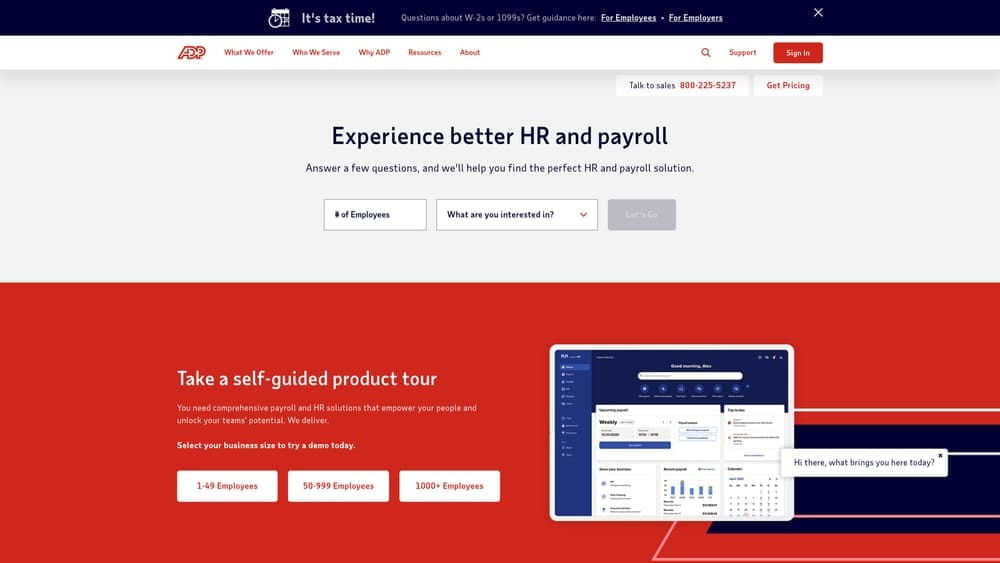
ADP TotalSource operates as a self-contained PEO system. You get payroll, benefits administration, compliance support, and HR tools bundled together in a unified platform. The technology serves the PEO relationship — everything is designed to support that core service model.
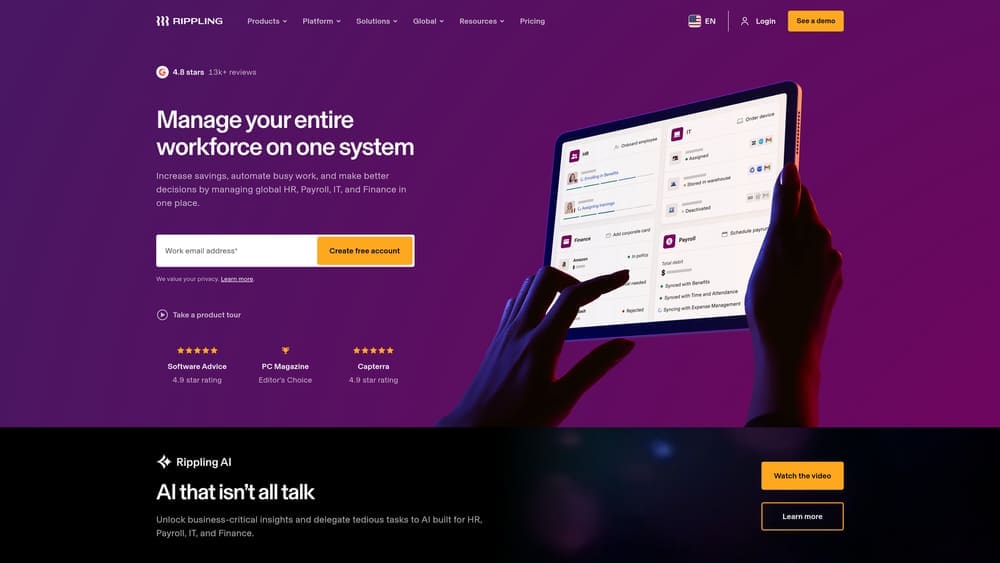
Rippling approaches PEO differently. Their platform started as a workforce management system that handles IT provisioning, app access, device management, and HR workflows. PEO is one service layer you can add on top of that infrastructure.
This architectural difference matters more than most businesses realize during initial evaluation.
What This Means Operationally
With ADP TotalSource, you’re working within their ecosystem. The platform is mature and stable, but customization is limited. You follow their processes, use their reporting structures, and integrate with their approved third-party tools.
With Rippling, you get more flexibility to build workflows that match your operations. The platform connects to hundreds of apps and allows automation across IT and HR functions. You can provision software access, assign equipment, and manage benefits through the same system.
The tradeoff: ADP’s approach is simpler if you want a turnkey solution. Rippling’s approach is more powerful if you have the internal capability to configure and maintain those integrations.
Implementation Reality
ADP implementations follow a structured playbook. You’ll work with an implementation specialist who guides you through their standard process. Customization requests go through formal channels and may face limitations based on platform constraints.
Rippling implementations require more upfront configuration. You’ll need to map your workflows, connect your tech stack, and build automation rules. This takes longer initially but gives you more control over how a PEO works once it’s live.
Pro Tips
Ask both providers for a detailed walkthrough of how you’d handle a common scenario — like onboarding a new employee across multiple states with specific equipment and app access needs. Watch how each platform handles the workflow. That demonstration will reveal whether their technology philosophy matches your operational preferences.
2. Benefits Access and Buying Power Comparison
The Challenge It Solves
One of the primary reasons businesses choose a PEO is access to better health insurance rates and benefits options. When you join a PEO, you’re pooled with other client companies under the PEO’s master benefits policies. Larger pools typically mean better pricing and more plan options.
The question is whether that theoretical advantage translates to real savings for your specific business.
ADP’s Benefits Infrastructure
ADP TotalSource is one of the largest PEOs in the country. Their benefits buying power comes from decades of operation and a massive client base. They have established relationships with major carriers and offer a wide range of plan options across medical, dental, vision, life insurance, and retirement plans.
Their scale means they can negotiate competitive rates, particularly for businesses in the 10-100 employee range. If you’re currently buying insurance on the small group market, joining ADP’s pool often improves your pricing and plan quality.
The structure is straightforward: you select from their available plan options, and ADP handles enrollment, administration, and carrier relationships. You’re working within their benefits framework, but that framework is comprehensive.
Rippling’s Benefits Approach
Rippling entered the PEO market more recently, which means their risk pool is smaller than ADP’s. They offer benefits access and administration, but their primary differentiator is how benefits connect to the rest of their platform.
Enrollment automation, lifecycle management, and integration with payroll and IT systems are where Rippling stands out. The administrative experience is cleaner and more automated than traditional PEO providers.
However, their benefits pricing may not match ADP’s buying power, particularly if you’re in a competitive insurance market or have a smaller employee count. This gap matters less if your current benefits costs are already reasonable and you’re prioritizing administrative efficiency over marginal rate improvements.
Pro Tips
Request actual benefits quotes from both providers before making a decision. Don’t rely on estimates or hypothetical savings. Get real plan options with real pricing based on your employee census and location. Compare those quotes against your current costs and factor in any plan design differences. Benefits pricing can vary significantly based on your industry, location, and employee demographics.
3. Compliance Infrastructure and Risk Coverage
Why This Matters
When you work with a PEO, you’re sharing employment responsibilities and certain legal liabilities. The PEO becomes the employer of record for tax purposes, which means they’re responsible for employment tax deposits, workers’ compensation coverage, and regulatory compliance across your operating states.
Not all PEOs provide the same level of risk protection. The difference between a standard PEO and a Certified Professional Employer Organization (CPEO) is significant.
ADP’s CPEO Status
ADP TotalSource holds CPEO certification from the IRS. This certification requires meeting strict bonding, financial reporting, and background check requirements. It also provides specific tax liability protections for client companies.
If ADP fails to remit employment taxes on your behalf, the IRS cannot hold you liable for those taxes as long as you’ve paid ADP in full. This protection doesn’t exist with non-certified PEOs.
ADP also maintains comprehensive workers’ compensation coverage and multi-state compliance infrastructure. They have dedicated teams monitoring regulatory changes across all 50 states and update client policies accordingly.
Rippling’s Compliance Approach
Rippling’s PEO offering is newer, and their compliance infrastructure is still maturing. You should verify their current CPEO certification status directly, as this can change over time.
Their compliance capabilities are strong on the technology side — automated tax filings, multi-state payroll processing, and regulatory updates. Where they may have less depth is in the human advisory layer that comes with decades of operating experience.
If you’re operating in multiple states with complex regulatory requirements, ADP’s established compliance infrastructure may provide more peace of mind. If you’re in a simpler operating environment and prioritize technology-driven compliance over advisory support, Rippling’s approach may be sufficient.
Pro Tips
Ask both providers about their workers’ compensation claims handling process and their experience managing compliance in your specific states. Request information about their audit support and how they handle regulatory inquiries. These scenarios reveal the depth of their compliance infrastructure beyond what’s visible in the platform.
4. Implementation Complexity and Onboarding Reality
The Challenge It Solves
Switching to a PEO isn’t a simple software migration. You’re changing your employer of record, moving benefits plans, updating payroll processing, and potentially restructuring internal workflows. Implementation timelines and resource requirements vary significantly between providers.
Understanding what you’re actually committing to helps you plan appropriately and avoid surprises mid-implementation.
ADP’s Implementation Process
ADP follows a structured implementation playbook. You’ll work with an assigned implementation specialist who guides you through data migration, benefits enrollment, payroll setup, and system configuration.
Typical timelines run 60-90 days from contract signing to full go-live. This includes benefits open enrollment if you’re switching to a PEO mid-year, payroll conversion, and employee onboarding into the ADP system.
The process is well-documented and predictable. You’ll know what’s required at each stage, and ADP handles most of the heavy lifting. The tradeoff is limited flexibility — you’re following their process, not designing your own.
Internal resource requirements are moderate. You’ll need someone to coordinate data gathering, answer questions about your current setup, and communicate changes to employees. Most businesses can manage this with existing HR staff.
Rippling’s Implementation Process
Rippling implementations require more upfront configuration work. You’re not just setting up PEO services — you’re configuring workflows, connecting integrations, and building automation rules across IT and HR functions.
Timelines vary based on complexity. A basic PEO setup might take 30-45 days. A full platform implementation with IT management, app integrations, and custom workflows can extend to 90+ days.
You’ll need internal resources who understand your tech stack, can map workflows, and are comfortable with system configuration. Rippling provides implementation support, but you’re doing more of the actual work compared to ADP’s hands-on approach.
The payoff is a system that’s tailored to your operations rather than a standardized solution you adapt to.
Pro Tips
Ask both providers for a detailed implementation timeline with specific milestones and resource requirements. Request references from businesses similar to yours who recently completed implementation. Ask those references how actual timelines compared to projections and what surprised them during the process.
5. Pricing Structures and Hidden Cost Factors
The Challenge It Solves
PEO pricing is notoriously opaque. Providers quote per-employee-per-month rates, but the total cost includes administrative fees, benefits markups, workers’ compensation premiums, and various add-on charges that aren’t always clear upfront.
Understanding the full cost structure helps you compare PEO pricing accurately and avoid surprises after you’ve signed.
ADP’s Pricing Model
ADP TotalSource typically uses bundled pricing. You pay a per-employee-per-month fee that covers core PEO services, plus separate charges for benefits (medical, dental, vision) based on your selected plans and employee enrollment.
Administrative fees are built into the monthly rate. Workers’ compensation is usually included, though rates vary by industry classification and claims history.
Contract terms typically run one to three years with automatic renewal clauses. Early termination can trigger penalties, and you’ll need to review exit terms carefully before signing.
The challenge with ADP’s pricing is understanding what’s included versus what costs extra. Implementation fees, COBRA administration, certain compliance services, and premium support may carry additional charges.
Rippling’s Pricing Model
Rippling uses modular pricing. You pay for the platform features you need — base HR, payroll, benefits administration, IT management, and PEO services are separate line items.
This structure gives you more control over costs but requires careful evaluation of what you actually need. Adding modules increases your total expense, and the full-featured platform can become expensive quickly.
Rippling has historically offered more flexible contract terms than traditional PEOs, though specific terms vary by deal size and negotiation. Verify current contract requirements directly.
Benefits pricing is separate from platform fees. You’ll pay Rippling’s administrative charges plus the actual insurance premiums, which may not benefit from the same buying power as ADP’s larger risk pool.
Pro Tips
Request a complete cost breakdown from both providers that includes all fees — implementation, monthly administration, benefits markups, workers’ compensation estimates, and any service charges. Watch for hidden PEO fees that aren’t disclosed upfront. Ask for a 12-month total cost projection based on your current employee count and anticipated benefits enrollment. Compare these projections against your current costs to determine real savings or increases.
6. Ideal Company Profiles for Each Provider
The Challenge It Solves
Neither ADP TotalSource nor Rippling is universally superior. Each provider excels for specific business profiles based on operational priorities, internal capabilities, and growth trajectories.
Matching your company characteristics to provider strengths improves your likelihood of a successful long-term relationship.
When ADP TotalSource Makes Sense
ADP is the stronger choice if you prioritize benefits buying power and want hands-off administration. Businesses in the 20-150 employee range with limited internal HR resources benefit most from ADP’s comprehensive service model.
If you’re in a high-risk industry with complex workers’ compensation needs, ADP’s established infrastructure and claims management experience provide meaningful value.
Companies operating in multiple states with varying compliance requirements appreciate ADP’s depth of regulatory expertise and dedicated compliance support.
ADP also works well for businesses that prefer stability over cutting-edge technology. Their platform is mature, predictable, and supported by decades of operational experience.
When Rippling Makes Sense
Rippling is the better fit if you need IT and HR integration and want automation-first workflows. Tech companies, remote-first businesses, and organizations with distributed teams benefit from Rippling’s unified platform approach.
If you have internal technical resources who can configure systems and build workflows, Rippling’s flexibility becomes a significant advantage rather than a complexity burden.
Companies that prioritize employee experience and want modern, intuitive interfaces for onboarding, benefits management, and self-service prefer Rippling’s user experience over ADP’s more traditional design. Evaluating PEO HR technology platforms can help you understand what modern systems offer.
Rippling also works well for businesses that expect to scale quickly and need a platform that can grow with them without requiring a complete system replacement.
Pro Tips
Evaluate your internal capabilities honestly. If you don’t have someone who can manage system configuration and workflow automation, Rippling’s flexibility may become a liability rather than an asset. If you prefer hands-on control and have technical resources, ADP’s structured approach may feel limiting. Match the provider’s service model to your actual operational reality, not your aspirational state.
7. When Neither Provider Is the Right Fit
The Challenge It Solves
Not every business benefits from a PEO relationship. Sometimes the costs outweigh the advantages, or your operational needs don’t align with what PEOs provide.
Understanding when to walk away from the PEO model entirely saves you from committing to a multi-year contract that doesn’t solve your actual problems.
When to Consider Alternatives
If your primary need is payroll processing with basic benefits administration, a standalone payroll provider like Gusto or ADP Workforce Now may be more cost-effective. You’ll lose the benefits buying power and shared liability protection, but you’ll also avoid PEO administrative fees and contract commitments.
If you’re below 10 employees and don’t have complex compliance needs, the PEO cost structure may not justify the benefits access. Small businesses often find better value with direct insurance purchases and simpler payroll solutions.
If you operate in a single state with straightforward regulatory requirements, you may not need the multi-state compliance infrastructure that PEOs provide. A good employment attorney and a competent payroll provider can handle most compliance needs more affordably.
If you value maximum control over HR processes and have internal expertise, a PEO’s co-employment model may feel restrictive. You’ll share decision-making authority with the PEO, which some businesses find limiting.
Alternative Solutions
For businesses that need benefits access without full PEO services, consider a Professional Employer Organization that offers benefits-only arrangements or a benefits broker who can access association plans.
For companies that need compliance support without co-employment, HR consulting firms and employment law specialists provide advisory services without taking on employer of record responsibilities. Understanding the ASO vs PEO distinction can help clarify your options.
For organizations that want technology-driven HR without PEO costs, standalone HRIS platforms like BambooHR or Namely offer workflow automation and employee self-service at lower price points.
Pro Tips
Before committing to either ADP or Rippling, calculate your total current costs for payroll, benefits, workers’ compensation, and HR administration. Compare that baseline against the all-in PEO cost. If the PEO doesn’t deliver at least 15-20% improvement in cost, service quality, or risk reduction, you may be better served by optimizing your current setup rather than switching to a co-employment model.
Making the Right Choice for Your Business
Choosing between ADP TotalSource and Rippling isn’t about picking the “best” PEO. It’s about matching provider strengths to your operational needs.
If you prioritize benefits buying power, compliance infrastructure, and hands-off administration, ADP TotalSource deserves serious consideration. Their established infrastructure, CPEO certification, and comprehensive service model work well for businesses that want a turnkey solution with minimal internal management.
If you need IT integration, automation-first workflows, and modular flexibility, Rippling’s platform approach may fit better. Their technology-driven model appeals to companies with internal technical resources who value customization and modern user experience.
The decision ultimately comes down to your operational priorities, internal capabilities, and long-term growth plans.
Before signing with either provider, request detailed pricing breakdowns that include all fees and charges. Clarify contract exit terms and understand what happens if you need to terminate early. Verify their experience with businesses in your industry and state footprint.
Ask for references from companies similar to yours and speak with them about implementation experience, ongoing support quality, and whether the provider delivered on initial promises.
Before you renew your PEO agreement, compare your options. Most businesses overpay due to bundled fees and unclear administrative markups. We break down pricing, services, and contract structures so you can make a smarter decision.
The right PEO relationship should simplify your operations, reduce risk, and improve your benefits access. If the provider you’re evaluating doesn’t clearly deliver on those outcomes, keep looking.