
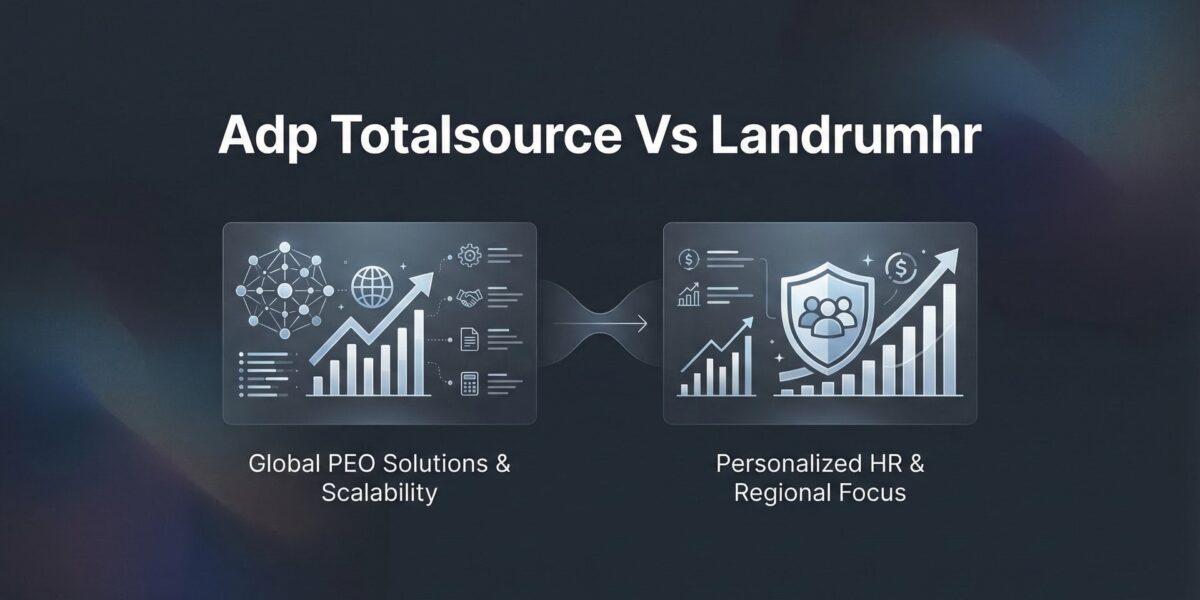
You’re looking at two PEOs that represent fundamentally different approaches to the same problem. ADP TotalSource brings enterprise infrastructure, national scale, and Fortune 500-level benefits access. LandrumHR offers regional expertise, relationship-driven service, and flexibility rooted in Southeast operations since 1970. Neither is universally better. The right choice depends on your operational footprint, growth trajectory, and what you actually need from a PEO relationship.
This comparison is for business owners with 5-150 employees who are actively evaluating these two providers specifically. We’re not going to regurgitate marketing claims or pretend one size fits all. Instead, we’ll break down the structural differences that actually affect your operations, costs, and service experience. If you’re new to PEO evaluation entirely, start with understanding what a PEO actually does and how to choose one before diving into provider-specific comparisons.
What follows are the decision factors that matter when you’re weighing these two options against your business reality.
1. Company Size Sweet Spot
The Challenge It Solves
Not every PEO operates effectively across all employee counts. Some providers build their service model around specific size bands, and pushing outside those boundaries often means you’re either overserved and overpaying or underserved and frustrated. Knowing where each provider’s operational model works best helps you avoid mismatches that create friction down the road.
The Strategy Explained
ADP TotalSource is built to handle scale. Their infrastructure supports businesses from 5 employees well into the hundreds, with systems designed to accommodate multi-state operations and complex organizational structures. The platform doesn’t strain when you add locations or cross state lines. It’s designed for businesses that expect to grow beyond 50 employees or already operate in that range.
LandrumHR operates most effectively in the 5-75 employee range, particularly for businesses with concentrated operations in the Southeast. Their relationship model works because they’re not trying to serve thousands of clients across 50 states. They focus on depth over breadth, which means more direct access to decision-makers but less infrastructure for rapid multi-state expansion. This approach aligns well with strategies for choosing a PEO for small business needs.
Implementation Steps
1. Identify your current employee count and realistic 3-year projection, including any planned geographic expansion.
2. Assess whether you’re likely to remain regionally concentrated or need true national infrastructure.
3. Ask each provider directly about their client concentration by size band and what happens when you outgrow typical thresholds.
Pro Tips
If you’re at 40 employees now and planning aggressive growth, ADP’s infrastructure scales more naturally. If you’re at 25 employees with stable regional operations, LandrumHR’s service model may deliver better access and flexibility. Don’t choose based on where you are today alone. Consider where you’ll be in two years and whether the provider’s model still fits.
2. Geographic Footprint
The Challenge It Solves
Operating across state lines introduces compliance complexity, benefits administration challenges, and service delivery questions. A PEO’s geographic capabilities directly affect how smoothly you can expand, hire remote workers, or manage multi-state teams. Mismatched footprints create operational friction you don’t anticipate until you’re already committed.
The Strategy Explained
ADP TotalSource operates nationally with infrastructure in all 50 states. They handle multi-state payroll, benefits administration, and compliance without requiring you to cobble together regional solutions. If you hire someone in Oregon while your headquarters is in Georgia, the platform handles it without special accommodations. For businesses with distributed workforces, understanding PEO options for multi-state companies becomes essential.
LandrumHR’s strength is regional depth in the Southeast, primarily Florida, Georgia, Alabama, and Tennessee. They know state-specific nuances, local carrier relationships, and regulatory environments intimately in these markets. That depth translates to better problem-solving and faster issue resolution within their core geography. Outside those states, their infrastructure thins considerably.
Implementation Steps
1. Map your current employee locations and any states where you’re likely to hire in the next 24 months.
2. Determine whether your growth strategy is regional concentration or national distribution.
3. Ask each provider about their service delivery model in your specific states, including local support availability and carrier relationships.
Pro Tips
If your entire operation stays within the Southeast and you value regional expertise over national reach, LandrumHR’s concentrated footprint works in your favor. If you’re already multi-state or plan to be, ADP’s national infrastructure eliminates friction. Don’t assume “we can expand anywhere” from a regional provider means the same service quality everywhere.
3. Technology Platform Comparison
The Challenge It Solves
Your PEO’s technology platform determines how you manage payroll, benefits enrollment, time tracking, and reporting. A clunky system creates administrative drag. A tightly integrated ecosystem can lock you into specific workflows. Understanding each provider’s technology approach helps you evaluate whether the platform supports or constrains your operations.
The Strategy Explained
ADP TotalSource operates within ADP’s broader technology ecosystem. The platform integrates payroll, benefits, time and attendance, and reporting in a unified environment. This integration reduces data entry and creates consistency across HR functions. The tradeoff is that you’re working within ADP’s architecture. If you need specific integrations or custom workflows, you’re adapting to their system rather than the other way around. Evaluating PEO HR technology platforms helps you understand what capabilities matter most.
LandrumHR takes a more flexible approach, partnering with various technology providers rather than maintaining a proprietary ecosystem. This creates more adaptability if you have existing systems you want to preserve or specific integration requirements. The tradeoff is that you may deal with multiple logins and less seamless data flow between functions.
Implementation Steps
1. List your current HR technology stack and identify which systems are non-negotiable to keep.
2. Request platform demonstrations from both providers showing actual workflows for payroll processing, benefits enrollment, and reporting.
3. Ask specific questions about API availability, data export capabilities, and integration options with your existing tools.
Pro Tips
If you value a single unified platform and don’t have complex integration requirements, ADP’s ecosystem delivers consistency. If you need flexibility to integrate specific tools or want to avoid platform lock-in, LandrumHR’s approach preserves more optionality. Test the actual interfaces during demos. A powerful platform that’s frustrating to use daily creates hidden costs.
4. Benefits Access and Purchasing Power
The Challenge It Solves
Benefits quality and cost directly affect your ability to attract talent and control expenses. PEOs pool multiple employers to negotiate better rates and access plans typically reserved for larger companies. The size and composition of that pool determines what you can offer employees and what it costs you. Understanding each provider’s purchasing leverage helps you evaluate real benefits value.
The Strategy Explained
ADP TotalSource leverages ADP’s massive scale to access Fortune 500-level benefits pools. This means your 30-person company can offer health plans, dental coverage, and ancillary benefits typically available only to enterprises with thousands of employees. The purchasing power translates to better plan options and more competitive rates, particularly for medical coverage. This matters most in competitive hiring markets where benefits differentiation affects talent acquisition.
LandrumHR builds benefits access through regional carrier relationships in the Southeast. They work with local and regional carriers who understand the market and offer competitive rates for businesses in their core geography. The pool is smaller, which can mean less leverage on pricing, but the carrier relationships often deliver more responsive service and faster issue resolution. Understanding small business benefits administration helps you evaluate what level of support you actually need.
Implementation Steps
1. Request specific plan details from both providers, including carrier names, coverage levels, and employee contribution structures.
2. Compare your current benefits costs against quoted rates from each provider, accounting for any coverage differences.
3. Ask about plan renewal history and rate increase patterns over the past three years to understand cost stability.
Pro Tips
If you’re competing for talent against larger companies and need enterprise-level benefits to stay competitive, ADP’s purchasing power creates real advantage. If your hiring market is regional and you value responsive carrier service over maximum plan variety, LandrumHR’s approach may deliver better practical outcomes. Don’t assume bigger pools always mean lower costs. Ask for actual rate comparisons based on your employee demographics.
5. Service Model Differences
The Challenge It Solves
When you have a payroll question at 4 PM on Friday or need help with a benefits enrollment issue, how you access support determines whether problems get resolved quickly or linger. PEO service models vary dramatically, from dedicated relationship managers to tiered support structures. Understanding each provider’s approach helps you evaluate whether you’ll get the access you need when operational issues arise.
ADP TotalSource typically assigns clients to service teams rather than individual dedicated contacts. You work with specialists for different functions—payroll, benefits, compliance—through a tiered support structure. This model provides deep expertise in specific areas but means you’re explaining your situation to different people depending on the issue. For straightforward questions, the system works efficiently. For complex situations requiring context about your business, you may repeat information across multiple interactions. Understanding small business HR outsourcing options helps frame what service levels are available.
The Strategy Explained
LandrumHR emphasizes relationship-driven service with dedicated contacts who understand your business. You’re more likely to reach the same person who handled your last issue, which reduces repetitive explanations and speeds resolution. This model works particularly well for businesses that value continuity and direct access over specialized departmental expertise. The tradeoff is that your dedicated contact’s availability directly affects response times.
Implementation Steps
1. Ask each provider to describe their service delivery model specifically, including how you access support and typical response times.
2. Request references from current clients in your size range and ask about their actual service experience.
3. Clarify what issues get handled by your primary contact versus escalated to specialized teams.
Pro Tips
If you have a lean internal team and need someone who knows your business to handle diverse issues, LandrumHR’s relationship model reduces friction. If you prefer specialized expertise for different functions and don’t mind working with multiple contacts, ADP’s structure provides depth. Test the service model during implementation. How they handle onboarding predicts how they’ll handle ongoing support.
6. Pricing Structure Transparency
The Challenge It Solves
PEO pricing is notoriously opaque. Providers quote per-employee-per-month rates that don’t include administrative fees, benefits markups, or service charges that appear later. Understanding each provider’s pricing structure helps you evaluate true costs and avoid surprises during renewal. This factor often determines whether a PEO relationship remains financially viable long-term.
The Strategy Explained
ADP TotalSource typically structures pricing as a percentage of payroll or per-employee-per-month fee, with additional charges for specific services and benefits administration. Their pricing tends to be more standardized given their scale, but the bundled nature of their offering can make it harder to isolate individual cost components. Administrative fees, technology charges, and benefits markups are often folded into the overall rate rather than itemized separately. Reviewing professional employer organization cost benchmarks helps you understand typical pricing ranges.
LandrumHR generally offers more flexibility in pricing structure, with the ability to customize which services you include and how costs are allocated. This can create better transparency if you want to understand exactly what you’re paying for each component, but it also means more variables to track. Smaller regional providers sometimes offer more room for negotiation, particularly for businesses in their core markets.
Implementation Steps
1. Request itemized pricing breakdowns from both providers showing base fees, administrative charges, benefits markups, and any additional service costs.
2. Ask specifically about renewal rate increase patterns and what drives cost changes year over year.
3. Clarify which services are included in base pricing versus charged separately, including workers’ compensation administration and compliance support.
Pro Tips
Don’t accept high-level per-employee quotes without understanding what’s included. Ask both providers to break down costs by category so you can compare apples to apples. Request sample invoices from current clients if possible. The pricing structure you agree to initially often determines your leverage during renewal negotiations.
7. Contract Terms and Exit Flexibility
The Challenge It Solves
PEO contracts determine how long you’re committed, what happens if you need to leave, and whether you can access your data after termination. Restrictive terms can trap you in relationships that no longer serve your business. Understanding each provider’s contract structure helps you evaluate risk and maintain optionality as your needs evolve.
The Strategy Explained
ADP TotalSource typically uses annual contracts with specific renewal terms and termination notice requirements. Their contracts tend to be more standardized given their scale, which means less room for customization but more predictability in terms and conditions. Data portability is generally supported given their CPEO certification requirements, but transition timelines and support levels vary. Expect 30-90 day notice requirements for termination depending on contract terms.
LandrumHR often offers more flexibility in contract terms, particularly for businesses in their core markets. Smaller providers sometimes accommodate mid-contract adjustments or shorter initial commitment periods to reduce risk for new clients. Exit support and data transition assistance may be more personalized given their relationship-driven model, but this varies based on circumstances and relationship history. Understanding what’s in a professional employer organization agreement helps you negotiate better terms.
Implementation Steps
1. Review contract terms carefully before signing, paying particular attention to auto-renewal clauses and termination notice requirements.
2. Ask specifically about data portability, including what information you can export and in what format if you terminate the relationship.
3. Clarify transition support expectations, including whether the provider assists with moving to a new PEO or back to internal administration.
Pro Tips
Negotiate contract terms before signing, not during renewal when you have less leverage. Ask about early termination provisions and associated costs. Understand exactly how much notice you must provide and what happens to your benefits coverage during transition periods. The easiest contract to exit is the one you negotiate properly from the start.
Putting It All Together
The decision between ADP TotalSource and LandrumHR comes down to matching their structural differences against your operational reality. ADP TotalSource fits businesses that prioritize national infrastructure, enterprise-grade technology integration, and Fortune 500-level benefits access. This positioning works best for companies scaling past 50 employees, operating in multiple states, or planning aggressive geographic expansion. You’re choosing proven scale and standardized systems over relationship flexibility.
LandrumHR fits businesses that value regional expertise, relationship-driven service, and operational flexibility. This model works best for Southeast-based companies under 75 employees with concentrated operations in their core markets. You’re choosing direct access and personalized service over maximum scale and national reach.
Neither provider is universally superior. The right choice depends on your employee count, geographic footprint, growth trajectory, and what you actually need from a PEO relationship. A 30-person company in Atlanta with no plans for multi-state expansion may find LandrumHR’s relationship model more valuable than ADP’s national infrastructure. A 60-person company hiring across ten states needs what ADP delivers regardless of service model preferences.
Before making a final decision, request detailed quotes from both providers with specific questions based on the factors we’ve covered. Ask about their client concentration in your size range and geography. Test their service model during the sales process—how they handle pre-sale questions predicts how they’ll handle operational issues. Review contract terms carefully and negotiate before signing.
Before you renew your PEO agreement, compare your options. Most businesses overpay due to bundled fees and unclear administrative markups. We break down pricing, services, and contract structures so you can make a smarter decision.