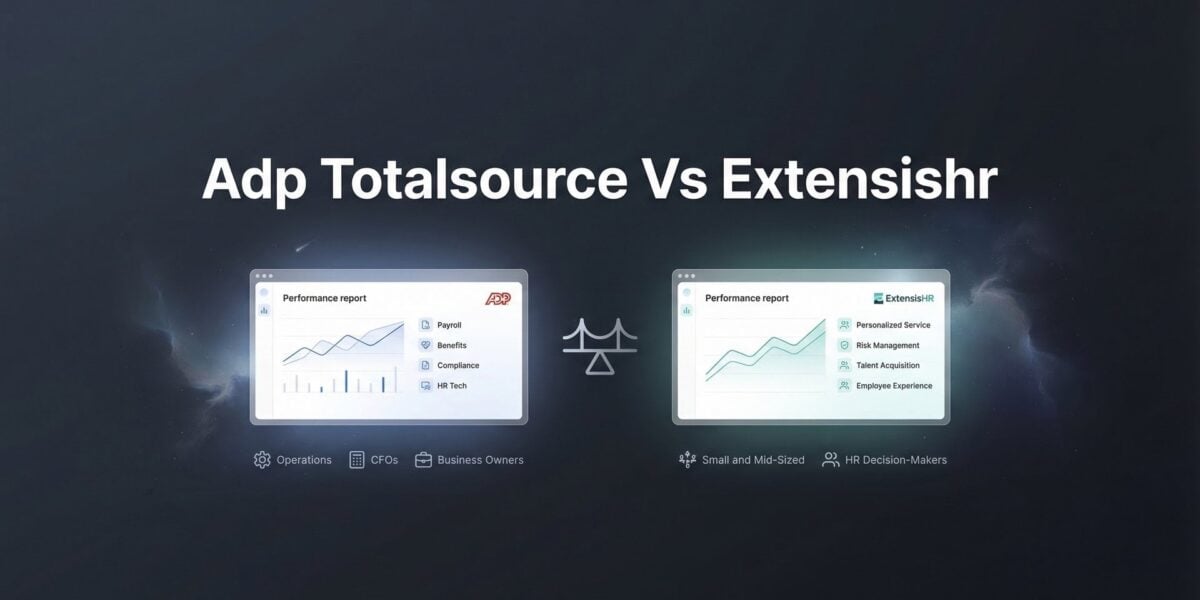
You’re comparing ADP TotalSource and ExtensisHR because you know a PEO decision isn’t something you get to redo every quarter. Both are IRS-certified PEOs (CPEOs), which means they carry federal tax liability protections — a baseline requirement worth confirming with any provider you’re evaluating. But beyond that credential, they operate in different lanes.
ADP TotalSource brings the infrastructure of a publicly traded company (NASDAQ: ADP) serving approximately 920,000 clients across all HR services. ExtensisHR positions itself as a mid-market specialist focused on personalized service delivery. The real question isn’t which provider has better marketing — it’s which operational model aligns with where your business actually is and where it’s realistically headed.
This comparison focuses on seven decision factors that separate functional PEO relationships from expensive mismatches. If you need broader context on PEO evaluation frameworks first, start with how to choose a PEO before diving into provider-specific comparisons.
1. Company Size Sweet Spots
The Challenge It Solves
Not every PEO is built to serve every headcount range efficiently. Providers optimize their service models, pricing structures, and platform capabilities around specific client profiles. Choosing a PEO that treats your size as an afterthought — whether you’re too small to matter or too large to handle personally — creates friction that compounds over time.
The Strategy Explained
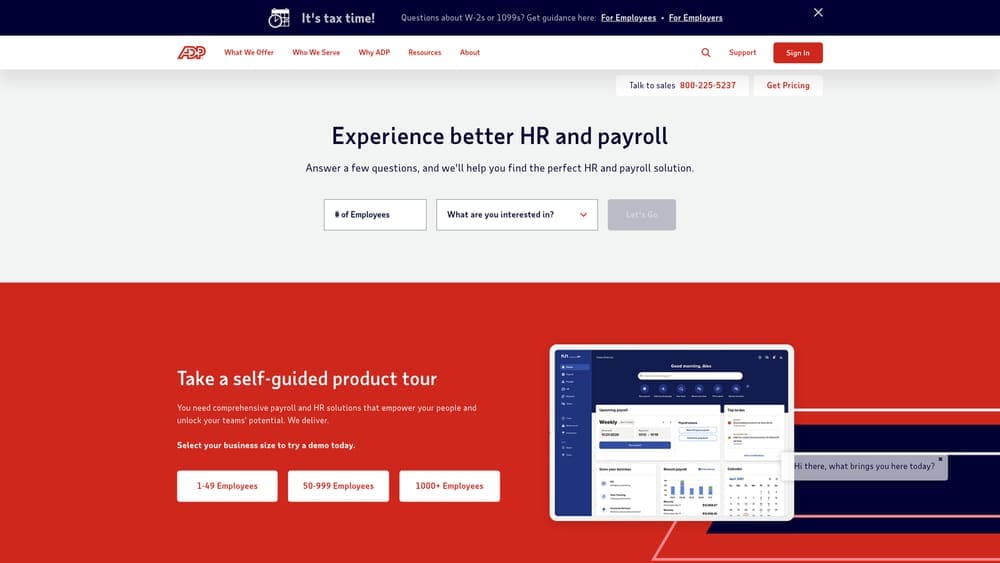
ADP TotalSource operates at enterprise scale. Their infrastructure is built to handle complex organizations with hundreds or thousands of employees, multiple entities, and sophisticated HR requirements. This creates advantages for larger clients who need robust systems and deep compliance resources. It can also mean smaller businesses get standardized service models designed for efficiency at scale rather than customization.
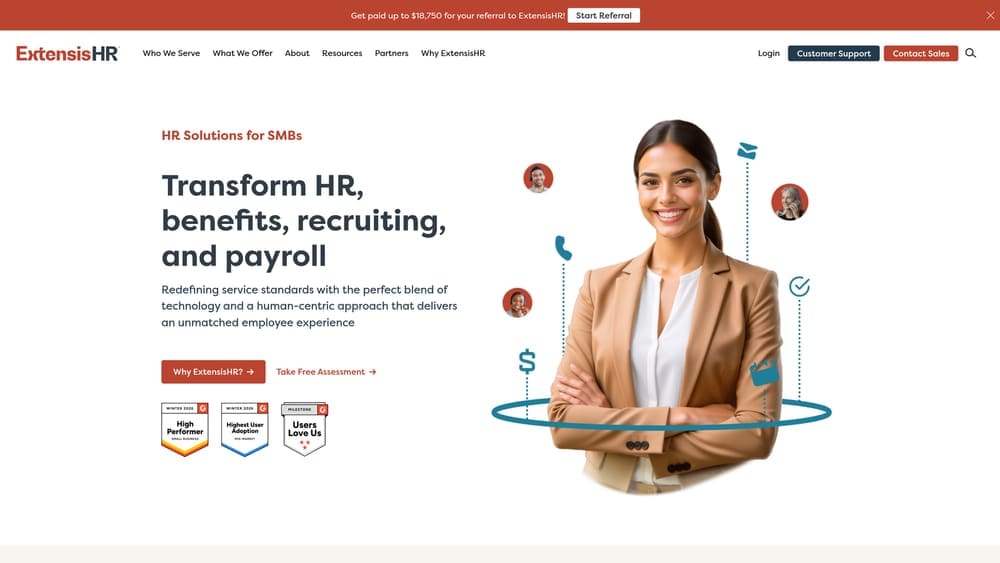
ExtensisHR focuses explicitly on mid-market businesses, typically positioning themselves for companies with 50-500 employees. Their service model emphasizes direct account management and responsive support. The tradeoff is less infrastructure depth for truly complex enterprise scenarios.
Your headcount today matters less than your trajectory. If you’re at 75 employees now but planning to reach 300 within two years, you need a provider that won’t require a painful migration mid-growth. If you’re stable at 150 and prioritize hands-on service, infrastructure designed for 10,000-employee clients may feel like operational overkill.
Implementation Steps
1. Map your realistic three-year headcount projection, accounting for planned expansion, seasonal fluctuations, and potential acquisitions or consolidations.
2. Ask each provider directly: “What percentage of your client base falls within our current and projected size range?” Providers perform best where they have concentration, not outliers.
3. Request references from clients at your current size and clients at your projected size to understand how service delivery changes as you scale within their model.
Pro Tips
Pay attention to how providers describe their “ideal client.” When a PEO says they serve businesses from 5 to 5,000 employees, they’re telling you they don’t have a focused service model. Specialists outperform generalists when the specialization matches your reality — which is why understanding professional employer organization options for small business matters if you’re in that category.
2. Pricing Structure Differences
The Challenge It Solves
PEO pricing appears simple — per-employee-per-month rates — until you encounter administrative fees, benefits markups, workers’ compensation adjustments, and annual true-up provisions. The headline rate rarely reflects total cost, and the gap between quoted rates and actual invoices creates budget surprises that strain PEO relationships.
The Strategy Explained
ADP TotalSource typically structures pricing with base administrative fees plus benefits pass-through costs. Their scale allows competitive workers’ compensation rates due to pooled risk across a massive client base. However, enterprise providers often bundle services you may not need, and unbundling isn’t always straightforward. Their pricing model assumes you want comprehensive coverage.
ExtensisHR generally offers more flexible pricing configurations, allowing mid-market clients to select specific service levels rather than accepting full-suite packages. This can reduce costs for businesses that already have functional HR systems and need targeted support rather than complete outsourcing. The tradeoff is less buying power on benefits compared to ADP’s pooled employee count.
Neither model is inherently cheaper. Total cost depends on your specific risk profile, benefits selections, state compliance complexity, and which services you actually use versus pay for as part of a bundle. Understanding professional employer organization cost structures helps you compare proposals accurately.
Implementation Steps
1. Request itemized proposals showing base administrative fees, estimated benefits costs, workers’ compensation rates, and any additional charges for multi-state compliance, onboarding, or technology access.
2. Ask how benefits markup is calculated and whether you receive transparency into carrier costs versus PEO margin — this varies significantly between providers.
3. Clarify annual adjustment mechanisms: how are rates recalculated based on claims experience, headcount changes, or benefits utilization? Get this in writing before signing.
Pro Tips
The lowest quoted rate often comes from providers who lowball initial proposals and recover margin through benefits markups or annual adjustments. Focus on total cost of ownership over three years, not the first year’s headline number. And remember — if a rate seems too good compared to market, the provider is either subsidizing year one to lock you in or hiding costs elsewhere.
3. Technology Platform Reality Check
The Challenge It Solves
PEO platforms handle payroll, benefits administration, time tracking, performance management, and compliance documentation. A platform that doesn’t integrate with your existing systems or requires excessive manual workarounds creates administrative drag that negates the efficiency gains you’re paying for. Conversely, over-investing in enterprise features you’ll never use wastes budget.
The Strategy Explained
ADP TotalSource runs on ADP’s core payroll and HR infrastructure — the same technology backbone used by thousands of enterprise clients. This means deep functionality, extensive integration options, and continuous platform investment. It also means complexity. If your HR team consists of one part-time person who needs simple workflows, enterprise-grade platforms can feel like using a bulldozer to plant a garden.
ExtensisHR uses a platform designed specifically for mid-market PEO clients. The focus is usability over feature depth. You get streamlined workflows optimized for businesses without dedicated HR technology specialists. The limitation is fewer advanced features for complex scenarios like multi-entity reporting or sophisticated compensation modeling.
Your existing tech stack matters here. If you’re already using specific accounting software, applicant tracking systems, or time-tracking tools, integration capability becomes critical. Reviewing the best PEO HR technology platforms can help you understand what features actually matter for your operations.
Implementation Steps
1. List your current HR technology tools and identify which integrations are non-negotiable versus nice-to-have — focus evaluation on must-haves first.
2. Request platform demos that show your specific use cases: running multi-state payroll, managing PTO accruals, generating compliance reports, and onboarding new hires in your actual workflow.
3. Ask about mobile functionality if your workforce includes field employees, remote workers, or hourly staff who need self-service access without desktop computers.
Pro Tips
Platform demos are designed to impress, not inform. Insist on seeing the actual administrative backend you’ll use daily, not the polished employee self-service portal. And test responsiveness — ask the sales team to show you how long it takes to complete a common task like updating benefits elections or running a custom payroll report. Slow platforms compound frustration over time.
4. Benefits Access and Buying Power
The Challenge It Solves
Small and mid-sized businesses struggle to negotiate competitive benefits rates with carriers. PEOs pool employees across multiple clients to create buying power that individual companies can’t match. But not all PEOs leverage scale equally, and benefits quality varies significantly based on how providers structure their carrier relationships and pass savings to clients.
The Strategy Explained
ADP TotalSource pools approximately 920,000 employees across their entire client base, creating substantial leverage with major carriers. This typically translates to competitive rates on health insurance, dental, vision, and supplemental benefits. Their carrier relationships are national, which helps businesses operating in multiple states access consistent benefits packages. The downside is less flexibility — you’re selecting from ADP’s negotiated options rather than bringing your own broker or customizing carrier relationships.
ExtensisHR operates with a smaller pooled employee count but often provides more flexibility in benefits design and carrier selection. Mid-market clients sometimes prefer this approach when they have specific industry needs or existing broker relationships they want to maintain. The tradeoff is potentially less buying power on standard benefits compared to enterprise-scale competitors.
Benefits buying power matters most when you’re offering comprehensive packages to attract competitive talent. Understanding professional employer organization benefits helps you evaluate what each provider actually delivers beyond the sales pitch.
Implementation Steps
1. Request sample benefits packages showing coverage levels, employee contribution rates, and carrier options for your specific industry and geographic footprint.
2. Ask how benefits costs are projected to increase annually and whether the PEO guarantees rate stability or passes through carrier increases directly — this affects budget predictability.
3. Clarify whether you can supplement PEO benefits with additional voluntary options or if you’re restricted to their carrier network exclusively.
Pro Tips
Benefits markup is where many PEOs recover margin lost on competitive administrative pricing. Ask explicitly: “What is your markup on benefits premiums, and how is it calculated?” If a provider won’t answer directly, that’s useful information about transparency you can expect throughout the relationship.
5. Service Model and Account Management
The Challenge It Solves
Post-sale service delivery determines whether your PEO relationship reduces administrative burden or creates new frustration. Responsive account management, accessible HR expertise, and efficient issue resolution matter more than platform features when you’re dealing with payroll errors, benefits questions, or compliance concerns in real time.
The Strategy Explained
ADP TotalSource typically assigns account management teams rather than individual dedicated representatives, especially for smaller clients. You get access to specialized resources — payroll specialists, benefits consultants, compliance experts — but you’re working with a team structure rather than a single point of contact. This creates depth of expertise but can mean repeating context across different representatives. For larger clients, ADP often provides dedicated account managers with direct access.
ExtensisHR emphasizes dedicated account management as a core differentiator, positioning hands-on service as their primary value proposition for mid-market clients. You’re more likely to have a single representative who knows your business and handles most requests directly. The limitation is less specialized depth — your account manager may be generalist rather than expert in complex compliance scenarios.
Your internal HR sophistication determines which model works better. If you have experienced HR leadership who need occasional expert consultation, team-based support works fine. If you’re relying on the PEO as your primary HR function, dedicated relationship management becomes more valuable. Understanding how co-employment works clarifies what responsibilities shift to your PEO partner.
Implementation Steps
1. Ask how account management is structured for clients at your size: dedicated representative, team-based support, or tiered access based on issue complexity?
2. Request average response times for routine questions, payroll issues, and urgent compliance matters — get this in writing as part of your service level agreement.
3. Talk to current clients about their actual experience with responsiveness, particularly during high-volume periods like open enrollment or year-end processing.
Pro Tips
The account manager you meet during sales often isn’t the person you’ll work with post-implementation. Ask to speak with the actual service team who would handle your account, not the sales support specialist. And pay attention to turnover — frequent account manager changes destroy relationship continuity and force you to re-educate new representatives repeatedly.
6. Multi-State Compliance Capabilities
The Challenge It Solves
Operating employees across multiple states creates exponential compliance complexity. Each state brings different tax requirements, labor laws, paid leave mandates, workers’ compensation rules, and unemployment insurance obligations. Managing this internally requires specialized expertise and constant monitoring of regulatory changes. PEOs handle multi-state compliance as part of their core service, but capability varies significantly between providers.
The Strategy Explained
ADP TotalSource operates in all 50 states with established infrastructure for handling state-specific compliance requirements. Their scale means they have local expertise and existing relationships with state agencies. This matters when you’re expanding into new markets or dealing with complex regulatory scenarios like reciprocal tax agreements or industry-specific state mandates. Their compliance resources are built for handling truly distributed workforces.
ExtensisHR handles multi-state compliance but with more concentration in specific regions where they have client density. They can certainly operate nationwide, but their depth of local expertise may vary by state. For businesses with employees in three to five states, this rarely creates issues. For companies with highly distributed workforces across dozens of states, enterprise infrastructure provides more consistent coverage. Reviewing the best professional employer organizations for multi-state companies helps you understand which providers excel in this area.
Multi-state complexity increases non-linearly. Going from one state to two creates manageable additional work. Going from five states to fifteen creates exponentially more compliance obligations, and that’s where provider capability differences become operationally significant.
Implementation Steps
1. List every state where you currently employ workers and every state you might expand into within three years — include remote workers, field employees, and temporary assignments.
2. Ask each provider: “How many active clients do you currently serve in [specific state]?” Concentration indicates established infrastructure and local expertise.
3. Request examples of how they’ve handled recent state-specific compliance changes (paid leave mandates, minimum wage increases, new reporting requirements) to assess their monitoring and implementation processes.
Pro Tips
Don’t assume all PEOs handle multi-state compliance equally just because they’re licensed nationwide. Implementation speed matters — ask how long it takes to add a new state to your account and what administrative lift is required on your end. Slow state additions create hiring delays when you’re trying to move quickly on talent opportunities.
7. Contract Terms and Exit Flexibility
The Challenge It Solves
PEO contracts typically run one to three years with various termination provisions, notice requirements, and transition obligations. Restrictive contract terms can trap you in underperforming relationships or create expensive exit barriers when your business needs change. Understanding commitment requirements and exit flexibility before signing prevents costly mistakes.
The Strategy Explained
ADP TotalSource typically requires multi-year commitments with specific notice periods for termination (often 60-90 days). Their contracts include detailed transition obligations covering payroll data transfer, benefits continuation, and compliance documentation handoff. Enterprise providers generally have less flexibility on contract modifications because their service model assumes long-term relationships and amortizes implementation costs over multiple years.
ExtensisHR often provides more flexible contract terms for mid-market clients, including shorter initial commitments or more favorable termination provisions. This reflects their focus on service quality as a retention mechanism rather than contractual lock-in. However, contract terms vary by client size and negotiation — don’t assume flexibility without confirming specific language.
The real question isn’t contract length — it’s what happens if the relationship doesn’t work. Termination fees, data access restrictions, and transition support obligations determine whether you can exit cleanly or face operational disruption. Understanding what’s in a professional employer organization agreement helps you negotiate better terms upfront.
Implementation Steps
1. Review termination provisions carefully: What notice period is required? Are there early termination fees? What transition support is provided during exit?
2. Clarify data ownership and access — confirm you can export complete payroll history, benefits records, and compliance documentation in usable formats without fees or restrictions.
3. Ask about contract modification processes: If your business changes significantly (acquisition, major headcount reduction, geographic exit), can you adjust service levels without full termination?
Pro Tips
Read the automatic renewal clause closely. Many PEO contracts auto-renew unless you provide notice within a specific window (often 60-90 days before term end). Missing this deadline can lock you in for another full year even if you’re actively unhappy with service. Set calendar reminders for renewal windows when you sign the initial contract.
Making the Call
The ADP TotalSource versus ExtensisHR decision comes down to three honest assessments. First, where are you on the growth curve? If you’re scaling rapidly toward enterprise complexity, ADP’s infrastructure is built for that trajectory. If you’re stable in the mid-market and value responsive service over maximum feature depth, ExtensisHR’s model may fit better.
Second, how much do you value personalized service versus enterprise infrastructure? There’s a real tradeoff here. Larger providers offer deeper resources and broader capabilities. Smaller providers often deliver more hands-on account management and flexibility. Neither is universally superior — it depends on your operational preferences and internal HR sophistication.
Third, what’s your tolerance for complexity in exchange for scale? ADP’s platform and service model assume you want comprehensive capabilities even if you don’t use everything immediately. ExtensisHR focuses on streamlined functionality for mid-market needs. More features create more complexity. Fewer features create limitations. Match the model to your actual requirements, not theoretical future scenarios that may never materialize.
Request detailed proposals from both providers. Use these seven factors as your evaluation framework rather than relying on sales presentations. And before you renew your PEO agreement, compare your options. Most businesses overpay due to bundled fees and unclear administrative markups. We break down pricing, services, and contract structures so you can make a smarter decision.
The right PEO relationship reduces administrative burden and provides genuine operational value. The wrong one creates expensive friction that compounds over time. Take the evaluation seriously, because switching PEOs mid-relationship is disruptive and costly.