7 Strategies for Evaluating TriNet PEO When You Have 20 Employees
Evaluating TriNet PEO for 20 employees requires careful consideration, as this headcount sits in a critical operational gap where spreadsheet HR no longer works but a full internal…
Growing to 25 employees puts you at a critical decision point for HR infrastructure, and evaluating TriNet PEO for 25 employees requires more than checking brand recognition. This…
Companies with around 35 employees face a unique HR challenge that TriNet PEO is specifically designed to address, but evaluating fit requires more than brand recognition. This guide…
Businesses with around 50 employees face a critical HR inflection point where a PEO becomes worth serious consideration, and this guide outlines seven practical strategies for evaluating TriNet…
Evaluating TriNet PEO for 15 employees requires a different approach than larger companies, as small businesses face unique cost sensitivities, tighter salary distributions, and lower tolerance for poor…
Insperity PEO for 2 employees raises legitimate questions about cost, eligibility, and whether a full-service PEO delivers real value at such a small headcount. This guide breaks down…
Insperity PEO for 10 employees is technically available but comes with important trade-offs — while the platform offers Fortune 500-level benefits, payroll, and compliance support, its pricing and…
Insperity PEO for 5 employees offers access to enterprise-level benefits, compliant payroll, and HR infrastructure—but comes with premium pricing and service minimums that may not align with micro-team…
Insperity PEO for 1 employee is generally not an option, as the company's core co-employment model requires a minimum headcount that solo operations and single-hire businesses don't meet.…
TriNet PEO for 1 employee is technically possible in some cases, but solo operators face significant structural barriers since PEOs like TriNet are built around pooling large employee…
TriNet PEO for 2 employees is a viable but expensive option that micro-businesses should carefully evaluate before committing, as the per-employee costs and fee structures hit very differently…
TriNet PEO for 5 employees is a viable option since the platform accepts small headcounts that larger PEOs often ignore, but whether it's worth the cost depends heavily…
ADP TotalSource PEO for 2 employees is technically possible but comes with significant cost and eligibility hurdles that make it impractical for most micro-employers. This guide breaks down…
ADP TotalSource PEO for 5 employees offers comprehensive HR, payroll, and benefits administration, but micro-teams need to carefully weigh the cost structure and minimum requirements before committing. This…
ADP TotalSource PEO for 10 employees offers small teams access to enterprise-level HR, payroll, and benefits administration, but the cost and complexity may not always align with a…
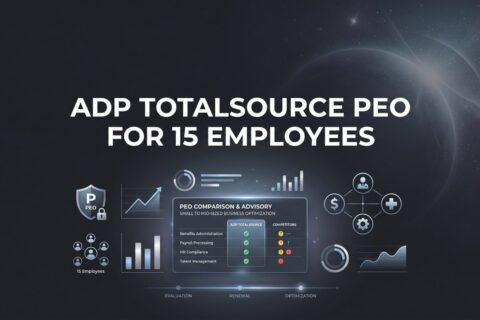
ADP TotalSource PEO for 15 employees offers comprehensive HR, payroll, benefits, and compliance support under one roof, but its pricing and service structure are optimized for larger, faster-growing…
ADP TotalSource PEO for 20 employees offers brand recognition and comprehensive HR services, but the real costs, contract terms, and platform complexity may not align with a small…
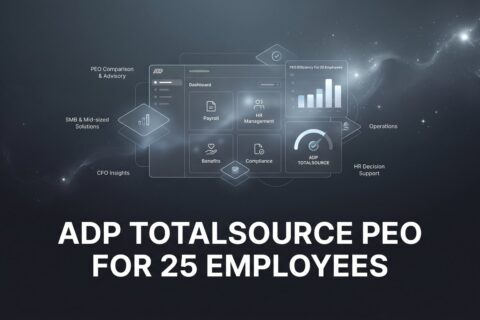
ADP TotalSource PEO for 25 employees offers access to enterprise-level HR, benefits, and compliance support through a co-employment model, but the experience at this headcount differs meaningfully from…
ADP TotalSource PEO for 35 employees offers a compelling middle ground—enough payroll volume to negotiate meaningful pricing while gaining access to enterprise-level HR, benefits, and compliance support without…
ADP TotalSource PEO for 50 employees offers a compelling solution for businesses at the critical growth stage where informal HR systems no longer suffice but a full internal…