
When comparing Paychex PEO and Staff One HR, most comparison articles give you feature lists that look nearly identical. Both handle payroll. Both offer benefits. Both promise compliance support. That’s not helpful when you’re trying to make a real decision.
This comparison takes a different approach. Instead of rehashing marketing materials, we’ll walk through the specific decision factors that separate these two providers in practice—where they genuinely differ, which business scenarios favor each, and what the tradeoffs look like in terms of cost, service model, and operational fit.
Paychex operates as one of the largest national PEO providers with significant scale advantages. Staff One HR positions itself as a regional specialist with a more hands-on service approach. Neither is universally “better”—but one is likely better for your specific situation.
Let’s break down how to figure out which.
1. Scale and Service Model: National Infrastructure vs Regional Relationship Depth
The Core Difference
Paychex operates at a fundamentally different scale than Staff One HR. As a publicly traded company serving clients across all 50 states, Paychex has built standardized systems designed for consistency. You’ll work with dedicated service teams, but those teams operate within established protocols and escalation paths.
Staff One HR takes the opposite approach. Their regional focus means you’re more likely to have direct access to decision-makers. Need to adjust how something is handled? You’re not navigating through multiple support tiers.
What This Means in Practice
With Paychex, you get predictability. Onboarding follows a structured process. Support requests route through defined channels. Technology updates roll out systematically. This works well if you value consistency and don’t need frequent exceptions to standard procedures.
With Staff One HR, you get flexibility. Your account team has more latitude to customize how services are delivered. This matters if your business has unique requirements that don’t fit neatly into standardized workflows. Understanding what PEO stands for helps clarify why these service model differences matter so much.
The tradeoff? Paychex’s scale means they’ve likely encountered and solved your specific issue before. Staff One HR’s smaller size means they may need to figure out solutions case-by-case.
When Each Model Works Better
Paychex’s infrastructure advantage matters most if you’re operating in multiple states, have complex compliance requirements across jurisdictions, or plan to scale quickly. Their systems are built to handle geographic expansion without requiring you to rebuild your HR processes.
Staff One HR’s relationship model works better if you’re regionally concentrated, need frequent direct communication with your service team, or have industry-specific requirements that benefit from a provider who knows your market deeply.
Questions to Ask
Before choosing based on service model, ask Paychex how escalations work and what your typical response timeline looks like for non-urgent issues. Ask Staff One HR who specifically you’ll work with and what happens if that person leaves. Both answers tell you more than generic promises about “dedicated support.”
2. Pricing Structure: How the Math Actually Works
The Pricing Model Difference
PEO pricing isn’t just about the administrative fee. The real cost comes from how benefits are marked up and what’s included in your base rate versus billed separately.
Paychex typically structures pricing as a percentage of payroll or a per-employee-per-month rate. Their benefits costs pass through with an administrative markup. Because they aggregate thousands of employees, they can negotiate competitive insurance rates—but you’re still paying a margin on top of those rates.
Staff One HR’s pricing structure varies more by client. Smaller PEOs often have more flexibility in how they structure fees, but they may not have the same negotiating leverage on benefits costs that Paychex’s scale provides.
Where Hidden Costs Show Up
The administrative fee is only part of your total cost. Look at what you’re actually paying for benefits coverage. A lower admin fee with a higher benefits markup can cost you more overall than a higher admin fee with better benefits pricing.
Ask both providers for a fully loaded cost comparison based on your actual employee census. Include medical, dental, vision, life insurance, disability coverage—everything you’re offering. The difference between providers often shows up in these pass-through costs more than the quoted administrative rate. If you’re weighing whether a full PEO is necessary, our guide on ASO vs PEO for small business breaks down the cost implications of each model.
Contract Terms That Affect Pricing
Paychex typically operates with standard contract terms that include annual rate adjustments. You’ll know your pricing structure upfront, but you’re locked into their methodology for calculating increases.
Staff One HR may offer more negotiation flexibility on contract terms, but that also means less predictability. Smaller providers sometimes adjust pricing more significantly at renewal if their underlying costs change.
What to Compare Directly
Get quotes from both providers using identical employee data. Include ages, coverage elections, and current benefit selections. Compare the total annual cost, not just the administrative fee. Ask how each provider handles mid-year changes, what happens if you add employees, and how benefits costs are reconciled if actual claims differ from projections.
3. Benefits Access: Scale Advantages vs Customization Options
How Buying Power Works in PEOs
When you join a PEO, you’re entering their benefits pool. The size of that pool directly affects the insurance rates you’ll pay and the plan options available to you.
Paychex aggregates tens of thousands of employees across their PEO client base. This gives them significant leverage when negotiating with insurance carriers. Larger pools typically mean more stable rates and access to carriers that won’t work with smaller groups.
Staff One HR operates with a smaller employee pool. This can mean less negotiating power with major carriers, but it can also mean more flexibility in plan design and the ability to work with regional insurance providers who may offer competitive rates in specific markets.
Plan Design Flexibility
With Paychex, you’re selecting from their established plan offerings. This works well if those plans align with what you need, but you can’t typically request significant customization. The benefit is that plans are already vetted, priced, and administered through their systems.
Staff One HR may offer more flexibility in plan design, particularly if you’re a larger client within their portfolio. You might be able to negotiate specific coverage features or work with carriers that Paychex doesn’t include in their standard offerings. For another perspective on how TriNet compares to Staff One HR, that comparison explores similar benefits considerations.
What This Means for Your Employees
Your employees care about three things: coverage quality, out-of-pocket costs, and provider networks. Paychex’s scale typically provides access to broad national networks, which matters if your employees are geographically dispersed. Staff One HR’s regional focus might provide better rates with local providers if your workforce is concentrated.
Ask both providers for sample plan documents and rate sheets based on your employee demographics. Compare deductibles, copays, coverage limits, and network access—not just premium costs.
Rate Stability Considerations
Larger employee pools generally provide more rate stability year over year. A few high-cost claims in a small pool can drive significant rate increases at renewal. Paychex’s size insulates you somewhat from this volatility. Staff One HR’s smaller pool means your specific claims experience may affect your rates more directly.
This isn’t necessarily bad—if your workforce is healthy, you might benefit from better rates in a smaller pool. But it does create more variability.
4. Technology Platform: Self-Service Capabilities vs Personal Support
Platform Sophistication Differences
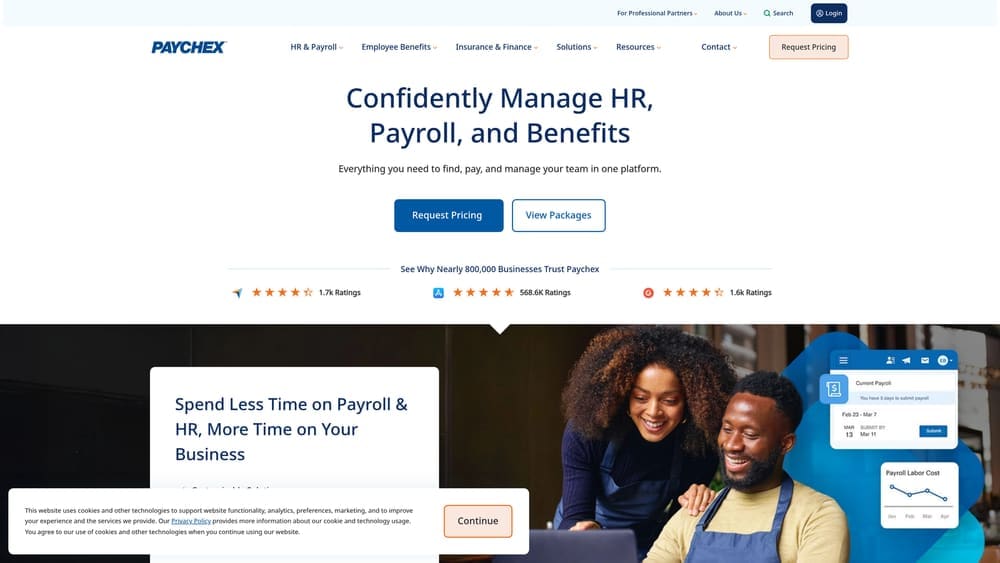
Paychex Flex is a comprehensive HR technology platform built over years of development. It handles payroll processing, time tracking, benefits administration, onboarding, performance management, and reporting through a unified interface. The system is designed for self-service—employees can access pay stubs, update information, and manage benefits elections without involving HR.
Staff One HR typically partners with third-party technology providers rather than building proprietary platforms. This means you may be working with different systems for payroll, benefits, and time tracking. The integration between these systems varies.
When Technology Matters Most
If you’re tired of answering the same employee questions repeatedly, Paychex’s self-service capabilities reduce that burden. Employees can handle routine tasks independently. Managers can approve time off, run reports, and access team information without calling HR.
If your team prefers working directly with people rather than navigating software, Staff One HR’s model may fit better. You’ll likely spend more time on the phone with your service team, but you’re not expected to figure out the technology on your own. Our analysis of PEO vs payroll company pros and cons explores how technology capabilities differ across these service models.
Integration Capabilities
Paychex has built integrations with major accounting, time tracking, and benefits platforms. If you’re using QuickBooks, NetSuite, or other common business systems, data likely flows between platforms without manual entry.
Staff One HR’s integration capabilities depend on which technology partners they use. Ask specifically about the systems you currently use and how data transfers between platforms. Manual data entry creates opportunities for errors and adds administrative time.
Reporting and Analytics
Paychex provides standardized reporting dashboards with the ability to create custom reports. You can track labor costs, benefits utilization, turnover rates, and other HR metrics through the platform.
Staff One HR’s reporting capabilities vary. You may get more customized reports built specifically for your needs, but you’re also more dependent on your service team to generate them. Ask to see sample reports during the evaluation process.
5. Compliance Support: Multi-State Coverage vs Regional Expertise
Compliance Scope and Depth
Paychex operates as an IRS-certified PEO (CPEO), which provides specific tax liability protections. They handle compliance across all 50 states with systems designed to track varying requirements for wage and hour laws, paid leave mandates, workers’ compensation regulations, and employment taxes.
If you’re operating in multiple states or planning to expand geographically, Paychex’s infrastructure handles the complexity without requiring you to research each jurisdiction’s requirements. They track regulatory changes and update their systems accordingly. The comparison of Insperity vs Paychex PEO provides additional context on how major national providers approach compliance differently.
Staff One HR’s compliance support focuses more heavily on their core geographic markets. They likely have deeper expertise in the specific states where they operate, but may have less robust systems for handling multi-state complexity.
Workers’ Compensation Administration
Both providers handle workers’ compensation as part of their PEO offering, but the experience differs. Paychex manages workers’ comp through their national program with established carrier relationships and standardized claims processes.
Staff One HR may work with regional carriers that provide competitive rates in their markets. The claims process might be more hands-on, with your service team directly involved in managing issues.
Regulatory Change Management
Employment law changes constantly. New paid leave mandates, minimum wage adjustments, tax law updates—staying compliant requires ongoing attention.
Paychex has dedicated compliance teams monitoring regulatory changes across all jurisdictions. When laws change, their systems update automatically. You receive notifications about changes that affect your business, but you’re not responsible for implementing the technical updates.
Staff One HR’s compliance support is more relationship-based. Your service team alerts you to relevant changes and helps you understand what actions you need to take. This can provide more context and explanation, but it requires you to trust that your team is tracking all applicable regulations.
Audit Support and Documentation
If you face an employment-related audit—whether from the IRS, Department of Labor, or state agencies—both providers offer support. Paychex provides documentation through their platform and has established processes for responding to auditor requests. Staff One HR typically offers more hands-on support through your service team, who may have direct relationships with local regulatory agencies.
6. Contract Terms: What You’re Actually Committing To
Agreement Length and Renewal Terms
PEO contracts typically run for one to three years with automatic renewal clauses. Paychex operates with standard contract terms that include defined notice periods for termination—usually 30 to 90 days before renewal.
Staff One HR’s contract terms may be more negotiable, particularly if you’re a significant client for their size. You might secure shorter initial terms or more favorable termination provisions, but this varies by situation.
Read the termination clause carefully with both providers. Some PEO contracts require you to continue through the end of the contract year even if you provide notice. Others allow you to terminate mid-contract with penalties.
Rate Adjustment Provisions
Your initial pricing won’t last forever. Both providers include provisions for rate adjustments at renewal. Paychex typically adjusts based on changes in your employee count, benefits costs, and overall risk profile. Their adjustments follow established methodologies.
Staff One HR’s rate adjustments may be more variable. Smaller providers sometimes face more significant cost fluctuations, which can translate to larger increases at renewal. Ask for historical rate increase data from both providers. If you’re also considering other national providers, our TriNet vs Paychex PEO comparison examines how contract terms differ between major players.
Exit Process and Transition Support
Leaving a PEO is operationally complex. You’re unwinding the co-employment relationship, transitioning benefits, moving payroll processing, and transferring employee records.
Paychex has standardized offboarding processes. They’ll provide required documentation and data exports, but you’re working within their established procedures and timelines. The process is predictable but not necessarily flexible.
Staff One HR’s exit process may be more collaborative. Smaller providers often work more closely with departing clients to ensure smooth transitions, but they may also have less robust systems for data transfer.
Before signing with either provider, ask specifically about the exit process. What data do you receive? In what format? How long does the transition typically take? What support do they provide during the switch?
Hidden Contract Provisions to Watch
Some PEO contracts include provisions that aren’t obvious during initial discussions. Look for clauses about minimum employee counts, penalties for mid-year termination, requirements to offer specific benefits, and limitations on hiring or termination decisions. Ask both providers to explain any provisions you don’t fully understand before signing.
7. Business Profile Fit: Matching Provider Strengths to Your Reality
When Paychex Makes More Sense
Paychex’s infrastructure advantages matter most in specific scenarios. If you’re operating across multiple states, their compliance systems and multi-jurisdiction expertise justify their approach. You’re not managing different requirements in each location—you’re working within one system that handles the complexity.
If you’re scaling quickly, Paychex’s standardized processes support growth without requiring you to rebuild your HR operations every time you expand. Onboarding new employees, adding locations, and managing increased headcount work within their established workflows.
If your team values self-service technology and you want to minimize the time spent answering routine employee questions, Paychex Flex provides the tools to enable that independence. For businesses evaluating Paychex against other technology-forward options, our Paychex PEO vs Rippling PEO comparison addresses platform capabilities in depth.
When Staff One HR Makes More Sense
Staff One HR’s model works better if you’re regionally concentrated and plan to stay that way. Their deeper expertise in specific markets can provide value that national providers can’t match. They understand local employment practices, have relationships with regional service providers, and can navigate state-specific requirements with more nuance.
If you value direct relationships and want your service team to know your business personally, Staff One HR’s size makes that possible. You’re not just a client number—you’re a meaningful part of their portfolio.
If you need flexibility in how services are structured or have requirements that don’t fit standardized offerings, smaller providers often have more latitude to customize their approach.
Industry and Headcount Considerations
Certain industries benefit more from one provider’s strengths. If you’re in a heavily regulated industry with complex compliance requirements, Paychex’s systems and resources may provide more robust support. If you’re in an industry where local market knowledge matters significantly, Staff One HR’s regional focus could be more valuable.
Headcount matters too. If you’re under 25 employees, you might not benefit as much from Paychex’s scale advantages, and Staff One HR’s personalized approach could serve you better. If you’re over 100 employees, Paychex’s infrastructure and technology capabilities become more important.
Making the Decision
Neither provider is universally superior. The right choice depends on your specific operational reality, growth plans, geographic footprint, and service preferences.
Request detailed proposals from both based on your actual employee data. Compare total costs including all fees and benefits markups. Ask for references from companies similar to yours in size, industry, and location. Talk to those references about their actual experience, not just whether they’re satisfied.
Schedule calls with the specific teams you’d be working with. How they communicate during the sales process tells you something about how they’ll communicate after you sign.
Making the Right Choice for Your Business
Choosing between Paychex PEO and Staff One HR isn’t about finding the “best” provider—it’s about matching provider strengths to your operational reality.
If you’re operating across multiple states, scaling quickly, or prioritize robust self-service technology, Paychex’s infrastructure advantages matter. Their systems are built to handle complexity at scale, and their CPEO certification provides specific tax liability protections.
If you’re regionally concentrated, value direct relationships with your service team, and want more flexibility in how services are structured, Staff One HR’s model may serve you better. You’ll likely have more direct access to decision-makers and more latitude to customize the service delivery approach.
Before making a final decision, request detailed pricing proposals from both based on your actual employee data. Compare the total cost including benefits markup, not just the admin fee. The difference between providers often shows up in pass-through costs more than the quoted administrative rate.
Ask each provider for references from companies similar to yours in size and industry. Talk to those references about their actual experience—what works well, what’s frustrating, how responsive the service team is when problems arise.
Before you renew your PEO agreement, compare your options. Most businesses overpay due to bundled fees and unclear administrative markups. We break down pricing, services, and contract structures so you can make a smarter decision.
The right PEO relationship can meaningfully reduce your administrative burden and improve your benefits offering. The wrong one creates friction you’ll deal with for years. Take the time to evaluate based on your specific needs, not generic feature comparisons.