
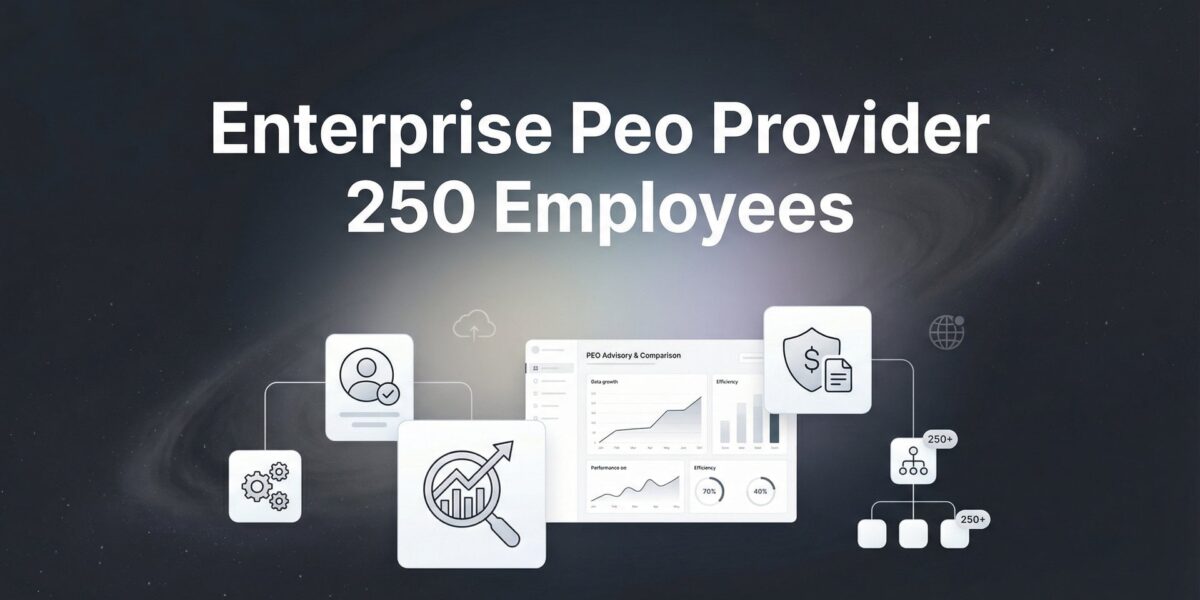
At 250 employees, you’ve outgrown the PEO solutions designed for small businesses. The compliance stakes are higher, benefits negotiations carry real leverage, and the wrong provider can cost you hundreds of thousands annually in hidden fees or misaligned services. This list focuses on PEO providers that actually specialize in mid-market and enterprise clients—not small business PEOs that claim they can scale up.
We’ve evaluated each based on enterprise-specific capabilities: dedicated account management depth, benefits purchasing power, multi-state compliance infrastructure, and transparent pricing at scale. If you’re evaluating or renewing a PEO relationship at this headcount, these are the providers worth your time.
1. Clicks Geek PEO Comparison Platform
Best for: Companies evaluating multiple PEO providers before committing or considering renewal alternatives
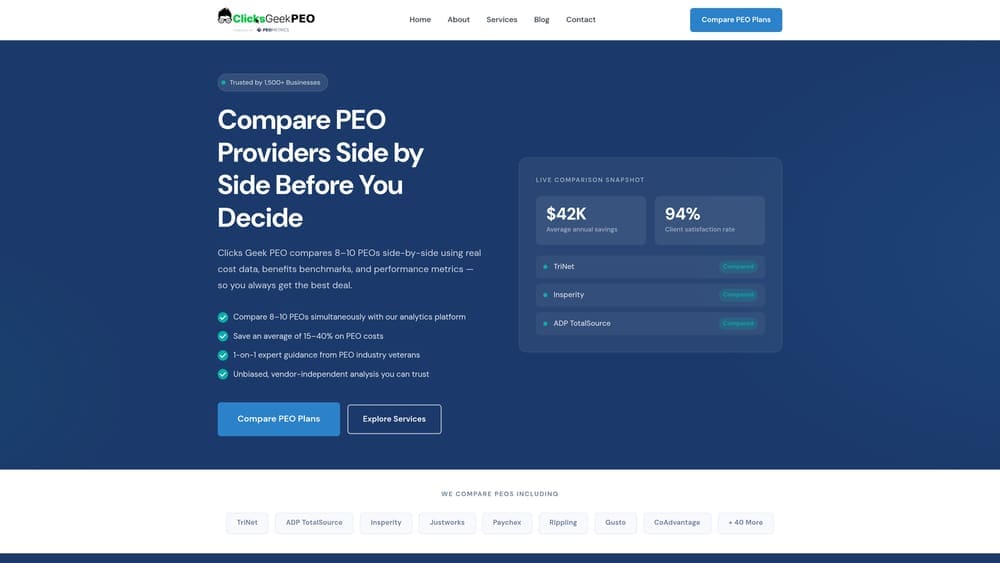
Clicks Geek PEO Comparison Platform is an independent analysis tool that helps businesses compare PEO providers objectively without sales pressure.
Where This Tool Shines
Most companies choose a PEO based on who calls first or which sales pitch sounds best. That’s a problem when you’re managing 250+ employees and a seven-figure annual commitment. This platform cuts through provider marketing by showing side-by-side pricing structures, contract terms, and service-level differences.
The independence matters. You’re getting analysis that isn’t tied to commission incentives or preferred partnerships. When you’re evaluating whether to stay with your current provider or switch, having transparent breakdowns of what you’re actually paying versus what’s available changes the negotiation entirely.
Key Features
Side-by-Side Provider Comparisons: Direct comparison of pricing models, fee structures, and service tiers across multiple PEO options.
Independent Analysis: Not affiliated with any single PEO, so recommendations are based on fit rather than sales incentives.
Contract Term Evaluation: Breaks down the fine print on termination clauses, fee escalations, and bundled service requirements.
Enterprise-Specific Pricing Guidance: Focuses on pricing dynamics at 250+ employee scale where negotiation leverage exists.
Renewal Assessment Tools: Helps current PEO clients evaluate whether their existing agreement is competitive or if switching makes sense.
Best For
CFOs and operations leaders who want objective data before committing to a PEO relationship. Particularly valuable if you’re renewing an existing contract and need leverage, or if you’re evaluating whether to bring HR in-house versus staying with a PEO.
Pricing
Free comparison resources available. Advisory services for deeper contract analysis and provider negotiation support offered separately.
2. ADP TotalSource
Best for: Companies prioritizing Fortune 500-level benefits access and global payroll capabilities
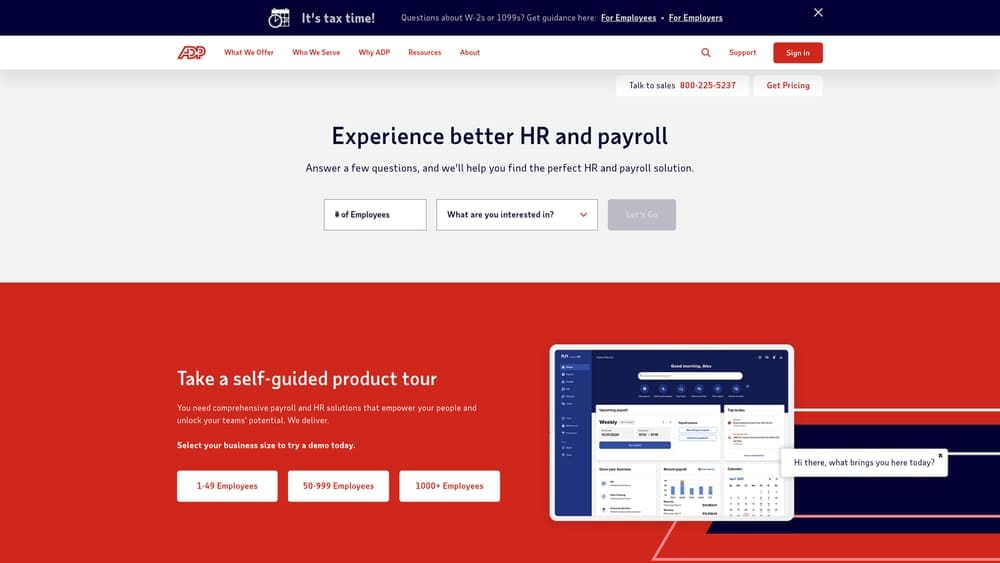
ADP TotalSource is a full-service enterprise PEO from the largest HR company in the world.
Where This Tool Shines
ADP’s scale translates directly into benefits purchasing power that smaller PEOs can’t match. At 250 employees, you’re getting access to health plans, retirement options, and voluntary benefits typically reserved for companies with thousands of employees. That matters when you’re competing for talent against larger organizations.
The global infrastructure is a differentiator if you’re expanding internationally or managing remote employees across multiple countries. Most PEOs handle domestic multi-state operations well. ADP can support actual international payroll and compliance, which becomes relevant as mid-market companies grow.
Key Features
Enterprise Benefits Access: Health, dental, vision, and retirement plans with pricing and coverage quality typically available only to Fortune 500 companies.
Global Payroll Capabilities: International payroll processing and compliance support for companies expanding beyond U.S. borders.
Multi-State Compliance Infrastructure: Extensive compliance management across all 50 states with proactive regulatory updates.
Dedicated HR Business Partner Model: Assigned strategic HR support beyond basic administrative services.
Technology Platform Integration: Robust API connections and third-party integrations with existing business systems.
Best For
Companies where benefits quality is a competitive differentiator for talent retention, or businesses with international operations that need global payroll support. Works well if you value brand recognition and infrastructure stability over pricing flexibility.
Pricing
Custom enterprise pricing based on headcount and services selected. Typically structured as a percentage of payroll. Expect pricing to be on the higher end but justified by benefits access and platform capabilities.
3. Insperity
Best for: Mid-market companies seeking strategic HR guidance beyond basic administrative support
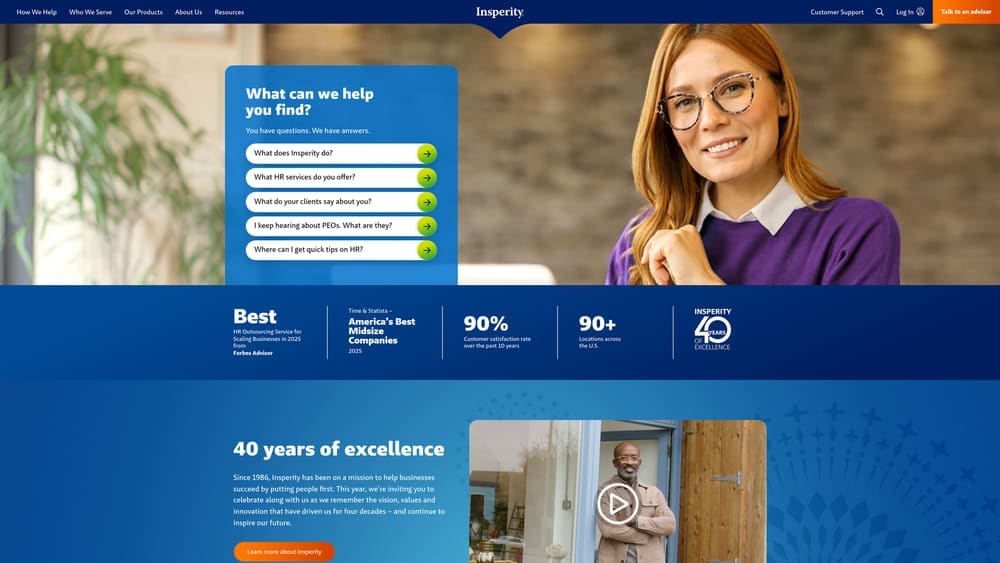
Insperity is a mid-market focused PEO known for high-touch HR support and proactive strategic guidance.
Where This Tool Shines
Insperity assigns dedicated HR specialists—not just account managers handling administrative requests. At 250 employees, you’re dealing with performance management complexity, leadership development needs, and organizational structure questions that go beyond payroll processing. Their model is built around that.
The CPEO (Certified Professional Employer Organization) certification provides favorable tax treatment and additional liability protection. At enterprise scale, that certification carries more weight than it does for smaller companies. You’re protecting against tax liability exposure that increases with headcount.
Key Features
Dedicated HR Specialists: Assigned HR professionals who provide strategic guidance on organizational development, not just transactional support.
Performance Management Resources: Tools and consulting for employee performance tracking, leadership development, and succession planning.
Proactive Compliance Guidance: Regular compliance updates and proactive recommendations rather than reactive problem-solving.
CPEO Certification: Certified status provides tax liability protection and favorable IRS treatment.
Scalable Service Model: Service depth adjusts as your company grows without requiring provider transitions.
Best For
Companies that view HR as a strategic function rather than just administrative overhead. Particularly strong fit if you’re building management infrastructure and need consulting support alongside operational execution.
Pricing
Per-employee-per-month pricing structure. Enterprise rates are negotiable based on headcount and service tier selected. Typically higher than basic PEOs but reflects strategic support depth.
4. TriNet
Best for: Industry-specific compliance and benefits expertise in technology, professional services, financial services, or life sciences
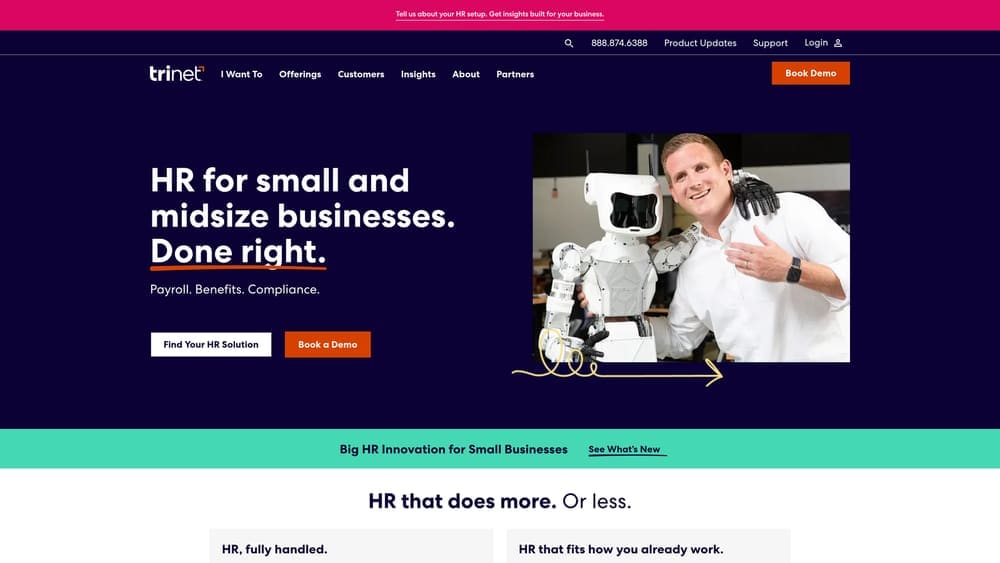
TriNet is an industry-specialized PEO with vertical expertise tailored to specific business sectors.
Where This Tool Shines
Generic PEO services miss industry-specific compliance nuances. TriNet builds vertical-specific packages that address regulatory requirements unique to your sector. If you’re in financial services, you’re dealing with FINRA compliance and securities regulations. If you’re in life sciences, FDA and clinical trial employment rules apply. TriNet structures benefits and compliance support around those realities.
The technology platform is strong for companies with distributed teams or remote-first operations. Mobile access and employee self-service capabilities reduce administrative burden when your workforce isn’t centralized in one location.
Key Features
Industry-Specific Benefits Packages: Tailored health plans, retirement options, and voluntary benefits designed for specific verticals.
Vertical Compliance Expertise: Regulatory guidance specific to technology, professional services, financial services, and life sciences sectors.
Technology Platform: Modern interface with strong mobile capabilities and employee self-service tools.
Risk Management: Industry-tailored risk mitigation and workers’ compensation management.
Scalability: Service model supports mid-market through enterprise growth without provider transitions.
Best For
Companies in specialized industries where generic HR solutions create compliance gaps or benefits misalignment. Particularly valuable if your industry has unique regulatory requirements that generalist PEOs handle poorly.
Pricing
Percentage of payroll model with industry-specific pricing tiers. Technology and professional services companies typically see different pricing than financial services or life sciences due to risk profiles and benefits costs.
5. Paychex PEO
Best for: Technology-forward companies prioritizing platform integrations and employee self-service capabilities
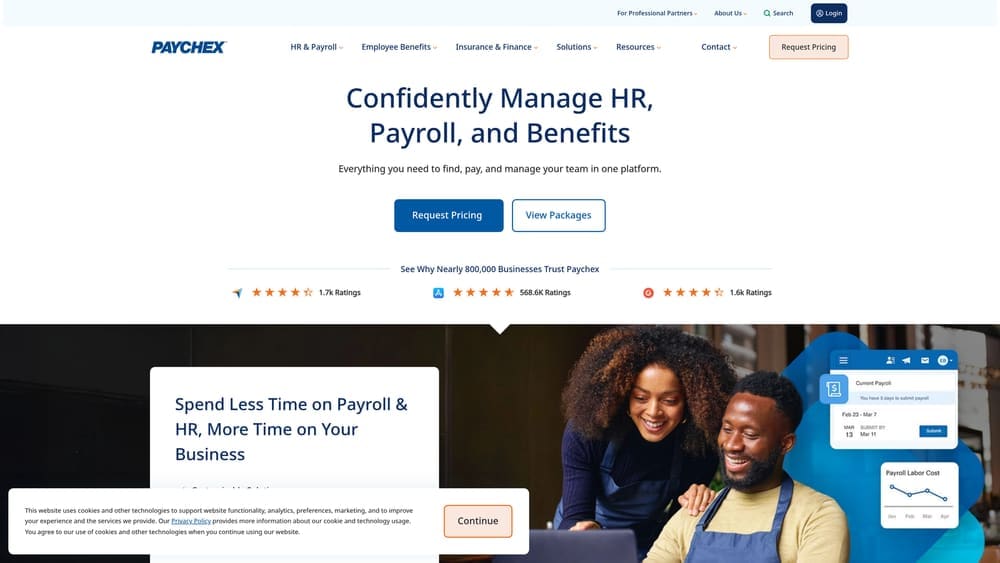
Paychex PEO is a technology-focused PEO with extensive integrations and strong self-service infrastructure.
Where This Tool Shines
If your existing business systems need to connect seamlessly with your PEO platform, Paychex has the API infrastructure to support it. Most PEOs offer basic integrations. Paychex builds around connectivity, which matters when you’re running accounting software, time tracking systems, and project management tools that need real-time data sync.
The self-service employee portal reduces administrative overhead significantly. At 250 employees, you don’t want HR fielding basic questions about pay stubs, benefits enrollment, or time-off balances. Paychex pushes that interaction to employees directly, freeing internal resources for strategic work.
Key Features
Robust API and Third-Party Integrations: Extensive connectivity with accounting, time tracking, and business management systems.
Employee Self-Service Portal: Comprehensive platform where employees manage benefits, payroll information, and HR requests independently.
Flexible Service Tiers: Options ranging from basic payroll and benefits administration to comprehensive HR outsourcing.
Multi-State Payroll Infrastructure: Strong compliance management for companies operating across multiple jurisdictions.
Mobile Platform: Full mobile functionality for distributed teams and remote employees.
Best For
Companies with distributed teams that need strong technology infrastructure and self-service capabilities. Works well if you’re already invested in specific business systems and need a PEO that integrates cleanly rather than forcing platform replacement.
Pricing
Custom pricing with both flat-fee and percentage of payroll models available. Service tier selection significantly impacts final cost. Transparent pricing discussions during evaluation process.
6. Justworks
Best for: Companies prioritizing transparent, predictable pricing with no hidden fees
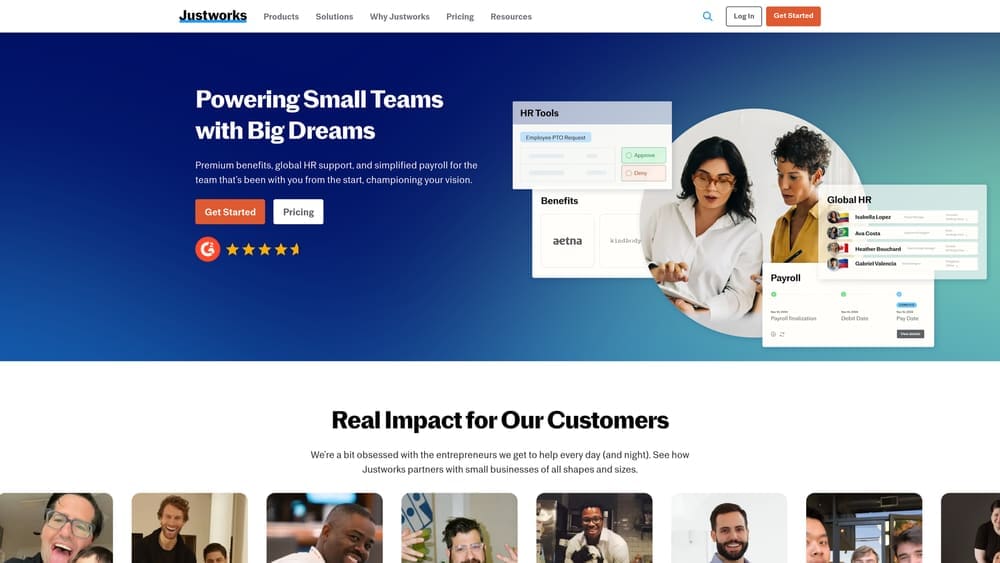
Justworks is a modern PEO known for straightforward pricing and clean technology interface.
Where This Tool Shines
Justworks publishes pricing on their website. That’s rare in the PEO industry, where most providers require sales calls and custom quotes before revealing costs. At 250 employees, you can calculate annual commitment accurately before engaging in negotiations. That transparency extends to contract terms—no complex escalation clauses or bundled services you don’t need.
The platform is built for remote and distributed teams. If your workforce is spread across states or working remotely, Justworks handles multi-state compliance and benefits administration without requiring physical office presence or centralized HR infrastructure.
Key Features
Transparent Flat Pricing: Published per-employee monthly rates with no hidden administrative fees or percentage markups.
Modern Technology Interface: Clean, intuitive platform designed for ease of use rather than feature bloat.
No Hidden Fee Structures: Straightforward pricing with no complex escalation clauses or surprise charges.
Remote Team Support: Strong infrastructure for distributed workforces and remote-first companies.
Quick Implementation: Faster onboarding process compared to traditional enterprise PEOs.
Best For
CFOs and finance leaders who value pricing predictability and budget certainty. Particularly strong for remote-first companies or businesses where technology simplicity matters more than deep strategic HR consulting.
Pricing
Basic plan: $59 per employee per month. Plus plan: $109 per employee per month. Pricing is transparent and published on their website, which is unusual in the PEO market.
7. Oasis (Paychex Company)
Best for: Complex multi-state operations requiring deep jurisdictional compliance expertise
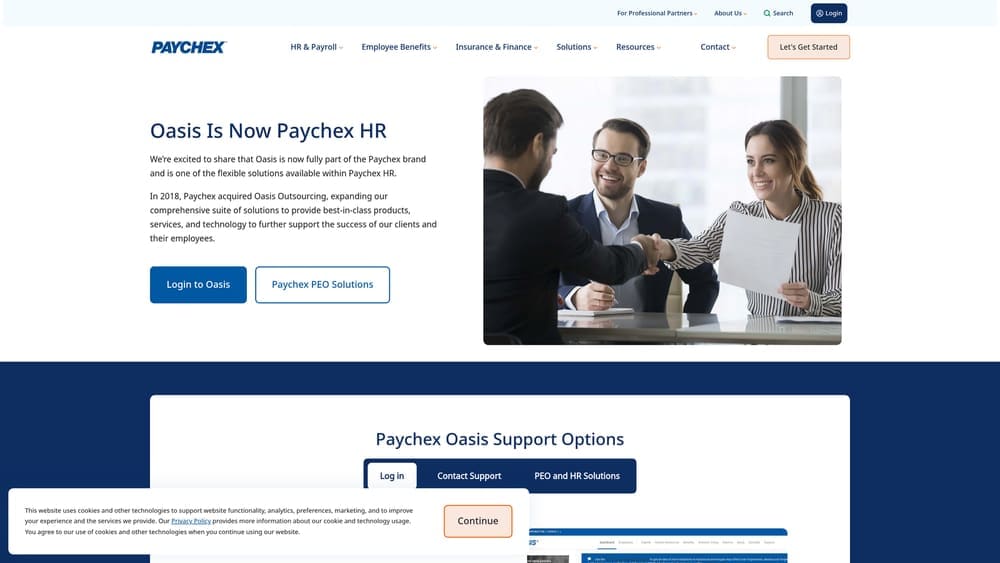
Oasis is an enterprise-focused PEO specializing in multi-jurisdictional compliance management.
Where This Tool Shines
If you’re operating in ten or fifteen states with different labor laws, unemployment insurance requirements, and workers’ compensation regulations, Oasis is built for that complexity. Their compliance infrastructure goes deeper than basic multi-state payroll. They handle jurisdictional nuances that create problems when you’re managing 250 employees across diverse locations.
Dedicated account teams matter at enterprise scale. You’re not sharing an account manager with fifty other clients. Oasis assigns teams specifically to enterprise accounts, which means faster response times and deeper familiarity with your specific situation. Backed by Paychex infrastructure, you get stability and resources without sacrificing the dedicated support model.
Key Features
Multi-Jurisdictional Compliance Expertise: Deep knowledge of state-specific labor laws, unemployment insurance, and regulatory requirements.
Dedicated Enterprise Account Teams: Assigned teams rather than shared account managers for faster response and deeper client knowledge.
Paychex Infrastructure Support: Backed by Paychex resources and technology platform while maintaining focused service model.
Workers’ Compensation Management: Strong risk management and claims handling for complex multi-state operations.
Scalable Compliance Infrastructure: Built to handle growth and geographic expansion without service degradation.
Best For
Companies with complex multi-state operations where compliance management is a primary concern. Particularly valuable if you’re expanding geographically and need a PEO that can handle jurisdictional complexity without constant escalations.
Pricing
Custom enterprise pricing based on operational complexity, number of states, and service requirements. Expect pricing to reflect dedicated account team structure and compliance depth.
8. Amplify PEO
Best for: Companies wanting targeted PEO services without committing to full-service bundles
Amplify PEO offers modular services for companies that need specific support rather than comprehensive HR outsourcing.
Where This Tool Shines
Most PEOs bundle services whether you need them or not. Amplify lets you select specific modules—benefits administration, payroll processing, compliance support—without paying for full HR outsourcing. At 250 employees, you might have internal HR handling recruiting and performance management but need help with multi-state compliance and benefits negotiation. Amplify’s modular approach supports that.
The flexibility extends to contract terms. If you’re testing whether a PEO makes sense before committing long-term, Amplify offers shorter commitment periods and easier exit terms than traditional enterprise PEOs. That matters if you’re evaluating whether to eventually bring HR fully in-house.
Key Features
Modular Service Selection: Choose specific services rather than paying for bundled packages you don’t need.
Works Alongside Internal HR: Designed to complement existing HR teams rather than replace them entirely.
Flexible Contract Terms: Shorter commitment periods and clearer exit terms compared to traditional PEO agreements.
Scalable Service Addition: Add or remove modules as your needs change without renegotiating entire contracts.
Cost Control: Pay only for services you actually use rather than subsidizing bundled offerings.
Best For
Companies with existing internal HR capabilities that need targeted support in specific areas. Particularly valuable if you’re transitioning between full PEO reliance and in-house HR, or if you want to test PEO services before committing to comprehensive outsourcing.
Pricing
Modular pricing based on services selected. No published rates due to customization, but structure allows cost control by avoiding bundled services you don’t need.
Making the Right Choice
The right PEO at 250 employees depends on what you’re actually trying to solve. If benefits quality drives talent retention, ADP’s purchasing power matters more than pricing flexibility. If you’re managing complex multi-state operations, Oasis or Paychex PEO handle jurisdictional compliance better than generalist providers. If you value strategic HR guidance, Insperity’s dedicated specialist model delivers more than transactional account management.
Pricing transparency becomes critical at this scale. You’re committing significant annual budget, and unclear fee structures or bundled services you don’t need cost real money. Justworks offers published pricing that eliminates negotiation uncertainty. Amplify’s modular approach lets you pay only for what you use. Most enterprise PEOs negotiate custom agreements—which means you need leverage and data to negotiate effectively.
Before you renew your PEO agreement, compare your options. Most businesses overpay due to bundled fees and unclear administrative markups. We break down pricing, services, and contract structures so you can make a smarter decision.
Ask specific questions during evaluation. What’s the dedicated account manager ratio? How many clients does each HR specialist support? What’s included in base pricing versus add-on fees? How do contract terms handle growth or reduction in headcount? What’s the actual termination process and timeline if you decide to switch providers?
The companies that get the best PEO relationships treat it like any other significant vendor decision. They compare multiple providers, negotiate contract terms, and revisit the relationship annually to ensure it still makes sense. At 250 employees, you have negotiating leverage. Use it.