
If you’ve been pitched CoAdvantage or are already using them and wondering whether a standalone payroll company might do the job for less, you’re asking the right question. The honest answer is: it depends on what you actually need.
A PEO like CoAdvantage operates under a co-employment model. That means bundled HR administration, benefits access, workers’ comp coverage, compliance support, and payroll — all under one roof. A payroll company handles wage processing and tax filings. That’s it. The gap between those two things is significant, and so is the cost difference.
The right choice comes down to your headcount, how much HR infrastructure you already have, your compliance exposure, and whether your employees need access to large-group benefits. If you want a deeper grounding in how PEOs work before diving into this comparison, our PEO comparison hub covers the fundamentals.
This list covers CoAdvantage alongside strong payroll-only and hybrid alternatives so you can see the real tradeoffs before making a decision.
1. Clicks Geek PEO Comparison Platform
Best for: Business owners comparing PEO providers or evaluating PEO vs. payroll-only options independently.
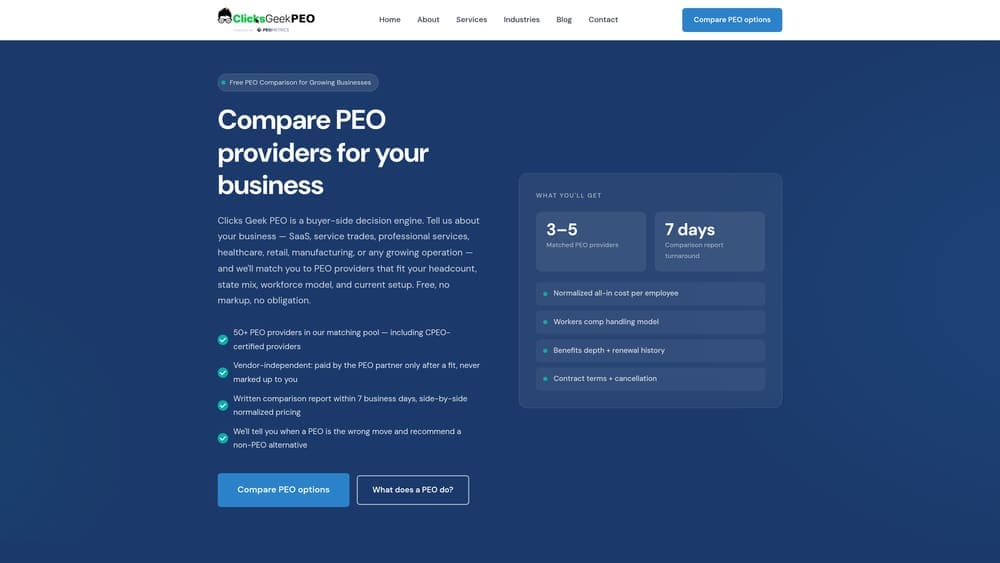
Clicks Geek PEO is an independent comparison platform that helps SMB owners evaluate PEO providers and payroll alternatives without vendor bias or sales pressure.
Where This Tool Shines
Most business owners evaluating CoAdvantage or any PEO get their information from the PEO’s own sales team. That’s a problem. This platform exists specifically to close that gap — giving you side-by-side provider comparisons, transparent pricing breakdowns, and contract analysis tools that aren’t filtered through a vendor’s incentives.
It’s particularly useful if you’re mid-contract with a PEO and wondering whether you’re overpaying, or if you’re deciding between a full co-employment arrangement and a payroll-only setup. The resources here are designed for the decision stage, not the discovery stage.
Key Features
Side-by-Side Provider Comparisons: Compare CoAdvantage and other PEOs against payroll alternatives on services, pricing structures, and contract terms.
Independent Evaluations: Not affiliated with any PEO provider — no referral incentives that skew recommendations.
Contract Term Analysis: Helps you understand what you’re actually agreeing to, including administrative markups and renewal terms that often go unread.
PEO vs. Payroll Decision Resources: Educational content built for business owners who need to understand the structural differences before committing.
Best For
Business owners who are currently evaluating CoAdvantage, renewing a PEO contract, or trying to determine whether a full PEO is justified versus a payroll-only solution. Especially valuable for CFOs or operations managers who want objective data before a vendor conversation.
Pricing
Free comparison tools and educational resources. No cost to use the platform.
2. CoAdvantage PEO
Best for: Mid-market businesses with 50+ employees needing full HR outsourcing and workers’ comp management.
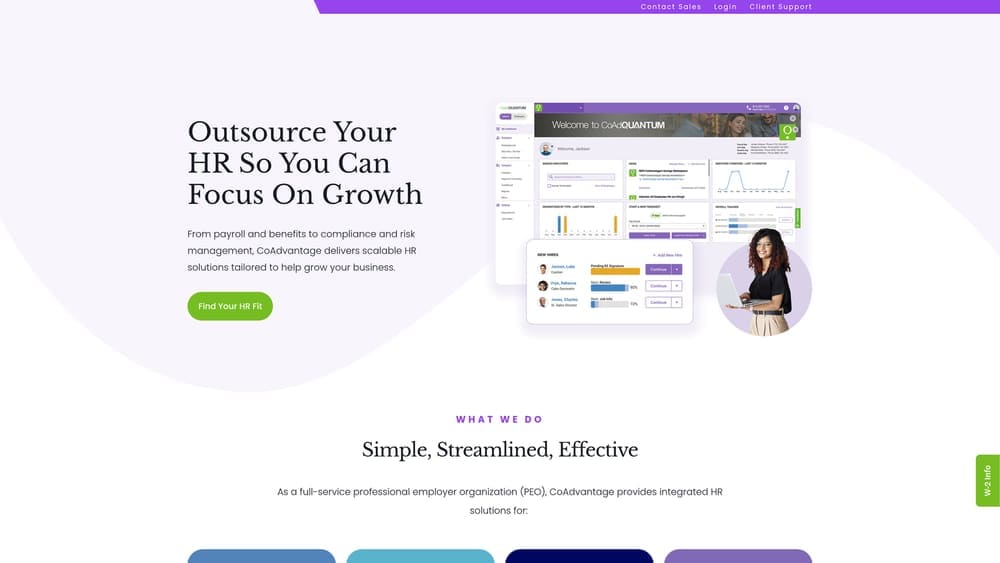
CoAdvantage is a full-service PEO operating under a co-employment model, with particular strength in workers’ compensation administration and dedicated HR support for mid-sized companies.
Where This Tool Shines
CoAdvantage’s strongest differentiator is workers’ comp. For businesses in industries with meaningful injury exposure — construction, manufacturing, field services — their risk management and workers’ comp administration is genuinely valuable. It’s not just claims processing; it’s proactive risk mitigation bundled into the service.
Their dedicated HR support model also works well for mid-market companies that have grown past the point where one HR generalist can handle everything, but aren’t large enough to justify a full internal HR department. You get real people assigned to your account, not a generic support queue.
Key Features
Co-Employment Model: Bundles payroll, HR administration, benefits, and compliance under a single co-employment arrangement.
Workers’ Comp Administration: Strong risk management infrastructure, particularly useful for businesses with physical or field-based workforces.
Dedicated HR Support Teams: Assigned HR professionals rather than shared support pools — relevant for mid-sized companies with complex needs.
Benefits Access: Pooled purchasing power allows smaller companies to access large-group health insurance rates they couldn’t negotiate independently.
Multi-State Compliance Support: Handles the regulatory complexity of employing across multiple states, including varying tax and labor law requirements.
Best For
Companies with 50 to 500 employees, particularly those in industries with workers’ comp complexity or multi-state employment. Less suited for very small businesses where the cost premium of a PEO outweighs the operational benefit.
Pricing
Custom quotes only. Typically structured as a percentage of payroll or a bundled per-employee monthly fee. Contact CoAdvantage directly for pricing — expect costs to be meaningfully higher than payroll-only alternatives.
3. Gusto
Best for: Small businesses that want modern payroll with HR tools but don’t need or want co-employment.
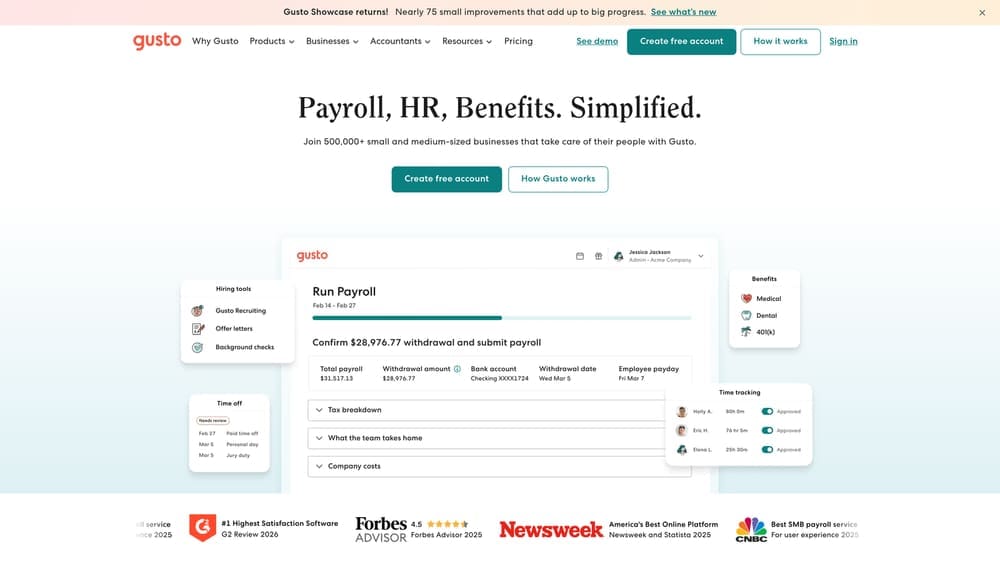
Gusto is a payroll-first platform with built-in benefits brokerage and HR tools that handles the operational basics without pulling you into a co-employment relationship.
Where This Tool Shines
Gusto is genuinely well-designed. The interface is clean, onboarding is fast, and automated tax filings reduce the administrative friction that makes payroll painful for small business owners. For a company with under 50 employees that has basic HR needs, it covers most of the ground at a fraction of what a PEO costs.
The built-in benefits brokerage is a legitimate differentiator among payroll-only platforms. You can offer health insurance, 401(k), and other benefits through Gusto without needing a separate broker relationship — though the rates won’t match what a PEO’s pooled purchasing delivers.
Key Features
Full-Service Payroll: Automated payroll runs with federal, state, and local tax filings handled automatically.
Benefits Brokerage: Health, dental, vision, and retirement options available directly through the platform.
Employee Onboarding: Digital onboarding tools including offer letters, I-9 completion, and direct deposit setup.
Transparent Pricing: Per-employee pricing with no hidden administrative fees — a meaningful contrast to PEO cost structures.
Accounting Integrations: Syncs with QuickBooks, Xero, and other common accounting platforms.
Best For
Small businesses under 50 employees that want clean payroll, basic HR, and some benefits access without the cost or complexity of a PEO arrangement. Not a replacement for CoAdvantage if you need workers’ comp management or dedicated HR support.
Pricing
Simple plan starts at $40/month base plus $6 per employee per month. Higher tiers add HR features and more robust support.
4. ADP Run / ADP TotalSource
Best for: Businesses that want a growth path from payroll-only to full PEO without switching vendors.
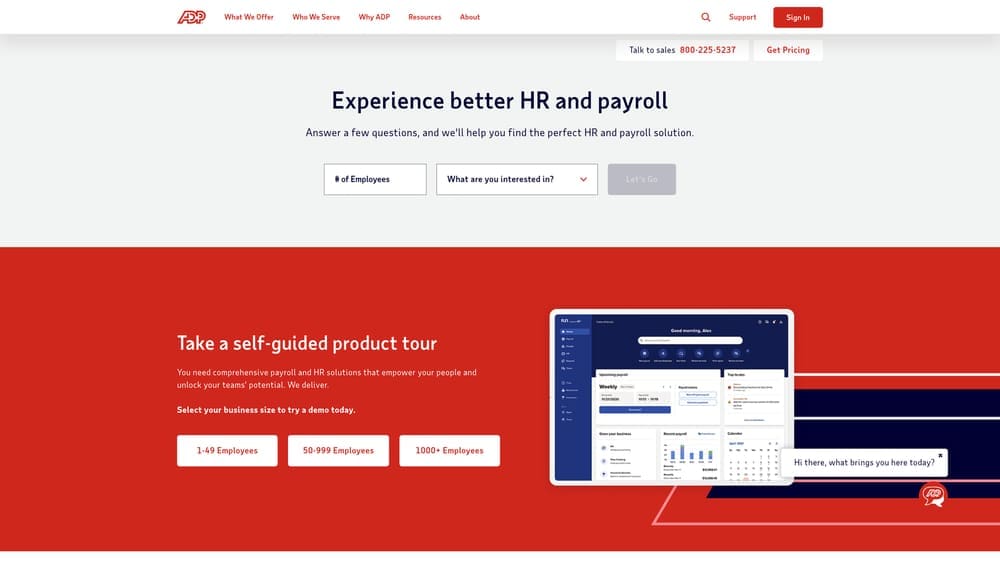
ADP is one of the few vendors that offers both a standalone payroll product (Run) for small businesses and an IRS-certified full PEO (TotalSource) under the same ecosystem.
Where This Tool Shines
The real value here is optionality. If you start with ADP Run for payroll and later decide you need the full co-employment model — more compliance support, better benefits access, dedicated HR — you can upgrade to TotalSource without migrating to a new vendor. That continuity reduces disruption and preserves your data history.
ADP’s scale also matters. Their reporting tools, integration ecosystem, and compliance infrastructure are enterprise-grade, even when deployed for small businesses. If you’re already running ADP Run and feeling the limits of payroll-only, TotalSource is worth a serious look before shopping CoAdvantage.
Key Features
ADP Run: Payroll processing, tax filing, and basic HR tools designed for small businesses.
ADP TotalSource: IRS-certified PEO with full co-employment, benefits access, and compliance support.
Scalable Architecture: Upgrade from payroll-only to full PEO without changing vendors or rebuilding employee records.
Integration Ecosystem: Extensive third-party integrations with accounting, time-tracking, and HR software.
Large-Group Benefits: TotalSource clients access enterprise-level benefits purchasing through ADP’s pooled model.
Best For
Businesses that anticipate growth and want to avoid vendor switching costs later. Also strong for companies already in the ADP ecosystem looking to expand services without operational disruption.
Pricing
ADP Run starts around $59/month plus per-employee fees; exact pricing is quote-based. TotalSource is custom PEO pricing — contact ADP directly.
5. Paychex Flex / Paychex PEO
Best for: Small-to-mid-market businesses that want modular HR services and local support access.
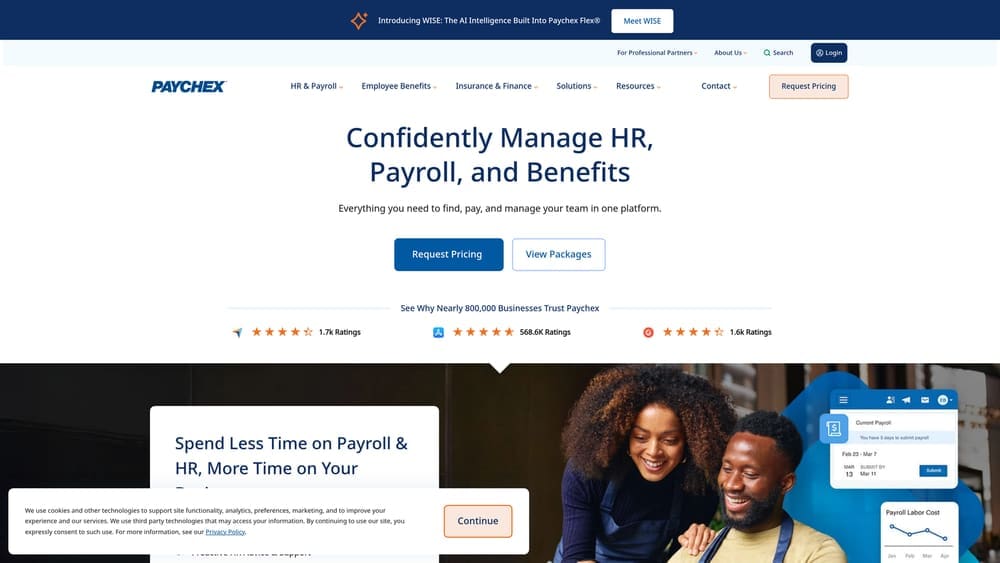
Paychex offers a modular approach — start with payroll through Paychex Flex and layer on HR, benefits, and PEO services incrementally as your needs grow.
Where This Tool Shines
Paychex has a genuinely large local office footprint, which matters more than most vendors admit. If you want a human being you can call who knows your account, Paychex’s local presence is a real operational advantage over fully remote platforms. Their dedicated HR professional model within the PEO offering mirrors what CoAdvantage does, with similar mid-market positioning.
The modular add-on structure also works well for businesses that aren’t ready to commit to a full PEO but want to incrementally add compliance support, time tracking, or benefits administration without switching platforms entirely.
Key Features
Paychex Flex: Core payroll, tax filing, and HR tools in a single platform for small businesses.
Paychex PEO: Full co-employment model with a dedicated HR professional assigned to your account.
Modular Add-Ons: Benefits, time tracking, recruiting, and compliance features can be added individually.
Local Support Offices: Physical presence in many markets — useful for businesses that prefer in-person or regionally-aware support.
Workers’ Comp Pay-As-You-Go: Avoids large upfront workers’ comp deposits by tying premiums directly to payroll cycles.
Best For
Small and mid-market businesses that want flexibility to grow into PEO services, value local support, and prefer a modular pricing structure over all-in bundling.
Pricing
Paychex Flex pricing is quote-based depending on services selected. PEO pricing is custom bundled — contact Paychex for specifics.
6. Justworks
Best for: Small businesses and startups that want PEO benefits and compliance without the complexity of traditional co-employment.
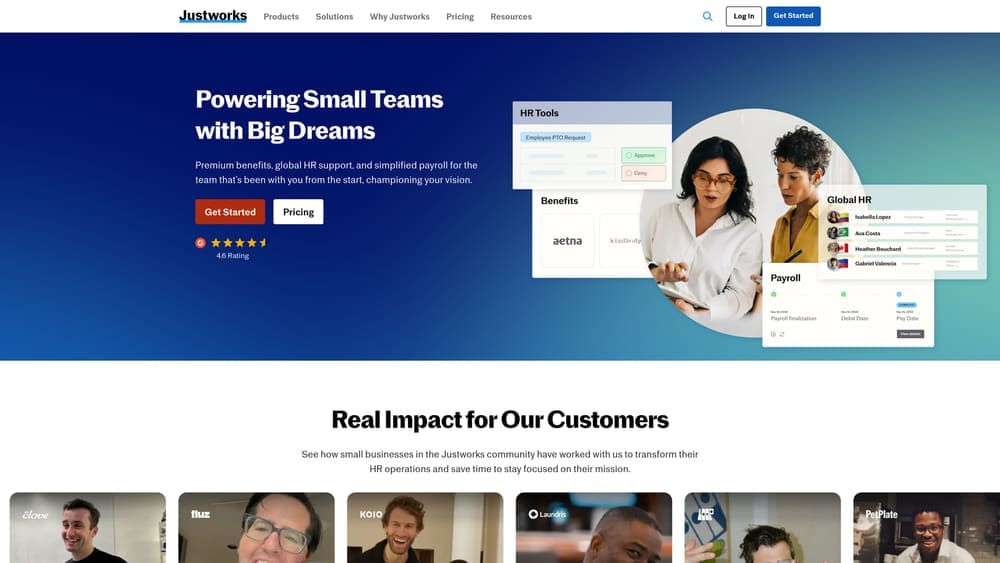
Justworks is a PEO built around simplicity — flat per-employee pricing, strong benefits access, and a modern interface that makes co-employment less intimidating for first-time buyers.
Where This Tool Shines
Justworks solves a real problem: most PEOs are opaque about pricing and complicated to set up. Justworks publishes its rates, onboarding is faster than traditional PEOs, and the interface doesn’t require an HR background to navigate. For a founder-led company that’s just hired its 10th or 15th employee and needs benefits access without a full HR team, Justworks is often the right call.
The benefits access is legitimate. Justworks clients get large-group health insurance rates through the pooled co-employment model — a genuine financial advantage over what a small business could negotiate independently.
Key Features
Flat Per-Employee Pricing: Published rates with no hidden administrative markups — unusual in the PEO market.
Large-Group Benefits Access: Health insurance, 401(k), commuter benefits, and other perks at group rates.
Co-Employment Model: Full PEO arrangement covering payroll, compliance, and HR support.
Simple Onboarding: Faster and less document-intensive than traditional PEO implementations.
Multi-State Compliance: Handles multi-state employment tax and labor law requirements automatically.
Best For
Startups and small businesses with 10 to 100 employees that want PEO-level benefits and compliance without the complexity or opacity of traditional providers. A strong alternative to CoAdvantage for companies that prioritize pricing transparency and ease of use over deep HR customization.
Pricing
Basic plan starts at $59 per employee per month. Plus plan (which includes access to benefits) is $109 per employee per month.
7. OnPay
Best for: Very small businesses that have decided they don’t need a PEO and just want clean, affordable payroll.
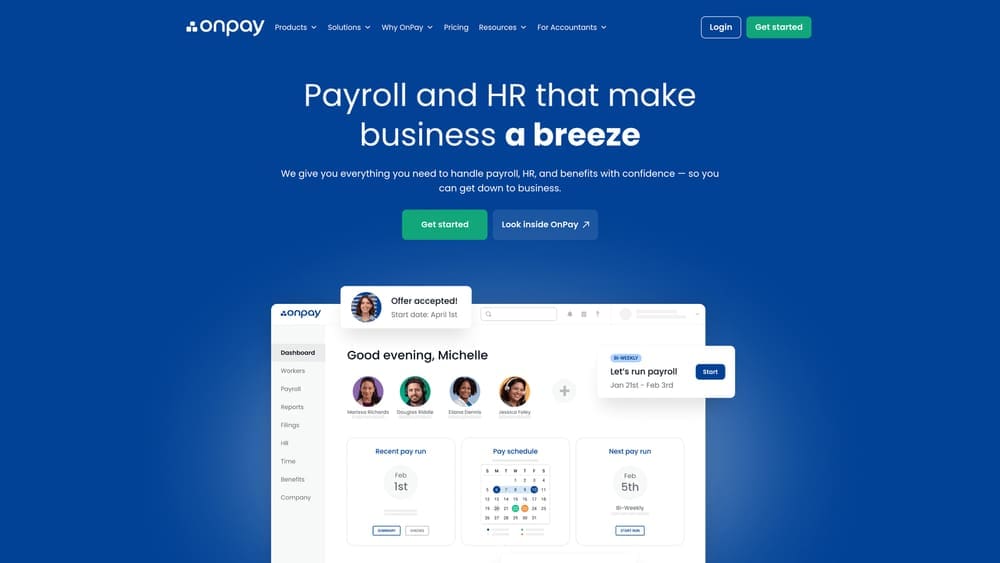
OnPay is a no-frills payroll provider with a single plan, transparent pricing, and strong customer support — built for businesses that know exactly what they need and don’t want to be upsold.
Where This Tool Shines
OnPay doesn’t try to be a PEO. That’s actually its strength. If you’ve evaluated the co-employment model and concluded your business doesn’t need it — you have an internal HR person, your workers’ comp situation is simple, and you’re operating in one or two states — OnPay handles payroll cleanly without forcing you into tiers or add-ons you won’t use.
The single-plan model is genuinely refreshing. Everything is included: payroll, tax filing, multi-state processing, and basic benefits administration. No surprise fees when you add an employee or run an off-cycle payroll.
Key Features
Single Inclusive Plan: Full payroll, tax filing, and compliance in one plan — no feature gating or upsell pressure.
Benefits Administration: Health, dental, vision, and 401(k) administration available within the same platform.
Multi-State Payroll: Handles employees across multiple states without additional per-state fees.
Dedicated Account Support: Customers get real support from dedicated account managers, not just a help center.
No Tiered Complexity: One price, one plan — straightforward for small business owners who don’t want to manage a vendor relationship.
Best For
Businesses with under 25 employees that have made a clear decision against co-employment and want a reliable, affordable payroll solution. Not suitable if you need bundled HR outsourcing, workers’ comp management, or large-group benefits access.
Pricing
$40/month base plus $6 per employee per month. One plan, everything included.
8. TriNet
Best for: Businesses in specialized industries — tech, professional services, nonprofits — that need vertical-specific PEO expertise.
TriNet is a full-service PEO that differentiates itself through industry-specific bundles, making it a direct CoAdvantage alternative for companies where generic HR outsourcing isn’t enough.
Where This Tool Shines
TriNet’s vertical specialization is real. Their compliance expertise and benefits configurations are tailored to specific industries — a tech startup has different employment law exposure, equity compensation considerations, and benefits expectations than a construction company. TriNet’s industry-specific packages reflect that, which is something CoAdvantage’s more generalist model doesn’t fully address.
For small teams at growth-stage companies that need enterprise-level benefits to compete for talent, TriNet’s pooled purchasing model delivers meaningful value. A 15-person tech company can offer benefits that look like what a 500-person company offers — that matters for hiring.
Key Features
Industry-Tailored Packages: Vertical-specific PEO bundles with compliance expertise aligned to your sector.
Full Co-Employment Model: Payroll, HR administration, benefits, and compliance under one co-employment arrangement.
Risk and Workers’ Comp Management: Proactive risk mitigation and claims handling included in the service model.
Enterprise Benefits Access: Large-group health insurance and benefits packages accessible to small teams.
Cloud-Based Reporting: Real-time analytics and HR reporting through TriNet’s platform.
Best For
Companies in tech, professional services, life sciences, or nonprofits where industry-specific HR and compliance knowledge genuinely matters. A strong alternative to CoAdvantage if your industry has specific regulatory complexity or if talent competition requires premium benefits.
Pricing
Custom quotes based on industry vertical, headcount, and services selected. Expect per-employee bundled pricing — contact TriNet for specifics.
Making the Right Call for Your Business
The CoAdvantage vs. payroll company question isn’t really about features. It’s about whether your business actually needs what a PEO provides.
If you have meaningful workers’ comp exposure, operate across multiple states, or need your employees to access large-group benefits they couldn’t get otherwise, a PEO like CoAdvantage, TriNet, or Justworks is worth the cost premium. The compliance and risk management infrastructure alone can justify the fee for the right business.
If you’re a small team with a straightforward payroll situation and basic HR needs, a payroll-only platform like Gusto or OnPay will handle the job at a fraction of the cost. There’s no reason to pay for co-employment infrastructure you don’t need.
If you’re somewhere in the middle — growing quickly, starting to feel the limits of payroll-only, but not sure whether a full PEO is warranted — ADP and Paychex are worth evaluating specifically because they let you start with payroll and scale into PEO without switching vendors.
One thing worth noting regardless of where you land: PEO contracts are often more complex than they appear, and administrative markups can be buried in ways that make true cost comparisons difficult. Before you renew your PEO agreement, compare your options. Most businesses overpay due to bundled fees and unclear administrative markups. We break down pricing, services, and contract structures so you can make a smarter decision.