
If you’re comparing ADP TotalSource and SouthEast Personnel Leasing, you’re likely weighing a national enterprise PEO against a regional specialist. ADP TotalSource is one of the largest PEOs in the country, backed by ADP’s global payroll and HR infrastructure. SouthEast Personnel Leasing operates as a Florida-focused regional provider with deep roots in the Southeast market since 1988.
Neither is universally better. The right choice depends on where your employees work, how fast you’re growing, what kind of benefits access you need, and whether you value enterprise-grade technology or direct regional relationships.
This comparison matters because these two providers represent fundamentally different service models. ADP brings scale, standardization, and multi-state capability. SEPL offers regional expertise, personalized service, and simpler operational structures. The decision factors that matter most are not the ones typically highlighted in sales materials.
This article breaks down the seven key areas where these providers differ in ways that actually affect your day-to-day operations and long-term costs. If you’re new to PEOs or need baseline context on how these arrangements work, start with what a PEO is and how PEOs work before diving into provider comparisons.
1. Geographic Footprint and Multi-State Complexity
The Challenge It Solves
Where your employees work determines which PEO can actually serve you effectively. Multi-state operations create compliance complexity around payroll tax registration, workers’ comp coverage, benefits administration, and employment law. A PEO that operates in all your states simplifies this. One that doesn’t creates operational gaps.
The Strategy Explained
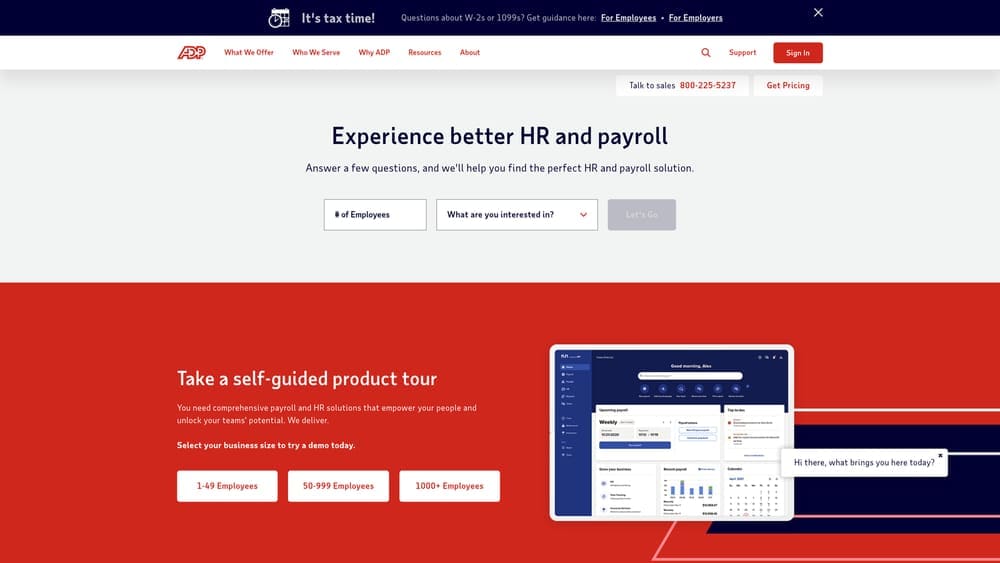
ADP TotalSource operates in all 50 states with established infrastructure in each jurisdiction. They handle state-specific payroll tax filings, workers’ comp coverage, and compliance requirements as part of their standard service model. If you hire someone in a new state, ADP’s systems are already configured to handle that expansion.
SouthEast Personnel Leasing focuses primarily on Florida and select Southeast states. Their regional concentration means deeper expertise in Florida-specific regulations, stronger local carrier relationships, and more familiarity with state labor market conditions. But if you hire outside their service area, you’ll need a different solution for those employees.
This matters most when your growth plans involve geographic expansion. A company planning to stay Florida-focused benefits from SEPL’s regional depth. A company expecting to hire across multiple states needs ADP’s broader coverage. For businesses with employees in multiple jurisdictions, understanding PEO solutions for multi-state companies becomes essential to the decision.
Implementation Steps
1. List every state where you currently have employees, including remote workers and field staff.
2. Identify states where you plan to hire in the next 12-24 months based on growth plans or talent acquisition strategy.
3. Confirm with each provider which states they actively service and whether they can handle your specific locations without operational workarounds.
4. Ask how they handle mid-contract geographic expansion if you hire in a new state unexpectedly.
Pro Tips
Don’t assume a national PEO automatically means better multi-state support. Ask about their workers’ comp carrier network in your specific states and whether they use multiple carriers or a single master policy. Regional carriers sometimes offer better rates in their home markets than national carriers do.
2. Pricing Structure and Cost Transparency
The Challenge It Solves
PEO pricing models vary significantly between national and regional providers. Without understanding how each structures their fees, you can’t accurately compare total costs or identify where markups hide. Businesses often choose based on incomplete pricing information and discover additional costs after signing.
The Strategy Explained
ADP TotalSource typically uses a per-employee-per-month (PEPM) pricing model. You pay a flat monthly fee per employee that covers HR administration, payroll processing, compliance support, and access to their technology platform. Benefits, workers’ comp, and certain ancillary services are billed separately based on actual costs plus administrative fees.
SouthEast Personnel Leasing often uses a percentage-of-payroll model, where your PEO fee is calculated as a percentage of total gross payroll each pay period. This means costs scale directly with employee compensation rather than headcount. Benefits and workers’ comp are similarly billed separately.
The PEPM model creates predictable per-employee costs but can become expensive for lower-wage workforces where percentage-of-payroll would be cheaper. The percentage model scales with compensation, which can be more cost-effective for businesses with lower average wages but more expensive for companies with higher-paid employees. Understanding what PEOs actually cost helps you evaluate which model works better for your payroll structure.
Implementation Steps
1. Request itemized quotes from both providers that separate base PEO fees, benefits costs, workers’ comp premiums, and administrative markups.
2. Calculate your total annual cost under each model using your actual payroll data and employee demographics.
3. Identify any setup fees, implementation costs, or technology charges that aren’t included in the base pricing.
4. Ask how each provider handles mid-year rate adjustments, benefits renewals, and workers’ comp rate changes.
Pro Tips
The quoted PEO fee is rarely your total cost. Benefits administration markups, workers’ comp administrative fees, and ancillary service charges add up. Request a 12-month cost projection that includes all fees, not just the base PEPM or percentage rate. Some regional PEOs have lower markups on benefits because they work with local carriers directly rather than through national master policies.
3. Technology Platform and Day-to-Day Usability
The Challenge It Solves
Your PEO’s technology platform is what your team uses daily for payroll, time tracking, benefits enrollment, and HR documentation. A platform that’s overly complex creates administrative burden. One that lacks necessary features forces workarounds. The technology decision affects operational efficiency more than most businesses realize during evaluation.
The Strategy Explained
ADP TotalSource uses ADP Workforce Now, an enterprise-grade HRIS platform with extensive functionality. You get integrated payroll, time and attendance, benefits administration, performance management, applicant tracking, and reporting tools. The platform connects with hundreds of third-party applications and offers mobile access for employees and managers.
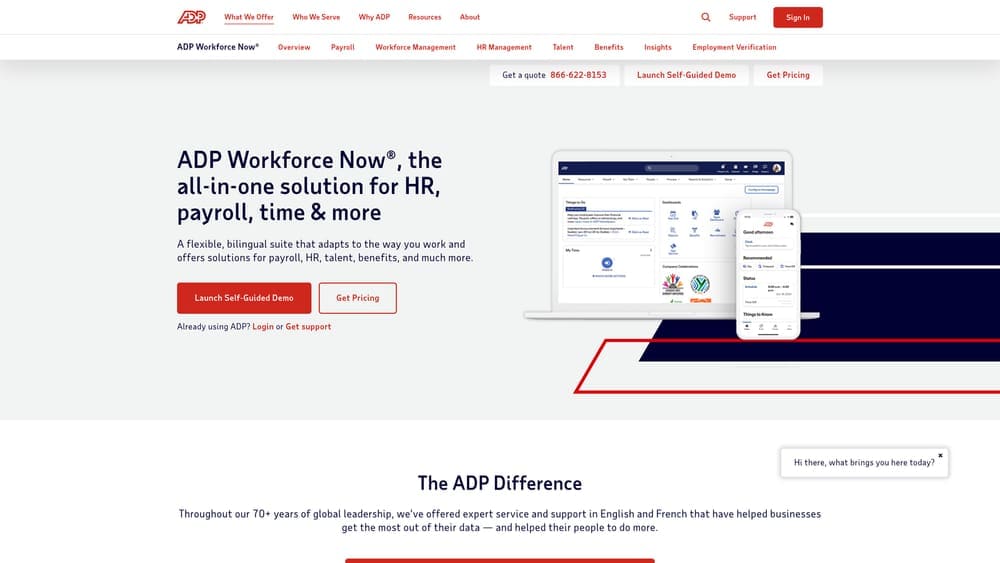
The tradeoff is complexity. ADP’s platform has a steeper learning curve and requires more configuration. Businesses with simple HR needs may find they’re paying for features they don’t use.
SouthEast Personnel Leasing typically offers a simpler, more streamlined platform focused on core payroll and benefits functions. The interface is easier to learn and requires less administrative overhead. But you get fewer advanced features, limited integration options, and less sophisticated reporting capabilities.
This matters based on your operational complexity. A 500-person company with multiple departments, complex scheduling, and performance management needs benefits from ADP’s depth. A 50-person company with straightforward payroll and benefits may prefer SEPL’s simplicity. Our comparison of PEO HR technology platforms covers what to look for in these systems.
Implementation Steps
1. Request platform demos from both providers showing how your team would handle common tasks like running payroll, processing benefits changes, and generating reports.
2. List any third-party tools you currently use (accounting software, applicant tracking systems, time clocks) and confirm integration capabilities.
3. Test mobile functionality if your workforce includes field employees or remote workers who need self-service access.
4. Ask current clients of each provider about platform reliability, system downtime, and how quickly technical issues get resolved.
Pro Tips
Platform sophistication doesn’t always correlate with usability. ADP’s platform is powerful but can feel overwhelming for businesses that only need basic payroll and benefits. Ask to see the actual user interface during demos, not just marketing presentations. Test how many clicks it takes to complete routine tasks.
4. Benefits Access and Health Insurance Options
The Challenge It Solves
One of the primary reasons businesses join a PEO is to access better health insurance rates and benefit options through pooled buying power. But not all PEOs offer the same quality of benefits, carrier relationships, or renewal stability. Poor benefits access can undermine the entire value proposition of using a PEO.
The Strategy Explained
ADP TotalSource offers access to Fortune 500-level benefits through large group master policies. You can typically choose from multiple national carriers with comprehensive plan options including medical, dental, vision, life insurance, disability, and voluntary benefits. Their scale gives them negotiating leverage with carriers and generally more stable renewal rates.
The downside is less flexibility. You’re selecting from ADP’s pre-negotiated plan options rather than customizing coverage. And you’re subject to the overall claims experience of ADP’s entire client base, which can affect renewal rates.
SouthEast Personnel Leasing works with regional carriers and brokers in the Florida market. This can mean stronger relationships with local carriers and sometimes better rates for Florida-based businesses. But you have fewer carrier choices, less plan variety, and potentially more exposure to regional market conditions affecting renewals.
Benefits quality matters for talent retention. If your industry competes for skilled workers, access to strong health insurance and comprehensive benefits packages becomes a competitive differentiator. Understanding how to set up benefits administration helps you evaluate what each provider actually delivers.
Implementation Steps
1. Compare the specific health insurance carriers, plan designs, and premium rates each PEO can offer for your employee demographics.
2. Review benefits beyond health insurance including retirement plan options, FSA/HSA administration, and voluntary benefits availability.
3. Ask about historical renewal rate increases over the past three years and how each PEO manages benefits cost escalation.
4. Confirm whether you can maintain your current carrier relationships or if switching PEOs requires changing insurance carriers.
Pro Tips
The benefits presentation during sales often shows best-case scenarios. Ask for actual rate quotes based on your workforce’s age, location, and claims history. Some businesses find that regional PEOs offer better rates in their home markets because of concentrated buying power with local carriers, while national PEOs have advantages in markets where they have less presence.
5. Service Model: Dedicated Support vs. Account Teams
The Challenge It Solves
When you need help with a payroll issue, benefits question, or compliance concern, who answers the phone matters. The service model determines whether you work with the same people who know your business or get routed through a call center. Response time and service quality vary dramatically between PEO providers.
The Strategy Explained
ADP TotalSource typically assigns an account team structure. You have a designated HR business partner, but day-to-day support often flows through shared service centers and specialized departments. Payroll questions go to payroll specialists, benefits issues to benefits coordinators, and compliance questions to compliance teams.
This creates deep expertise in each area but can feel fragmented. You may speak with different people depending on your issue, and coordinating across departments sometimes requires multiple calls.
SouthEast Personnel Leasing emphasizes direct relationships with dedicated account managers who handle most issues directly. You typically work with the same person or small team who knows your business, your employees, and your operational quirks. This creates continuity but may mean less specialized expertise for complex technical issues. Many businesses considering regional PEO companies prioritize this relationship-based service model.
Service model preference depends on your internal HR capacity. Businesses with experienced HR staff may prefer ADP’s specialized support for complex issues. Companies without dedicated HR resources often value SEPL’s generalist approach where one person handles most questions.
Implementation Steps
1. Ask each provider to explain exactly who you’ll work with on a daily basis and how support requests get routed.
2. Request references from current clients in your industry and size range, then ask specifically about service responsiveness and issue resolution.
3. Test their support process during implementation by noting how quickly questions get answered and whether you work with consistent contacts.
4. Clarify service level agreements around response times, escalation procedures, and after-hours support availability.
Pro Tips
Service quality varies more by individual account manager than by PEO provider. During reference calls, ask whether clients have the same account team they started with or if turnover has been an issue. High account manager turnover at any PEO undermines relationship continuity regardless of the stated service model.
6. Workers’ Compensation and Risk Management
The Challenge It Solves
Workers’ comp is often one of the largest costs in a PEO relationship, particularly for businesses in construction, manufacturing, healthcare, or other industries with elevated injury risk. How a PEO structures workers’ comp coverage, handles claims, and supports safety programs directly impacts your costs and risk exposure.
The Strategy Explained
ADP TotalSource typically uses a master workers’ comp policy covering all clients, with rates based on your industry classification and claims history. Their scale allows them to negotiate competitive rates with national carriers. They also provide formal safety programs, online training resources, and risk management support as part of their service package.
Claims handling goes through their centralized workers’ comp team, which can mean more standardized processes but less direct involvement in individual cases. Understanding how PEOs handle workers’ comp responsibilities clarifies what shifts to the provider versus what stays with you.
SouthEast Personnel Leasing works with regional workers’ comp carriers and may offer more hands-on claims management. Their smaller client base can mean more direct involvement in return-to-work programs and claims resolution. Regional carriers sometimes provide better service in their home markets than national carriers do.
The tradeoff is less sophisticated risk management infrastructure. You may not get the same level of online safety training, formal safety audits, or loss control services that larger PEOs provide.
Workers’ comp matters most for businesses in high-risk industries where injury frequency and claims costs are significant operational concerns.
Implementation Steps
1. Request detailed workers’ comp quotes showing rates by classification code, experience mods, and any administrative fees or markups.
2. Ask how each PEO handles claims management, return-to-work programs, and dispute resolution with injured employees.
3. Review what safety programs, training resources, and risk management support come included versus what costs extra.
4. Confirm how your experience mod is calculated and whether you’re pooled with other clients or rated individually.
Pro Tips
Workers’ comp rates can vary significantly based on how the PEO structures their master policy and which carrier they use. Some PEOs mark up workers’ comp premiums as a profit center beyond the base carrier rate. Ask for the actual carrier rate and the PEO’s administrative fee separately so you can see the true markup.
7. Contract Terms and Exit Flexibility
The Challenge It Solves
PEO contracts often include provisions that make switching providers difficult or expensive. Understanding termination clauses, notice periods, and data portability requirements before signing prevents costly surprises if the relationship doesn’t work out. Many businesses discover restrictive contract terms only when they try to leave.
The Strategy Explained
ADP TotalSource typically uses one-year contracts with automatic renewal clauses. Termination usually requires 60-90 days written notice before the contract anniversary date. Missing that window can lock you in for another full year. Data portability is generally good given ADP’s standardized systems, but you’ll need to extract payroll history, employee records, and benefits data in formats your next provider can use.
Early termination fees are uncommon but implementation costs are usually non-refundable. The bigger challenge is timing your exit to align with benefits plan years and workers’ comp policy periods to avoid coverage gaps or double-billing. Our guide on PEO agreements covers what to watch for in these contracts.
SouthEast Personnel Leasing contract terms vary but regional PEOs sometimes offer more flexible arrangements. You may find shorter initial terms, more lenient notice requirements, or negotiable termination provisions. The tradeoff is that smaller PEOs may have less sophisticated data export capabilities, making the transition to a new provider more manual.
Contract flexibility matters most if you’re uncertain about the PEO relationship or expect significant business changes that might require switching providers.
Implementation Steps
1. Review the complete service agreement before signing, paying specific attention to termination clauses, notice requirements, and automatic renewal provisions.
2. Ask what happens if you need to terminate mid-contract due to business changes like acquisition, closure, or workforce reduction.
3. Confirm data ownership and portability, including what formats you can export payroll history, employee records, and benefits information in.
4. Understand how benefits coverage and workers’ comp policies transition if you leave, including whether you face coverage gaps or need to secure tail coverage.
Pro Tips
The termination notice period is critical. If your contract requires 90 days notice before the anniversary date and you miss that window, you’re locked in for another year. Calendar the notice deadline immediately after signing so you don’t accidentally auto-renew. Some businesses negotiate shorter notice periods or trial periods into their initial contracts if they’re uncertain about the fit.
Moving Forward with Your Decision
The ADP TotalSource versus SouthEast Personnel Leasing decision typically comes down to scale versus specialization. ADP makes sense if you operate across multiple states, need enterprise-grade technology, plan rapid growth, or want access to Fortune 500-level benefits. Their infrastructure supports complexity and standardization.
SouthEast Personnel Leasing is often the better fit for Florida-focused businesses that value direct relationships, regional expertise, and simpler operational structures. If your workforce stays concentrated in the Southeast and you prefer working with the same account manager who knows your business, SEPL’s model may serve you better.
Neither provider is universally cheaper. Total costs depend on your specific employee demographics, industry classification, benefits selections, and which pricing model aligns with your payroll structure. A business with 75 employees earning $45,000 average salary will see different economics than one with 200 employees earning $65,000 average salary.
The evaluation process matters more than the decision timeline. Request itemized quotes from both providers showing all fees separately. Compare not just base PEO costs but benefits premiums, workers’ comp rates, administrative markups, and ancillary service charges. Run 12-month cost projections using your actual payroll data.
Talk to current clients in your industry and size range. Ask specifically about service responsiveness, platform usability, benefits renewal experiences, and whether they’d choose the same provider again. Reference calls reveal operational realities that sales presentations don’t.
Test the relationship during implementation. How quickly do they answer questions? Do you work with consistent contacts? Does the platform actually do what they demonstrated? The first 60 days tell you whether the service model matches what was promised.
Before you commit to either provider, compare your options with a complete cost breakdown. Most businesses overpay because bundled fees and unclear administrative markups hide the true total cost. We break down pricing, services, and contract structures so you can make a smarter decision with complete transparency.
For a complete evaluation framework covering all PEO selection criteria beyond this specific comparison, see our guide on how to choose a PEO. The decision framework applies regardless of which providers you’re comparing.