
If you’re currently with Alcott HR — or were seriously considering them — and something isn’t clicking, that’s worth paying attention to. Maybe it’s pricing that’s hard to decode. Maybe your workforce has grown beyond what a regional PEO can comfortably support. Maybe you’re operating in multiple states and finding that the compliance infrastructure isn’t keeping up. Whatever the trigger, looking at alternatives isn’t a sign of failure. It’s just good business judgment.
Alcott HR is a regional PEO with roots in the Northeast, primarily serving New York-based businesses. That regional focus has real advantages for certain companies: more localized service, familiarity with New York employment law, and a smaller-scale feel that some business owners genuinely prefer. But for companies that have grown, expanded geographically, or need benefits that can compete with larger employers, the regional model starts to show its limits.
This guide walks through seven alternatives worth evaluating — not as a sales pitch for any of them, but as a structured way to understand what’s actually available and how each option compares on the factors that matter: cost structure, service model, compliance depth, benefits quality, and headcount fit.
One note before diving in: Alcott HR has undergone rebranding and structural changes in recent years. If you’re researching them under a different operating name, verify the current brand before signing anything. The underlying service model and regional footprint are what matter most for this comparison.
We’ll also cover how to actually run a comparison without getting burned by the evaluation process itself. Because choosing the wrong PEO — or switching at the wrong time — carries real operational risk beyond just the monthly cost.
1. Understand What You’re Actually Leaving — Alcott HR’s Real Scope and Limitations
The Challenge It Solves
Most businesses don’t do a clean-eyed assessment of their current PEO before shopping alternatives. They just know something feels off. Before you can evaluate what to move toward, it helps to be specific about what’s actually not working — because the answer changes which alternative makes sense.
The Strategy Explained
Regional PEOs like Alcott HR typically offer a more hands-on, relationship-based service model compared to the large nationals. That’s genuinely valuable for some businesses. But the tradeoffs are real: smaller benefits risk pools, narrower technology infrastructure, and limited compliance depth for multi-state operations.
If you’re in New York with a single-state workforce and straightforward HR needs, Alcott HR may have been a reasonable fit. But if you’ve since added employees in New Jersey, Connecticut, or across the country — or if you need benefits competitive enough to attract professional talent — the regional model starts working against you.
The other thing worth being honest about: sometimes the issue isn’t the PEO’s capabilities. It’s pricing opacity. Regional PEOs often bundle administrative fees in ways that make it hard to understand what you’re actually paying per employee. That lack of transparency is itself a reason to look elsewhere, and it’s worth reviewing a broader set of PEO alternatives before making any decisions.
Implementation Steps
1. Pull your current PEO agreement and identify exactly what services are included, what’s billed separately, and what your termination notice period requires.
2. List the specific pain points driving your search: Is it cost? Multi-state compliance gaps? Benefits quality? Technology limitations? Service responsiveness? Being specific here will make your alternative evaluation far more useful.
3. Check your renewal date. Many PEOs auto-renew with 30-90 day notice windows. Missing that window can lock you in for another year regardless of what you decide.
Pro Tips
Don’t start shopping alternatives until you know your exit terms. The best alternative in the world doesn’t help if you’re contractually locked in for eight more months. Also, if Alcott HR has rebranded under a new operating name, confirm which entity you’re actually contracted with before initiating any termination process.
2. ADP TotalSource — Scale and Infrastructure, at a Price
The Challenge It Solves
For businesses that have outgrown a regional PEO and need multi-state compliance infrastructure, enterprise-grade technology, and a benefits pool large enough to offer genuinely competitive coverage, ADP TotalSource is the most logical place to start the comparison. It’s the largest PEO in the U.S. by headcount, which matters more than most buyers initially realize.
The Strategy Explained
ADP TotalSource runs on the same technology backbone as ADP’s broader payroll and HR platform — which means robust employee self-service, solid payroll integration, and compliance tools built for businesses operating across multiple states. Their benefits pool is large enough that smaller employers can access coverage options that would otherwise be out of reach.
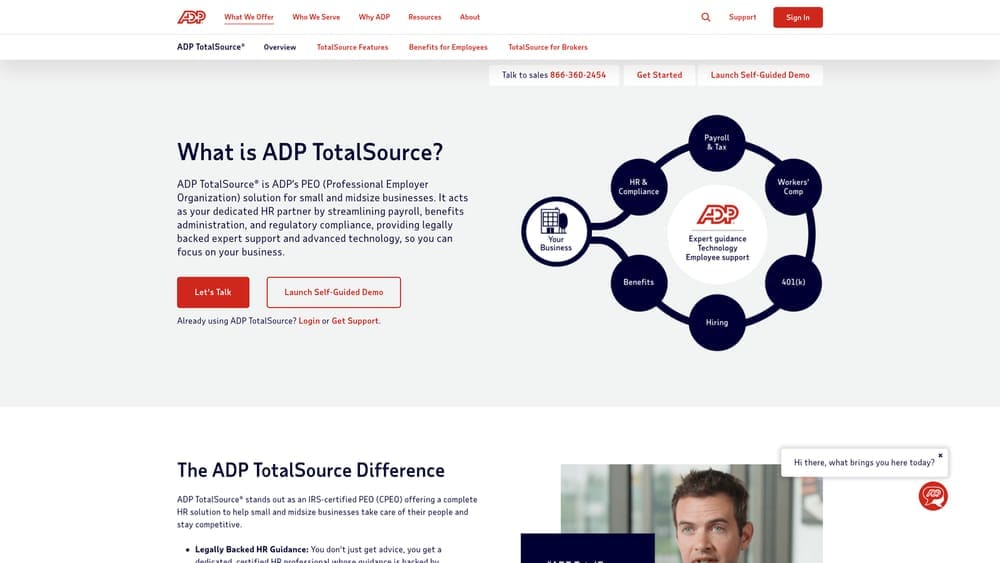
The tradeoff is cost and minimum thresholds. ADP TotalSource isn’t designed for micro-businesses. If you’re under 25-30 employees, the pricing structure likely won’t make sense. And even for mid-sized companies, the fee structure can be opaque — you’ll want to get a line-item breakdown rather than just a monthly total before signing.
Service model is also worth flagging. At ADP’s scale, you’re typically working with a service team rather than a dedicated rep. That’s fine for businesses with some internal HR capacity, but it’s a real adjustment if you’ve been used to a more relationship-based regional PEO model.
Implementation Steps
1. Request a formal quote with itemized fee breakdowns — not just a blended rate. Ask specifically how administrative fees are structured: percentage of payroll vs. per-employee-per-month (PEPM).
2. Ask for a technology demo before committing. The platform is a major part of what you’re paying for, and it should fit how your HR and payroll teams actually work.
3. Clarify service model expectations upfront. Understand who your point of contact will be, what the response time commitment looks like, and how compliance questions get escalated.
Pro Tips
ADP TotalSource is well-suited for companies with 50+ employees, multi-state workforces, or complex compliance environments. If you’re smaller than that, the cost-benefit math often doesn’t work in your favor. Consider mid-market options first before defaulting to the biggest name in the space.
3. Insperity — Premium Service Model for Established SMBs
The Challenge It Solves
If the core frustration with your current PEO is service quality — slow responses, generic support, feeling like you’re just a number in a call center queue — Insperity addresses that directly. Their model is built around dedicated HR specialists rather than general support teams, which changes the day-to-day experience considerably.
The Strategy Explained
Insperity positions itself at the premium end of the PEO market. You get an assigned HR specialist who understands your business, handles compliance questions with depth, and proactively surfaces issues rather than waiting for you to call in with a problem. For business owners who want PEO support to feel like an extension of their team rather than a vendor relationship, Insperity is one of the few options that actually delivers on that.
Their compliance infrastructure is strong, particularly around risk management and employment practices liability. For businesses in industries with higher HR complexity — healthcare-adjacent, professional services, companies that have had employment claims in the past — that depth has real value.
The cost is higher than most alternatives. Insperity is not the right fit if your primary driver is reducing HR spend. It’s the right fit if you’ve been burned by inadequate HR support and you’re willing to pay for something that actually works. If Insperity ultimately isn’t the right match, there are several Insperity PEO alternatives worth evaluating before you commit.
Implementation Steps
1. Ask Insperity directly how dedicated HR specialists are assigned and what the specialist-to-client ratio looks like. This is the core of their value proposition — you want specifics, not marketing language.
2. Get a clear breakdown of what’s included in the base fee vs. what triggers add-on costs. Insperity’s pricing can include components that aren’t immediately obvious in the initial quote.
3. Ask for references from companies in your industry and headcount range. Insperity’s service experience can vary by region and specialist quality, so peer references matter here.
Pro Tips
Insperity tends to work best for businesses in the 25-150 employee range that have enough HR complexity to justify the premium. If your workforce is simple and stable, you may be paying for service depth you’ll rarely use. But if you’re navigating growth, compliance complexity, or a history of HR issues, the investment often pays off.
4. TriNet — Vertical-Specific Benefits for Knowledge-Work Industries
The Challenge It Solves
Benefits competitiveness is a real problem for small and mid-sized businesses trying to attract professional talent. If you’re a tech company, a financial services firm, or a professional services business competing with larger employers for skilled workers, generic PEO benefits packages often aren’t enough. TriNet is built specifically for this problem.
The Strategy Explained
TriNet’s core differentiation is industry-specific benefit packages designed around the needs of knowledge-work workforces. Their tech vertical, for example, offers benefit structures that mirror what larger tech employers offer — which matters enormously when you’re recruiting against companies with dedicated HR departments and enterprise-level benefits budgets.
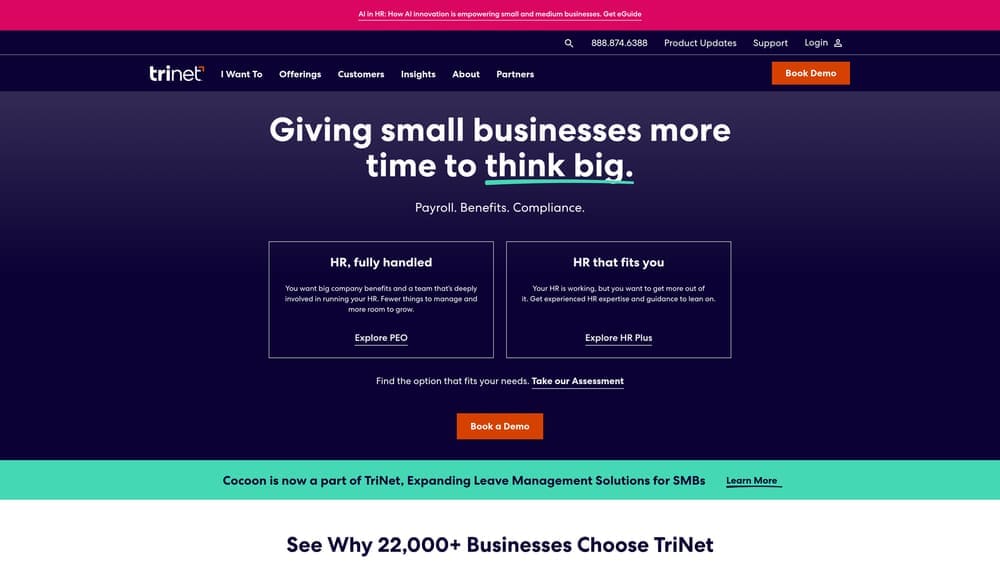
This vertical focus is a genuine advantage if you’re in the right industry. It’s a limitation if you’re not. TriNet’s model is less well-suited for trades, construction, field-service businesses, or industries where workforce needs look very different from the professional services profile TriNet is optimized for.
Technology is solid, and their compliance coverage is national. For businesses managing employees across multiple states, understanding how to handle multi-state payroll through TriNet PEO is worth reviewing before you commit. Service model sits between Insperity’s dedicated specialist approach and ADP’s scale-service model — accessible, but not as relationship-intensive as Insperity.
Implementation Steps
1. Ask TriNet specifically which industry vertical your business would fall under and request a sample benefits package for that vertical. The quality of the benefits is the main reason to consider TriNet — verify it before assuming it applies to you.
2. Get pricing as a PEPM figure and compare it against your current cost. TriNet’s pricing can carry a premium, and it only makes sense if the benefits quality justifies it for your workforce.
3. Ask about compliance support for your specific states. TriNet is national, but compliance depth can vary — particularly for states with complex employment law like California or New York.
Pro Tips
TriNet is a strong choice for tech startups, SaaS companies, financial services firms, and professional services businesses where talent acquisition is a real competitive challenge. If benefits aren’t a major recruitment lever in your industry, TriNet’s premium may not be justified. Match the tool to the actual problem.
5. Oasis (Paychex PEO) — Mid-Market Value with Payroll Integration
The Challenge It Solves
Not every business needs the full premium service model or the enterprise-scale infrastructure of the largest PEOs. For businesses looking for a solid, mid-market option with good technology backing and reasonable cost, Oasis — now operating under the Paychex PEO umbrella — is worth a serious look, particularly if you’re already in the Paychex ecosystem.
The Strategy Explained
Paychex acquired Oasis several years ago and has since integrated it into their broader HR and payroll platform. The result is a PEO offering with solid technology infrastructure, reasonable pricing for mid-market businesses, and a payroll integration story that’s genuinely clean if you’re already using Paychex for payroll. For a deeper look at what this service actually includes, the Paychex Oasis PEO services overview covers the key components worth evaluating.
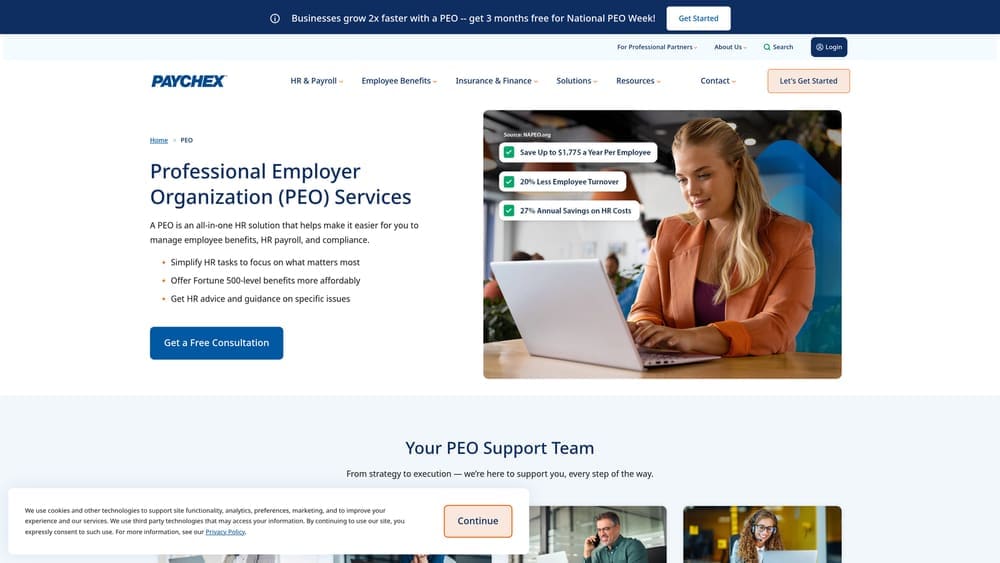
The service model is serviceable rather than exceptional. It’s not Insperity’s dedicated specialist approach, but it’s also not the impersonal scale-service experience that comes with ADP at very high headcounts. For businesses that primarily need compliance coverage, solid payroll, and a functional benefits package without paying a premium for white-glove service, Oasis/Paychex PEO covers the basics well.
The important caveat: service quality varies meaningfully by region. Paychex has a large local office network, but the quality of that local support isn’t uniform. Before committing, ask specifically about who handles your account locally and get a sense of their responsiveness.
Implementation Steps
1. If you’re already a Paychex payroll customer, ask specifically about the migration path to their PEO offering. The integration should be relatively clean, but you want to confirm what actually carries over vs. what needs to be re-entered.
2. Ask for references from businesses in your geographic area. Regional service quality is the main variable with Oasis/Paychex PEO — local references are more informative than national case studies.
3. Compare the PEPM or percentage-of-payroll cost against at least one other mid-market option. Oasis/Paychex PEO is competitive, but it’s worth validating that against Engage PEO or a similar mid-market alternative before deciding.
Pro Tips
This option makes the most sense for businesses already using Paychex for payroll, companies in the 20-100 employee range that want solid fundamentals without premium pricing, and businesses that don’t have highly complex benefits or compliance needs. If you’re in a state with aggressive employment law and need deep compliance support, you may want to vet their local team more carefully.
6. Engage PEO — A Genuine Option for Smaller Headcounts
The Challenge It Solves
One of the consistent frustrations smaller businesses face when evaluating national PEOs is that the pricing minimums and service models are built for companies larger than they are. Engage PEO is specifically designed for smaller businesses — typically under 150 employees — and it fills a real gap between regional PEOs and the large nationals.
The Strategy Explained
Engage PEO operates as a smaller national PEO, which means it offers broader geographic coverage and more technology infrastructure than a regional provider like Alcott HR, without the complexity and cost floor that comes with ADP TotalSource or Insperity.
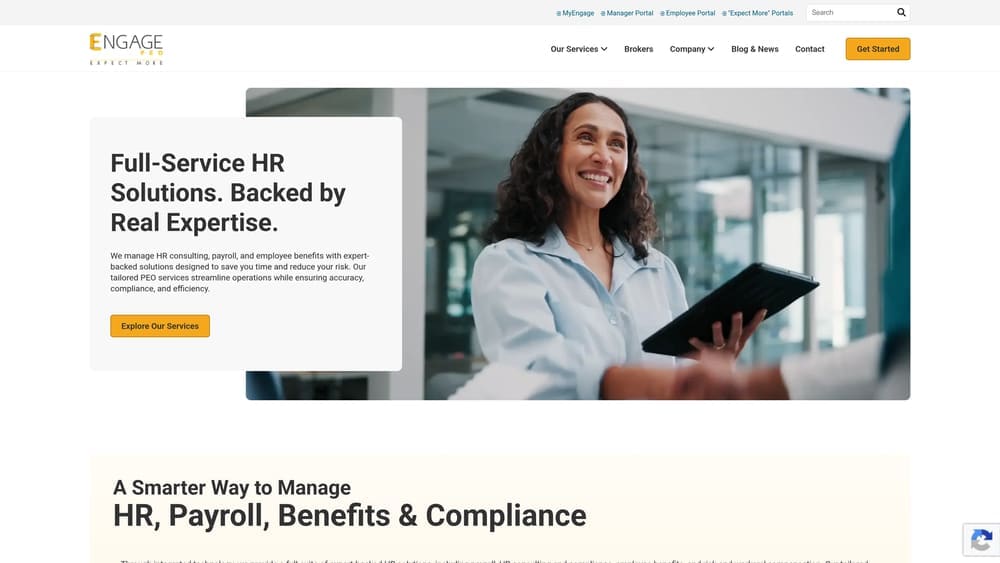
Their service model tends to be more accessible and responsive for smaller clients than the large nationals, where a 30-employee company can feel like a low-priority account. Engage is built for exactly that size range, which changes the service dynamic considerably.
Benefits quality is solid for the size tier. You won’t get the same buying power as a PEO with hundreds of thousands of covered lives, but you’ll get meaningfully better options than what a small business could access independently or through a regional PEO with a limited pool. It’s also worth comparing how Engage stacks up directly — a side-by-side look at Paychex PEO vs Engage PEO can help clarify which mid-market option fits your situation.
Implementation Steps
1. Request a quote and ask specifically how their pricing is structured for your headcount. Engage PEO’s pricing is generally more transparent than the large nationals, but you should still get a line-item breakdown.
2. Ask about their compliance infrastructure for your specific states. Engage PEO operates nationally, but verify their depth in any state where you have significant headcount or complex employment law exposure.
3. Compare Engage PEO directly against your current Alcott HR cost on a per-employee basis. The switch should make financial sense, not just operational sense.
Pro Tips
Engage PEO is a particularly strong consideration for businesses in the 10-75 employee range that feel underserved by regional PEOs but aren’t ready for the cost and complexity of the top-tier nationals. It’s a legitimate middle path that often gets overlooked because it doesn’t have the brand recognition of ADP or Insperity.
7. How to Compare PEO Alternatives Without Getting Burned
The Challenge It Solves
The PEO sales process is designed to move you toward a decision quickly. Demos are polished, pricing is presented in ways that make direct comparison difficult, and the urgency around open enrollment windows is real. Most businesses end up making a PEO decision with incomplete information — and that’s when costly mistakes happen.
The Strategy Explained
A structured evaluation process protects you from choosing based on who had the best sales rep rather than who’s actually the best fit. The goal is to compare providers on the same terms, not just the summary numbers they want you to see.
The most important thing to get from every provider is a line-item fee breakdown: administrative fees, benefits markups, workers’ comp rates, and any per-transaction charges. Blended rates hide the actual cost structure. Ask for the components separately.
Contract terms deserve as much attention as pricing. Look specifically at: the termination notice period, what happens to your workers’ comp coverage if you exit mid-policy year, whether there’s an auto-renewal clause, and what the process looks like for offboarding employees from the PEO’s systems back to yours.
Timing matters more than most buyers realize. Switching PEOs mid-year can disrupt employee benefits coverage — particularly if employees are mid-treatment on a health claim. Open enrollment timing should drive your transition timeline, not the PEO’s sales calendar.
Implementation Steps
1. Request itemized quotes from at least two or three providers using the same employee count, state distribution, and benefits tier. This is the only way to make a real cost comparison.
2. Ask every provider the same three contract questions: What is the termination notice period? What happens to workers’ comp coverage at exit? Is there an auto-renewal clause, and what is the opt-out deadline?
3. Plan your transition timeline around your benefits renewal window. Ideally, you want your new PEO relationship to begin at the start of a new plan year to avoid mid-year coverage disruptions for your employees.
Pro Tips
Run your comparison through an independent tool rather than directly through each PEO’s sales team. When you’re comparing providers side-by-side with structured data, the differences become much clearer — and you’re less susceptible to the soft pressure that comes from a direct sales relationship. Our compare your options tool is built specifically for this process.
Before You Commit to Anything
Switching PEOs is a real operational decision, not just a vendor swap. The right choice depends on your headcount, where your employees are located, your industry, and how much internal HR capacity you’re working with.
Alcott HR serves a specific kind of business well: Northeast-based, single-state or limited-state, with straightforward HR needs and a preference for localized service. If that description still fits your business, the alternatives here may be more than you need. But if your business has grown, expanded geographically, or needs benefits that can genuinely compete in your talent market, the regional PEO model likely isn’t built for where you’re headed.
The alternatives in this guide represent meaningfully different options — not just different names on the same service. ADP TotalSource and Insperity serve different needs than Engage PEO. TriNet is built for a specific kind of workforce. Oasis/Paychex PEO makes the most sense in a specific context. The right fit depends on matching your actual situation to the provider’s actual strengths.
Before you renew your PEO agreement, take the time to get structured quotes from at least two or three providers and compare them on the same terms. Most businesses overpay due to bundled fees and unclear administrative markups. We break down pricing, services, and contract structures so you can make a smarter decision. Compare your options before you sign anything — it’s the one step most business owners skip and almost always wish they hadn’t.